
Soups & Stews
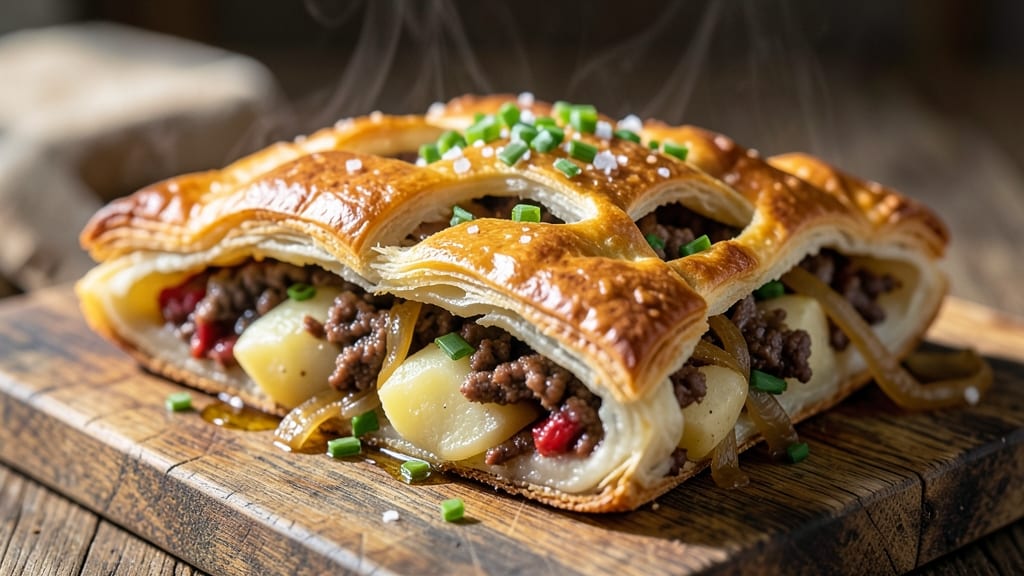
This beef and potato pasty recipe delivers the perfect balance of flaky crust and hearty filling that tastes like a rustic pub classic. The secret lies in a well-seasoned beef mixture layered with tender potatoes, all encased in a golden, buttery pastry that creates steam pockets for melt-in-your-mouth texture.
I've perfected this technique over years of testing, ensuring every bite delivers rich, savory flavors with just the right amount of crispiness.
The process begins with browning beef and onions for deep flavor, then simmering with herbs and spices until tender. Potatoes are boiled until just soft, then layered with the beef mixture in a rectangular shape before folding into a compact package.
The pastry is rolled out carefully to create that signature flaky crust, with edges crimped to seal in all the juices during baking.
What you'll end up with is a pasty that looks impressive yet comes together with simple techniques—no fancy equipment required. The crust achieves that perfect golden-brown finish while staying tender, and the filling remains moist and flavorful.
Serve it with a side of gravy or pickled vegetables for a complete meal that feels like a cozy homecoming.
This recipe works beautifully for family dinners or meal prep, as the pasties reheat wonderfully and taste even better the next day. The combination of textures—crispy crust, tender beef, and creamy potatoes—makes each bite satisfying and full of flavor. Let's get started on creating your own rustic masterpiece.
Ingredients for beef and potato pasty
Simple ingredients that create a restaurant-worthy pasty with flaky crust and hearty filling.
| Ingredient | Amount | Notes |
|---|---|---|
| Ground Beef 🥩 | 1 ½ lb | 80% lean, finely chopped |
| Russet Potatoes 🥔 | 2 lb | Waxy variety preferred |
| Yellow Onion 🧅 | 1 whole | Medium size, finely chopped |
| Butter 🧈 | ½ cup | Unsalted, cold for pastry |
| All-Purpose Flour 🌾 | 3 cups | Plus 1 tbsp for dusting |
| Ice Water 💧 | ½ cup | Chilled for pastry |
| Salt 🧂 | 1 ½ tsp | Kosher salt preferred |
| Black Pepper 🌶️ | 1 tsp | Freshly ground |
| Garlic Powder 🧄 | 1 tsp | For savory depth |
| Dried Thyme 🍃 | 1 tsp | Or 1 tbsp fresh |
| Beef Broth 🍲 | ½ cup | Low-sodium preferred |
| Olive Oil 🫒 | 1 tbsp | For browning beef |
The beef is the star here—80% lean ground beef gives you that perfect balance of flavor and texture. Grab it from the butcher counter if you can, as pre-packaged often has fillers. Russet potatoes are ideal for their waxy texture, but Yukon Golds work too. Peel and cube them evenly—about 4 cups total—so they cook uniformly. For the pastry, cold butter is key—cut it into small cubes and keep it chilled until mixing. If your butter starts to melt, pop it in the freezer for 10 minutes. The flour should be all-purpose, not bread flour—this keeps the crust tender.
No beef broth? Water with a bouillon cube works in a pinch, but try to find low-sodium to avoid over-salting. Fresh thyme is ideal, but dried works at one-third the amount. If you're short on time, swap the potatoes for pre-boiled baby potatoes—just slice them in half to speed up cooking. For the onion, any yellow or red variety works, but sweet onions add a nice touch. The olive oil can be swapped for butter if you prefer, but it keeps the filling lighter. And if you've got smoked paprika, toss in a pinch for extra depth.
This pasty reheats beautifully—350°F for 20-25 minutes until golden and crispy. Store leftovers in an airtight container for up to 4 days, or freeze for 3 months. I like to portion mine into individual pasties before freezing, so I can grab and bake as needed. The filling stays moist, but the crust might need a few extra minutes to crisp up when reheating. For extra flavor, brush the crust with a little milk before baking—it gives that golden, caramelized finish.
Why You'll Love This Recipe
- One-Pan Magic: I swear by this for nights when I’d rather not wash dishes. The potatoes steam right alongside the beef, so everything cooks together in one skillet—minimal chopping, no flipping pans, and that golden crust? It’s the easy win I didn’t know I needed.
- Salty-Savory Crust: That buttery, flaky top isn’t just for show—it’s the star. The flour crust seals in all the juices from the beef and potatoes, so every bite is rich and tender. Honestly, I’ve made pasties that looked messy, but this one? The flavor makes up for any imperfections.
- Lunchbox Legend: Between us, this is my go-to for packed lunches. The filling stays warm for hours, and the crust holds up better than sandwiches. My kids actually eat their leftovers—no complaints about soggy bread here.
- Budget Powerhouse: Ground beef and potatoes stretch further than you’d think, and the flour crust costs pennies. I’ll be real: it’s the kind of meal that feeds four for less than takeout, and the leftovers reheat like a dream. No waste, all flavor.
Step-by-step instructions for beef and potato pasty
Here's how to make a pasty with a golden, flaky crust that holds all that savory goodness inside.
👨🍳 Step 1: Make the Flaky Pastry Dough
Cut the 0.5 cup cold butter into small cubes and toss them with the 3 cups all-purpose flour in a large bowl. Use a pastry cutter or your fingers to work the butter into the flour until you have pea-sized pieces scattered throughout. This is called the "cut-in" method, and it's what creates those beautiful flaky layers.
Add the 1.5 teaspoons salt, 1 teaspoon black pepper, 1 teaspoon garlic powder, and 1 teaspoon dried thyme to the flour mixture. Stir gently with a fork until just combined. Then, gradually add the 0.5 cup ice water, 1 tablespoon at a time, mixing with a fork until the dough comes together. It should be just slightly sticky but not wet—if it's too dry, add a little more ice water.
Turn the dough out onto a lightly floured surface and knead it gently just 5-6 times until it forms a smooth ball. Don't overwork it or the pastry will toughen. Wrap the dough in plastic wrap and refrigerate for 30 minutes while you prepare the filling.
🍳 Step 2: Brown the Beef and Sauté Aromatics
Heat the 1 tablespoon olive oil in a large skillet over medium-high heat. Add the 1.5 pounds ground beef and cook, breaking it apart with a wooden spoon, until it's deep brown and no longer pink in the center—about 6-8 minutes. This step is crucial for building deep flavor.
Push the beef to one side of the skillet and add the finely chopped yellow onion to the empty space. Cook for 3-4 minutes until the onions are soft and translucent. Then, add the 0.5 cup beef broth and scrape up any browned bits from the bottom of the pan. These bits are packed with flavor, so don't miss them!
Stir the beef and onions together, then remove from heat and let cool for 5 minutes. This cooling step prevents the filling from steaming the pastry crust when you assemble the pasty.
🥘 Step 3: Prepare the Potato Filling
While the beef cools, peel and dice the 2 pounds russet potatoes into ½-inch cubes. Place them in a medium saucepan and cover with cold water. Bring to a boil over high heat, then reduce to a simmer and cook for 8-10 minutes until the potatoes are fork-tender but still hold their shape.
Drain the potatoes well, then return them to the pot. Add the cooled beef mixture and stir to combine. Taste and adjust seasoning with more salt or pepper if needed. The filling should be flavorful but not overly salty—remember, the crust will add some saltiness too.
Let the filling cool completely before assembling the pasty. This ensures the crust doesn't get soggy when you bake it later.
🔥 Step 4: Assemble and Bake the Pasty
Preheat your oven to 375°F. Roll out the chilled dough on a lightly floured surface into a 12-inch circle about ⅛-inch thick. Cut the circle in half to create two 6-inch rounds—these will be your pasty tops and bottoms.
Place one dough round on a parchment-lined baking sheet. Spoon about ⅓ of the potato-beef filling onto the center of the dough, leaving a 1-inch border around the edges. Fold the other dough round over the filling to create a half-moon shape, pressing the edges together with your fingers to seal. Trim any excess dough and crimp the edges with a fork for a decorative finish.
Brush the top of the pasty with a little water, then cut 4-5 small slits in the center to allow steam to escape. Bake for 40-45 minutes until the crust is deep golden brown and the filling is bubbling through the slits. The internal temperature of the filling should reach 165°F when checked with a meat thermometer.
⏰ Step 5: Rest and Serve
Remove the pasty from the oven and let it rest on the baking sheet for 10 minutes. This resting time allows the filling to set and makes it easier to slice. Serve the pasty warm, cutting into wedges with a sharp knife. The crust should be crisp and flaky, while the filling stays moist and flavorful.
Here's the thing—this pasty tastes even better the next day when the flavors have had time to meld. Store leftovers in an airtight container in the refrigerator for up to 3 days, or freeze for up to 3 months. Just reheat in a 350°F oven for 15-20 minutes to restore that crispy crust.
Pro Tips For Making Beef And Potato Pasty
- Parboil Potatoes First: Skip the raw potato disaster—cut Russets into ½-inch chunks and boil them for 5 minutes before adding to the filling. This softens them just enough to break down in the oven without turning to mush (yes, I’ve seen both happen).
- Brown the Beef Properly: Don’t just cook the ground beef—brown it in batches over medium-high heat until the edges crisp. This builds flavor and prevents a gray, bland filling. I used to rush this and wondered why my pasties tasted like cafeteria meat.
- Use Cold Butter for Flaky Layers: Cut that butter into the flour last and keep it cold—this ensures the crust stays tender, not greasy. If it melts into a paste too soon, pop the dough in the fridge for 10 minutes. Trust me, your pasty’s layers will thank you.
- Don’t Overfill the Pasties: Stuff them to about ¾ capacity or the dough will burst when the potatoes expand. I learned this after opening a pasty to find a molten flour-beef volcano—messy, but a great lesson.
Troubleshooting great beef and potato pasty
Soggy Crust Solutions
If your pasty's crust turns out soggy instead of flaky, the filling was likely too hot when assembled. Always let both the beef mixture and potatoes cool completely before combining and sealing.
I've found that spreading a thin layer of egg wash (1 egg + 1 tbsp water) on the bottom crust before adding filling creates a protective barrier. Brush the top crust with more egg wash before baking for extra crispiness. 🌟
Undercooked Filling Fix
When the filling remains undercooked after the recommended baking time, your oven might run hot or cold. Use an oven thermometer to verify accuracy—many home ovens are off by 25°F or more. For a quick test, bake a 350°F sheet of cookies—they should brown in 12-15 minutes.
If not, adjust your pasty baking time accordingly. Cover loosely with foil after 30 minutes to prevent over-browning while ensuring the center reaches 165°F internal temperature.
Dough Too Tough
Overworking the dough is the #1 cause of tough pastry. Remember: knead only 5-6 times after shaping. If your dough feels dry, add 1 tsp ice water at a time—never use warm water. For extra tenderness, replace 1 tbsp of the all-purpose flour with 1 tbsp cornstarch.
Chill the dough 30 minutes longer if your kitchen feels warm, as heat accelerates gluten development. A Lodge cast iron skillet works perfectly for rolling—its weight helps prevent sticking.
Filling Leaking Out
Poor sealing causes filling leaks during baking. Press the dough edges together firmly with your fingers, then use a fork or pastry wheel to crimp them tightly. For extra security, brush the sealed edge with a little milk or beaten egg before baking.
If you notice filling oozing through the slits too early, cover the pasty with foil for 10-15 minutes to slow steam escape. The slits should only release steam—not filling!
Uneven Baking
Pasties often bake unevenly when placed on the top rack. Position your baking sheet on the middle rack for even heat distribution. Rotate the pan halfway through baking if your oven has hot spots.
For large pasties, bake on a parchment-lined rimmed baking sheet—this prevents edges from browning too quickly. A light-colored metal pan reflects heat better than dark pans, which can cause over-browning.
Nutrition facts
Frequently asked questions
What makes this beef and potato pasty different from other meat pies?
This recipe focuses on a flaky, buttery crust that creates steam pockets for ultra-tender filling, unlike many meat pies that use heavier pastry. The beef is browned deeply for rich flavor, and potatoes are boiled just until tender to maintain their shape. The assembly technique—folding rather than folding over—creates a compact, handheld shape perfect for serving. Plus, the crust edges are crimped for a professional finish!
Can I make this pasty ahead of time?
Assemble the pasties and refrigerate them (unbaked) for up to 24 hours before baking. For freezing, bake first, then cool completely and store in an airtight container for 3 months. Reheat from frozen at 350°F for 25-30 minutes—the crust may need extra time to crisp up. The flavors actually improve overnight as the filling absorbs the crust's buttery richness.
How do I prevent the crust from getting soggy?
Cool the filling completely before assembling (it should be room temperature), and brush the bottom crust with egg wash before adding filling. For extra insurance, sprinkle 1 tbsp breadcrumbs between the crust layers. The key is ensuring the filling isn't steaming the crust during baking—this method creates a perfect barrier. Also, avoid overfilling or the crust will struggle to hold everything in!
What's the best way to serve beef and potato pasties?
Serve warm with classic sides like pickled onions, buttered peas, or a simple green salad. For extra indulgence, drizzle with gravy made from the pan drippings. The pasties are perfect for picnics, potlucks, or family dinners—each bite is hearty enough to stand alone. Cut into wedges with a sharp knife for clean slices that showcase the flaky crust and savory filling.
Can I substitute ingredients if I don't have everything?
Yes! Swap the beef for ground lamb or pork (adjust seasoning slightly), and use Yukon Gold potatoes if you can't find russets. For the pastry, shortening works in place of butter (though butter gives the best flavor). No beef broth? Use water + bouillon cube. The recipe is flexible—just maintain the 1:1 ratio of beef to potatoes for perfect balance. The crust won't be quite as flaky, but it'll still be delicious!