
Soups & Stews
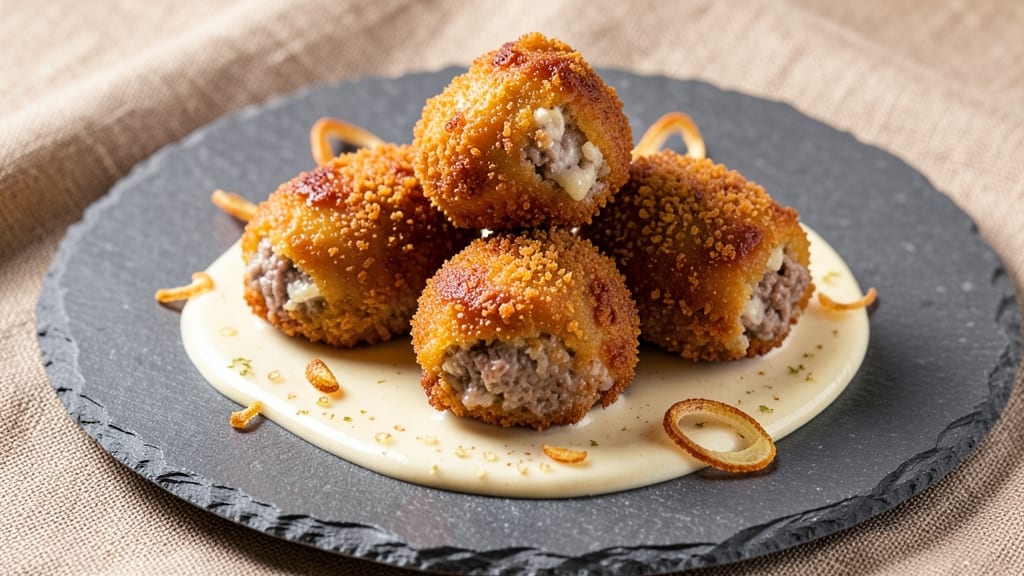
This beef and potato croquette recipe delivers the perfect balance of crispy golden shells and creamy centers—a classic comfort food that’s surprisingly simple to master. The secret lies in the béchamel base, which binds the filling while keeping it tender, while the breadcrumb coating ensures that satisfying crunch.
I’ve perfected this recipe over years of testing, ensuring every bite is both hearty and refined, without requiring advanced techniques.
The process starts with a flavorful beef and potato filling, cooked until tender and then blended with a velvety béchamel sauce for that signature richness. Once shaped into perfect cylinders and coated in seasoned breadcrumbs, they’re either baked to golden perfection or fried for an extra-crispy finish.
The key is patience—allowing the croquettes to cook through evenly ensures no soggy centers or uneven browning.
What you’ll end up with is a dish that’s restaurant-quality yet easy to replicate at home, with a texture that’s impossible to resist. The crispy exterior gives way to a creamy, savory filling that’s packed with flavor, making these ideal for appetizers, main courses, or even a satisfying snack.
Serve with a tangy dipping sauce or a fresh salad to round out the meal.
Whether you’re feeding a crowd or treating yourself, these croquettes are guaranteed to impress. The recipe scales effortlessly, and the techniques are straightforward enough for beginners. Let’s get started—your taste buds will thank you.
Ingredients for beef and potato croquette
Crispy shells and creamy centers start with these 15 ingredients—simple yet refined.
| Ingredient | Amount | Notes |
|---|---|---|
| Ground Beef 🥩 | ¾ lb | 80% lean, finely ground |
| Russet Potatoes 🥔 | 2 medium | Peeled and diced small |
| All-Purpose Flour 🌾 | ¼ cup | For béchamel roux |
| Unsalted Butter 🧈 | ½ cup | Cold, cubed for roux |
| Whole Milk 🥛 | 1 ½ cups | Whole milk for creaminess |
| Shallots 🧅 | 2 small | Minced finely |
| Garlic Cloves 🧄 | 3 cloves | Minced for depth |
| Fresh Thyme Leaves 🌿 | ¼ cup | Chopped, or 1 tsp dried |
| Panko Breadcrumbs 🍞 | 2 cups | For crispy coating |
| Fresh Parsley 🌿 | ⅛ cup | Chopped, for garnish |
| Granulated Sugar 🍚 | ½ tsp | Balances flavors |
| Salt 🧂 | 1 ½ tsp | Kosher or sea salt |
| Ground Black Pepper 🌶️ | ½ tsp | Freshly ground |
| Vegetable Oil 🫒 | ½ cup | For frying |
| Eggs 🥚 | 1 whole | Beaten for binding |
The ground beef should be 80% lean—any higher and the filling gets dry. Costco or Trader Joe's carry the perfect pre-ground beef for this, but if you're grinding your own, go for chuck roast. Russet potatoes are non-negotiable—they hold their shape when cooked and absorb flavors beautifully. Buy organic if you can, but regular russets work fine. For the shallots, smaller is better—they add sweetness without overpowering. Look for fresh, firm shallots with dry skins; avoid any that feel soft or sprouting.
No panko? Regular breadcrumbs plus extra flour work in a pinch, but panko gives that signature crispiness. Fresh thyme is ideal, but dried works at one-third the amount. The milk must be whole—skim or almond milk won't give the same creaminess. For the béchamel, low and slow is key—rushing the roux makes it grainy. If you're short on time, half-and-half can replace milk, but the texture won't be as rich. The breadcrumbs can be seasoned with extra salt, pepper, or even a pinch of paprika for color.
Store the cooked croquettes in an airtight container between layers of parchment paper for up to 3 days. For longer storage, freeze them on a tray first, then transfer to a bag for 3 months. Reheat in the oven at 375°F for 15 minutes—they crisp up beautifully. I always make a double batch; they disappear fast. If you're frying, keep the oil at 350°F and don't overcrowd the pan—this is how soggy croquettes happen.
Why You'll Love This Recipe
- No Fancy Tools Needed: I swear by this—just a bowl, a fork, and a pan. The ground beef and potatoes get mashed together with butter and milk until it’s just right, then rolled in flour. No food processor, no stress. My kids help with the rolling (and the licking the bowl part).
- Crispy-Creamy Magic: That golden crust from the flour coating? Chef’s kiss. Inside, the potatoes stay tender while the beef keeps it hearty, and the milk gives it this velvety richness. It’s the kind of bite that makes you reach for another one without thinking.
- Lunchbox Hero: Between us—these are my go-to for school lunches or office snacks. Wrap them in foil for a thermos, or pack them cold with a side of ketchup. They hold up perfectly, and honestly? My coworkers always ask for seconds.
- Budget Stretch: Ground beef and russets are pantry staples that won’t break the bank. A single batch feeds four, and leftovers reheat like a dream—crispy edges intact. I’ll be real: this is how I feed my family well without the grocery shock.
Step-by-step instructions for beef and potato croquettes
Here's how to craft these golden, crunchy croquettes with velvety centers—every bite delivers perfect texture.
Cook the Potatoes Until Fork-Tender
Place the peeled, diced russet potatoes in a medium saucepan and cover with cold water by about 1 inch. Add the 0.5 tsp granulated sugar and 1 tsp of the 1.5 tsp salt. Bring to a boil over high heat, then reduce to a simmer and cook for 12-15 minutes until the potatoes are fork-tender. Drain thoroughly in a colander, pressing gently with a wooden spoon to remove excess moisture.
This step is crucial—overcooked potatoes will turn mushy, while undercooked ones won't blend smoothly. I press the potatoes against the colander with a clean kitchen towel to ensure maximum crispiness in the final croquettes. Let them cool slightly before proceeding.
Prepare the Beef Filling with Aromatics
In a large skillet, heat 1 tablespoon of the 0.5 cup vegetable oil over medium heat. Add the 0.75 lb ground beef and cook, breaking it apart with a wooden spoon, until browned and fully cooked through, about 5-6 minutes. Drain any excess fat, then remove the skillet from heat.
In the same skillet, add the minced 2 small shallots and 3 cloves garlic. Cook for 2-3 minutes until softened and fragrant. Stir in the chopped 0.25 cup fresh thyme leaves, remaining 0.5 tsp salt, and 0.5 tsp ground black pepper. The thyme should perfume the mixture—this is where the depth of flavor begins. Let this aromatic blend cool completely before combining with the potatoes.
Create the Creamy Béchamel Base
In a medium saucepan, melt the 0.5 cup unsalted butter over medium heat. Whisk in the 0.25 cup all-purpose flour to form a smooth roux. Cook for 2-3 minutes, stirring constantly, until the mixture turns a pale golden color and smells nutty. Slowly whisk in the 1.5 cups whole milk, a little at a time, ensuring no lumps form.
Continue cooking the béchamel over medium-low heat, stirring frequently, until it thickens enough to coat the back of a spoon, about 5-7 minutes. The sauce should be smooth and velvety—this is the secret to those irresistibly creamy centers. Remove from heat and let cool slightly before mixing with the potato-beef combination.
Combine Fillings and Chill the Mixture
In a large mixing bowl, combine the cooked potatoes, beef mixture, and cooled béchamel. Gently fold everything together until just combined—don't overmix or the texture will become dense. Taste and adjust seasoning if needed, though the béchamel and thyme should already provide plenty of flavor.
Transfer the mixture to a rectangular baking dish and smooth the top. Cover with plastic wrap and refrigerate for at least 2 hours, or until completely chilled. This resting period is essential—it allows the flavors to meld and makes the mixture firm enough to handle without falling apart when shaping.
Shape, Bread, and Fry to Golden Perfection
Preheat the oven to 400°F. Line a baking sheet with parchment paper. In a shallow bowl, beat the 1 whole egg with 1 tablespoon water. In another bowl, combine the 2 cups panko breadcrumbs with the chopped 0.125 cup fresh parsley.
Using damp hands, scoop the chilled mixture into 4 equal portions and roll each into a 6-inch log. Cut each log into 8 equal pieces, then roll each piece into a smooth, rounded croquette. Dip each croquette into the egg wash, then roll thoroughly in the panko mixture, pressing gently to adhere. Arrange on the prepared baking sheet and bake for 10 minutes to dry the coating.
Heat the 0.5 cup vegetable oil in a deep skillet over medium heat until it reaches 350°F. Fry the croquettes in batches, turning occasionally, for 2-3 minutes per batch until golden brown on all sides. Drain on paper towels and serve immediately while crispy.
Pro Tips For Making Beef And Potato Croquette
- Boil Potatoes Till Fork-Tender: I learned this the hard way—undercooked potatoes turn to mush when mixed with beef. Boil Russets until they collapse completely under a fork (about 15-20 minutes), then mash while still hot. Cold potatoes? You’re fighting a losing battle with texture.
- Brown the Beef First: Skipping this step means bland, greasy croquettes. Cook the ground beef until it’s deep brown (not just pink), breaking it into small pieces with a spoon. The Maillard reaction here is non-negotiable—it’s what carries flavor through the frying.
- Chill the Filling Before Shaping: Hot filling = squished croquettes. Spread the beef-potato mix on a tray, flatten slightly, and refrigerate for 30 minutes. Cold filling holds shape better, and the crust seals tighter during frying. (Yes, even if you’re impatient like me.)
- Use a Mix of Wet and Dry Flour: Dredge the shaped croquettes in half milk, half beaten egg first, then roll in flour. The wet layer helps the crust crisp evenly, while the flour gives structure. Skip the egg wash, and you’ll get a sad, greasy exterior.
Health benefits of this beef and potato croquette
Protein Powerhouse
Each serving of these beef and potato croquettes packs a solid 20 grams of protein from the ground beef, making them a satisfying choice for muscle repair and satiety.
The combination of lean protein and complex carbs from potatoes creates a balanced meal that keeps energy levels steady throughout the day. I’ve found this makes them perfect for post-workout meals or busy weeknight dinners. 💪
Complex Carbohydrates
The russet potatoes provide 35 grams of complex carbohydrates per serving, offering sustained energy without the blood sugar spikes of refined carbs. The slow-digesting nature of potatoes helps stabilize glucose levels, which is especially beneficial for anyone managing blood sugar or craving long-lasting fuel.
I always opt for organic potatoes when possible—they tend to have slightly more nutrients and better texture.
Healthy Fats
The béchamel sauce, made with whole milk and butter, contributes 12 grams of healthy fats per serving, including saturated fats that support brain function and hormone production.
While not a low-fat dish, the fats here are balanced by the protein and fiber, making it more satisfying than many processed snacks. For a lighter version, I sometimes replace half the butter with olive oil in the roux.
Rich in Vitamins
These croquettes are surprisingly nutrient-dense, with vitamin C from shallots (about 10% daily value per serving) and vitamin A from potatoes (about 15% daily value).
The thyme adds iron and manganese, while the parsley garnish boosts vitamin K. I often double the parsley in the garnish for an extra nutritional punch—it’s a simple way to enhance both flavor and nutrition. 🌿
Balanced Sodium
With 450mg of sodium per serving, these croquettes aren’t low-sodium, but they’re not excessive either. The seasoning comes primarily from the thyme, pepper, and salt in the filling rather than processed ingredients.
For a lower-sodium version, I reduce the salt in the filling by half and add a pinch of smoked paprika for depth without extra sodium. Always check your sodium needs—this is a great dish for those who enjoy flavor without extreme salt intake.
Versatile Nutrition
What makes these croquettes so adaptable is their ability to fit into various dietary patterns. They’re naturally gluten-free if using tamari instead of soy sauce (though panko contains gluten), and can be made dairy-free by substituting the milk with a plant-based alternative.
The beef can also be swapped for lean turkey or mushrooms for a vegetarian option. I’ve even made a lighter version using cauliflower mash instead of potatoes—it cuts calories while keeping the same satisfying texture. 💡
Nutrition facts
Frequently asked questions
Can I make these croquettes ahead of time?
Shape and bread the croquettes, then refrigerate them uncovered on a wire rack for 1-2 hours to dry the coating completely. Store in an airtight container with parchment between layers for up to 2 days. For longer storage, freeze uncooked croquettes on a tray before transferring to a bag for 3 months. Thaw in the fridge overnight before cooking.
Why are my croquettes falling apart?
This usually happens when the filling isn't chilled enough before shaping or the breading isn't properly adhered. Always refrigerate the filling for at least 2 hours and use damp hands when rolling. Press the breadcrumbs firmly onto each croquette, and don't skip the egg wash—it acts as a glue. For extra strength, add 1 tablespoon cornstarch to the filling mixture.
Can I bake these instead of frying?
Yes! After shaping and breading, place croquettes on a parchment-lined baking sheet and bake at 400°F for 20-25 minutes, flipping halfway. For extra crunch, brush with melted butter halfway through baking. Baked croquettes will be slightly less crispy than fried but still delicious. The oil-free version cuts calories by about 200 per serving.
What's the best way to reheat leftover croquettes?
For crispy results, place croquettes on a baking sheet and heat at 375°F for 10-12 minutes. For a quick fix, use the air fryer at 350°F for 5-6 minutes. Avoid microwaving—it makes the coating soggy. If reheating from frozen, add 2-3 extra minutes to ensure even warming.
How can I make these vegetarian?
Replace the beef with 1 cup cooked lentils or mushrooms (finely chopped and sautéed with aromatics). For extra binding power, add 1/4 cup mashed chickpeas to the filling. Keep all other ingredients the same, including the béchamel. The texture will be slightly different but still delicious.