
Soups & Stews
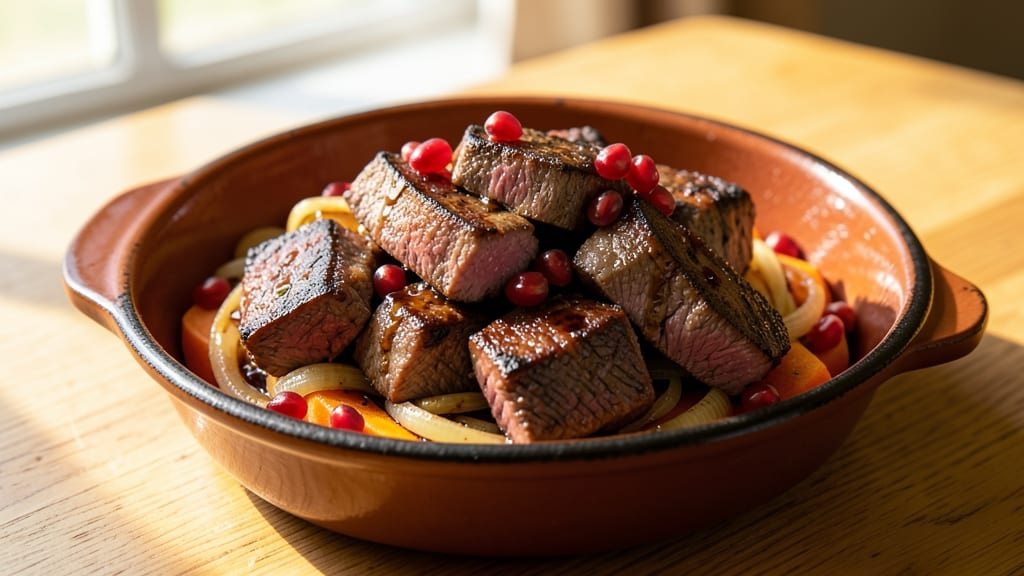
This beef and pomegranate recipe transforms tender beef into a luxurious stew where sweet-tart pomegranate arils burst with every bite.
The secret lies in slow-braising the beef until fork-tender while infusing the sauce with pomegranate molasses for depth—creating a balance of rich, savory, and vibrant flavors that elevate any dinner table.
What sets this dish apart is how the pomegranate's natural sweetness complements the beef's umami without overpowering it, resulting in a harmonious harmony of textures and tastes.
Perfect for special occasions or cozy weeknights, this recipe delivers restaurant-quality results with minimal effort. The beef develops a deep, caramelized crust from searing, while the pomegranate arils add a refreshing pop of color and texture.
The slow cooking process ensures the meat remains juicy and tender, while the pomegranate molasses adds a subtle tang that brightens the entire dish. This is the kind of recipe that transforms a simple dinner into an unforgettable experience.
By the time you serve this dish, you'll have a rich, aromatic stew with perfectly tender beef and jewel-like pomegranate arils scattered throughout. The sauce will be velvety yet vibrant, with just the right balance of sweet and tart flavors.
It pairs beautifully with warm flatbread or fluffy basmati rice, making it a complete meal that feels both elegant and approachable.
Whether you're hosting a dinner party or simply craving a comforting meal, this beef and pomegranate recipe delivers on flavor, texture, and presentation. The technique is straightforward, but the results are anything but ordinary—this is the kind of dish that makes you feel like a master chef without the fuss.
Let's get started on creating something truly special.
Ingredients for beef and pomegranate
Juicy beef and jewel-like pomegranate arils create a luxurious stew with perfect balance of sweet, tart, and savory flavors.
| Ingredient | Amount | Notes |
|---|---|---|
| Beef Chuck Roast 🥩 | 2 lb | Cut into 1.5-inch cubes |
| Pomegranate Arils 🍇 | 1 cup | Freshly seeded, plus extra for garnish |
| Pomegranate Molasses 🍯 | ¼ cup | For sauce depth |
| Yellow Onions 🧅 | 1 whole | Diced, medium size |
| Garlic Cloves 🧄 | 4 cloves | Minced, fresh preferred |
| Carrots 🥕 | 3 medium | Peeled, sliced into rounds |
| Red Wine 🍷 | 1 cup | Bold dry variety like Cabernet |
| Beef Broth 💧 | 2 cups | Low-sodium preferred |
| Tomato Paste 🍅 | 2 tbsp | For sauce richness |
| Fresh Thyme 🌿 | 2 sprigs | Leaves only, stems removed |
| Olive Oil 🫒 | 2 tbsp | Extra-virgin for searing |
| Salt 🧂 | 1 ½ tsp | Kosher salt, adjust to taste |
| Ground Black Pepper 🌶️ | ½ tsp | Freshly cracked |
| Cumin 🌿 | ½ tsp | Ground, for earthy depth |
| Bay Leaves 🍃 | 2 whole | For aromatic base |
The beef chuck roast is non-negotiable for this dish—its marbled fat renders beautifully during slow cooking, creating a rich sauce while keeping the meat fork-tender. Look for cuts with visible marbling at Whole Foods or your local butcher shop. Pomegranate molasses is the secret weapon here; Middle Eastern markets often carry it, or you can find it online. If using fresh pomegranates, seed them carefully—those jewel-like arils should be the star of the dish. For the carrots, medium-sized works best—they'll soften perfectly without turning to mush.
No pomegranate molasses? Substitute with 1 tbsp balsamic vinegar plus 1 tbsp maple syrup—it won't be identical, but it'll add depth. Swapping red wine? Use beef broth with 1 tbsp balsamic vinegar for similar acidity. Fresh thyme unavailable? Dried thyme at one-third the amount works in a pinch. For the tomato paste, those small squeeze tubes from Trader Joe's are perfect—they're convenient and keep indefinitely. The cumin adds earthy warmth that pairs beautifully with the pomegranate's sweetness, so don't skip it unless you're avoiding spices entirely.
This stew tastes even better the next day as flavors meld together. Store in an airtight container in the fridge for up to 5 days, or freeze for 3 months in portion-sized containers. When reheating, add a splash of water or broth to prevent drying out. The pomegranate arils can be added fresh just before serving to maintain their vibrant color and texture. For a restaurant-quality finish, garnish with extra arils and a sprinkle of fresh thyme leaves.
Why You'll Love This Recipe
- One-Pan Magic: Honestly, I swear by this—just brown the beef, toss in onions and garlic, then let the slow cooker or oven do the work while you chop pomegranate arils (or buy them pre-seeded). Minimal chopping, zero fuss, and the molasses caramelizes into a glossy sauce that’s almost too pretty to eat.
- Sweet-Savory Bomb: That pomegranate molasses is the MVP—it cuts through the richness of the beef with a tart, jammy depth, while the fresh arils add a pop of bright, juicy contrast. Between us, the first bite makes me forget I’m eating "healthy" (or whatever you call it when you’re sneaking veggies into meat).
- Weeknight to Dinner Party: Serve it sliced over crusty bread with a sprinkle of arils for a lazy Sunday brunch, or plate it with roasted potatoes and greens for a fancy-ish weeknight dinner. My in-laws think it’s "fancy," but I’m just reusing leftovers for sandwiches—no judgment here.
- Budget-Friendly Powerhouse: A chuck roast stretches for days, and pomegranate molasses (if you buy it in bulk) lasts forever. I’ve turned this into a freezer meal, reheated it for lunch, and even shredded the beef for tacos later. Basically, it’s the kind of recipe that makes grocery day less stressful.
Step-by-step instructions for sweet-tart beef and pomegranate stew
This method delivers melt-in-your-mouth beef with a vibrant pomegranate sauce that balances sweet and tart flavors perfectly.
Sear the Beef Chuck Roast for Deep Flavor
Heat the 2 tablespoons olive oil in a heavy Dutch oven over medium-high heat until shimmering. Pat the 2 lb beef chuck roast dry with paper towels and cut it into 1.5-inch cubes. Working in batches to avoid crowding, sear the beef for 3-4 minutes per side until deeply browned with a crust forming. This step develops the rich, meaty foundation of the stew.
Real talk: Don't rush this searing. You'll know it's ready when the beef releases easily from the pan and has developed a deep golden-brown crust. Transfer the seared beef to a plate and set aside. If the pan gets too crowded, work in batches but keep the oil hot between additions.
Build the Aromatic Base with Onions, Carrots, and Garlic
In the same Dutch oven, add the 1 whole yellow onions (diced), 3 medium carrots (peeled and sliced into rounds), and 1.5 teaspoons salt. Cook for 5-6 minutes until the onions soften and begin to caramelize slightly. Add the 4 cloves garlic cloves (minced), 0.5 teaspoon ground black pepper, and 0.5 teaspoon cumin, stirring for 30 seconds until fragrant.
The reason we cook the vegetables first is to develop their natural sweetness before adding liquids. You'll notice the onions turn translucent and the carrots begin to soften—this is when they're ready for the next step. If the vegetables stick, add a splash of beef broth to deglaze and keep everything moving.
Deglaze and Simmer the Sauce with Wine and Broth
Pour in the 1 cup red wine, scraping up any browned bits from the bottom of the pan with a wooden spoon. Let it simmer for 3-4 minutes until the alcohol smell dissipates. Stir in the 2 tablespoons tomato paste, 2 cups beef broth, 2 sprigs fresh thyme (leaves only), and 2 whole bay leaves. Bring to a gentle boil, then reduce heat to low and add the seared beef back to the pot.
This is where the magic happens. The wine and broth create the perfect liquid base for the stew, while the tomato paste adds depth. You'll want to maintain a gentle simmer—not a rolling boil—to prevent the beef from toughening. Cover the pot and let it cook for 1 hour 30 minutes, stirring occasionally, until the beef is fork-tender.
Finish with Pomegranate Molasses and Arils
After the beef is tender, stir in the 0.25 cup pomegranate molasses and 1 cup pomegranate arils. Simmer uncovered for an additional 15-20 minutes until the sauce thickens slightly and the flavors meld together. Taste and adjust seasoning with additional salt if needed. The molasses adds a deep, tangy sweetness that pairs beautifully with the tartness of the pomegranate arils.
Here's the thing—don't skip the simmering time. The pomegranate molasses needs time to integrate fully into the sauce, creating that signature sweet-tart balance. You'll see the sauce reduce slightly and coat the back of a spoon, signaling it's ready. The pomegranate arils should be heated through but still retain their bright color and slight crunch.
Rest and Serve with Garnish
Remove the stew from heat and let it rest for 10 minutes, covered. This resting period allows the juices to redistribute throughout the beef, ensuring each bite is juicy and flavorful. Discard the bay leaves and thyme sprigs before serving. Ladle the stew into bowls, garnishing each serving with a sprinkle of pomegranate arils for a pop of color and texture.
Serve immediately with crusty bread or over mashed potatoes to soak up every last drop of that vibrant, sweet-tart sauce. The beef should pull apart easily with a fork, and the sauce should coat the meat beautifully, delivering a harmonious blend of rich, savory, and fruity flavors in every bite.
Pro Tips For Making Beef And Pomegranate
- CRUST THE ROAST FIRST: I learned this the hard way—skipping the sear means your beef will stay bland no matter how much pomegranate molasses you add. Sear the chuck roast over high heat for 5-6 minutes per side until deeply browned. That crust locks in flavor and prevents the beef from turning into a mushy pile of meat.
- SAUTE ONIONS LOW AND SLOW: After burning three batches of onions, I finally figured out: medium-low heat is your friend here. Cook the yellow onions for 15-20 minutes until caramelized, not crispy. If they brown too fast, they’ll turn bitter and overpower the bright pomegranate notes. Patience pays off—this is where the dish’s depth starts.
- ADD MOLASSES LATE: Pomegranate molasses is intense, and adding it too early will turn your sauce into a sticky mess. Stir it in during the last 10 minutes of cooking, or even just before serving if you’re braising. This keeps the sweet-tart balance sharp and prevents the molasses from burning into a bitter sludge.
- USE FROZEN ARILS FOR CRISP: I was skeptical until I tried it: frozen pomegranate arils stay vibrant and pop with texture when tossed in at the end. Thaw them first, then add them just before serving—no need to cook them. They’ll add freshness without turning mushy, and you’ll save time scrubbing seeds off your teeth (yes, it happens).
Perfect pairings for beef and pomegranate
Wine Pairings
For this beef and pomegranate dish, I reach for a bold red wine with enough body to stand up to the rich stew while complementing the pomegranate's sweet-tart profile. A Cabernet Sauvignon from Napa Valley—like Caymus Vineyards—works beautifully, with its dark fruit notes and structured tannins.
The wine's acidity cuts through the sauce's richness while its blackcurrant flavors mirror the pomegranate's depth. 🍷
If you prefer something lighter, a Syrah from the Rhône Valley offers spicy notes that dance with the cumin and thyme in the stew. Look for a Guigal Côte-Rôtie—its peppery finish enhances the dish's complexity without overpowering it.
For a budget-friendly option, try a California Zinfandel like Ravenswood, which delivers jammy fruit flavors that harmonize perfectly with the pomegranate.
Beer Pairings
A dark ale or porter is my go-to beer pairing for this hearty stew. The malty sweetness of a Belgian Dubbel—like Westmalle Trappist—mirrors the pomegranate's natural sugars while the caramel notes balance the dish's savory depth.
The beer's slight tartness also echoes the molasses, creating a cohesive flavor experience. 🍺
For a lighter option, a German Helles Lager—such as Weihenstephaner Original—provides crispness that cleanses the palate between bites. The subtle hop bitterness contrasts nicely with the stew's richness, making each spoonful feel fresh.
Avoid heavy stouts or IPAs, as their bold flavors can clash with the delicate pomegranate notes.
Side Dish Ideas
Warm, crusty sourdough bread is my top choice for soaking up the vibrant sauce. Toast a baguette from Bread Ahead until golden, then serve with extra pomegranate arils sprinkled on top.
The bread's chewy texture contrasts perfectly with the tender beef and velvety sauce. For a heartier option, try garlic mashed potatoes—their creamy texture balances the stew's bold flavors.
For a lighter side, a Persian cucumber salad adds freshness to the rich stew. Thinly slice 2 Persian cucumbers, toss with 2 tbsp plain yogurt, 1 tbsp fresh mint, ½ tsp salt, and a squeeze of lemon.
The cool, crisp salad cuts through the stew's warmth, making each bite feel balanced and refreshing. ✨
Garnish Finishes
Fresh pomegranate arils are a must for garnishing—scatter them generously over the stew just before serving to add a burst of color and texture. For an extra touch of elegance, sprinkle with toasted pine nuts or slivered almonds—their nutty crunch contrasts beautifully with the soft beef.
I also love adding a drizzle of extra-virgin olive oil for a silky finish that ties everything together.
For a herbaceous note, a sprinkle of fresh cilantro or parsley brightens the dish with a touch of green. If you're feeling adventurous, a pinch of smoked paprika adds warmth and depth, enhancing the stew's savory profile. These finishing touches elevate the dish from comforting to restaurant-worthy in seconds. 💫
Nutrition facts
Frequently asked questions
Can I substitute pomegranate molasses in this beef stew?
Yes, if you don't have pomegranate molasses, use 1 tbsp balsamic vinegar plus 1 tbsp maple syrup for a similar sweet-tart balance. For extra depth, add ½ tsp ground cinnamon to mimic the molasses' complexity. The flavor won't be identical, but it'll still complement the beef beautifully.
How do I properly seed pomegranates for this recipe?
Cut the pomegranate in half and place it cut-side down on a cutting board. Gently tap the back with a wooden spoon to release the arils into a bowl. For stubborn seeds, use a fork to scrape them out. Avoid squeezing the fruit—it releases bitter juice. You'll need about 1 cup fresh arils for this recipe.
What's the best cut of beef for this stew?
Chuck roast is ideal because its marbling renders beautifully during slow cooking, creating rich flavor while keeping the meat tender. Brisket or stew meat work well too, but avoid lean cuts like sirloin—they'll dry out. Ask your butcher to cut the beef into 1.5-inch cubes for even cooking.
Can I make this stew in a slow cooker?
Sear the beef first, then transfer everything (including wine and broth) to your slow cooker. Cook on low for 7-8 hours or high for 4-5 hours. Add the pomegranate molasses and arils during the last 30 minutes to preserve their freshness. The slow cooker method is perfect for hands-off preparation.
Why does my stew taste too sweet?
If the pomegranate flavors overpower the beef, reduce the molasses to 2 tbsp next time and add 1 extra bay leaf to enhance the savory notes. The key is balance—taste as you go! For extra depth, stir in 1 tsp soy sauce or ½ tsp smoked paprika to ground the sweetness.