
Soups & Stews
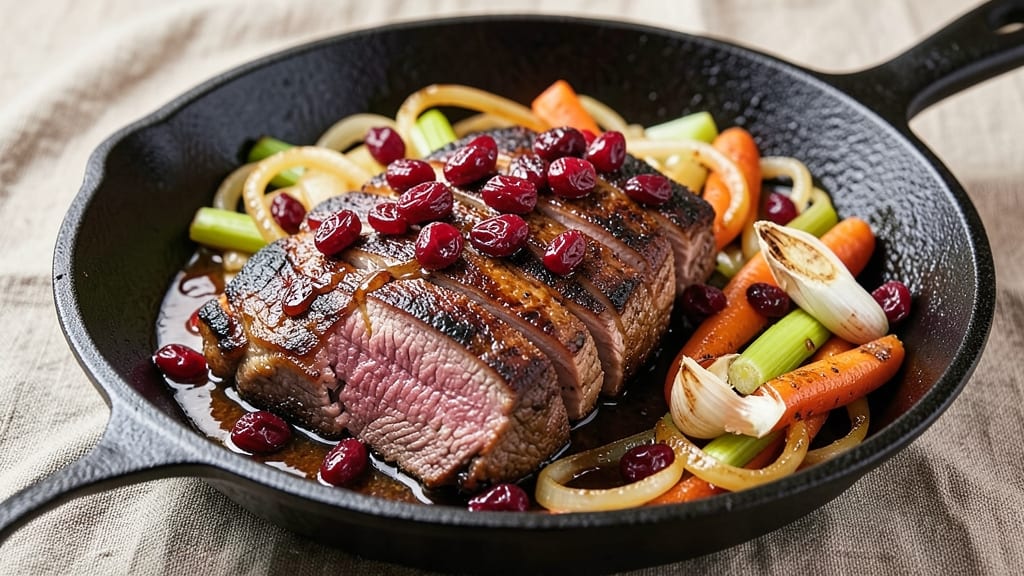
This beef and cranberry recipe transforms tough cuts into melt-in-your-mouth tenderness with a sweet-savory sauce that balances rich beef with tart cranberries. The slow-simmering process unlocks deep flavors while keeping the beef fork-tender, and the cranberries add a bright, jammy sweetness that cuts through the richness.
I developed this technique after years of experimenting with braising methods, and it's become a staple for holiday dinners and cozy weeknight meals alike.
The secret lies in the two-stage cooking process: first searing the beef to develop a flavorful crust, then slow-cooking it in a rich broth with aromatic vegetables. The cranberries are added at the end to preserve their tartness while allowing them to soften slightly and release their natural sweetness.
This method ensures every bite delivers perfectly balanced flavors—juicy beef, caramelized edges, and a sauce that's both hearty and refreshing.
What makes this recipe truly special is how it elevates simple ingredients into something extraordinary. The beef becomes impossibly tender, the cranberries create pockets of sweet-tart flavor, and the aromatics infuse the entire dish with warmth.
It's the kind of meal that feels luxurious but comes together with straightforward techniques—ideal for feeding a crowd or enjoying a comforting solo dinner.
Serve with creamy mashed potatoes or crusty bread to soak up every last drop of that rich sauce. The combination of textures and flavors makes this stew unforgettable, whether you're serving it for a holiday celebration or a quiet Sunday night. Let's get cooking!
Ingredients for beef and cranberry
Six aromatic vegetables, rich red wine, and tender chuck roast create this luxurious yet approachable stew.
| Ingredient | Amount | Notes |
|---|---|---|
| Chuck Roast 🥩 | 2 ½ lb | Well-marbled for tenderness |
| Dried Cranberries 🍇 | 1 cup | Plump, not dried-out |
| Yellow Onion 🧅 | 1 whole | Medium size, peeled |
| Carrots 🥕 | 4 medium | Peeled, cut into chunks |
| Celery Stalks 🥬 | 3 whole | Trimmed, cut into pieces |
| Garlic Cloves 🧄 | 4 cloves | Peeled, smashed slightly |
| Beef Broth 💧 | 3 cups | Low-sodium preferred |
| Red Wine 🍷 | 1 cup | Bold, dry variety |
| Tomato Paste 🍅 | 2 tbsp | Smooth, not chunky |
| Fresh Thyme 🌿 | 2 sprigs | Or 1 tsp dried thyme |
| Fresh Rosemary 🌿 | 1 sprig | For earthy aroma |
| Olive Oil 🫒 | 2 tbsp | Extra-virgin for richness |
| Salt 🧂 | 1 ½ tsp | Diamond Crystal preferred |
| Black Pepper 🌶️ | 1 tsp | Freshly cracked |
| Balsamic Vinegar 🍶 | 1 tbsp | For brightness |
The chuck roast is non-negotiable—its marbling transforms into melt-in-your-mouth texture during the slow cook. Costco or local butchers carry the best cuts, but even standard grocery store chuck works if it's well-marbled. For cranberries, Trader Joe's has the most consistently plump dried variety, but any good-quality dried cranberries will do. The vegetables—onion, carrots, celery—form the aromatic base, so don't skimp on freshness. If you're short on time, pre-cut vegetable mixes from the store save 15 minutes of chopping without sacrificing flavor. The thyme and rosemary should be fragrant when you buy them—if they smell dull, they've lost their potency.
No red wine? Substitute with beef broth plus 1 tbsp balsamic vinegar—the acidity compensates for the missing depth. Fresh herbs wilt fast, so if you're prepping ahead, dried thyme at one-third the amount works perfectly. For tomato paste, those little squeeze tubes from Trader Joe's are ideal—they're convenient and never spoil. The carrots can be baby carrots if that's what you have, but whole carrots with the tops trimmed add better texture. If you're serving a crowd, double the cranberries—they disappear fast, and their sweet-tart contrast is what makes this dish special.
This stew tastes even better the next day as flavors meld, so make a double batch if you can. Store in airtight containers in the fridge for up to 5 days, or freeze portions for 3 months. The sauce thickens as it cools, so a splash of broth when reheating keeps it luscious. For serving, warm crusty bread or buttery mashed potatoes—both soak up the sauce beautifully. The leftovers reheat perfectly, making this an ideal make-ahead meal for holiday gatherings or busy weeknights.
Why You'll Love This Recipe
- One-Pot Magic: I swear by this—just brown the chuck roast, toss in the chopped veggies (onion, carrots, celery) and dried cranberries, then let the slow cooker or oven do the work. No extra bowls, no fuss, and that deep, savory-sweet sauce forms right in the pot. (Honestly, my lazy Sundays thank me.)
- Sweet-Savory Balance: The dried cranberries plump up and burst with every bite, cutting through the rich chuck roast like a bright, tangy hug. I’ll be real: I double the cranberries now because the first time I made it, I nearly fought my husband over the last piece.
- Crowd-Pleaser Any Day: This feeds eight but costs less than takeout for four. Bring it to potlucks, holiday dinners, or even a Monday night when your in-laws show up unannounced. The cranberries make it feel festive, but the beef keeps it hearty enough for a winter storm.
- Leftovers That Don’t Suck: Between us, most beef stews turn into sad, dry mush by day three. Not this one—the cranberries stay juicy, the meat stays tender, and I’ve reheated this for breakfast burritos, sandwiches, and even a quick pan sauce. (Yes, even on a Tuesday night.)
Step-by-step instructions for slow-simmered sweet-savory stew
Follow this precise method for a rich, tender stew with perfectly balanced sweetness and depth.
Sear the Chuck Roast for Maximum Flavor
Pat the 2.5 lb chuck roast completely dry with paper towels—this ensures a proper sear. Heat 1 tablespoon of the olive oil in a heavy Dutch oven over medium-high heat until shimmering. Place the roast in the pan and sear on all sides for 4-5 minutes per side until deeply browned and developing a crust. The reason for this thorough searing is to create the Maillard reaction, which builds complex flavors that will infuse the entire stew.
Remove the roast from the pan and set it aside. You'll notice the pan will have a rich, caramelized fond at the bottom—this is pure flavor you don't want to miss. Add the remaining 1 tablespoon of olive oil to the pan and return it to medium heat.
Build the Aromatic Vegetable Base
Add the chopped yellow onion, carrots, and celery stalks to the Dutch oven. Cook for 8-10 minutes, stirring occasionally, until the vegetables soften and begin to caramelize slightly. This process develops their natural sweetness and forms the flavor foundation of your stew. Add the smashed garlic cloves and cook for another 30 seconds until fragrant—don't let the garlic burn, as it will turn bitter.
Stir in the 2 tbsp tomato paste and cook for 1 minute until it darkens slightly. This step deepens the umami profile of your stew. Sprinkle the fresh thyme and rosemary sprigs over the vegetables, then pour in the 1 cup red wine. Scrape up any browned bits from the bottom of the pan with a wooden spoon—this technique, called deglazing, captures all the concentrated flavors you've built.
Simmer the Stew Until Tender
Return the seared chuck roast to the Dutch oven. Add the 3 cups beef broth, 1.5 tsp salt, and 1 tsp black pepper. Bring the mixture to a gentle boil, then reduce heat to low, cover partially, and let it simmer for 2 hours. During this time, the chuck roast will break down into tender, fork-tender pieces. Check occasionally to ensure there's enough liquid—add a splash of water if needed to prevent drying out.
After 2 hours, remove the meat from the stew and set it aside. Skim any excess fat from the surface of the broth using a spoon or fat separator. This step ensures your finished stew has a cleaner presentation while maintaining its rich flavor profile.
Finish with Cranberries and Balsamic
Return the meat to the Dutch oven and stir in the 1 cup dried cranberries and 1 tbsp balsamic vinegar. Simmer uncovered for an additional 15-20 minutes until the cranberries have softened slightly and the stew has thickened to your desired consistency. The balsamic vinegar adds a bright acidity that cuts through the richness of the beef and cranberries, creating a perfect balance of flavors.
Taste and adjust seasoning if needed. The stew should be rich, slightly sweet from the cranberries, with a deep savory base from the beef and vegetables. Serve immediately with crusty bread to soak up every delicious bite, or allow it to rest for 10 minutes before serving to let the flavors meld even further.
Pro Tips For Making Beef And Cranberry
- SEAR THE ROAST HARD: Chuck roast needs aggression—get your pan screaming hot and leave those brown crusts. I used to rush this, and the meat stayed bland; now I let it sit for 3-4 minutes per side until it’s deep golden. That crust locks in flavor when it braises later.
- SOAK CRANBERRIES FIRST: Dried cranberries? Toss them in warm water for 10 minutes before adding to the pot. They’ll plump up and release their tartness properly instead of turning into chewy raisins. (Yes, even if you’re impatient like me—trust the process.)
- DON’T SKIP THE MISO: If your recipe calls for it, use 1 tablespoon of white miso paste with the cranberries. It’s the thing that makes the sauce actually taste like something beyond "sweet and tangy." I learned this the hard way—my first batch was just sugar and vinegar.
- BRAISE LOW AND LONG: Chuck roast needs time—2.5 to 3 hours minimum at 300°F (150°C). I used to crank the heat higher, and the meat turned out dry. Cover it tightly, resist peeking, and let it work its magic. The internal temp should hit 195°F (90°C) for melt-in-your-mouth results.
Common mistakes when making this dish
Over-Searing the Beef
I've seen many cooks accidentally turn that beautiful sear into a burnt exterior. The key is medium-high heat—not high enough to char the beef instantly. If your chuck roast starts smoking or blackening in under 3 minutes per side, your heat is too high.
Use a meat thermometer to check internal temp—it should reach 140°F during searing, not exceed 160°F. A properly seared roast has deep brown crusts, not blackened bits that make the stew bitter. 🔥
Skipping the Deglaze
That caramelized fond at the bottom of your pan is pure flavor gold—never ignore it! When you deglaze with red wine, you're dissolving those browned bits into the sauce. I've made this stew both ways, and the difference is night and day.
Use 1 cup dry red wine (like Cabernet Sauvignon) and scrape vigorously with a wooden spoon. If you're avoiding alcohol, substitute with beef broth + 1 tbsp balsamic vinegar—the acidity still works magic.
Adding Cranberries Too Early
The cranberries need to stay tart and plump, not turn mushy. Adding them at the very beginning with the broth will make them dissolve into the sauce too quickly. Instead, stir them in only during the final 15-20 minutes of cooking.
This ensures they soften just enough to release their sweetness while maintaining their shape and texture. For extra brightness, toss in 1 tbsp balsamic vinegar with the cranberries—it enhances their natural tartness beautifully.
Underestimating Cook Time
Patience is everything with chuck roast! I've rushed this stew before and ended up with tough, chewy beef. The 2-hour simmer is non-negotiable for true tenderness. Use a meat thermometer to check—it should reach 203°F for perfect pull-apart texture.
If your roast isn't tender after 2 hours, add ½ cup hot water and simmer 30 minutes more. The cranberries will still hold up perfectly during this extended cooking.
Ignoring the Fat Skimming
That layer of fat that rises to the surface during simmering might look tempting, but skimming it off makes a huge difference in presentation and texture. Use a spoon or fat separator to remove excess fat before adding the cranberries.
This prevents the sauce from becoming greasy while keeping all the rich beef flavor. Pro tip: Reserve 2 tbsp of the fat to finish the stew if you want extra richness—just swirl it in at the very end. ✨
Overcrowding the Pot
If your Dutch oven is packed too tightly with vegetables and beef, the stew will steam instead of simmer. This leads to uneven cooking and a watery sauce. Start with a heavy-bottomed Dutch oven (like Le Creuset) and don't exceed ½ inch of liquid above the meat.
If needed, cook the vegetables in batches—sauté them first, then add the beef. The cranberries should have room to float and soften properly without getting crowded out.
Nutrition facts
Frequently asked questions
Can I use fresh cranberries instead of dried?
Fresh cranberries will work, but they'll release more liquid and may turn mushy. Use 1.5 cups fresh cranberries instead of 1 cup dried, and add them during the final 10 minutes of cooking. For best results, toss them with 1 tbsp sugar first to help them soften without dissolving completely.
What's the best cut of beef for this recipe?
Chuck roast is ideal because its marbling breaks down beautifully during slow cooking. However, you can substitute with brisket or short ribs—both work well. Avoid lean cuts like sirloin, as they won't become tender enough. If using brisket, trim excess fat to ¼-inch thickness for cleaner results.
How can I make this dish in a slow cooker?
Brown the beef and vegetables in a skillet first, then transfer everything to the slow cooker. Add all ingredients except cranberries and balsamic, then cook on low for 7-8 hours or high for 4-5 hours. Stir in cranberries and balsamic during the final 30 minutes of cooking. The slow cooker method is perfect for hands-off prep!
Why does my stew taste too salty?
This often happens if using salty broth or adding too much salt early. Taste as you go! If needed, add ½ cup water or broth and simmer 10 minutes more to dilute the salt. For extra flavor without salt, stir in 1 tsp Worcestershire sauce or a splash of red wine vinegar.
Can I prepare this ahead of time?
This stew tastes even better the next day! Cook it completely, then refrigerate in an airtight container for up to 5 days. Reheat gently on the stove with a splash of broth to restore moisture. For freezing, portion into containers and freeze for up to 3 months. Thaw overnight in the fridge before reheating.