
Main Courses
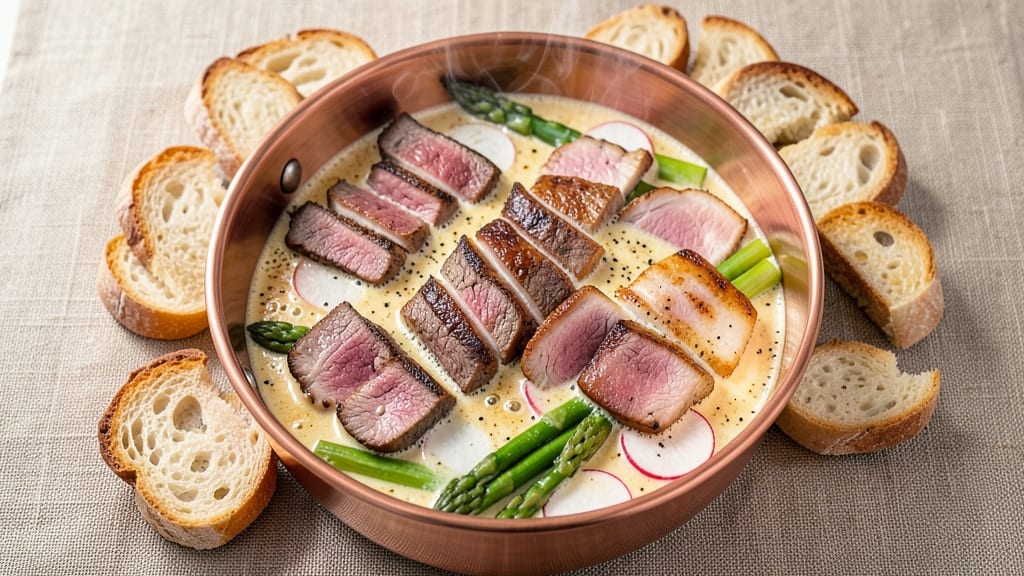
This beef and chicken fondue recipe transforms a simple fondue pot into a luxurious dining experience where two proteins melt into creamy, cheesy perfection.
The secret lies in balancing rich white wine broth with sharp cheeses that create rivers of golden, stretchy goodness—ideal for dipping tender beef and chicken pieces that cook just until tender.
What sets this recipe apart is the dual-protein approach, where perfectly sliced beef and chicken cook simultaneously in the fondue pot, absorbing the bold flavors of the broth and cheese.
The key to success is maintaining a precise temperature—too hot and the cheese seizes, too cool and the proteins won’t cook through. With just a few simple ingredients and a fondue pot, you’ll create a meal that feels indulgent yet effortless.
The result is a steaming pot of fondue where each bite delivers tender, flavorful protein enveloped in a blanket of melted cheese and aromatic broth. Serve with crusty bread, fresh vegetables, and potatoes for dipping, and watch as everyone at the table becomes completely immersed in the experience.
This is comfort food at its finest—warm, inviting, and impossible to resist.
Perfect for cozy gatherings, date nights, or a special weekend dinner, this fondue recipe delivers restaurant-quality results with minimal effort. The combination of beef and chicken ensures there’s something for everyone, while the cheesy rivers tie everything together into a harmonious, flavorful bite. Here’s how to create this unforgettable dish.
Ingredients for beef and chicken fondue
Sixteen essential ingredients transform your fondue pot into a luxurious dual-protein experience.
| Ingredient | Amount | Notes |
|---|---|---|
| Beef Sirloin 🥩 | 1 ½ lb | Thinly sliced against grain |
| Boneless Chicken Breast 🍗 | 1 ½ lb | Thinly sliced, skinless |
| Gruyère Cheese 🧀 | 1 cup | Freshly grated, aged 12+ months |
| Emmental Cheese 🧀 | 1 cup | Freshly grated, mild flavor |
| Dry White Wine 🍷 | 1 cup | Sauvignon Blanc or Chardonnay |
| Heavy Cream 🥛 | ½ cup | Full-fat for richness |
| Chicken Broth 💧 | 1 cup | Low-sodium preferred |
| Garlic Cloves 🧄 | 4 cloves | Minced for aromatic base |
| Shallots 🧅 | 2 whole | Finely minced, 2 tbsp total |
| Dijon Mustard 🌶️ | 1 tbsp | For depth of flavor |
| Dry White Wine Vinegar 🍋 | 1 tbsp | For brightness |
| Salt 🧂 | 1 ½ tsp | Diamond Crystal preferred |
| Black Pepper 🌶️ | ½ tsp | Freshly cracked |
| Fresh Thyme Leaves 🍃 | ¼ cup | Or 1 tsp dried thyme |
| Cornstarch 🌾 | 1 tbsp | For thickening fondue |
The cheeses are non-negotiable for authentic fondue. Gruyère and Emmental create those signature stretchy rivers when melted properly. Whole Foods or specialty cheese shops carry aged Gruyère with the best marbling—look for blocks labeled 12+ months. Freshly grating is critical; pre-shredded contains anti-caking agents that prevent proper melting. For the wine, Sauvignon Blanc or Chardonnay adds brightness without overpowering the cheese. Avoid bold reds, which can clash with the delicate fondue balance. The chicken broth should be low-sodium to avoid over-salting the delicate fondue mixture.
No Gruyère? Comté or aged cheddar work in a pinch, though texture will differ. Substitute heavy cream with full-fat coconut milk> for a dairy-free option, though richness suffers. The white wine can be swapped for dry vermouth or additional chicken broth>, but the acidity balance shifts dramatically. For the proteins, thinly sliced flank steak**> replaces sirloin perfectly—just ensure even thickness for consistent cooking. The shallots can be swapped for onion, but shallots add subtle sweetness that complements the wine. Always measure thyme by volume, not weight—fresh leaves pack differently than dried.
Prep the proteins first—they should be room temperature> when added to the fondue. Store unused cheese in an airtight container with a paper towel to absorb moisture, keeping for up to 2 weeks>. The fondue mixture itself reheats beautifully; simply warm over low heat with a splash of wine or broth. For make-ahead convenience, prepare the cheese mixture without the proteins and refrigerate for up to 2 days**>. The proteins can be marinated separately and added just before serving to maintain tenderness.
Why You'll Love This Recipe
- One-Pot Magic: I swear by the simplicity of this—just slice the beef and chicken thin, toss them in a pot with the cheese and wine, and let it melt together. No chopping, no fuss, just hands-off warmth while you sip your own glass of that dry white wine.
- Cheese Love Bomb: Gruyère and Emmental aren’t just fancy—they’re the stars here. That nutty, melty goodness coats every bite of beef and chicken, while the wine keeps it bright. It’s the kind of rich, savory hug you didn’t know you needed until you took the first dip.
- Weeknight or Weekend Win: This isn’t just for fancy dinners. Serve it with crusty bread for a lazy Sunday lunch or pair it with roasted potatoes for a hearty weeknight meal. Honestly, it’s my go-to when I’m too tired to plan but still want something impressive.
- Leftovers That Don’t Suck: Most fondue recipes turn into sad, grainy cheese the next day. Not this one—the beef stays tender, the chicken holds together, and the cheese? Still melty perfection. I’ll be real: I’ve reheated it twice, and it’s just as good. Budget-friendly and foolproof.
Step-by-step instructions for beef and chicken fondue
Here's how to create a luxurious fondue with tender proteins and velvety cheese sauce.
Prepare the Protein Mixture
Slice the 1.5 lb beef sirloin and 1.5 lb boneless chicken breast against the grain into ¼-inch thick pieces. This ensures each bite has maximum tenderness. Place both proteins in a bowl and toss them with 1 tbsp Dijon mustard, 1 tbsp dry white wine vinegar, 1.5 tsp salt, and 0.5 tsp black pepper. Let the mixture marinate for 15 minutes at room temperature while you prepare the fondue base.
The acidity from the vinegar and mustard tenderizes the proteins, while the salt enhances their natural flavors. Don't skip this step—it makes a noticeable difference in texture and taste. If using fresh thyme, add 0.25 cup fresh thyme leaves to the marinade for an aromatic touch.
Build the Fondue Base
In a medium saucepan, combine 1 cup dry white wine and 1 cup chicken broth. Bring to a gentle simmer over medium heat and let it reduce by half—about 8-10 minutes. This concentrated broth forms the flavor foundation of your fondue.
While the liquid reduces, finely mince 4 cloves garlic and 2 whole shallots (about 2 tbsp total). Add them to the pan along with 0.5 cup heavy cream and 1 tbsp cornstarch mixed with 2 tbsp cold water. Stir constantly until the sauce thickens to a velvety consistency, which should take about 3-4 minutes. Remove from heat before it boils.
Create the Cheese Rivers
Lower the heat to low and gradually whisk in 1 cup freshly grated Gruyère cheese and 1 cup freshly grated Emmental cheese in batches. Stir continuously until fully melted and smooth—this should take about 5-7 minutes. The cheese should create a glossy, molten layer that coats the back of a spoon.
If the fondue becomes too thick, thin it with 1-2 tbsp reserved chicken broth. For extra richness, add a splash of the reduced white wine mixture. Here's where the magic happens: the cheese should melt into a luxurious sauce with visible rivers of melted Gruyère and Emmental, creating that signature fondue texture.
Combine and Maintain Temperature
Return the protein mixture to the saucepan and stir gently to coat the beef and chicken in the cheese sauce. Transfer the fondue to a fondue pot or heatproof serving dish and keep it warm over low heat—around 160-170°F. If using a fondue pot, ensure it has a built-in burner or heat source to maintain the temperature without scorching.
For serving, keep the fondue at a gentle simmer. If it thickens too much, whisk in 1-2 tbsp warm chicken broth to restore its silky consistency. The fondue is ready when it reaches a temperature where the cheese remains molten but doesn't separate—this usually takes about 5 minutes after combining everything.
Serve with Dippers and Enjoy
Serve the fondue immediately with an assortment of dippers: crusty bread, blanched vegetables, and even apple slices. The beef and chicken should be cooked through but still tender, with a glossy coating of melted cheese. Each bite should deliver a perfect balance of rich, savory protein and creamy cheese.
For an authentic experience, keep the fondue pot in the center of the table and let everyone dip their chosen ingredients. The fondue will continue to thicken slightly as it cools, so adjust with warm broth as needed. Enjoy this luxurious dish while it's hot—it's best served fresh from the pot!
Pro Tips For Making Beef And Chicken Fondue
- Sear the Beef First: Cut the beef sirloin into thin strips—about ½-inch thick—and sear them in a hot skillet with a splash of wine before adding to the fondue. I learned this the hard way: skipping the sear means the beef ends up tough and dry instead of rich and tender. Do this while the fondue sauce simmers.
- Shred Chicken Properly: Pull the chicken breasts from the fondue when they hit 165°F, then let them rest 3 minutes before shredding. Use two forks—this keeps the meat intact and juicy. I used to tear it apart too soon, and it turned out stringy. Patience here makes all the difference.
- Grate Cheese Fresh: Skip pre-shredded cheese—it clumps and won’t melt smoothly. Use a box grater for Gruyère and Emmental, and add them in stages: half at the start, the rest when the sauce is bubbling. My grandmother swore by this, and she was right: the texture is velvety, not grainy.
- Deglaze with Wine Early: After searing the beef, immediately pour in ½ cup of dry white wine to scrape up the browned bits. This adds depth to the fondue sauce without overpowering it. I was skeptical until I tried it—now I never skip it.
Make-ahead tips for this beef and chicken fondue
Cheese Prep Ahead
Grating the Gruyère and Emmental cheese the day before saves time and prevents clumping. Store the freshly grated cheese in an airtight container with a paper towel between layers to absorb moisture. Keep it refrigerated for up to 24 hours—this also helps the flavors meld slightly.
When ready to use, simply whisk the cheese into the warm broth base for that signature fondue texture. 🧀
Protein Prep
Slice and marinate the beef sirloin and chicken breast up to 4 hours ahead of time. Store them in a sealed container with the marinade in the refrigerator.
Bring to room temperature for 30 minutes before adding to the fondue pot to ensure even cooking. This step guarantees tender results without overcooking during the fondue process.
Broth Base
Prepare the wine-broth base in advance and store it in the refrigerator for up to 2 days. When ready to assemble, simply reheat it gently over low heat until warm.
This prepped base reduces cooking time significantly and ensures the fondue maintains its rich flavor profile. Keep the cornstarch slurry separate until ready to thicken the mixture.
Fondue Assembly
Combine the cheese and broth base just before serving to maintain the perfect molten consistency. If making ahead, store the cheese mixture separately in a heatproof container and reheat gently over low heat.
Stir in the protein mixture only when ready to serve—this keeps the beef and chicken tender and prevents overcooking in the fondue pot.
Dippers Ready
Prepare dippers like crusty bread and blanched vegetables ahead of time and store them in the refrigerator. Toast the bread just before serving to maintain crispness. For extra convenience, arrange dippers on a platter and keep them warm in a low oven (200°F) until ready to use.
This ensures everything is ready simultaneously for a seamless dining experience. 🍞
Temperature Control
Use a fondue pot with precise temperature control to maintain the ideal serving temperature of 160-170°F. Preheat the pot for 10 minutes before adding the fondue mixture. If using a stovetop setup, keep the heat on low and stir occasionally to prevent scorching.
This ensures the cheese remains creamy and the proteins cook perfectly every time. ⏰
Nutrition facts
Frequently asked questions about beef and chicken fondue
Can I use a regular pot instead of a fondue pot?
Yes, you can! A heavy-bottomed saucepan works well for this recipe. Just maintain the fondue at a gentle simmer (160-170°F) using a thermometer, and stir occasionally to prevent scorching. For serving, transfer to a heatproof dish that can stay warm on the table. The key is keeping the temperature consistent—too hot and the cheese seizes, too cool and the proteins won't cook properly.
What's the best way to keep the cheese from separating?
Whisk the cheese in gradually over low heat, and never let the mixture boil. If it starts to separate, whisk in 1-2 tbsp warm chicken broth> to restore smoothness. Also, ensure your cheese is freshly grated—pre-shredded contains anti-caking agents that prevent proper melting. For extra insurance, add a pinch of cornstarch to the cheese mixture before combining with the broth.
Can I make this fondue vegetarian?
Replace the beef and chicken with mushroom slices> (like cremini or portobello) and tofu cubes> (pressed and marinated). For extra richness, add smoked gouda> or nutritional yeast> to the cheese blend. The wine-broth base remains the same, but you may need to adjust cooking times—mushrooms cook faster than meat.
Why did my fondue get grainy?
Grainy fondue usually means the cheese wasn't melted slowly enough or contained too much moisture. Always grate the cheese fresh, pat it dry with paper towels, and whisk it into the warm (not hot) broth base. If it happens, whisk in 1 tbsp heavy cream> to smooth it out. Also, avoid using high-heat—low and slow is key for that silky texture.
How do I adjust this for a larger group?
Double the recipe, but use a larger fondue pot or two separate pots to maintain proper temperature control. For 8-10 servings, you'll need 3 lb beef> and 3 lb chicken, plus 2 cups each of Gruyère and Emmental. Keep the broth-to-cheese ratio the same (1:1) to maintain balance. Prep all components separately and combine just before serving to keep everything warm and fresh.