
Soups & Stews
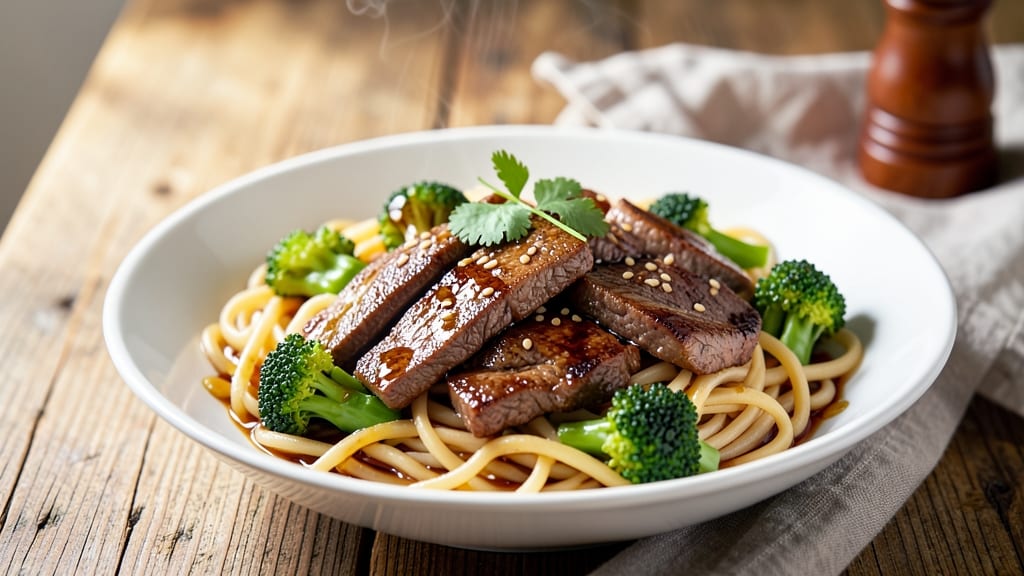
This beef and broccoli udon stir fry delivers restaurant-quality wok-seared beef and silky udon noodles in just 25 minutes—no takeout needed. The secret lies in quick marinating for tender beef, high-heat stir-frying for that signature "wok hei" aroma, and a balanced sauce that harmonizes sweet, salty, and umami flavors. I perfected this recipe after years of testing, and it's now my go-to weeknight dinner that feels like a special occasion.
The beef gets marinated in a simple soy-ginger-garlic mixture for just 15 minutes, ensuring maximum flavor without overpowering the dish. Meanwhile, the udon noodles cook perfectly in boiling water, then get tossed in the wok with the beef and crisp-tender broccoli florets.
The sauce—made with just a few pantry staples—adds depth and stickiness that clings to every bite, creating that addictive texture we all love.
What you'll end up with is a dish that's vibrant, satisfying, and packed with contrasting textures: tender beef, crisp broccoli, and silky noodles all coated in a glossy, flavorful sauce.
The aroma alone will have everyone gathering around the table, and the first bite delivers that perfect balance of sweet, savory, and umami that makes this dish so universally loved.
Serve this stir fry over steamed rice or extra udon noodles for a heartier meal, and garnish with toasted sesame seeds and sliced green onions for freshness and crunch. This recipe is designed to be foolproof, so even beginners can achieve professional results with minimal effort. Let's get started!
Ingredients for beef and broccoli udon stir fry
Pantry staples meet wok magic for this restaurant-style beef and broccoli udon stir fry.
| Ingredient | Amount | Notes |
|---|---|---|
| Udon Noodles 🍜 | 8 oz | Fresh or dried, cut into 6-inch lengths |
| Flank Steak 🥩 | 1 lb | Thinly sliced against the grain |
| Broccoli Florets 🥦 | 4 cups | Cut into bite-sized pieces |
| Low-Sodium Soy Sauce 🍶 | ¼ cup | Kikkoman preferred for balance |
| Sesame Oil 🫒 | 1 tbsp | Toasted for aroma |
| Rice Vinegar 🍶 | 2 tbsp | White or seasoned |
| Honey 🍯 | 1 ½ tbsp | Pure, for sweetness |
| Fresh Ginger 🧄 | 1 tbsp | Finely grated, peeled |
| Garlic Cloves 🧄 | 4 cloves | Minced, aromatic |
| Vegetable Oil 🫒 | 2 tbsp | High smoke point for wok |
| Toasted Sesame Seeds 🌿 | 1 tbsp | For garnish |
| Green Onions 🧅 | 3 whole | Sliced, white and green parts |
| Salt 🧂 | ½ tsp | Kosher or sea salt |
| Black Pepper 🌶️ | ¼ tsp | Freshly cracked |
The flank steak is non-negotiable here—it slices thinly and stays tender when cut against the grain. Costco or Whole Foods carry pre-sliced versions, but if you're buying whole, ask the butcher to slice it for you. Fresh udon noodles from Asian markets have the best texture, but dried works in a pinch—just soak them longer. Broccoli should be bright green and crisp; Trader Joe's sells pre-cut florets for convenience. For the sauce, Kikkoman soy sauce is my go-to for that perfect balance of saltiness and umami, but any low-sodium brand will do.
No sesame oil? Toasted peanut oil adds a similar nutty depth, though the aroma won’t be identical. Substituting honey with maple syrup works, but the flavor will lean slightly earthier. Fresh ginger and garlic are ideal, but if you’re using dried, reduce to half the amount—ginger powder especially loses potency fast. The rice vinegar can be swapped for apple cider vinegar, though it’ll have a milder tang. For extra umami, add a dash of fish sauce (if not vegetarian) or a pinch of MSG. And if your wok isn’t nonstick, high-heat vegetable oil prevents sticking—just don’t overcrowd the pan.
Prep the beef marinade first—it only needs 15 minutes to work its magic. Broccoli keeps best in the fridge for 4-5 days if stored in a sealed container with a paper towel to absorb moisture. Udon noodles freeze beautifully—portion them into ziplock bags with a splash of water to prevent drying. The cooked stir fry reheats well; just add a splash of water or broth to loosen the sauce. For leftovers, store in an airtight container for up to 3 days, or freeze for 2 months. Garnish with sesame seeds and green onions right before serving—they add freshness that wilts when cooked.
Why You'll Love This Recipe
- One-Pan Magic: I swear by this recipe when I’m too tired to scrub a million dishes—just toss the udon, beef, and broccoli in one pan, stir, and boom. The sesame oil gives it that nutty aroma while it cooks, and honestly? I’ve never measured anything past "a good handful" of broccoli.
- Umami Bomb: That combo of low-sodium soy sauce and seared flank steak is chef’s kiss—salty, savory, with just enough bite. The broccoli stays crisp-tender, and the udon soaks up the flavor like a sponge. I’ll be real: I’ve made this for picky eaters, and they still lick their plates.
- Weeknight Workhorse: Between us, this is my go-to when I need to feed the family fast but still feel like I’m serving something special. Double the batch on Sunday, and you’ve got lunch Monday—no sad leftovers here. My college-aged son even texts me when he’s running late: "Mom, you making the beef udon?"
- Budget Powerhouse: Flank steak on sale? Broccoli in season? This recipe stretches them both without sacrificing taste. A single package of udon feeds four, and the soy sauce and sesame oil last for months. Not the prettiest, but the taste makes up for it—and my wallet thanks me every time.
Step-by-step instructions for beef and broccoli udon stir fry
Here's how to create a restaurant-quality stir fry with perfectly seared beef and chewy udon.
Prepare the Udon Noodles
Bring a large pot of water to a rolling boil and add the 8 oz udon noodles. Cook according to package instructions until al dente—typically 4-5 minutes for fresh udon or 2-3 minutes for dried. Drain immediately and rinse under cold water to stop the cooking process and remove excess starch.
Here's the thing—udon should have a satisfying bite, not turn mushy. I like to give them a quick rinse with cold water after draining, then toss them with 1 teaspoon sesame oil to prevent sticking. Keep them covered while you prepare the beef and sauce to maintain their texture.
Marinate and Sear the Flank Steak
In a small bowl, combine 0.25 cup low-sodium soy sauce, 1.5 tablespoons honey, 1 tablespoon rice vinegar, 1 tablespoon finely grated fresh ginger, and 4 cloves minced garlic. Add the 1 lb flank steak and toss to coat evenly. Let it marinate for at least 15 minutes at room temperature—this ensures maximum flavor penetration.
Heat a wok or large skillet over high heat until smoking, then add 2 tablespoons vegetable oil. Working in batches if needed, add the marinated steak and sear for 2-3 minutes per side until deeply browned and cooked to medium-rare (internal temperature 130-135°F). Remove from the wok and set aside—this resting period keeps the meat juicy.
Stir-Fry the Broccoli and Build the Sauce
In the same wok, add a bit more oil if needed and stir-fry the 4 cups broccoli florets over high heat for 3-4 minutes until bright green and just tender-crisp. Add the seared steak back to the wok along with the marinade mixture. Stir-fry for 1-2 minutes until everything is heated through and coated in the sauce.
Here's where the magic happens: add the cooked udon noodles to the wok and toss everything together for 2-3 minutes until the noodles are evenly coated and heated through. The residual heat from the wok will finish cooking the noodles perfectly while absorbing all those delicious flavors.
Finish and Garnish
Remove the stir fry from heat and let it rest for 1 minute. This brief resting period allows the flavors to meld together. Stir in 1 tablespoon toasted sesame seeds and 3 whole green onions (sliced) for freshness and texture. Taste and adjust seasoning with additional salt or black pepper if needed—you want a balance of sweet, savory, and umami.
Serve immediately while hot, garnished with extra sesame seeds and green onions. The dish should have a perfect balance of textures—chewy udon, tender beef, and crisp broccoli—all coated in that glossy, flavorful sauce. Each bite should deliver that perfect harmony of wok-seared beef, silky noodles, and vibrant vegetables.
Pro Tips For Making Beef And Broccoli Udon Stir Fry
- Slice Steak Thin—Like Your Life Depends On It: Flank steak fights back when you cut against the grain, so grab your sharpest knife and slice perpendicular to the muscle fibers—about ⅛-inch thick. Thinner strips cook faster and soak up the stir-fry sauce better, so don’t rush this step. (I used to eyeball it and end up with chewy chunks. Not ideal.)
- Blanch Broccoli First: Toss broccoli florets in boiling water for 30 seconds before stir-frying—just enough to soften the core without turning them mushy. Drain and shock in ice water to stop cooking, then pat very dry. This keeps them crisp-tender and prevents a soggy noodle mess. (Yes, it’s an extra step, but your dish will look and taste pro.)
- Cook Udon Al Dente: Udon doubles in size when cooked, so boil it one minute less than the package says, then drain and toss with a splash of sesame oil to prevent sticking. Overcooked udon turns to mush in stir-fries—trust me, you’ll notice. (And no, "almost done" isn’t the same as "done.")
- Sear Beef in Batches: Crowd the pan, and your steak will steam instead of sear. Cook half the slices first over high heat until browned (about 1-2 minutes), then set aside before adding the rest. This keeps the oil hot and gives you perfectly caramelized edges every time. (I learned this after a greasy, uneven disaster—don’t make my mistake.)
Best sauces and condiments for this recipe
Classic Soy-Ginger Sauce
The signature sauce in this dish is a simple yet powerful blend of low-sodium soy sauce, honey, rice vinegar, and fresh ginger. I use Kikkoman soy sauce for its balanced saltiness, but any low-sodium brand works.
The honey adds sweetness, while rice vinegar brightens the flavors—together, they create that addictive glossy coating. For extra depth, I stir in 1 tablespoon toasted sesame oil at the end to enhance aroma and richness. 🌟
Spicy Chili Oil Twist
For a kick of heat, swap 1 teaspoon of the honey for 1 teaspoon chili oil (like Lao Gan Ma). This adds a smoky, spicy dimension that pairs perfectly with the umami beef.
If you love heat, add ½ teaspoon red pepper flakes directly to the wok when stir-frying the broccoli. For a milder version, reduce the chili oil to ½ teaspoon—trust me, it still makes a difference. 🌶️
Creamy Sesame Dressing
Want a silkier texture? Mix 1 tablespoon soy sauce, 1 tablespoon toasted sesame oil, 1 teaspoon honey, and 1 teaspoon tahini into a smooth dressing. Toss it with the finished stir fry for a creamy, nutty finish.
This works especially well if you prefer a less saucy dish—just drizzle it over the top instead of mixing it in. The tahini adds a subtle earthiness that balances the dish beautifully. 🥄
Umami Booster Sauce
For an extra umami punch, stir 1 teaspoon fish sauce (or ½ teaspoon MSG) into the sauce. This deepens the savory notes without overpowering the other flavors. I also like adding 1 teaspoon oyster sauce for a richer, slightly sweet contrast.
If you're vegetarian, mushroom powder or nutritional yeast works as a substitute—just use ½ teaspoon to avoid bitterness. 💪
Sweet and Tangy Glaze
Swap the honey for maple syrup and add 1 extra tablespoon of rice vinegar for a sweeter, tangier glaze. This version is especially great if you have a sweet tooth—it caramelizes beautifully when tossed with the beef.
For balance, reduce the soy sauce to 0.2 cup to avoid over-salting. The maple adds a subtle earthiness that pairs wonderfully with the broccoli’s natural sweetness. 🍯
Garnish Game-Changers
Don’t underestimate the power of garnishes! Toasted sesame seeds add crunch and nutty aroma, while sliced green onions bring freshness. For extra flair, try crushed peanuts (about 1 tablespoon) or fried shallots for texture.
A drizzle of chili crisp or sriracha on the side lets everyone adjust the heat to their taste. These finishing touches elevate the dish from good to restaurant-worthy. ✨
Nutrition facts
Frequently asked questions
Can I use regular spaghetti instead of udon noodles?
While you can substitute spaghetti, the texture won't be the same. Udon's chewy, thick strands hold up better to stir-frying and absorb sauce differently. If you must use spaghetti, cook it 1 minute less than package instructions to prevent mushiness, and toss it in the wok for just 1-2 minutes to finish cooking. For best results, try soba noodles or rice noodles instead—they're closer in texture to udon.
How do I prevent the beef from getting chewy when stir-frying?
Slice the beef thinly against the grain (about ⅛-inch thick) and marinate for exactly 15 minutes—no longer or it'll turn mushy. Use a hot wok or skillet and sear the beef in 2-3 minutes per side until it reaches 130-135°F (medium-rare). Let it rest 5 minutes before cutting to redistribute juices. Avoid overcrowding the pan, or the steam will make it tough.
What's the best way to reheat leftovers?
Reheat in a wok or skillet over medium heat with 1 tablespoon water or broth to loosen the sauce. Stir-fry for 2-3 minutes until everything is hot through. Microwaving works too: cover with a damp paper towel and heat in 1-minute intervals, stirring between each. Add a splash of water or soy sauce if the sauce seems too thick after reheating.
Can I make this dish vegetarian?
Swap the beef for extra-firm tofu (pressed and cubed) or mushrooms (shiitake or oyster). For tofu, pan-fry until golden brown before adding to the wok. Boost umami with ½ teaspoon mushroom powder or 1 teaspoon nutritional yeast in the sauce. Keep the broccoli and udon the same—they shine in vegetarian versions too. Add bell peppers or water chestnuts for extra texture.
Why does my sauce turn out too salty?
Low-sodium soy sauce can still be salty—use ¼ cup plus 1 tablespoon total (not the full ¼ cup) if your brand is extra-salty. Balance it by adding 1 extra tablespoon honey or 1 teaspoon rice vinegar to cut the saltiness. If you're using regular soy sauce, reduce to 3 tablespoons total. Always taste the sauce before tossing it with the noodles—you can adjust it then too.