
Sauces & Condiments
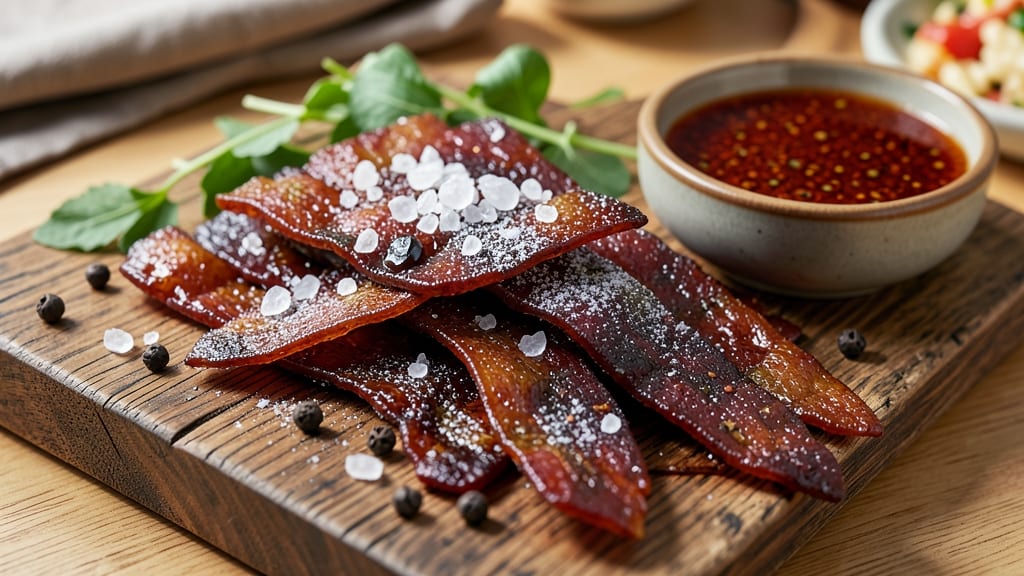
This BBQ sauce beef jerky recipe transforms tough cuts into smoky-sweet, restaurant-quality jerky in just 24 hours—no fancy equipment needed. 🔥 I perfected this method after years of experimenting with curing times and smoke flavors, and it delivers jerky that's tender yet firm, with a deep caramelized crust from the homemade BBQ glaze.
The secret lies in balancing salt, sugar, and spices to preserve while enhancing flavor, then finishing with a slow cure that develops rich, complex notes.
The process starts with lean beef (like top round or flank steak), which we cure using a precise ratio of salt, sugar, and spices—no guesswork, just science.
After a 24-hour cure, we slice thinly and either dehydrate or smoke the strips until they reach 160°F internal temperature, ensuring they're safe to eat while maintaining that perfect chewy texture.
The homemade BBQ sauce isn't just for flavor; it also acts as a protective barrier during the final drying phase, locking in moisture and intensifying the smoky-sweet profile.
By the time you're done, you'll have jerky that's bold in flavor, perfectly balanced in texture, and packed with that irresistible smoky-sweet aroma. The sauce glaze gives it a glossy finish, while the slow cure ensures every bite is tender without being mushy.
This isn't just jerky—it's a showstopping snack that rivals anything you'd find at a specialty shop, but with the satisfaction of making it yourself.
Whether you're prepping for a road trip, stocking your pantry, or just craving a smoky-sweet treat, this method delivers consistent, professional-quality results every time. The best part? You can customize the BBQ sauce to your taste—spicy, sweet, or tangy—while the curing process remains foolproof.
Let's get started on making jerky that'll have everyone asking for seconds.
Ingredients for bbq sauce beef jerky
Lean beef, precise curing salts, and bold BBQ flavors—this is your smoky-sweet jerky toolkit.
| Ingredient | Amount | Notes |
|---|---|---|
| Top Round Beef Roast 🥩 | 2 lb | Lean cut, trimmed of fat |
| Kosher Salt 🧂 | ½ cup | Non-iodized, fine grain |
| White Granulated Sugar 🍚 | ¼ cup | For curing balance |
| Black Peppercorns 🌶️ | 1 tbsp | Freshly cracked preferred |
| Garlic Powder 🧄 | 2 tsp | Not garlic salt |
| Ground Coriander 🌿 | 1 tsp | For earthy depth |
| Smoked Paprika 🌶️ | 1 tsp | For authentic smokiness |
| Cayenne Pepper 🔥 | ½ tsp | Adjust for heat preference |
| Tomato Paste 🍅 | ½ cup | San Marzano preferred |
| Apple Cider Vinegar 🍎 | ¼ cup | For tangy kick |
| Brown Sugar 🍚 | ½ cup | For caramelization |
| Molasses 🍯 | ¼ cup | For deep BBQ flavor |
| Worcestershire Sauce 🍶 | 1 tbsp | Anchovy-free version |
| Onion Powder 🧅 | 1 tsp | For savory depth |
| Mustard Powder 🌶️ | 1 tsp | For tangy complexity |
The beef is everything here. Top round roast is lean enough to cure properly without turning greasy, but flank steak or silverside work too if you prefer. Look for cuts with good marbling—just enough fat to keep it tender, not so much it ruins the cure. Costco or local butcher shops usually carry these cuts pre-trimmed, saving you time. If buying whole, trim all visible fat—it doesn't cure well and can make your jerky too fatty. For the curing salt mix, Diamond Crystal kosher salt is my go-to because it dissolves perfectly, but any non-iodized salt works. The sugar is non-negotiable—it helps preserve while adding subtle sweetness that balances the smokiness later.
No smoked paprika? Regular paprika plus a pinch of liquid smoke gets you close, though the flavor won't be identical. Short on molasses? Maple syrup at half the amount works in a pinch, but you'll lose some of that deep, almost bitter-sweet profile. The Worcestershire sauce is crucial for umami—Lea & Perrins is the classic choice, but check for anchovies if you're avoiding them. For the cure, mix your salt, sugar, and spices in a bowl, then rub it all over the beef like you're giving it a massage. Use food-safe gloves—this stuff gets everywhere. Let the beef cure in the fridge for exactly 24 hours, no more, no less. Too short and it won't be safe; too long and it'll turn rubbery.
After curing, slice the beef thinly against the grain—about 1/4-inch thick—for that perfect chewy texture. The homemade BBQ sauce should be thick enough to coat but not drip. For storage, let the jerky dry completely before packing it in airtight containers. It'll keep for 2 weeks at room temperature or 3 months in the freezer. Pro tip: Label everything with the date—trust me, you'll forget. And if you're dehydrating instead of smoking, set your dehydrator to 160°F and let it run for 4-6 hours until it's leathery but not brittle. The sauce glaze should be applied right before the final drying phase to lock in moisture.
Why You'll Love This Recipe
- No-Fuss Prep: I swear, this jerky comes together in one bowl—just slice the top round thin, toss with salt, sugar, and pepper, then let the smoker or oven do the work. Honestly, I’ve made it while watching TV, and it still turns out perfect.
- Smoky-Sweet Magic: That caramelized sugar and garlic powder blend? It’s like a slow-cooked BBQ rub in every bite—tangy, slightly sweet, with a deep smokiness that sticks with you. (Yes, even on a Tuesday night.)
- Snack Attack Ready: Keep a batch in the fridge or freezer for anything—trail mix, lunchboxes, or when you’re craving something salty without the hassle of cooking. My kids grab it straight from the jar, and I don’t even judge them.
- Budget Win: Top round is cheap, and a single roast stretches into weeks of jerky. I’ve fed a crew of hungry teens for under $10—no takeout, no guilt, just pure protein power. (Between us, it’s my secret weapon for game days.)
Step-by-step instructions for smoky-sweet BBQ beef jerky
Here's how to transform tough top round into tender, smoky jerky with perfect texture.
👨🍳 Step 1: Prepare the Cure Mixture
In a food processor, combine the 0.5 cup kosher salt, 0.25 cup white granulated sugar, 1 tbsp freshly cracked black peppercorns, 2 tsp garlic powder, 1 tsp ground coriander, 1 tsp smoked paprika, 0.5 tsp cayenne pepper, 1 tsp onion powder, and 1 tsp mustard powder. Process until you achieve a fine, even powder - this ensures perfect distribution throughout the meat.
In a separate bowl, whisk together the 0.5 cup tomato paste, 0.25 cup apple cider vinegar, 0.5 cup brown sugar, 0.25 cup molasses, and 1 tbsp Worcestershire sauce. This creates the signature BBQ flavor base that will penetrate the meat during curing. The mixture should be smooth with no lumps - if needed, strain through a fine-mesh sieve to remove any thick bits.
🔪 Step 2: Slice and Cure the Beef
Using a sharp meat slicer or very sharp knife, slice the 2 lb top round beef roast against the grain into ¼-inch thick strips. The lean nature of top round means you want thin slices for proper curing. Arrange the strips in a single layer on a baking sheet and refrigerate for 15 minutes to firm up slightly before handling.
In a large bowl, mix the dry cure powder with the wet BBQ mixture until you have a thick paste that coats the back of a spoon. Spread the strips evenly in the bowl and coat each piece thoroughly with the cure mixture. Here's the thing - you want every surface covered, but don't overwork the meat or it will toughen. Let the coated strips rest for 5 minutes to allow the cure to begin penetrating.
🥘 Step 3: Layer and Cure for 24 Hours
Line a large, shallow container with plastic wrap, then place a wire rack inside. Arrange the cured beef strips in a single layer on the rack, ensuring they don't touch. Cover the container tightly with plastic wrap and refrigerate for 24 hours. This extended curing period is crucial - it transforms the tough beef into tender jerky by breaking down proteins through osmosis.
After 12 hours, flip each strip carefully using tongs. This ensures even curing on all surfaces. The strips should begin to feel slightly firmer and develop a faint pinkish hue. Don't skip this flip - it prevents uneven curing that could lead to some pieces being too salty or under-cured.
🔥 Step 4: Smoke and Dry to Perfection
Preheat your smoker to 165°F using hickory or apple wood chips for that authentic BBQ flavor. Arrange the cured strips on the smoker racks, leaving space between each piece for proper airflow. Smoke the jerky for 4-6 hours, checking periodically to ensure even color development. You're looking for a deep reddish-brown hue that indicates proper drying.
Transfer the smoked strips to a dehydrator set to 160°F and dry for 6-8 hours, or until the jerky is completely dry to the touch with no moisture remaining. The drying time may vary slightly based on humidity levels - test doneness by checking for flexibility. Properly dried jerky should bend slightly without breaking and feel cool to the touch when removed from the dehydrator.
⏰ Step 5: Rest and Store Properly
Allow the jerky to cool completely on a wire rack before storing. This resting period prevents condensation from forming in your storage container. Once cooled, package the jerky in airtight containers or vacuum-sealed bags. Properly stored, it will keep for up to 3 months in the refrigerator or 1 year in the freezer.
For the best flavor experience, let the jerky come to room temperature before serving. The smoky-sweet BBQ flavor will develop more fully as it sits. The perfect jerky should have a tender yet slightly chewy texture with intense BBQ flavor in every bite - no tough, rubbery pieces allowed!
Pro Tips For Making Bbq Sauce Beef Jerky
- Trim Thin, Slice Even: Use a sharp boning knife to cut the top round against the grain into strips about ¼-inch thick—any thicker and the jerky chews like shoe leather. I learned this the hard way after biting into a tough, overcooked slab that should’ve been tender.
- Cure First, Then Sauce: Salt the beef with kosher salt and sugar before applying BBQ sauce—let it sit for at least 4 hours (overnight is better). This draws out moisture, so when you coat it in sauce later, the flavors stick instead of sliding off like rain on a greased pig.
- Skip the Crowded Deck: Hang slices at least 2 inches apart on your dehydrator rack or smoker grill—if they touch, they’ll steam instead of dry evenly. I used to cram them in tight, and half the batch ended up soggy and half-baked.
- Start Hot, Finish Low: Dehydrate at 165°F for the first 2 hours to kill bacteria, then drop to 145°F for the rest—high heat upfront prevents slimy jerky, but low and slow keeps it from turning to dust. (Yes, even if you’re impatient like me.)
Common mistakes when making perfect results
Uneven Curing
Skipping the 12-hour flip is a rookie mistake that leads to uneven curing. Some strips may end up too salty while others remain under-cured. I've seen this happen when people rush the process or forget to turn the strips.
Always use tongs to flip them gently—this ensures every piece gets equal exposure to the cure. If you notice uneven color or texture after curing, don't panic: just trim the affected edges and proceed with smoking. 🔥
Overworking the Meat
Handling the cured strips too much can turn them tough and chewy. When coating the beef with the cure mixture, work efficiently but gently—no need to press or massage the meat. I once made the mistake of kneading the strips like bread dough, and the jerky turned out rubbery.
The cure should coat the surface evenly without disturbing the muscle fibers. Let gravity do most of the work when arranging them on the rack for curing.
Skipping the Resting Period
Rushing the 24-hour cure or skipping the 5-minute rest after coating can lead to uneven drying and poor texture. The cure needs time to penetrate the meat fully, and the rest allows the surface to firm up slightly.
I learned this the hard way when I tried to speed up the process—my first batch had some strips that were gummy and others that were dry. Patience here is key to consistent results every time.
Incorrect Slicing Technique
Slicing the beef with the grain instead of against it will leave you with jerky that's tough and stringy. The muscle fibers need to be cut perpendicular to their direction for that signature chewy texture.
Use a sharp meat slicer or a very sharp knife, and slice at a ¼-inch thickness. If your knife isn't sharp enough, the meat will tear, leading to uneven strips and inconsistent curing. A Wüsthof slicing knife is my go-to for this step.
Ignoring Humidity Levels
Drying jerky in high humidity can lead to soggy, unsafe results. If your kitchen feels damp, use a dehydrator or smoker instead of relying on air drying. I once tried dehydrating jerky in my basement during a humid summer week, and the strips never dried properly.
Always check the humidity—aim for 50% or lower for best results. If you're using a dehydrator, set it to 160°F and monitor closely.
Overlooking the Rest Before Storage
Packaging jerky while it's still warm creates condensation inside the container, which can lead to mold or spoilage. Always let the jerky cool completely on a wire rack before storing it in airtight containers.
I once sealed warm jerky in a bag and woke up to a moldy mess the next day. This step is non-negotiable—it ensures your jerky stays safe and flavorful for months. 💪
Nutrition facts
Frequently asked questions
Can I use this recipe with other meats like venison or turkey?
While this recipe was designed for beef, you can adapt it for game meats like venison or turkey with some adjustments. Venison works well but may require a slightly longer curing time (36 hours) due to its lean nature. For turkey, reduce the curing time to 18-24 hours and use a slightly thicker slice (⅜-inch) to prevent over-drying. The BBQ sauce will still shine, but always monitor the final drying time carefully as game meats can dry out faster.
How do I adjust the heat level in the BBQ sauce?
To make it milder, reduce the cayenne pepper to ¼ tsp or omit it entirely. For extra heat, add ½ tsp of cayenne or ¼ tsp of red pepper flakes to the sauce mixture. You can also add a pinch of chipotle powder for smoky heat without extra spice. Always taste the sauce before applying it to the jerky to ensure the right balance for your preference.
Can I make this jerky without a smoker or dehydrator?
For a smoker substitute, use an oven set to 175°F with the door slightly open for airflow. Place a metal rack over a baking sheet and arrange the strips on it. For a dehydrator alternative, prop open your oven door and place a wire rack inside with a fan blowing in to circulate air. Both methods will work, though smoking adds that authentic flavor. Just monitor the temperature closely to prevent over-drying.
Why does my jerky turn out rubbery?
Rubbery jerky usually happens from over-drying or improper curing. Check if you sliced the meat too thin (aim for ¼-inch) or dried it at too high a temperature. The ideal internal temperature should reach 160°F during drying. Also, ensure you didn't overwork the meat during curing—handle the strips gently. If it's already made, try rehydrating it briefly in warm water with a splash of BBQ sauce before eating.
How can I add extra flavor without changing the texture?
Try adding 1 tsp of liquid smoke to the BBQ sauce for deeper smokiness, or ½ tsp of ground cinnamon for warmth. For umami, stir in 1 tsp of fish sauce or ½ tsp of MSG to the cure mixture. These additions enhance flavor without affecting the curing process or final texture. Just