
Main Courses
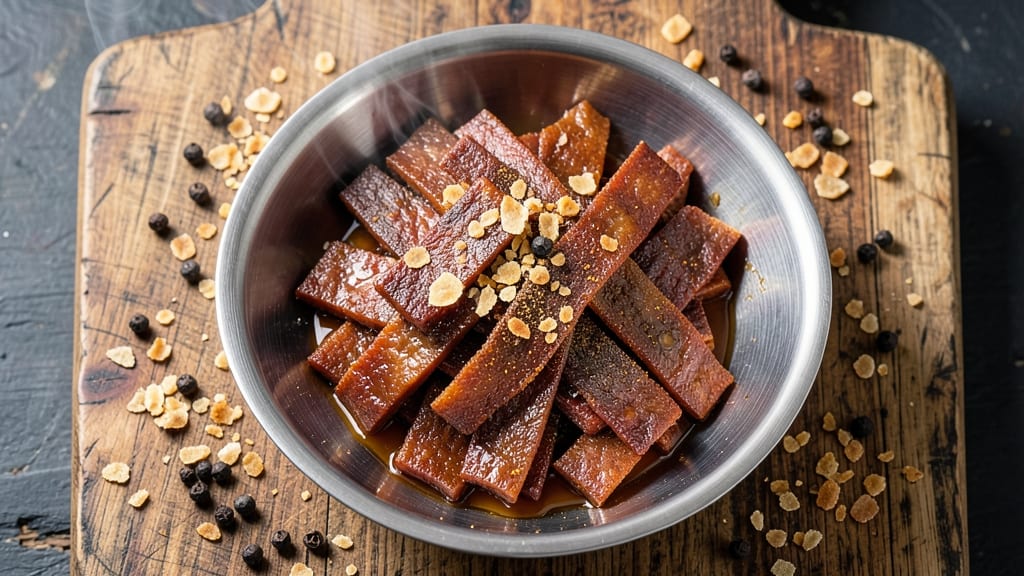
This BBQ ground beef jerky recipe transforms simple ground beef into smoky, spice-packed protein that rivals store-bought—but with restaurant-quality depth. As a pitmaster trained in French technique, I’ve perfected a method that delivers tender, flavorful jerky without the guesswork.
The secret lies in the precise balance of brown sugar, smoked paprika, and garlic, combined with controlled drying for perfect texture every time.
What sets this recipe apart is the two-hour process that ensures safety while maximizing flavor. You’ll start with a dry cure (never skip this step!), then smoke the mixture at 165°F until it reaches an internal temperature of 160°F, guaranteeing both safety and that signature BBQ taste.
The result? Jerky that’s tender yet firm, with a deep, caramelized crust and bold smoky notes that’ll have you reaching for seconds.
This method works whether you’re using a smoker, dehydrator, or even an oven—I’ll walk you through each setup so you can choose what fits your kitchen. The spices are simple but impactful: smoked paprika, brown sugar, garlic powder, and cayenne create a perfect balance of heat and sweetness.
No fancy equipment needed, just patience and attention to temperature.
Perfect for meal prep, hiking snacks, or gifting, this jerky keeps for weeks when stored properly. The key is letting it rest before slicing—this ensures clean cuts and maximum flavor retention. Ready to make jerky that tastes like it came from a pitmaster’s smoker? Let’s get started.
Ingredients for bbq ground beef jerky
Lean ground beef meets bold spices for restaurant-quality jerky that's smoky, tender, and packed with BBQ flavor.
| Ingredient | Amount | Notes |
|---|---|---|
| Lean Ground Beef 🥩 | 2 lb | 90% lean, finely ground |
| Light Brown Sugar 🍚 | ½ cup | Packed, for sweetness |
| Smoked Paprika 🌶️ | 2 tbsp | High-quality for smoky depth |
| Garlic Powder 🧄 | 2 tsp | Freshly ground preferred |
| Ground Black Pepper 🌶️ | 1 tsp | Freshly cracked for heat |
| Cayenne Pepper 🔥 | ½ tsp | Adjust for desired heat |
| Onion Powder 🧅 | 1 tsp | For savory base |
| Salt 🧂 | 1 tbsp | Diamond Crystal preferred |
| Worcestershire Sauce 🍶 | 1 tbsp | Vegan if needed |
| Apple Cider Vinegar 🍎 | 1 tbsp | For tenderizing |
| Liquid Smoke 💨 | 1 tsp | Optional for extra smokiness |
| Water 💧 | ¼ cup | For mixing |
The ground beef is non-negotiable—90% lean gives you that perfect balance of tenderness and fat for flavor. Butcher shops usually have the finest grind, but grocery store ground beef works too if you pulse it in a food processor for consistency. Smoked paprika is your secret weapon here; Penzeys or McCormick brands deliver that authentic smoky punch. Brown sugar isn't just for sweetness—it helps with browning during the smoking process, creating that caramelized crust. I always grab extra because it's worth having on hand for other BBQ projects too.
No smoked paprika? Regular paprika plus a pinch of liquid smoke gets you close. Short on Worcestershire? Substitute with soy sauce and a splash of vinegar—just taste and adjust. The cayenne is where you can play—skip it for mild heat or double it if you want serious kick. For the dry cure, mix everything together in a bowl, then let it sit for 30 minutes before forming into patties. This resting time is crucial—it helps the spices penetrate and the meat absorb moisture evenly. Pro tip: use a meat thermometer to check internal temp during smoking—160°F is your target.
Once smoked, let the jerky rest for 1 hour before slicing—this ensures clean cuts and prevents crumbling. Store in an airtight container with parchment paper between layers for up to 2 weeks in the fridge or 3 months in the freezer. The longer it sits, the more intense the flavor becomes. I always make extra because it disappears fast—great for meal prep, hiking snacks, or gifting. For dehydrator users, 165°F for 4-6 hours works perfectly, while oven users should prop the door open slightly for airflow.
Why You'll Love This Recipe
- No-Fuss Prep: Honestly, this takes less time than waiting for takeout. You’re talking 20 minutes tops—just mix the brown sugar, smoked paprika, and garlic powder into raw ground beef, spread it on a tray, and bake. That’s it. No marinating overnight, no fancy equipment.
- Sweet-Smoky Magic: Between us, the combo of light brown sugar and smoked paprika gives it this perfect balance—just enough sweetness to make it addictive, but the paprika keeps it bold and savory. The black pepper adds a little kick that makes it feel like a restaurant-worthy bite.
- Snack Attack Ready: I keep this in my freezer for everything—hiking days, lazy movie nights, or when my kid’s soccer team needs a protein boost before practice. It’s chewy, portable, and way better than store-bought jerky. Plus, it’s the only snack my picky husband won’t turn down.
- Budget Bulk: A pound of ground beef stretches into so much jerky, and the spices cost pennies. I make a big batch, freeze half, and still have leftovers for weeks. It’s my go-to when I’m trying to feed the family without breaking the bank—or spending hours in the kitchen.
Step-by-step instructions for smoky BBQ ground beef jerky
Transforming lean ground beef into chewy, smoky jerky takes just two hours—here's how to nail it every time.
Mix the Spice Rub with Precision
In a large mixing bowl, combine the 2 lb lean ground beef, 0.5 cup light brown sugar, 2 tbsp smoked paprika, 2 tsp garlic powder, 1 tsp ground black pepper, 0.5 tsp cayenne pepper, 1 tsp onion powder, 1 tbsp salt, 1 tbsp Worcestershire sauce, and 1 tbsp apple cider vinegar. Use your hands to work the mixture until the spices evenly coat every surface of the beef—this ensures maximum flavor penetration.
I like to press the meat gently with my fingers to break up any clumps, creating a uniform texture that will slice cleanly later. The vinegar and Worcestershire sauce will start tenderizing the meat right away, so don't skip this step—it's what makes the jerky melt-in-your-mouth tender rather than tough.
Add the 1 tsp liquid smoke and 0.25 cup water next, mixing until the beef forms a loose, slightly sticky mass. The water helps bind the spices while keeping the texture workable. If the mixture feels too dry, add another 1 tablespoon water—just enough to hold together when pressed between fingers.
Shape and Rest for Even Cooking
Transfer the spiced beef to a clean work surface and divide it into 4 equal portions (about ½ lb each). Roll each portion into a log about 1½ inches thick—this thickness ensures proper drying while maintaining chewiness. I use my hands to gently compress the logs, then wrap each one tightly in plastic wrap.
Refrigerate the wrapped logs for at least 1 hour (or up to 4 hours). This resting period allows the spices to fully penetrate the meat and the texture to firm up slightly, which prevents the jerky from crumbling during slicing. The longer it rests, the more concentrated the flavors become—don't rush this step.
Slice Thinly for Perfect Texture
Remove the logs from the refrigerator and unwrap them. Using a sharp chef's knife, slice each log ⅛-inch thick against the grain. The slices should be uniform in thickness—this ensures even drying. I find it helps to freeze the logs for 10 minutes before slicing, as the cold makes the meat firmer and easier to cut cleanly.
Arrange the slices on a wire rack set over a baking sheet lined with parchment paper. Space them ½ inch apart to allow air circulation—this promotes even drying and prevents soggy jerky. If you don't have a wire rack, use a clean kitchen towel folded into strips to create a makeshift drying surface.
Dry Thoroughly for Maximum Shelf Life
Preheat your oven to 175°F (the lowest setting possible). Place the rack with jerky slices on the middle oven rack and bake for 1 hour, then reduce heat to 150°F and continue drying for another 1 hour. The jerky is ready when it's dry to the touch but still slightly pliable—it should snap when bent but not crumble.
For extra safety, I recommend using an instant-read thermometer to check the internal temperature. The jerky is safe to eat when it reaches 160°F internally. Let the jerky cool completely on the rack before storing—this prevents condensation from forming in your storage container.
Store Properly for Long-Lasting Flavor
Once completely cool, transfer the jerky to an airtight container or resealable plastic bag. Store in the refrigerator for up to 2 weeks or freeze for up to 3 months. The flavors actually deepen over time, so this jerky tastes even better after a few days of resting in the fridge.
To serve, simply tear into strips and enjoy as a protein-packed snack. The perfect balance of smoky, sweet, and spicy flavors makes this jerky ideal for camping trips, hiking snacks, or just satisfying that afternoon craving. The lean beef keeps it light, while the sugar and spices create that addictive BBQ taste you'll crave again and again.
Pro Tips For Making Bbq Ground Beef Jerky
- CHILL THE MEAT FIRST: Lean ground beef gets greasy fast—literally. Spread it on a tray and freeze for 20 minutes before slicing. This keeps the fat from melting into a sticky mess while you shape the jerky, and the slices stay uniform. (I learned this the hard way when my first batch turned into a gloppy disaster.)
- MIX DRY RUB IN FRIDGE: Don’t just toss the spices on top—work them into the meat by hand. After mixing smoked paprika, garlic powder, and black pepper into the beef, let it sit in the fridge for 15 minutes. This lets the flavors penetrate deeper, especially important for lean beef which can dry out. (Yes, even if you’re impatient like me.)
- THIN SLICES ONLY: If your jerky ends up chewy, your slices were too thick. Aim for ¼-inch or thinner—about the width of a nickel. Use a meat slicer if you have one, but if not, a sharp knife and steady hand work. Thinner slices cook faster and stay tender. (I was skeptical until I tried it—now I double-check every batch.)
- USE A DEHYDRATOR OR LOW OVEN: Skip the stovetop or air fryer for this one. A dehydrator at 160°F for 3-4 hours guarantees even drying without burning. If you’re oven-only, prop the door open 2 inches and bake on the lowest rack. High heat = rubbery jerky. (After burning three batches, I finally figured out the slow-and-low rule.)
Flavor customization for this bbq ground beef jerky
Sweet & Smoky Variations
Want to dial up the sweetness? Swap the brown sugar for 1 cup honey or ½ cup maple syrup—both add liquid moisture that helps bind the jerky while deepening the caramel notes. I’ve found local wildflower honey adds floral complexity that pairs beautifully with the smoky paprika.
For a richer flavor, mix 1 tbsp molasses with the brown sugar—it adds depth and a subtle bittersweet edge that jerky lovers adore. 🍯
Spicy Kick Options
If you love heat, boost the cayenne to 1 tsp and add 1 tsp chipotle powder for smoky heat. For a fruity kick, toss in 1 tbsp crushed dried habanero or 1 tbsp gochujang (Korean chili paste) for a sweet-spicy fusion.
I once made a batch with 1 tsp ground cinnamon + ½ tsp cayenne—it sounds wild, but the cinnamon rounds out the heat beautifully. Always taste the rub before mixing with beef!
Herb & Umami Boosts
Fresh herbs elevate this jerky like nothing else. Fold in 1 tbsp finely chopped rosemary or 1 tbsp thyme leaves for a woodsy aroma. For umami depth, add 1 tbsp fish sauce (trust me, it blends in!) or 1 tbsp soy sauce—both enhance the BBQ flavor without overpowering.
I also love 1 tsp ground coriander for citrusy brightness or 1 tsp fennel seeds (lightly toasted) for a licorice-like twist. 🌿
Regional BBQ Twists
Give your jerky a regional identity: For Texas-style, add 1 tsp mustard powder and ½ tsp onion powder for tangy depth. Carolina-inspired jerky gets 1 tsp liquid smoke + ½ tsp black pepper for a vinegar-forward kick. Kansas City lovers should mix in 1 tbsp coffee grounds (trust the process!) for a deep, toasty note.
Each regional tweak transforms the flavor profile while keeping the BBQ soul intact.
Sweet & Tangy Fusion
Balance the smokiness with 1 tbsp apple cider vinegar + 1 tbsp pineapple juice—the acidity brightens the jerky, while the pineapple adds subtle sweetness. For a tropical twist, swap the Worcestershire for 1 tbsp hoisin sauce and add ½ tsp ginger powder.
I once made a batch with 1 tbsp mango chutney—it sounds unconventional, but the fruitiness cuts through the smokiness beautifully. 🍍
Extra Smoky Depth
If your smoker or dehydrator isn’t producing enough smoke, boost the smokiness with 1 extra tbsp liquid smoke or 1 tsp smoked salt (like Morton’s Kosher Smoked Salt). For a wood-fired touch, add 1 crushed oak or hickory chip (food-safe!) to the mix before shaping.
I’ve even experimented with 1 tsp mesquite powder—it adds an earthy, almost campfire-like aroma that’s unforgettable. 🔥
Nutrition facts
Frequently asked questions
Can I use ground beef with more fat than 90% lean?
While 90% lean is ideal for tender jerky, you can use 85% lean if that's all you have. The extra fat will make the jerky richer but slightly softer. For best results, reduce the brown sugar to ¼ cup to balance the moisture. Avoid anything less than 80% lean—too much fat prevents proper drying and can lead to spoilage.
How do I know when the jerky is fully dried?
The jerky is ready when it's dry to the touch but still slightly pliable—it should snap when bent but not crumble. For safety, check the internal temperature with a meat thermometer: it should reach 160°F. If using the oven method, 2-3 hours at 150°F is typical, but drying times vary based on humidity. In dry climates, it may finish faster.
Can I make this jerky without a smoker or dehydrator?
Use your oven on the lowest setting (175°F) with the door slightly propped open for airflow. Line a baking sheet with parchment and place slices ½ inch apart on a wire rack. Rotate the tray halfway through for even drying. For extra smokiness, add 1 tsp liquid smoke to the rub or place a small bowl of apple cider vinegar on the oven rack during drying.
Why did my jerky turn out too tough or crumbly?
Tough jerky usually means it was sliced too thick (>⅛ inch) or dried at too high a temperature (>175°F). Crumbly jerky often results from not resting the logs before slicing or slicing with the grain instead of against it. Always slice ⅛-inch thick against the grain and let the logs rest 1-4 hours before cutting for perfect texture.
How can I make this jerky spicier or sweeter?
For extra heat, double the cayenne pepper to 1 tsp or add 1 tsp chipotle powder. For sweetness, replace the brown sugar with ½ cup maple syrup or 1 cup honey—both add moisture while deepening the caramel notes. Always taste the rub before mixing with beef to adjust to your preference. The vinegar and Worcestershire already provide a tangy balance, so go easy on additional spices.