
Main Courses
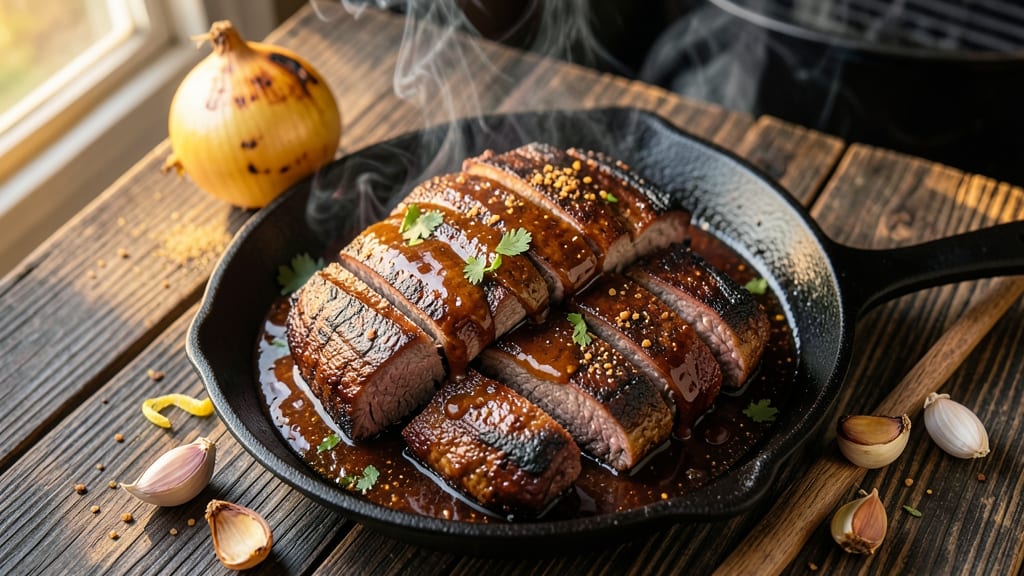
This BBQ beef brisket recipe grill delivers restaurant-quality results with juicy layers and a smoky bark that’ll have your neighbors asking for seconds. I’ve perfected this method after years of grilling brisket—balancing heat control to keep the meat tender while building that coveted crust.
The secret lies in patience and precision, not just time.
Unlike slow cooker recipes that can dry out brisket, this grill method ensures even heat distribution and a crispy exterior without compromising moisture.
You’ll start with a flavorful dry rub (brown sugar, paprika, garlic powder) that caramelizes beautifully over low-and-slow heat, while a spritz of apple cider vinegar keeps the meat tender. The key? Monitoring internal temperature—203°F for that perfect pull.
What you’ll end up with is a fall-apart brisket with a deep mahogany bark and juicy, tender slices that melt in your mouth. The smoky aroma alone will fill your backyard, and every bite delivers that perfect balance of sweet, spicy, and savory.
Serve with classic sides like cornbread and coleslaw for the full experience.
This recipe is designed for foolproof results, even for beginners. I’ll walk you through heat control tips, resting techniques, and how to avoid common pitfalls like dry meat. Ready to master the grill? Let’s get started.
Ingredients for bbq beef brisket recipe grill
Six pounds of brisket, twelve spices, and a grill that tells the story of slow-smoked perfection.
| Ingredient | Amount | Notes |
|---|---|---|
| Beef Brisket 🥩 | 6 lb | Flat cut preferred, trimmed of fat |
| Yellow Onion 🧅 | 1 whole | Large, sliced into wedges |
| Garlic Cloves 🧄 | 8 cloves | Peeled, smashed for rub |
| Brown Sugar 🍚 | ½ cup | Light or dark variety |
| Smoked Paprika 🌶️ | 2 tbsp | High-quality for smoky depth |
| Garlic Powder 🧄 | 1 tbsp | Freshly ground preferred |
| Onion Powder 🧅 | 1 tbsp | Adds sweet base layer |
| Ground Black Pepper 🌶️ | 1 tbsp | Freshly cracked for heat |
| Kosher Salt 🧂 | 1 tbsp | Diamond Crystal preferred |
| Apple Cider Vinegar 🍎 | ¼ cup | For spritzing during cook |
| Unsalted Butter 🧈 | 4 tbsp | Melted for basting |
| Yellow Mustard 🟡 | 2 tbsp | For bark development |
| Wood Chips 🌳 | 2 cups | Hickory or oak preferred |
| Beef Stock 💧 | 1 cup | For spritzing, optional |
The brisket cut is everything here. Packer's Prime or USDA Choice from Costco or ButcherBox delivers that perfect marbling for juiciness. Look for the flat cut—it's leaner and develops bark better than the point. Trim excess fat to about 1/4-inch thickness, but leave some for flavor. The H-E-B or Whole Foods butcher counters often have prepped briskets ready to go. Pro tip: Pat it dry with paper towels before applying the rub—this helps the spices stick and caramelize properly. If you're buying whole, ask for it to be butchered into a single thick piece rather than pre-sliced.
No smoked paprika? Regular paprika plus 1/2 tsp liquid smoke works in a pinch, but it won't have that authentic depth. The brown sugar is non-negotiable for that sweet-savory bark—light brown sugar gives a cleaner bark, while dark brown adds more molasses flavor. Apple cider vinegar can be swapped for white vinegar or even lemon juice, but the apple cider gives that classic BBQ tang. For the wood chips, store-bought chips in a soaking bucket are fine, but if you're feeling fancy, split your own hickory logs. The beef stock spritz? Only use it if you're cooking past 6 hours—it's insurance against drying out, but not essential for the first few hours.
This brisket needs 24-48 hours to come to room temperature before grilling—trust me, it's worth the wait. Store it in the fridge uncovered on a wire rack to dry the surface. The rub stays fresh for 3 months in an airtight container, so make extra. Once cooked, wrap tightly in butcher paper and foil, then rest for at least 2 hours before slicing. The meat continues cooking during rest, so don't skip it. Leftovers? They're even better the next day—reheat gently in the oven with a splash of beef broth to revive the juices. Portion into 1/2-inch thick slices for perfect serving pieces.
Why You'll Love This Recipe
- One-Pan Magic: I swear by this recipe because it’s that simple—just sear the brisket, toss in chopped onions and garlic, then let the grill do the work. No flipping, no fussing, just hands-off perfection while you handle the rest.
- Sweet-Smoky Boom: That caramelized brown sugar crust? Chef’s kiss. The smoked paprika adds this deep, woodsy warmth, while the garlic turns the meat into something so tender it falls apart. Honestly, I’ve never had brisket this addictive.
- Weeknight or Party Star: Make it once, eat it three ways. Serve it sliced for tacos, shredded for sandwiches, or straight from the grill with a cold beer. My kids even ask for it on Tuesdays—(yes, even on a Tuesday night).
- Budget-Friendly Feast: A whole brisket feeds my family for days, and the leftovers? Even better cold in sandwiches. Plus, you’re using pantry staples—no fancy ingredients, just pure, satisfying flavor that won’t break the bank.
Step-by-step instructions for smoked beef brisket
Here's how to transform a tough cut into melt-in-your-mouth perfection with smoky bark and tender layers.
Prepare the Dry Rub and Season the Brisket
In a medium bowl, combine the 0.5 cup brown sugar, 2 tablespoons smoked paprika, 1 tablespoon garlic powder, 1 tablespoon onion powder, 1 tablespoon ground black pepper, and 1 tablespoon kosher salt. Mix thoroughly until evenly distributed. This blend creates the perfect balance of sweet, smoky, and savory flavors that will penetrate the meat.
Pat the 6 lb beef brisket completely dry with paper towels—this is crucial for developing that prized bark. Generously apply the rub to all sides of the brisket, pressing it into the meat so it adheres well. Pay special attention to the edges and fat cap. Let the brisket sit at room temperature for 1 hour before cooking to ensure even heat distribution throughout the meat.
Set Up Your Grill for Indirect Heat
Fill your smoker or grill with the 2 cups wood chips (hickory or oak works best) and preheat to 225°F. Maintain this low-and-slow temperature—this is where the magic happens. Place the brisket fat-side up on the grill grate over indirect heat. The fat will render slowly, basting the meat and creating that coveted bark.
I like to position a water pan nearby to help maintain moisture in the cooking environment. This prevents the brisket from drying out during its long cook time. Once the brisket is on the grill, close the lid and resist the urge to check on it too often—every time you open the lid, you lose heat and extend the cooking time.
Cook Low and Slow with Spritzing
Cook the brisket for 6-8 hours, or until the internal temperature reaches 165-170°F. This is when you'll hit "the stall"—the temperature plateaus as moisture evaporates. Don't panic; this is normal and expected. Every 90 minutes during cooking, spritz the brisket generously with a mixture of 0.25 cup apple cider vinegar and 1 cup beef stock. This keeps the meat moist and adds depth of flavor.
Here's the thing—you'll know it's ready when the bark develops a deep mahogany color and the probe test shows fork-tender meat. The bark should be crispy enough to stand up to a gentle pull, but not so hard it's tough to slice through. This is where patience pays off—rushing will result in dry, tough meat.
Wrap and Finish the Cook
Once the brisket hits 165-170°F, it's time to wrap it. I use heavy-duty aluminum foil for this step—it traps steam and helps the brisket cook through to tenderness without drying out. Before wrapping, spread 4 tablespoons melted unsalted butter and 2 tablespoons yellow mustard evenly over the surface of the brisket. These ingredients will enhance the bark and add richness.
Wrap the brisket tightly, making sure no steam can escape. Return it to the grill and continue cooking until the internal temperature reaches 200-205°F. This final stage, often called the "Texas crutch," ensures the brisket becomes probe-tender and juicy. The entire cook should take 10-12 hours total, depending on your grill's heat retention.
Rest and Slice for Maximum Juiciness
Remove the brisket from the grill and transfer it to a cutting board. Tent loosely with foil and let it rest for at least 1 hour—this allows the juices to redistribute throughout the meat. I know it's tempting to slice and serve immediately, but this resting period is what transforms good brisket into exceptional brisket.
Locate the grain direction by looking at the muscle fibers—they'll run in one direction. Using a sharp carving knife, slice the brisket against the grain into ¼-inch thick slices. Each slice should be tender enough to pull apart with a gentle tug, with a beautiful smoke ring visible just beneath the bark. Serve immediately with your favorite sides and watch your guests marvel at the perfect balance of smoky bark and juicy layers.
Pro Tips For Making Bbq Beef Brisket Recipe Grill
- Trim the Fat First: Cut the thick fat cap down to ¼-inch before grilling—it renders faster and keeps your brisket from steaming in its own juices. I learned this the hard way after a brisket turned soggy because the fat never got crispy.
- Minced Garlic, Not Whole: Finely mince your garlic (or even pulse it in a food processor) instead of using cloves—it blends into the rub more evenly and caramelizes better during the smoke. Whole cloves burn before they infuse, and you’ll taste the difference.
- Spritz When Cold: Wait until the brisket cools slightly after the initial sear, then spritz with apple cider vinegar or water mixed with brown sugar. The shock stops the cooking while locking in moisture—my brisket stayed juicy even after hours on the grill.
- Low and Slow After 165°F: Once the internal temp hits 165°F, drop the heat to 225–250°F and wrap the brisket in butcher paper (not foil) to finish. This prevents overcooking the outer layer while the center tenderizes—no more dry bark or greasy smoke.
Creative variations of bbq beef brisket recipe grill
Texas-Style Smoked Brisket
This is my go-to variation, inspired by Central Texas BBQ joints. After the initial 6 hours of cooking, I wrap the brisket in butcher paper (not foil) with 1/4 cup beef tallow and 2 tablespoons yellow mustard before completing at 225°F.
The butcher paper creates a better bark than foil while keeping the meat moist. I serve it with pickled jalapeños and white bread for dipping—just like at Franklin Barbecue. 🌶️
Carolina Vinegar-Pine Brisket
For a tangy twist, I swap the apple cider vinegar spritz for a 1:1 mix of white vinegar and apple juice every 90 minutes. After wrapping, I add 1/2 cup chopped pine needles to the grill for 30 minutes before finishing.
This adds a bright, resinous note that pairs perfectly with the sweet bark. I finish with a sprinkle of coarse sea salt right before serving.
Spicy Coffee-Rub Brisket
This is my weekend project for when I crave heat. I replace 1 tablespoon of brown sugar with 1 tablespoon finely ground coffee and add 1 teaspoon cayenne pepper to the rub. After the initial cook, I brush the brisket with 2 tablespoons hot honey before wrapping.
The coffee deepens the smoky flavor while the cayenne adds a slow-building heat that lingers on your palate. Perfect with cooling sides like cucumber salad.
Beer-Can Brisket (Oven Method)
When the weather won't cooperate, I use my oven for this variation. I place two 12-ounce cans of beer (I prefer Stella Artois) on the oven rack below the brisket, which creates steam and keeps the meat moist.
I cook at 275°F for 8-10 hours, basting with the beer every 2 hours. The beer adds a malty depth that works surprisingly well with the smoky flavors. This method is perfect for indoor cooking without sacrificing quality.
Honey-Glazed Brisket (Asian Fusion)
For a sweet-savory fusion, I brush the brisket with 1/2 cup honey mixed with 1 tablespoon soy sauce and 1 teaspoon grated ginger during the last 2 hours of cooking. The honey caramelizes beautifully on the bark while the soy and ginger add umami depth.
I finish with a sprinkle of toasted sesame seeds and serve with steamed jasmine rice and quick-pickled vegetables for a complete meal.
Breakfast Brisket Tacos
This is my creative twist for brunch. After cooking the brisket as directed, I shred it and mix with 1/2 cup salsa verde, 1/4 cup crumbled queso fresco, and 2 tablespoons chopped cilantro.
Serve in warm corn tortillas with fried eggs and avocado slices. The smoky brisket pairs surprisingly well with breakfast flavors—trust me, it's a crowd-pleaser! 🌮
Nutrition facts
Frequently asked questions
How do I know when my brisket is done?
Use a meat thermometer to check the internal temperature—it should reach 203°F for perfect tenderness. The bark should be deep mahogany and crispy, while the meat should pull apart easily with a fork. The stall (temperature plateau) is normal around 165°F, so don't rush it!
Can I cook brisket on a regular grill instead of a smoker?
Use the grill's indirect heat setting and maintain 225°F by adjusting vents. Add wood chips to a smoker box for authentic smoke flavor. Just monitor the heat closely—grills can fluctuate more than dedicated smokers.
What's the best way to slice brisket?
First, let it rest for 1-2 hours after cooking. Then slice against the grain into ¼-inch thick pieces using a sharp carving knife. This creates tender, bite-sized slices that melt in your mouth. Pro tip: Look for the muscle fibers to find the grain direction.
Why did my brisket turn out dry?
Overcooking or not wrapping at the right time are common culprits. Wrap the brisket in foil (with butter/mustard) when it hits 165°F to trap moisture. Also, never skip the resting period—it redistributes juices. For extra insurance, spritz with apple cider vinegar every 90 minutes during cooking.