
Soups & Stews
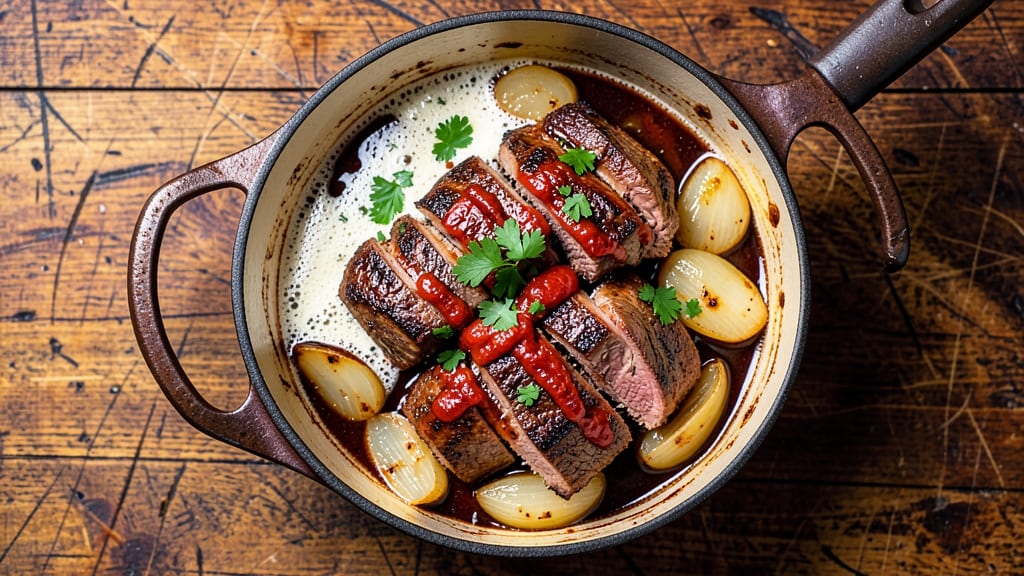
This Bavarian beef stew recipe brings hearty German comfort to your table with its deep, caramelized flavors and tender beef. The secret lies in slow-simmering beef with onions until they develop a rich, sweet depth—just like my grandmother’s version, but with modern shortcuts.
What makes this stew special is the balance of savory, slightly sweet, and umami notes that come together over hours of gentle cooking.
The recipe starts with browning thick-cut beef in a Dutch oven, creating a flavorful crust that forms the base of the stew. Caramelized onions add natural sweetness, while aromatic herbs and a splash of dark beer deepen the complexity.
Simmering low and slow transforms tough cuts into melt-in-your-mouth tenderness, making every bite satisfying.
By the time it’s done, you’ll have a rich, velvety stew with beef that practically falls apart and onions so tender they’re almost jam-like. The aroma alone will have everyone gathered around the table, and the flavor is bold enough to stand alone or pair perfectly with crusty bread.
This is the kind of dish that feels like a hug in a bowl.
Perfect for chilly evenings or holiday gatherings, this stew scales easily to feed a crowd while keeping the same depth of flavor. The instructions are straightforward, but the patience required is worth every minute of simmering time. Let’s get started on creating this Bavarian classic at home.
Ingredients for bavarian beef stew
Hearty beef, caramelized onions, and rich beer—this stew brings German comfort to your table.
| Ingredient | Amount | Notes |
|---|---|---|
| Beef Chuck Roast 🥩 | 3 lb | Thick-cut, 1-1.5 inches |
| Yellow Onions 🧅 | 4 whole | Large, peeled and halved |
| Dark Beer 🍺 | 1 ½ cups | Like Schwarzbier or Dunkel |
| Beef Broth 💧 | 3 cups | Low-sodium preferred |
| Tomato Paste 🍅 | 2 tbsp | Squeeze tube works fine |
| Worcestershire Sauce 🍯 | 1 tbsp | Traditional umami boost |
| Bay Leaves 🌿 | 2 whole | Fresh if possible |
| Thyme 🌿 | 1 tbsp | Dried or 1 tbsp fresh |
| Garlic Cloves 🧄 | 4 cloves | Minced for depth |
| Olive Oil 🫒 | 2 tbsp | For searing |
| Flour 🌾 | 2 tbsp | All-purpose for dredging |
| Salt 🧂 | 2 tsp | Kosher or sea salt |
| Black Peppercorns 🌶️ | 1 tsp | Freshly cracked |
| Crusty Bread 🍞 | 6 slices | For serving (optional) |
The beef is everything here. Chuck roast is the gold standard—it’s got enough fat to stay juicy while slow-cooking. I always grab mine from Costco when I can, but any well-marbled roast works. Look for pieces that are about 1-1.5 inches thick; thinner cuts can dry out. The onions? Don’t skimp—yellow onions caramelize best, and you’ll need plenty for that jammy texture. If you’re short on time, pre-chopped onions from the freezer section save steps without sacrificing flavor. Just thaw them first.
No dark beer? Substitute with beef broth plus a splash of balsamic vinegar—it mimics the depth. Fresh thyme is ideal, but dried works at half the amount. The tomato paste can be skipped if you’re avoiding acidity, but it adds a nice richness. Worcestershire sauce is non-negotiable—it’s the secret to that classic umami punch. For a vegetarian twist (though not traditional), swap the beef for mushrooms and lentils—they’ll soak up all the flavors. And if you’re using a squeeze tube of tomato paste, Trader Joe’s has the best-priced ones that last forever.
This stew tastes even better the next day—honestly, 3-4 days in the fridge is perfect. Portion it out into containers for easy lunches, and it reheats beautifully with a splash of broth. For longer storage, freeze portions for up to 3 months. The crusty bread? Toast it fresh before serving—a good sourdough or baguette from the bakery section makes all the difference. And if you’ve got leftovers, freeze the broth separately to use later for soups or gravy.
Why You'll Love This Recipe
- One-Pot Magic: I swear by this recipe—just dump everything into one pot, walk away, and let the beer and broth do the work. No fancy techniques, no last-minute stress.
- Rich Without Effort: That dark beer and tomato paste combo? It’s like a flavor bomb waiting to happen. The onions caramelize while you’re busy, and the chuck roast turns tender—minimal effort, maximum depth.
- Leftovers That Shine: Between us, this stew tastes even better the next day. I make a double batch on Sundays, freeze half, and still have hearty lunches for days. (Yes, even on a Tuesday night.)
- Budget-Friendly Feast: A chuck roast and a six-pack of beer stretch further than you’d think. This feeds four for under $20, and the leftovers stretch into sandwiches or pasta—no waste, all satisfaction.
Step-by-step instructions for Bavarian beef stew
This rich stew comes together through patience and layering flavors—let's build it properly.
Sear the Beef Chuck Roast for Deep Flavor
Pat the 3 lb beef chuck roast dry with paper towels. Heat the 2 tablespoons olive oil in a heavy Dutch oven over medium-high heat until shimmering. Place the beef in the pot and sear on all sides for about 5 minutes total, moving it occasionally so it browns evenly. You're building that rich, caramelized crust that forms the stew's foundation.
Once the beef is deeply browned, remove it from the pot and set it aside. Don't wipe out the Dutch oven—those browned bits are pure flavor. Here's the thing—if you skip this searing step, your stew will taste more like broth than rich, savory comfort food. Trust the process and let that beef develop that beautiful crust.
Caramelize the Onions and Build the Base
In the same Dutch oven, add the 4 whole yellow onions (halved) and cook them over medium heat for 10-12 minutes, stirring occasionally, until they begin to soften and develop golden color. You'll know they're ready when they smell sweet and the edges start to brown slightly.
After the onions have softened, sprinkle the 2 tablespoons flour over them and stir well to coat. Cook for another 2 minutes until the flour turns golden brown. This creates a roux that will help thicken your stew. Pour in the 1.5 cups dark beer and scrape up any browned bits from the bottom of the pot—this is called deglazing, and it captures all that meaty flavor.
Simmer the Stew Until Tender
Return the beef to the pot along with the 3 cups beef broth, 2 tablespoons tomato paste, 1 tablespoon Worcestershire sauce, 2 whole bay leaves, 1 tablespoon thyme, and 4 cloves minced garlic. Bring everything to a boil, then reduce the heat to low, cover the pot, and let it simmer for 2 to 2.5 hours. This long, slow cook time is what makes the beef fork-tender and the flavors meld together beautifully.
Check the stew after 2 hours—it should be fork-tender. If not, continue simmering for another 30 minutes. The beef is done when it easily pulls apart with a fork. Here's a pro tip: I like to check the liquid level about halfway through cooking. If it's reduced too much, add a little water or broth to keep the beef submerged and prevent it from drying out.
Season and Finish
Once the beef is tender, remove it from the stew and set it aside. Strain the cooking liquid through a fine-mesh sieve into a clean pot and return it to the heat. Season the strained liquid with 2 teaspoons salt and 1 teaspoon freshly cracked black peppercorns. Let it simmer for 5-7 minutes until slightly thickened.
Return the beef to the pot and gently stir to coat it with the sauce. Taste and adjust the seasoning if needed. The stew should be rich, slightly tangy from the beer, and well-seasoned. Let it sit off the heat for 10 minutes before serving to allow the flavors to meld even more.
Serve with Crusty Bread
Ladle the Bavarian beef stew into bowls and serve immediately with the 6 slices crusty bread. The bread is perfect for soaking up all that delicious sauce. Each bite should deliver tender beef, caramelized onions, and a rich, beer-infused sauce that coats your tongue with every spoonful.
Real talk: This stew tastes even better the next day as the flavors continue to develop. If you have leftovers, store them in the refrigerator for up to 3 days or freeze them for up to 3 months. When reheating, do it gently on the stove to avoid drying out the beef.
Pro Tips For Making Bavarian Beef Stew
- SEAR THE ROAST HARD: Don’t just brown the beef chuck—get it deep golden with a crust that’ll shatter when you press it. I learned this the hard way after serving stew with meat that just looked "cooked" but tasted bland. Use a heavy pot, medium-high heat, and 8-10 minutes per side, flipping once. The crust locks in flavor during the long simmer.
- SOFTEN ONIONS LOW AND SLOW: Onions are the flavor backbone, but rushing them turns them mushy and bitter. After searing the meat, reduce heat to low and let them cook uncovered for 20-25 minutes, stirring occasionally. The slow evaporation concentrates their sweetness—no need to add extra sugar. (Yes, even if you’re impatient like me.)
- SKIP THE BEER BOIL: Adding cold beer to a hot pot makes it foam and dilute your stew. Instead, pour the beer into the pot after the onions have softened but before the broth goes in. Let it warm gradually—this preserves its maltiness and prevents a sad, watery reduction. (Your future self will notice the difference.)
- USE TOMATO PASTE LAST: Stir in that tomato paste after the beef has cooked for at least 2 hours, not at the start. Early addition makes it bitter and gummy. A quick 5-minute simmer at the end caramelizes it perfectly, adding depth without overpowering the beer’s richness. I was skeptical until I tried it—now it’s non-negotiable.
Make-ahead tips for this bavarian beef stew
Prep Ahead for Effortless Cooking
Start by prepping all your ingredients the night before—this stew is all about patience, and you’ll thank yourself later. Chop the 4 yellow onions and mince the 4 garlic cloves, storing them in airtight containers in the fridge.
The 3 lb beef chuck roast can be trimmed and patted dry up to 24 hours ahead, making the searing step a breeze.
I like to measure out all the spices—2 tsp salt, 1 tsp black peppercorns, 1 tbsp thyme—into a small bowl so they’re ready to go. This saves time and keeps your cooking zone organized. 💡
Slow Cooker Adaptation
For a hands-off approach, use a 6-quart slow cooker to simplify the process. After searing the beef and caramelizing the onions in a skillet, transfer everything to the slow cooker along with all remaining ingredients. Cook on LOW for 8-10 hours or HIGH for 5-6 hours.
The slow cooker maintains consistent heat, so you won’t need to monitor it as closely. Just stir occasionally and adjust seasoning at the end. This method is perfect for busy weeknights or when you’re hosting guests. ✨
Freezer-Friendly Components
Break this stew into freezer-friendly portions for easy future meals. After cooking, let it cool completely, then transfer to quart-sized freezer bags or airtight containers. Label each with the date—it keeps well for up to 3 months.
When ready to eat, thaw overnight in the fridge, then reheat gently on the stove with a splash of beef broth to restore moisture. I often freeze the broth separately to use later for other dishes, like mashed potatoes or gravy. ❄️
Make-Ahead for Crowds
This stew scales beautifully for gatherings. Double or triple the recipe and use two Dutch ovens to maintain even cooking. Prep all ingredients ahead of time, then assemble and simmer while guests arrive. The aroma alone will draw everyone to the kitchen!
For serving, keep the stew warm in a slow cooker on LOW or transfer it to a chafing dish with a heat source. Pre-slice the crusty bread and arrange it on a platter for easy access. 🍽️
Flavor Boost Before Serving
If you’re prepping ahead, store the cooked stew without seasoning it until just before serving. This lets you adjust the salt, pepper, or even add a splash of dark beer or Worcestershire sauce to intensify the flavors.
For extra depth, stir in 1 tbsp butter or a dollop of sour cream right before serving. The key is to reheat gently—never microwave it directly, as it can make the beef tough. Instead, warm it on the stove over medium-low heat for 5-10 minutes. 🔥
Leftovers Reinvented
Transform leftover stew into new meals to minimize waste. Use it as a filling for beef pot pie by adding a flaky crust, or turn it into beef stroganoff with a splash of cream and egg noodles.
For a quick lunch, serve it over mashed potatoes or buttered egg noodles. The broth can also be strained and reduced into a glazed sauce for roasted vegetables or grilled meats. Get creative—there’s no such thing as "leftovers" when you repurpose them! 💫
Nutrition facts
Frequently asked questions
Can I substitute the dark beer in this Bavarian beef stew?
Yes! If you don’t have dark beer, use 1.5 cups beef broth plus 1 tablespoon balsamic vinegar for depth. For a non-alcoholic version, try apple cider or ginger beer. The beer adds maltiness, but these substitutes still deliver rich flavor. Just adjust seasoning after tasting.
How do I know when the beef is fully tender?
The beef is done when it easily pulls apart with a fork—no resistance should remain. After 2 hours of simmering, test a small piece. If it’s still slightly tough, cook another 30-45 minutes. Pro tip: Keep the beef submerged in liquid to prevent drying out.
Can I make this stew in an Instant Pot or electric pressure cooker?
Sear the beef first, then add all ingredients and pressure cook on HIGH for 45 minutes. Quick-release the pressure, then let it sit for 10 minutes before opening. The onions will be less caramelized but still flavorful. For extra richness, finish with a splash of beer or broth.
Why does my stew taste too salty?
Beef broth and Worcestershire sauce often add hidden salt. Taste as you go—add 1-2 tablespoons cold water to dilute the stew, then simmer for 5 minutes to reduce again. Avoid adding more liquid later, as it can make the beef mushy. The key is balancing flavors gradually.
What’s the best way to reheat leftovers?
Reheat gently on the stove over medium-low heat for 5-10 minutes, adding a splash of beef broth if needed. Never microwave directly—it can make the beef tough. For extra richness, stir in 1 tablespoon butter or a dollop of sour cream at the end.