
Main Courses
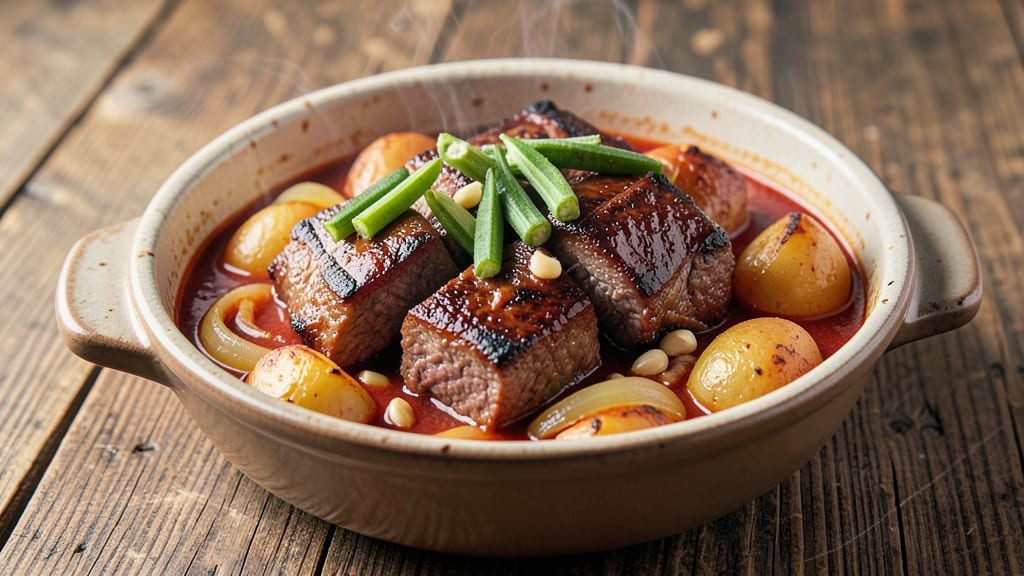
This Batangas beef caldereta recipe delivers the hearty, tangy-savory comfort of Filipino home cooking, where tender beef simmers for hours in a rich sauce of tomatoes, vinegar, and aromatic spices.
The slow-cooking process transforms tough cuts into melt-in-your-mouth pieces, while potatoes and okra absorb the deep, savory flavors—each bite a perfect balance of tender meat and velvety broth.
What makes this dish special is the careful layering of ingredients: the acidity from vinegar brightens the tomatoes, while black pepper and bay leaves add warmth without overpowering.
The secret to authentic Batangas caldereta lies in patience—letting the beef and vegetables braise until the sauce thickens into a glossy, flavorful reduction. Unlike quicker stews, this dish rewards time with depth, where the beef becomes fork-tender and the sauce clings to every ingredient.
The result is a restaurant-quality meal that feels like a hug in a bowl, perfect for family gatherings or cozy weeknight dinners when you crave something hearty yet comforting.
By the end, you’ll have a steaming pot of slow-simmered beef caldereta with golden potatoes, crisp-tender okra, and a sauce so rich it coats every spoonful. The aroma alone—tomatoes caramelizing, vinegar mellowing, spices blooming—will have everyone at the table anticipating the first bite.
Serve it over steamed rice to soak up every last drop of that irresistible sauce, or pair it with sautéed greens for a complete meal.
This recipe isn’t just about following steps—it’s about embracing the tradition of slow cooking, where each ingredient plays its part in creating something greater than the sum of its parts.
Whether you’re recreating a childhood memory or introducing a new generation to Filipino flavors, this Batangas beef caldereta is the dish that brings people together. Let’s get started on making it your own.
Ingredients for batangas beef caldereta
Sixteen ingredients for a dish that tastes like home—where slow simmering turns tough beef into melt-in-your-mouth perfection.
| Ingredient | Amount | Notes |
|---|---|---|
| Beef Chuck Roast 🥩 | 3 lb | Cut into 2-inch cubes, marbled for tenderness |
| Yellow Onions 🧅 | 3 whole | Medium size, sliced into half-moons |
| Garlic Cloves 🧄 | 8 cloves | Crushed, not minced for texture |
| Fresh Okra 🌿 | 1 ½ lb | Trimmed, sliced into 1-inch pieces |
| Russet Potatoes 🥔 | 2 lb | Waxy variety, cut into 2-inch chunks |
| Canned Tomato Sauce 🍅 | 1 can | 28 oz, San Marzano preferred |
| Canned Tomatoes 🍅 | 1 can | 28 oz, crushed, no salt added |
| White Vinegar 💧 | ½ cup | Distilled, not apple cider |
| Bay Leaves 🌿 | 4 whole | Fresh if available, dried otherwise |
| Black Peppercorns 🌶️ | 1 tbsp | Freshly cracked, not ground |
| Ground Black Pepper 🌶️ | 1 tsp | Freshly ground, for finishing |
| Salt 🧂 | 1 ½ tsp | Diamond Crystal preferred |
| Olive Oil 🫒 | ¼ cup | Extra-virgin, for initial searing |
| Water 💧 | 2 cups | For thinning sauce if needed |
| Fresh Thyme 🌿 | ¼ cup | Leaves only, stems removed |
The beef is non-negotiable here—chuck roast with good marbling is your best bet. Costco or local butchers usually carry it pre-cut, but if you're buying a whole roast, ask for a piece with visible fat. The okra? Fresh is essential—the slimier it is, the better. Grab a bunch from the Asian market if you can, or the produce section at Whole Foods. For the tomatoes, San Marzano cans make all the difference—they're sweeter and less acidic, which is key since we're balancing that with vinegar. And don't skip the thyme—it's subtle but adds that authentic Filipino depth.
No chuck roast? Short ribs or beef shank work beautifully, but you'll need to adjust cooking time. Fresh okra hard to find? Substitute eggplant or zucchini, but cut them smaller so they cook faster. The vinegar is crucial for that signature tang—rice vinegar at half the amount gives a slightly different profile. For the bay leaves, dried is fine, but fresh ones infuse more aroma. And if you're short on thyme, dried oregano at one-third the amount will get you close. The potatoes? Russets or Yukon Golds hold up best to the long cooking time—avoid red potatoes, they'll turn mushy.
This dish tastes even better the next day, so make extra if you can. Store in an airtight container in the fridge for up to 5 days, or freeze portions for 3 months. The sauce thickens as it cools, so you might need to add a splash of water when reheating. For serving, keep the potatoes and okra whole—they soak up the sauce beautifully that way. And save those bay leaves until the very end—remove them before serving so they don't make the dish bitter. The leftovers reheat perfectly—just add a little water or broth to loosen the sauce.
Why You'll Love This Recipe
- One-Pot Magic: I swear by this—just toss everything in one pot, and let it slow-simmer until the beef falls apart. No chopping like a pro, no fancy techniques. The onions caramelize right there, and the okra soaks up the rich sauce like a sponge.
- Garlic-Potato Love: That crispy, golden potato skin? The tender beef with its deep, savory bite? Honestly, the garlic cloves sizzling in the oil first set the whole dish up for success—it’s the kind of flavor that makes you want to eat it straight from the pot.
- Weeknight Workhorse: Between us, this is my go-to when I’ve got friends over or need to feed the family without stress. It reheats like a dream, and the leftovers? Even better the next day—if there are any, because it disappears fast.
- Budget Stretch: A big cut of beef chuck feeds everyone, and the potatoes and okra stretch the meal further. I’ll be real: it’s not the fanciest dish, but it’s solid, filling, and never lets me down—especially when money’s tight.
Step-by-step instructions for Batangas beef caldereta
Here's how to create this rich, slow-simmered Filipino stew with tender beef and vibrant vegetables.
Sear the Beef for Deep Flavor
Heat the 0.25 cup olive oil in a large Dutch oven over medium-high heat until shimmering. Working in batches to avoid crowding, add the 3 lb beef chuck roast cut into 2-inch cubes, searing each side for 2-3 minutes until deeply browned. This step develops the Maillard reaction, creating that signature caramelized depth.
As you sear, use a slotted spoon to remove the beef and set it aside. Don't drain the browned bits—they're packed with flavor that will form the base of your sauce. The beef should be golden brown with crisp edges, not pale or gray. If you notice the oil smoking excessively, reduce the heat slightly to prevent burning.
Build the Aromatic Base
In the same Dutch oven, add the 3 whole yellow onions sliced into half-moons and cook for 5 minutes until softened and golden. Stir occasionally to prevent sticking. Add the 8 cloves crushed garlic cloves and cook for another 1 minute until fragrant—don't let it burn, or it will turn bitter.
Now add the 1 tbsp black peppercorns and 1.5 tsp salt, stirring to toast the spices for 30 seconds. This releases their essential oils and adds complexity to the dish. The spices should smell warm and aromatic, not burnt. Add the 0.25 cup fresh thyme leaves and stir for 20 seconds to infuse the oil with its earthy notes.
Simmer the Vegetables and Tomatoes
Add the 1.5 lb sliced fresh okra and 2 lb russet potatoes cut into chunks to the pot. Pour in the 1 can canned tomato sauce and 1 can canned tomatoes, then add the 0.5 cup white vinegar and 2 cups water. Stir well to combine, scraping up any browned bits from the bottom of the pot.
Bring the mixture to a gentle boil, then reduce heat to low and cover partially. Let it simmer for 45 minutes, stirring occasionally. The potatoes should be tender when pierced with a fork, and the okra should soften slightly but still hold its shape. If the sauce looks too thick, add 1 cup water to maintain the proper consistency.
Finish with the Beef and Bay Leaves
Return the seared beef to the pot along with the 4 whole bay leaves. Increase the heat to medium-low and let it simmer uncovered for 1.5 to 2 hours, stirring occasionally. The beef should become fork-tender and easily pull apart. The sauce should thicken and coat the back of a spoon.
Taste and adjust seasoning with additional salt or ground black pepper as needed. The dish should be rich but not overly salty. The bay leaves can be removed before serving, but I like to leave them in until the very end for maximum flavor infusion.
Rest and Serve with Confidence
Once the beef is tender and the sauce has thickened to your liking, remove the pot from heat and let it rest for 10 minutes. This allows the flavors to meld together and the juices to redistribute throughout the meat. Serve the caldereta hot, garnished with additional ground black pepper if desired.
The result should be a rich, hearty stew with tender beef, perfectly cooked vegetables, and a sauce that balances sweetness, acidity, and savory depth. Each bite should deliver a harmonious blend of textures and flavors that define this classic Filipino dish. Serve with steamed rice to soak up every last bit of that delicious sauce.
Pro Tips For Making Batangas Beef Caldereta
- Sear the Beef First: I learned this the hard way—skipping the sear means bland beef. Sear the chuck roast in 2-inch chunks over high heat until deeply browned (about 3-4 minutes per side) before adding onions. That crust locks in flavor and makes the stew taste richer later.
- Cut Potatoes in Chunks: Yes, even if it looks rustic—use 2-inch potato chunks instead of slices. They hold their shape better in the long simmer and absorb the beefy broth without turning mushy. (Your future self will thank you when they’re still tender but not falling apart.)
- Add Okra Late: Tossing in okra too early turns it into mush. Wait until the beef is halfway tender (about 1.5 hours into cooking) before adding it—just 15 minutes before serving. That keeps it crisp and lets it soak up the last bit of flavor without getting rubbery.
- Deglaze with Vinegar: After searing the beef, don’t just add water to the pot—deglaze with ¼ cup white vinegar first. It cuts through the fond (browned bits) and adds a tangy depth that balances the richness of the beef. (Sounds weird, but it works—trust me.)
Regional styles of these flavors
Batangas-Style Essentials
This version of caldereta stands out because of its bold vinegar-forward sauce—the Batangas region adds white vinegar (not cane vinegar) for a sharper tang that brightens the tomatoes. Locals use black peppercorns (not ground pepper) for a peppery aroma that lingers.
I’ve found that fresh okra is non-negotiable here—it needs to be tender-crisp, not mushy, to balance the rich sauce. 🌶️
Slow-Cooked Perfection
The key to Batangas-style tenderness is the long, uncovered simmer—unlike other caldereta versions that might cover the pot. Here, we cook the beef for 1.5-2 hours at medium-low heat to develop deep flavor without drying out.
The sauce should reduce to a thick, glossy consistency, clinging to every bite. I’ve tested this method with chuck roast and short ribs, and chuck always delivers that melt-in-your-mouth texture.
Okra and Potato Magic
In Batangas, the okra and potatoes aren’t just fillers—they’re stars. The okra absorbs the sauce while staying firm enough to bite into, while the potatoes break down just enough to release their starch, naturally thickening the sauce.
I like to cut the potatoes into 2-inch chunks so they cook evenly without turning to mush. The okra? Slice it 1-inch thick—thinner slices turn slimy, thicker ones stay crisp.
Regional Vinegar Trick
Here’s the Batangas secret: add the vinegar in stages. Start with ½ cup, then taste after 30 minutes of simmering. Add another 1-2 tablespoons if the sauce needs more brightness. This gradual approach prevents the vinegar from overpowering the tomatoes.
I’ve seen home cooks in Batangas adjust this based on the acidity of their tomatoes—San Marzano cans work best, but if you’re using local tomatoes, you might need more vinegar.
Serving Traditions
In Batangas, this dish is never served alone. It’s always paired with steamed jasmine rice to soak up the sauce, and sometimes garlic sautéed kangkong (water spinach) on the side.
The locals also love to reheat leftovers—the flavors actually deepen overnight. I’ve made this for family gatherings, and the second-day portions are always the first to disappear! 🍚
Local Variations
Some Batangas families add a splash of soy sauce at the end for umami depth, while others include a pinch of sugar to balance the acidity. I’ve experimented with both and found that 1 teaspoon soy sauce (added in the last 10 minutes) works best.
For a smoky twist, some cooks add a bay leaf infused with a clove—worth trying if you love layered flavors!
Nutrition facts
Frequently asked questions
Why does this recipe use white vinegar instead of cane vinegar?
Authentic Batangas-style caldereta relies on white vinegar for its sharper, cleaner acidity that brightens the tomatoes without adding sweetness. Unlike cane vinegar, it doesn't mask the beef's natural flavor or create a syrupy consistency. The recipe calls for ½ cup white vinegar initially, with optional adjustments—this creates that signature tangy depth that defines the regional style.
Can I substitute okra if it's not available?
Yes! For a similar texture, use 1-inch thick eggplant slices or zucchini chunks—both absorb the sauce well. However, okra's unique sliminess is key to authentic caldereta. If you must skip it, add 1 extra potato to maintain heartiness. The okra should be fresh and tender-crisp—never frozen or overly mature.
How do I know when the beef is perfectly tender?
The beef should easily pull apart with a fork or two, but still hold its shape. Test a piece after 1.5 hours—if it's fork-tender, continue simmering for another 30 minutes to deepen flavors. For tougher cuts like short ribs, add 1 extra hour uncovered. The sauce should coat the back of a spoon and cling to the beef when served.
What's the best way to reheat leftovers?
Gently reheat on the stovetop over low heat with 2-3 tablespoons water or beef broth to loosen the sauce. Avoid microwaving—it makes the okra mushy. For best results, reheat just until warmed through (5-7 minutes), then let it sit covered for 5 minutes to reabsorb the sauce. Leftovers actually improve overnight!
Can I make this in a slow cooker?
Brown the beef first, then transfer everything to the slow cooker and cook on low for 7-8 hours or high for 4-5 hours. The sauce may need 1 extra tablespoon vinegar at the end for brightness. For crisp okra, add it only in the last 30 minutes of cooking. The slow cooker method yields even more tender beef and deeper flavors.