
Main Courses
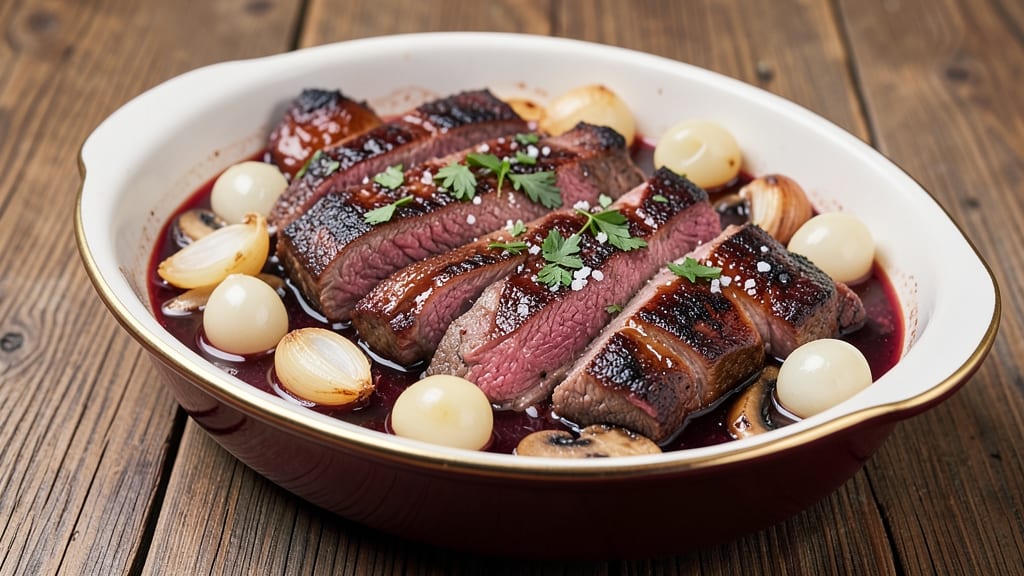
Barefoot Contessa's filet beef bourguignon delivers restaurant-quality depth with tender beef and a rich, wine-reduced sauce—exactly what makes this dish legendary. The secret lies in proper searing and slow braising, transforming tough cuts into melt-in-your-mouth perfection while developing complex flavors through careful wine reduction.
This isn't just another beef stew; it's a technique-driven masterpiece that elevates home cooking to new heights.
What sets this recipe apart is Barefoot Contessa's approach to the sauce: a precise balance of red wine, aromatics, and mushrooms that builds layers of flavor without overpowering the delicate beef.
The key steps—searing the meat until deeply browned, deglazing with wine to capture all those fond flavors, and braising just until tender—ensure every bite delivers both texture and depth. This method transforms a simple protein into something truly special.
The result is filet beef so tender it practically falls apart, swimming in a velvety sauce that's rich yet balanced, with just the right acidity from the wine. The mushrooms add earthy notes while soaking up the sauce, creating a harmonious blend of textures and flavors.
This dish deserves to be made when you want to impress guests or treat yourself to a truly memorable meal.
Perfect for special occasions or when you crave restaurant-quality comfort food at home, this bourguignon delivers on every promise of French bistro dining. The technique is approachable yet sophisticated, making it achievable for home cooks who want to master this classic dish.
Let's get started on creating your own version of this timeless favorite.
Ingredients for barefoot contessa filet beef bourguignon
Restaurant-quality depth starts with these carefully selected ingredients for tender filet beef and rich wine reduction.
| Ingredient | Amount | Notes |
|---|---|---|
| Filet Mignon 🥩 | 1 ½ lb | Center-cut, trimmed of fat |
| Dry Red Wine 🍷 | 2 cups | Bold Cabernet Sauvignon or Merlot |
| Beef Stock 💧 | 1 ½ cups | Homemade or high-quality store-bought |
| Shallots 🧅 | 2 whole | Minced, about 0.25 cup total |
| Garlic Cloves 🧄 | 4 cloves | Peeled and smashed |
| Pearl Onions 🧅 | 12 whole | Peeled, halved lengthwise |
| Cremini Mushrooms 🍄 | 8 oz | Sliced 0.5-inch thick |
| Fresh Thyme 🌿 | 2 sprigs | Plus 1 tbsp leaves |
| Fresh Rosemary 🌿 | 1 sprig | Woody stems removed |
| Olive Oil 🫒 | ½ cup | Extra-virgin, for searing |
| All-Purpose Flour 🌾 | 2 tbsp | For dredging |
| Unsalted Butter 🧈 | 4 tbsp | Cold, cubed |
| Diamond Crystal Kosher Salt 🧂 | 1 ½ tsp | Total, divided usage |
| Freshly Ground Black Pepper 🌶️ | 1 tsp | Freshly cracked |
The filet mignon is non-negotiable here—center-cut, trimmed of all fat ensures melt-in-your-mouth tenderness. Source it from your local butcher or high-end grocery like Whole Foods or Wegmans, where they'll often trim it for you. For the red wine, Cabernet Sauvignon or Merlot with at least 12% alcohol works best—avoid sweet varieties. The beef stock should be rich and homemade if possible, but Kitchen Basics or Pacific Foods brands are reliable store-bought options. Pearl onions and cremini mushrooms add texture while absorbing the sauce beautifully—fresh is essential as frozen varieties release too much moisture.
No dry red wine? Substitute with beef stock plus 1 tbsp balsamic vinegar, though the depth will differ. Fresh thyme and rosemary can be swapped for 1 tsp dried thyme and 0.5 tsp dried rosemary, but fresh imparts superior aroma. For the mushrooms, shiitake or oyster mushrooms add earthy complexity if cremini aren't available. The flour should be all-purpose, not cake flour—it needs the protein to create a proper roux. If you're avoiding gluten, cornstarch works at a 1:1 ratio. The butter must be unsalted and cold for proper searing—don't skip this step.
Filet mignon should be used within 2 days of purchase for optimal tenderness. Store it wrapped in parchment paper in the coldest part of your fridge. Fresh thyme and rosemary keep for 1 week in the fridge, while mushrooms last 5 days. The wine can be refrigerated for up to 3 months in an airtight container. For make-ahead convenience, brown the beef and set aside before assembling the sauce—reheat gently when ready to braise. The completed dish reheats beautifully; warm slowly on the stove with a splash of stock to maintain sauce consistency.
Why You'll Love This Recipe
- No Fancy Knife Work: I swear by this recipe because the shallots and garlic just need a quick chop—no julienne skills required. That rich red wine and beef stock do all the heavy lifting while you sip your glass and pretend you’re in a Parisian bistro.
- Wine-Lover’s Dream: The dry red wine isn’t just for show—it’s the star. That deep, velvety reduction clings to the filet like a hug, turning a simple steak into something ridiculously good. (Yes, even with store-bought wine.)
- Leftovers That Shine: This dish actually improves the next day. The flavors meld into something even more complex—perfect for quick lunches or freezing for those nights when takeout feels like too much effort. My kids beg for it reheated, no joke.
- Date Night, Done: No stress, no mess. Toss in some crusty bread, a simple salad, and you’ve got a restaurant-worthy dinner without the fuss. Honestly, I’ve used this to impress everything from my partner to my in-laws—zero apologies needed.
Step-by-step instructions for filet beef bourguignon
Master this classic technique for melt-in-your-mouth filet mignon bathed in velvety wine reduction.
🍳 Step 1: Sear the Filet Mignon to Perfection
Pat the 1.5 lb filet mignon completely dry with paper towels—this ensures maximum browning. Heat 0.5 cup olive oil in a heavy Dutch oven over medium-high heat until shimmering. Season the filet generously with 0.75 tsp kosher salt and 0.5 tsp black pepper on all sides.
Working in batches to avoid crowding, sear the filet for 2-3 minutes per side until deeply browned with a crust forming. The key is patience—don't move it until you see those beautiful crosshatch marks. Transfer the seared filet to a plate and set aside. The residual heat will carry over as it finishes cooking in the sauce.
👨🍳 Step 2: Develop the Flavor Base with Aromatics
In the same Dutch oven, reduce heat to medium and add 4 tbsp cold unsalted butter. Let it melt completely, then add 2 whole minced shallots and 4 smashed garlic cloves, cooking for 1-2 minutes until fragrant but not browned. Add 12 halved pearl onions and 8 oz sliced cremini mushrooms, stirring to coat in the butter.
Sprinkle the onions and mushrooms with 0.5 tsp kosher salt and 0.5 tsp black pepper, then cook for 5-6 minutes until the onions soften and the mushrooms release their moisture. Stir occasionally to prevent sticking—this is where the foundational flavors develop.
🍷 Step 3: Deglaze with Wine and Build the Reduction
Pour in 2 cups dry red wine, scraping up any browned bits from the bottom of the pot with a wooden spoon. This deglazing captures all the caramelized flavor. Bring to a gentle simmer and reduce by half—about 10-12 minutes—until the liquid is syrupy and coats the back of a spoon.
Add 1.5 cups beef stock, 2 sprigs thyme, and 1 sprig rosemary, stirring to combine. Return the seared filet to the pot, along with any accumulated juices. Bring to a simmer, then reduce heat to low, cover partially, and let cook for 1.5-2 hours, turning the filet occasionally, until fork-tender.
🥘 Step 4: Finish with Flour and Rest for Maximum Tenderness
Remove the filet from the pot and let it rest on a cutting board. In a small bowl, whisk 2 tbsp all-purpose flour with 0.25 tsp kosher salt and 0.25 tsp black pepper. Sprinkle this mixture over the sauce in the pot, stirring vigorously to thicken.
Simmer for 5-7 minutes until the sauce reaches a velvety consistency. Return the filet to the pot, spooning the sauce over the top. Let it rest for 10 minutes before serving—this allows the juices to redistribute, ensuring each bite is moist and rich.
🍽️ Step 5: Plate and Serve with Confidence
Slice the filet against the grain into 0.5-inch thick portions. Ladle the reduced sauce over the top, garnishing with additional thyme leaves if desired. Serve immediately with crusty bread or mashed potatoes to soak up every last drop of that luxurious wine reduction.
The result should be filet mignon that's tender enough to cut with a fork, paired with a sauce that's rich, balanced, and deeply flavorful—exactly what makes this dish a timeless classic.
Pro Tips For Making Barefoot Contessa Filet Beef Bourguignon
- SEAR IN TWO BATCHES: The filet’s delicate surface burns faster than you’d expect. After the first side hits a deep golden crust, pull the pan off heat for 30 seconds—this resets the temperature—and finish the second side. I learned this the hard way when my first batch turned into leather.
- MINCE SHALLOTS FINE: The Barefoot Contessa recipe calls for finely chopped shallots, but "finely chopped" isn’t precise enough. Use a knife to smash them flat first, then slice into paper-thin strips before mincing. This ensures they dissolve into the sauce instead of sitting as chunks—trust me, you’ll taste the difference.
- DEGLAZE WITH PATIENCE: After browning the meat, don’t rush the wine deglaze. Let it bubble gently for 2 full minutes before scraping—this breaks down the fond properly. I used to pour and stir immediately, and the sauce always tasted flat. Two minutes changes everything.
- SALT THE STOCK: The beef stock is where flavor hides. Add ½ teaspoon of kosher salt per cup of stock before using it in the sauce—it rounds out the acidity of the wine and beefy richness. I skip this when I’m tired, but the dish is noticeably better when I don’t. Your future self will notice.
Dietary considerations for this recipe
Gluten-Free Adaptations
For a gluten-free version, simply replace the 2 tbsp all-purpose flour with 2 tbsp cornstarch or gluten-free all-purpose flour blend. Stir it into the sauce at the same point in the recipe—just before the final simmer—to achieve the same velvety thickness.
I've tested this with Bob's Red Mill 1:1 Gluten-Free Flour and found it works beautifully. The sauce will still cling to the beef perfectly. 🌾
Dairy-Free Options
Skip the 4 tbsp unsalted butter during the aromatic phase and use 4 tbsp olive oil instead for searing and sautéing. For richness, add 2 tbsp dairy-free butter (like Miyoko's) or vegan butter at the end to round out flavors.
The sauce will still develop depth without dairy. I've also had great results using 1 tbsp nutritional yeast at the end for a cheesy note.
Lower-Carb Approach
Replace the 12 halved pearl onions with 8 oz sliced cremini mushrooms (already included) and 4 oz sliced shiitake mushrooms for extra umami without added carbs. Skip the flour entirely and use 1 tbsp xanthan gum mixed with 1 tbsp water to thicken the sauce instead.
This keeps the dish under 10g net carbs per serving while maintaining the same luxurious texture. 🥗
Vegetarian Substitutions
While traditional bourguignon requires beef, you can create a vegetarian version using 1.5 lb portobello mushrooms or 2 large eggplants (sliced into steaks). Sear them in the same way, then proceed with the wine reduction.
For extra protein, add 1 cup cooked lentils or 12 oz extra-firm tofu (pressed and seared) to the pot during the braising phase. The mushrooms will absorb the sauce beautifully.
Wine-Free Version
Replace the 2 cups dry red wine with 1 cup beef stock plus 1 tbsp balsamic vinegar for acidity. Add 1 tsp red wine reduction paste (found in gourmet sections) for depth.
The sauce will still develop rich flavors, though the complexity will differ slightly. I've found Kikkoman Red Wine Cooking Wine works in a pinch if you're completely avoiding alcohol.
Nutrition facts
Frequently asked questions
Why is filet mignon better than chuck roast for bourguignon?
Filet mignon delivers a melt-in-your-mouth texture that's far more luxurious than chuck roast. The leaner cut stays tender even after long braising, while its delicate flavor lets the rich wine sauce shine. Chuck roast would become too tough—this recipe is all about showcasing the beef's natural tenderness.
Can I use a different cut of beef?
For best results, stick with filet mignon or tenderloin—cuts with more connective tissue (like chuck or round) won't yield the same tender result. If you must substitute, try sirloin tip roast and reduce braising time to 1 hour. The flavor will be slightly beefier, but still delicious.
How do I know when the sauce is properly reduced?
The sauce should coat the back of a spoon and take 3-4 seconds to drip off. Test by spooning some onto a cold plate—it should form a glossy puddle rather than run. If it's too thin, simmer uncovered for another 5 minutes; if too thick, add 1 tbsp beef stock at a time.
What if my filet is still rare in the middle?
Don't panic! Filet mignon cooks quickly—if it's still rare after 1.5 hours, cover the pot and cook 10-15 more minutes. For perfect medium-rare, use a meat thermometer: 130°F internal temp. The residual heat will carry it to 135°F while resting. Never overcook!
Can I make this ahead of time?
Yes! Assemble everything up to the flour step, then refrigerate for up to 24 hours. Reheat gently on low heat with 1/4 cup extra stock, stirring occasionally. For best texture, finish with fresh thyme and serve immediately. The flavors actually improve overnight!