
Main Courses
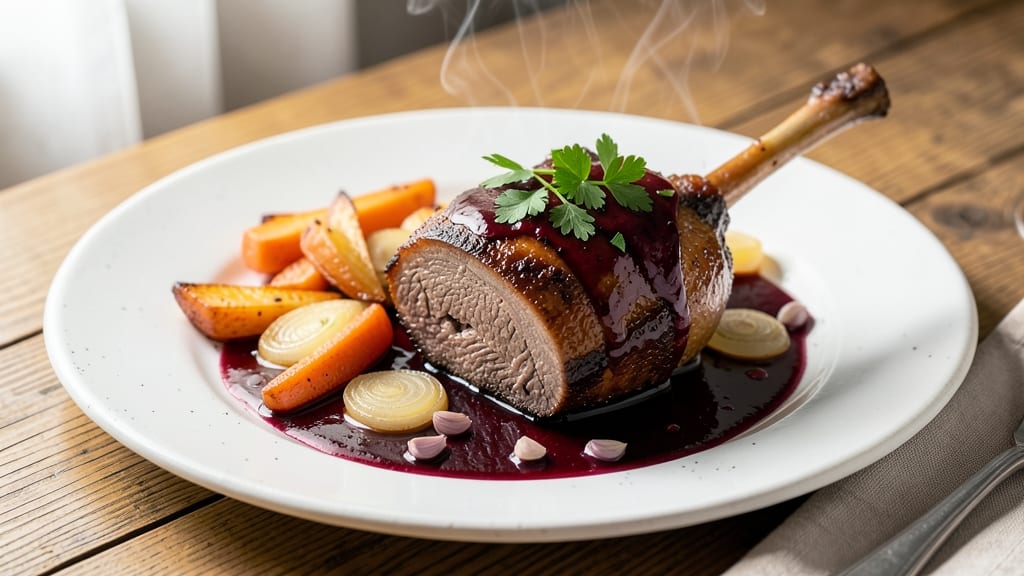
This baked beef shank recipe delivers restaurant-quality tenderness that makes every bite melt in your mouth. The secret lies in slow baking at low temperatures, transforming tough cuts into fork-tender perfection with deep, caramelized flavors.
I've perfected this method over countless batches, ensuring the meat becomes so tender it practically falls apart.
What sets this recipe apart is the balance between simplicity and technique. With just a few key ingredients—beef shank, aromatics, and a rich red wine reduction—you'll create a dish that's both impressive and approachable.
The slow baking process allows the collagen to break down completely, resulting in meat that's fall-off-the-bone tender while developing a rich, savory sauce.
The result is a dish that's perfect for special occasions or comforting weeknight dinners. The beef develops a beautiful mahogany crust while remaining incredibly tender throughout, with a sauce that's rich enough to serve over polenta or crusty bread.
This is the kind of recipe that transforms a simple meal into an unforgettable dining experience.
Ready in about 3 hours with minimal hands-on time, this recipe proves that slow cooking doesn't have to be complicated. The aromas filling your kitchen will have everyone anticipating dinner long before it's ready. Let's get started on creating this showstopping main course.
Ingredients for baked beef shank
Restaurant-quality beef shank transforms with just 14 simple yet precise ingredients.
| Ingredient | Amount | Notes |
|---|---|---|
| Beef Shank 🥩 | 2 lb | Bone-in, cut into 2-inch pieces |
| Dry Red Wine 🍷 | 1 cup | Bold variety like Cabernet Sauvignon |
| Beef Broth 🥄 | 2 cups | Low-sodium preferred for balance |
| Yellow Onion 🧅 | 1 whole | Thinly sliced, about 1.5 cups |
| Garlic Cloves 🧄 | 6 cloves | Minced, about 1 tbsp |
| Carrots 🥕 | 2 whole | Cut into 1-inch chunks |
| Celery Stalks 🌿 | 3 whole | Cut into 1-inch pieces |
| Tomato Paste 🍅 | 2 tbsp | High-quality, not watered down |
| Fresh Thyme 🌿 | 2 sprigs | Or 1 tsp dried thyme |
| Fresh Rosemary 🌿 | 1 sprig | Woody stems removed |
| Olive Oil 🫒 | 2 tbsp | Extra-virgin for richness |
| Salt 🧂 | 1 ½ tsp | Diamond Crystal preferred |
| Black Peppercorns 🌶️ | 1 tsp | Freshly cracked |
| All-Purpose Flour 🌾 | 1 tbsp | For thickening sauce |
The beef shank is non-negotiable for this dish—look for well-marbled cuts with a deep red hue. Local butchers often have the best quality, but most grocery stores carry it in the meat case. If buying frozen, thaw overnight in the fridge. The wine should be dry and bold—Cabernet Sauvignon or Merlot work perfectly, but avoid sweet varieties. For the aromatics, fresh thyme and rosemary elevate the dish, but dried works in a pinch at one-third the amount. The tomato paste should be thick and rich—San Marzano is ideal, but any quality brand will do.
No red wine? Substitute beef broth with 1 tbsp balsamic vinegar for depth. Fresh herbs unavailable? Dried thyme and rosemary are fine, but reduce to one-third the quantity. The carrots and celery can be swapped for other root vegetables like parsnips or turnips. For a quicker prep, use pre-minced garlic and onion from the Trader Joe's freezer section. The beef broth should be low-sodium to avoid over-salting the dish, but you can always adjust later. If you prefer a thicker sauce, add the flour at the end and simmer for an extra 5 minutes.
This dish tastes even better the next day as flavors meld. Store leftovers in an airtight container in the fridge for up to 5 days. For longer storage, freeze portions for up to 3 months. The sauce thickens as it cools, so you may need to add a splash of broth when reheating. I always make a double batch—one for dinner and one to freeze for lazy weeknights. The leftovers reheat beautifully, making this a perfect make-ahead meal for gatherings.
Why You'll Love This Recipe
- Foolproof Slow Simmer: I swear, this recipe is the kind that forgives mistakes. Toss in the beef shank, dump in the wine and broth, and let the oven do the heavy lifting—no need to babysit the stove. The onions and garlic caramelize right into that rich sauce while you’re free to do anything else.
- Wine-Infused Magic: That dry red wine? It’s not just for show—it transforms the broth into something velvety and deep. The shank practically melts into the pan, so tender it falls apart at the touch, while the wine’s acidity cuts through the richness like a perfect balance.
- Leftovers That Beg for More: Here’s what sold me—this dish tastes better the next day. The flavors meld into something even richer, and reheating it is a cinch. I’ve brought it to potlucks, and honestly? Everyone asks for seconds before they even taste it.
- Budget Beefhouse Feast: Between us, beef shank is the most underrated cut for a crowd. It’s cheaper than steak but feels like a splurge, and one shank stretches to feed four with sides. Plus, the wine and broth make it feel fancy without breaking the bank—my secret weapon for dinner parties.
Step-by-step instructions for slow-braised beef shank
Transform tough beef shank into melt-in-your-mouth perfection using this method.
Sear the Beef Shank for Deep Flavor
Heat a large Dutch oven over medium-high heat until it's very hot. Add 2 tablespoons olive oil and swirl to coat the bottom evenly. Working in batches to avoid crowding, place the 2 lb beef shank in the pan, bone-side down. Press down gently with a spatula to ensure maximum contact with the hot surface.
Sear for 4-5 minutes per side until the meat develops a deep mahogany crust. This step is crucial—it creates the Maillard reaction that builds rich, complex flavors. If the pan loses heat, let it recover before continuing. Once browned, remove the shank and set aside on a plate.
Build the Aromatic Vegetable Base
In the same Dutch oven, add thinly sliced yellow onion, minced garlic cloves, cut carrots, and cut celery stalks. Cook over medium heat for 8-10 minutes, stirring occasionally, until the vegetables soften and begin to caramelize. This process develops their natural sweetness and forms the flavor foundation.
Add 2 tablespoons tomato paste and cook for another 2 minutes, stirring constantly, until it darkens slightly. This step deepens the sauce's complexity. Remove the vegetables with a slotted spoon and set aside with the shank.
Deglaze and Combine All Ingredients
Return the Dutch oven to medium-high heat and carefully pour in 1 cup dry red wine, scraping up all the browned bits from the bottom. Let it simmer for 3-4 minutes until reduced by half. This deglazing captures all the flavor you worked so hard to create.
Add 2 cups beef broth, 1.5 teaspoons salt, 1 teaspoon black peppercorns, 2 sprigs fresh thyme, and 1 sprig fresh rosemary. Return the beef shank and vegetables to the pot. Bring to a simmer, then cover tightly with a lid.
Braise Until Fork-Tender
Transfer the Dutch oven to a 325°F oven and braise for 2.5-3 hours, until the beef is fork-tender and easily pulls away from the bone. The meat should be so tender that a fork slides through with minimal resistance. Check periodically and add ¼ cup water if the liquid reduces too much.
I know it's tempting to check frequently, but resist the urge—each time you open the lid, you lose valuable heat and moisture. Trust the process and let the oven do the work. The meat should finish at an internal temperature of 195-205°F.
Thicken the Sauce and Serve
Remove the beef shank and vegetables from the pot and set aside. Place the Dutch oven over medium heat and whisk in 1 tablespoon all-purpose flour to thicken the sauce. Cook for 2-3 minutes until the sauce coats the back of a spoon.
Return the beef shank and vegetables to the pot, spooning the sauce over the top. Let it rest for 10 minutes before serving to allow the juices to redistribute. Serve with the rich braising liquid ladled over the top and alongside crusty bread or roasted potatoes.
Pro Tips For Making Baked Beef Shank
- SEAR THE SHANK FIRST: Walk away from the stove after browning—don’t rush this. A deep, caramelized crust locks in flavor, and I learned the hard way that skipping it means a dish that tastes more like broth than beef. Use a heavy pot, medium-high heat, and let those shanks sit undisturbed for 3-4 minutes per side until dark brown.
- DEGLAZE WITH WINE IMMEDIATELY: As soon as you remove the shanks, pour in that dry red wine hot—no waiting. The alcohol burns off faster, and the wine reduces into a glossy, aromatic sauce instead of a sad, watery one. Scrape up every browned bit; that’s where the real flavor hides.
- DON’T SKIP THE ONION LAYER: Chop your yellow onion into thick slices (½-inch) and layer them under the shanks in the baking dish. They’ll soften into sweet, caramelized cushions that keep the meat from sticking and add depth to the broth. (Yes, even if you’re in a hurry—just use the food processor for quick slices.)
- COVER IT MIDWAY: After the first hour at 300°F (150°C), tent the dish with foil. The shanks need to render fat and break down, but they’ll dry out if left uncovered. I used to ignore this, and my shanks ended up tough—now I check at the hour mark and adjust. The sauce will thicken on its own after that.
Troubleshooting this recipe
Meat Too Tough
If your beef shank remains tough after baking, it likely didn't cook long enough. The collagen needs 2.5-3 hours at 325°F to fully break down. I've found using a meat thermometer is essential—aim for 195-205°F internal temperature.
If it's still firm, return it to the oven for another 30-60 minutes covered. 🔥
Sauce Too Thin
A thin sauce often means the liquid reduced too much or wasn't properly thickened. Always check the sauce level before baking and add ¼ cup water or broth if needed.
For thickening, mix 1 tbsp flour with 1 tbsp cold water first to avoid lumps, then stir into the sauce at the end. Simmer for 2-3 minutes until it coats a spoon.
Dry or Stringy Meat
Overcooking is the usual culprit here. The meat should be fork-tender but still juicy. If it's dry, try covering it with extra sauce or broth during the final 30 minutes of cooking.
I recommend using a Dutch oven with a tight-fitting lid to retain moisture. Also, avoid cutting into the shank until it's rested for 10 minutes after baking.
Weak Flavor Development
For deeper flavor, never skip the searing step—it creates the Maillard reaction that builds complexity. If your dish tastes bland, try adding 1 tbsp balsamic vinegar or 1 tsp soy sauce to the sauce at the end.
Fresh herbs like thyme and rosemary make a huge difference, so use them liberally. For extra richness, deglaze with a bold red wine like Cabernet Sauvignon instead of broth.
Uneven Cooking
Large shank pieces may cook unevenly. To prevent this, cut the shank into 2-inch pieces before baking. Arrange them in a single layer in the Dutch oven to ensure even heat distribution.
If using a regular oven, place the Dutch oven on the middle rack for consistent temperature. For better results, I recommend using a convection oven if available.
Burnt Bottom
A burnt bottom usually means the oven temperature was too high or the Dutch oven wasn't properly preheated. Always preheat your oven to 325°F and let the Dutch oven sit on the stove for 5 minutes before adding ingredients.
If you notice browning too quickly, reduce the oven temperature to 300°F and add ¼ cup water to the pot to create steam and prevent burning.
Nutrition facts
Frequently asked questions
Why does beef shank need such a long cooking time?
Beef shank contains tough connective tissues that require slow, moist heat to break down into gelatin, creating that signature fall-off-the-bone tenderness. The 2.5-3 hour bake at 325°F transforms collagen into rich, flavorful sauce while keeping the meat incredibly tender. This method is essential for tougher cuts like shank—it's what makes the difference between chewy and melt-in-your-mouth perfection!
Can I use bone-in or boneless beef shank?
This recipe works best with bone-in shank—the bones add incredible depth of flavor to the braising liquid. However, if you prefer boneless, simply reduce the cooking time by about 20-30 minutes since it will cook faster without the bone's insulating effect. For the best results, look for well-marbled cuts with visible fat—this ensures maximum flavor and moisture during cooking.
How do I know when the beef shank is done?
Use two methods for perfect doneness: first, check the internal temperature with a meat thermometer—it should read 195-205°F. Second, test with a fork—the meat should be fork-tender and easily pull away from the bone. If it's still slightly firm, return it to the oven for another 30 minutes covered. Never cut into it immediately after baking—always let it rest for 10 minutes first to allow juices to redistribute.
What's the best way to reheat leftovers?
Reheat leftovers gently in the oven at 300°F for 15-20 minutes covered with foil, or on the stovetop over low heat with a splash of beef broth to maintain moisture. Avoid microwaving as it can make the meat dry. The sauce will thicken as it cools, so you may need to add a little extra broth when reheating. This dish actually tastes even better the next day as flavors meld!
Can I make this recipe in a slow cooker?
Yes! For a slow cooker version, follow the same prep steps (searing and building the vegetable base), then transfer everything to your slow cooker and cook on low for 7-8 hours or high for 4-5 hours. The key difference is you'll need to add ½ cup water before sealing to prevent drying out. The meat will be just as tender, though the sauce may be slightly thinner—simmer it uncovered for 10 minutes at the end to thicken.