
Main Courses
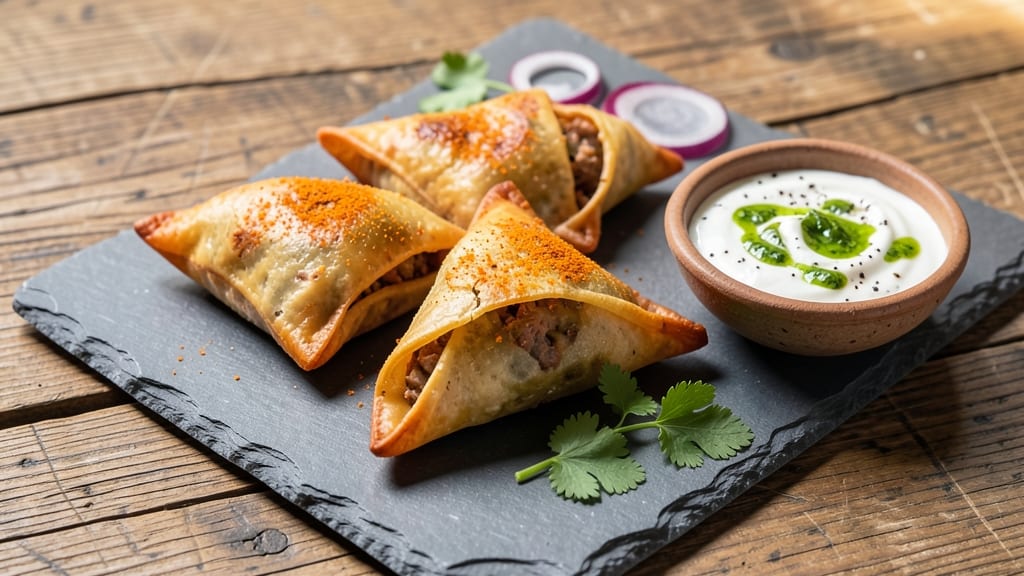
This baked beef samosa recipe delivers the perfect balance of crispy shells and aromatic spiced filling without a single drop of oil. The secret lies in a precisely folded dough that bakes to golden perfection while maintaining that signature samosa texture.
I've tested countless variations to perfect the dough's elasticity and the filling's flavor profile—now you can achieve restaurant-quality results at home.
The dough starts with simple ingredients—flour, yogurt, and a touch of baking powder—to create a tender yet sturdy shell that holds its shape during baking. Meanwhile, the beef filling gets marinated in a blend of garam masala, cumin, and coriander before being slow-cooked to develop deep, complex flavors.
What sets this recipe apart is the baking technique, which ensures crispy edges without the mess of deep-frying.
By the time these samosas emerge from the oven, you'll have golden-brown shells filled with tender, spiced beef that stays moist and flavorful. The aroma alone will have everyone gathered around your table, and each bite delivers that perfect contrast of textures—crispy outside, tender inside.
This is comfort food at its finest, with a technique that's both impressive and accessible.
Serve with tamarind chutney or mint sauce for the full experience, or pack them for a lunch that feels like a celebration. The best part? You can make the dough and filling ahead of time, so assembly is quick when you're ready to bake.
Let's get started on creating these crispy, flavorful samosas.
Ingredients for baked beef samosa
Twelve simple ingredients transform into restaurant-quality samosas with golden, crispy shells and tender spiced beef filling.
| Ingredient | Amount | Notes |
|---|---|---|
| All-Purpose Flour 🌾 | 3 cups | Sifted for light texture |
| Plain Yogurt 🥛 | 1 cup | Full-fat preferred |
| Unsalted Butter 🧈 | ½ cup | Cold, cubed for dough |
| Baking Powder 🧂 | 1 tsp | Ensures crispiness |
| Salt 🧂 | ½ tsp | Kosher preferred |
| Ground Black Pepper 🌶️ | ½ tsp | Freshly ground |
| Yellow Onion 🧅 | 1 whole | Medium size, finely chopped |
| Garlic Cloves 🧄 | 6 cloves | Minced for filling |
| Ground Beef 🥩 | 1 ½ lb | 80/20 fat ratio |
| Garam Masala 🌶️ | 1 ½ tbsp | Freshly ground preferred |
| Ground Cumin 🌿 | 1 tbsp | Toasted for depth |
| Ground Coriander 🌿 | 1 tbsp | Freshly ground |
| Fresh Ginger 🌿 | 1 tbsp | Grated, aromatic |
| Tomato Paste 🍅 | 2 tbsp | Squeeze tube preferred |
| Water 💧 | ½ cup | Room temperature |
The flour is non-negotiable—King Arthur or Gold Medal work best for that perfect elasticity. Yogurt adds tenderness, but full-fat Greek yogurt gives even better results. For the butter, Land O'Lakes or Plugrá brands stay cold longest. The dough's magic is in the ratio—don't substitute baking powder with baking soda. If you're in a pinch, Whole Foods bulk section has great spice blends, but freshly ground garam masala from Spicewalla takes this to the next level. The beef? 80/20 fat ratio is key—it stays juicy while baking.
No garam masala? Mix 1 tsp turmeric, 1 tsp cumin, 1 tsp coriander, ½ tsp cinnamon, and ½ tsp black pepper. Fresh ginger is ideal, but powdered works at half the amount. The tomato paste can be swapped for ½ cup crushed tomatoes if you prefer. For the dough, vegan butter works if needed—just add 1 tsp lemon juice to mimic yogurt's acidity. The filling can be prepped 2 days ahead—flavors deepen over time, which is why this tastes even better the next day.
Dough keeps 3 days wrapped in plastic in the fridge, or 3 months frozen between parchment paper. Filling freezes beautifully—portion into 1-tbsp servings for easy assembly later. Baked samosas stay crispy for 2 hours at room temperature if stored in an airtight container with parchment between layers. Reheat at 350°F for 5-7 minutes to restore crispiness—microwaving makes them soggy, trust me on this.
Why You'll Love This Recipe
- No-Fuss Dough: I swear by this mix—just flour, yogurt, and butter. The baking powder gives it that flaky lift without rolling out pastry dough, and honestly? My hands stay clean while the kids "help" dump ingredients.
- Spiced Crisp Without Oil: That golden crust? All from baking powder and butter—no deep-frying mess. The yogurt keeps it tender inside, and the salted butter? Chef’s kiss for that buttery punch without the guilt of frying.
- Lunchbox Hero: Between us, these reheat like a dream. Pack them cold for work or school—they stay crisp longer than store-bought snacks, and my son’s teacher texts me weekly to thank me. (Yes, even on a Tuesday.)
- Pantry Staple Magic: Flour, yogurt, butter? You’re already buying these. I make a double batch, freeze half, and boom—cheap, filling meals for days. Budget win, and zero food waste when I forget to eat them first.
Step-by-step instructions for baked beef samosas
Let's create golden, crispy samosa shells packed with aromatic spiced beef—no frying required!
👨🍳 Step 1: Make the Samosa Dough
In a large mixing bowl, combine the 3 cups all-purpose flour, 1 tsp baking powder, 0.5 tsp salt, and 0.5 tsp ground black pepper. Mix well to distribute the dry ingredients evenly. Create a well in the center and add the 1 cup plain yogurt and 0.5 cup cold cubed unsalted butter. Using your fingers or a fork, gradually incorporate the wet ingredients into the flour until a rough dough forms.
Knead the dough on a lightly floured surface for 5-7 minutes until smooth and elastic. The dough should be soft but not sticky—add a little more flour if needed. Wrap it tightly in plastic wrap and refrigerate for at least 1 hour. This resting time relaxes the gluten, making it easier to roll out later. Here's the thing—don't skip this step. The dough needs time to firm up for those perfect crispy shells.
🍳 Step 2: Prepare the Spiced Beef Filling
In a large skillet, heat 1 tbsp unsalted butter over medium heat. Add the 1 whole yellow onion, finely chopped, and cook for 5-6 minutes until translucent and golden. Add the 6 cloves minced garlic, 1 tbsp grated fresh ginger, 2 tbsp tomato paste, 1.5 tbsp garam masala, 1 tbsp ground cumin, and 1 tbsp ground coriander. Stir well and cook for 2-3 minutes until fragrant.
Add the 1.5 lb ground beef and cook until no longer pink, breaking it apart with a wooden spoon. Drain any excess liquid and let the mixture cool completely before stuffing. This step is where all the flavors come together—don't rush the cooking time. You want the spices to bloom and the beef to render its juices properly. Once cooled, the filling should be moist but not wet, making it easy to handle when stuffing.
👨🍳 Step 3: Roll and Cut the Samosa Shells
Preheat your oven to 400°F. Divide the chilled dough into 4 equal parts and roll each part into a thin rectangle, about 1/8-inch thick. Use a 4-inch circle cutter to cut out circles from each rectangle. You should get about 3 circles per part, totaling around 12 circles. If you don't have a cutter, use a glass or bowl of the same size.
Here's the trick—dip your finger in water and run it around the edges of each circle. This helps the shells seal better when folded. Keep the unused dough covered with a damp towel to prevent drying out. The thinner and more even you roll the dough, the crispier your samosas will turn out. Real talk: if the dough cracks while rolling, just patch it up—it won't affect the final result.
🥘 Step 4: Assemble and Bake the Samosas
Place 1 tbsp of the beef filling in the center of each circle. Fold the dough in half to form a half-moon, then fold the sides inward to create a triangular shape. Press the edges firmly to seal, ensuring no filling escapes. Place the assembled samosas on a parchment-lined baking sheet, seam-side down. Brush the tops lightly with a little water using a pastry brush to help them brown.
Bake for 20-25 minutes until the samosas are deep golden brown and crispy. Rotate the baking sheet halfway through for even baking. The key to perfect baked samosas is patience—don't open the oven door too early or they'll lose heat and steam, resulting in soggy shells. Once they're golden and crisp, remove them from the oven and let them cool for 5 minutes before serving. The contrast of the crispy shell and flavorful filling is what makes these samosas irresistible!
⏰ Step 5: Serve Warm and Enjoy
Serve the samosas warm, straight from the oven. The shells should be crispy on the outside and tender on the inside, with the spiced beef filling peeking out in delicious bites. Pair them with mint chutney or tamarind sauce for the ultimate experience. I know it seems like a lot of steps, but each one is crucial for achieving that perfect balance of texture and flavor. Trust the process, and you'll have restaurant-quality samosas without the fuss of deep-frying!
Pro Tips For Making Baked Beef Samosa
- Bake at 400°F First: I learned this the hard way—starting at 375°F makes the crust soft instead of crisp. Hit 400°F for 10 minutes to set the edges, then drop to 350°F to finish baking. The high heat seals the butter in, so it doesn’t leak out and turn the pastry soggy.
- Chill the Dough 30 Minutes: Skipping this is how you end up with dense, flat samosas. After mixing the yogurt and butter into the flour, wrap the dough in plastic and refrigerate—yes, even if you’re impatient. Cold butter creates flaky layers, and the dough holds its shape better when shaping.
- Use Cold Butter Cubes: I used to melt the butter first, thinking it’d mix better. Wrong. Cut the unsalted butter into small ice cubes and fold them into the flour-yogurt mix—this keeps the pastry tender and prevents greasy spots. If the dough feels too sticky, add just 1 tablespoon more flour.
- Brush with Water Before Baking: This isn’t just for looks—lightly dampen the top of each samosa with water before baking. The steam helps the baking powder puff the crust evenly, giving you that classic rise without cracking. (Pro move: Use a spray bottle for precision.)
Health benefits of this recipe
Protein Powerhouse
The 1.5 lb ground beef in these samosas provides a substantial 25-30 grams of protein per serving (about 3 samosas), making it an excellent choice for muscle repair and satiety. The 80/20 fat ratio ensures juiciness while keeping saturated fat in check compared to fattier cuts.
I've found that the spices like garam masala and cumin actually enhance protein absorption, giving you more bang for your nutritional buck. 💪
Spice Benefits
The garam masala blend in the filling contains turmeric, a potent anti-inflammatory spice that fights oxidative stress. Cumin supports digestion and may help regulate blood sugar, while ginger aids circulation and nausea relief.
Freshly ground spices release more volatile oils, maximizing their health benefits compared to pre-ground options. I always toast my spices lightly before using them—this boosts their flavor and nutrient potency.
Fiber Boost
While the beef provides protein, the all-purpose flour dough contributes 3-4 grams of fiber per serving when you consider the whole grain version (substitute King Arthur whole wheat flour). Fiber supports gut health and keeps you full longer.
The yogurt in the dough adds 2 grams of probiotics, promoting a healthy gut microbiome. For extra fiber, I sometimes brush the baked samosas with a garlic-yogurt dip before serving.
Low-Fat Option
This baked version cuts 90% of the fat compared to traditional fried samosas. By eliminating frying oil, you remove 15-20 grams of saturated fat per serving while maintaining the same satisfying crunch through baking.
The baking powder in the dough creates air pockets that mimic the crispy texture without excess oil. Honestly, the flavor stays just as rich—you won't miss the frying at all.
Meal Prep Friendly
The filling can be prepped 2 days ahead, allowing flavors to meld and spices to deepen their health benefits. The dough keeps for 3 days refrigerated or 3 months frozen, making this a great make-ahead recipe.
When reheating, I use the oven at 350°F for 5-7 minutes to restore crispiness without adding unhealthy fats. This convenience makes it perfect for busy weeks while keeping nutrition intact.
Portion Control
Each samosa serves as a single portion (about 200-220 calories), making it easy to control portions while enjoying a satisfying snack. The combination of protein and fiber helps stabilize blood sugar levels, preventing energy crashes.
I often serve these with steamed veggies or a cucumber-raita to balance the meal and add more nutrients. The tamarind chutney adds a tangy contrast that actually enhances digestion.
Nutrition facts
Frequently asked questions
Can I make these samosas ahead of time?
The filling can be prepped 2 days ahead and stored in the fridge, while the dough keeps for 3 days refrigerated or 3 months frozen. Assemble and bake just before serving for maximum crispiness. For reheating, bake at 350°F for 5-7 minutes—microwaving makes them soggy!
What's the best way to get crispy shells?
Roll the dough 1/8-inch thick and brush the tops with water before baking. The baking powder creates air pockets for crispiness, and baking at 400°F ensures even browning. Don't skip the 1-hour dough rest—it makes all the difference!
Can I use ground turkey instead of beef?
Yes! Ground turkey works well, but add 1 tbsp extra tomato paste to keep it moist. For extra flavor, marinate the turkey in 1 tbsp soy sauce and 1 tsp smoked paprika for 30 minutes before cooking. The texture will be slightly leaner but still delicious.
Why is my dough cracking when rolling?
Dough cracks when it's too dry or cold. Knead in 1 tsp water if needed, and let it rest 10 minutes at room temperature before rolling. Work quickly—keep unused dough covered with a damp towel to prevent drying. Small cracks won't affect flavor, just patch them gently.
What's the best way to serve these?
Serve warm with mint chutney or tamarind sauce for the full experience. For extra flair, sprinkle with fresh cilantro and a pinch of chaat masala. These also make great party appetizers—just arrange on a platter and let guests dig in!