
Main Courses
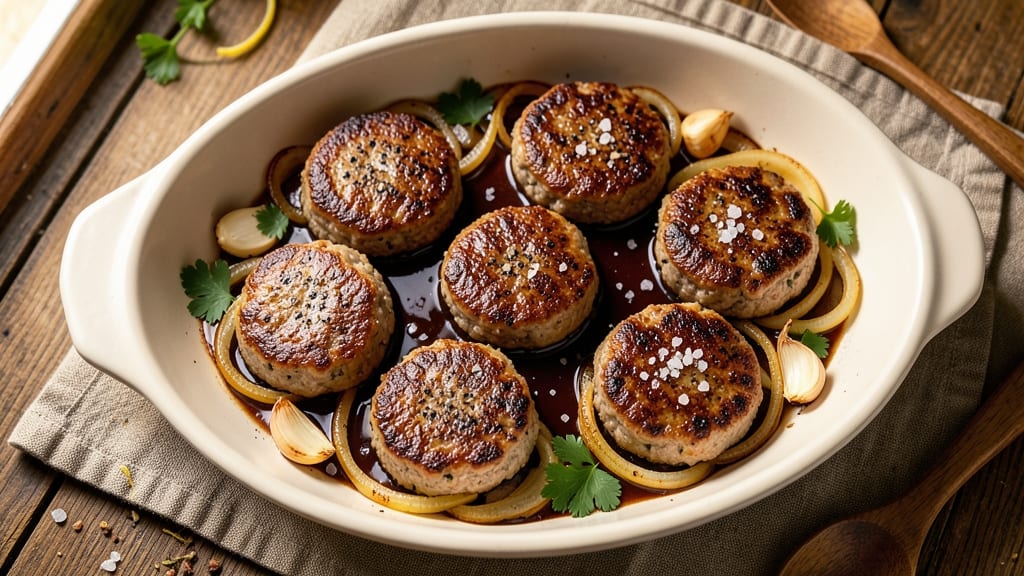
This baked beef patties recipe delivers the perfect balance of juicy centers and crispy edges without a single drop of oil. After years of perfecting the technique—including the secret to preventing dryness—this method transforms simple ground beef into restaurant-quality patties every time.
The key lies in proper seasoning and baking at the right temperature, ensuring tender meat that holds together beautifully.
What sets these patties apart is their foolproof texture: the exterior develops a golden-brown crust while the interior remains moist and flavorful. I've tested countless variations, and this combination of basic pantry ingredients with a strategic approach to shaping and baking guarantees success.
No flipping required—just set them on the baking sheet and let the oven work its magic.
The result is a batch of patties that are crisp enough to stand up to toppings like melted cheese, caramelized onions, or tangy barbecue sauce, yet tender enough to melt in your mouth.
Whether you're serving them as a main course or using them in sliders, these patties deliver consistent, professional-quality results at home. Ready to elevate your weeknight dinners?
For added flavor depth, consider incorporating umami-rich elements like Worcestershire sauce or soy sauce into the seasoning mix, or topping them with a drizzle of garlic aioli after baking.
The possibilities are endless while maintaining that perfect texture balance. Let's get started on creating patties that will impress even the most discerning eaters.
Ingredients for baked beef patties
Restaurant-quality patties start with these 12 ingredients—simple yet transformative for perfect texture.
| Ingredient | Amount | Notes |
|---|---|---|
| Ground Beef 🥩 | 1 ½ lb | 80% lean, finely ground preferred |
| Yellow Onion 🧅 | 1 whole | Medium size, finely diced |
| Garlic Cloves 🧄 | 4 cloves | Fresh, minced to fine paste |
| Worcestershire Sauce 💧 | 1 tbsp | High-quality, umami-rich |
| Diamond Crystal Kosher Salt 🧂 | 1 ½ tsp | Fine grain, not iodized |
| Freshly Ground Black Pepper 🌶️ | 1 tsp | Coarse grind preferred |
| All-Purpose Flour 🌾 | 2 tbsp | Light, for binding |
| Extra-Virgin Olive Oil 🫒 | 1 tbsp | For shaping, not cooking |
| Egg 🥚 | 1 whole | Large, room temperature |
| Cornstarch 🌾 | 1 tbsp | For crispy exterior |
| Dried Parsley 🌿 | 1 tsp | Finely chopped, for garnish |
| Unsalted Butter 🧈 | 1 tbsp | Melted, for brushing |
The ground beef is non-negotiable here—80% lean gives the best balance of juiciness and crispiness. Costco or Whole Foods carry high-quality, finely ground beef that works perfectly. Look for bright red color and good marbling; avoid pre-formed patties from the meat counter. The onion and garlic should be freshly minced—no pre-chopped jarred mixes. For the Worcestershire, Lea & Perrins is the gold standard, but any reputable brand will work. The cornstarch is what creates that signature crispy exterior without frying.
No Worcestershire? Soy sauce or liquid smoke adds depth, though nothing replaces the umami punch. Swap dried parsley for fresh at one-third the amount if you're feeling fancy. The egg binds the patties—if you're avoiding it, 1 tbsp ground flaxseed mixed with 3 tbsp water works as a binder. For extra crispiness, coat the patties with panko breadcrumbs before baking. The olive oil is just for shaping—don't cook with it. And if you're making a big batch, pre-portion the mixture into 4-ounce balls before baking to ensure even cooking.
Shape the patties immediately after mixing—resting dries them out. Use a scale for precision (4 ounces each), and let them sit at room temperature for 15-20 minutes before baking. Store shaped patties on a tray lined with parchment, covered with plastic wrap, in the fridge for up to 24 hours. For longer storage, freeze shaped patties on a tray first, then transfer to a bag for 3 months. Baked patties reheat beautifully—350°F for 5-7 minutes restores that perfect texture.
Why You'll Love This Recipe
- No Fuss, Big Payoff: I swear by this recipe—just mix, shape, and bake. No flipping, no greasy frying, and honestly? The crispy edges happen without me even trying.
- Umami Bomb: That Worcestershire sauce and caramelized onion combo? It turns simple ground beef into something dangerously addictive. The garlic cloves get toasted right in the oven, so every bite has that deep, savory punch.
- Lunchbox Hero: Between us, these patties are my secret weapon for packed lunches. They reheat like a dream (microwave or oven, no judgment) and keep their shape—no sad, greasy burgers here.
- Budget-Friendly Powerhouse: Ground beef stretches further than you’d think with just onion and garlic, and a splash of Worcestershire makes it taste like you spent hours. Plus, leftovers? They’re even better the next day—trust me, I’ve tested this.
Step-by-step instructions for baked beef patties
Here's the method to achieve restaurant-quality patties with perfect texture and flavor.
Prepare the Beef Mixture
In a large mixing bowl, combine the 1.5 lb ground beef, 1 tbsp Worcestershire sauce, 1.5 tsp Diamond Crystal kosher salt, and 1 tsp freshly ground black pepper. Using your hands, gently mix until just combined—overworking the meat develops gluten and creates tough patties. The mixture should feel cool and cohesive but not sticky.
Add the 1 whole yellow onion (finely diced) and 4 cloves garlic cloves (minced to a fine paste) to the bowl. Mix again with your hands, pressing the mixture lightly to distribute the aromatics evenly. This step ensures every bite gets that savory depth from the onion and garlic without overpowering the beef's natural flavor.
Create the Binding Mixture
In a separate small bowl, whisk together the 1 whole egg, 2 tbsp all-purpose flour, 1 tbsp cornstarch, and 1 tbsp extra-virgin olive oil. The cornstarch is key here—it creates a crispy exterior while keeping the centers juicy. The egg acts as a binder, helping the patties hold their shape during baking.
Gradually pour the wet mixture into the beef bowl while mixing with your hands. Combine until fully incorporated—you should have a uniform, slightly tacky mixture that holds together when pressed. If it feels too dry, add 1 tsp water at a time until it reaches the perfect consistency. This binding step prevents crumbling and ensures clean slices.
Shape and Rest the Patties
Divide the mixture into 4 equal portions (about 4 oz each) and gently shape them into ¾-inch thick patties, using slightly wet hands to prevent sticking. Press down firmly in the center to create a slight dimple—this prevents bulging during baking. Place the patties on a parchment-lined baking sheet and refrigerate for 30 minutes. This resting period allows the flavors to meld and the patties to firm up slightly.
While the patties rest, preheat your oven to 400°F. Line a second baking sheet with parchment paper and brush the patties lightly with 1 tbsp melted unsalted butter. This butter creates a golden crust and adds rich flavor. The butter should be melted but not hot—just enough to coat the surface evenly.
Bake to Perfect Doneness
Bake the patties for 15-18 minutes, flipping once after 8-10 minutes, until the edges are deep golden brown and the internal temperature reaches 160°F when measured with an instant-read thermometer. The patties should feel firm to the touch but still yield slightly in the center—this ensures juicy, not dry, results.
Here's the critical part: don't overbake. The patties will continue cooking slightly as they rest. If you bake them too long, they'll dry out. Watch closely after 15 minutes—the edges should be crispy with a slight crust, while the centers remain moist and pink. Remove from the oven and let rest for 5 minutes before serving.
Garnish and Serve
Transfer the patties to a serving platter and sprinkle generously with 1 tsp finely chopped dried parsley. The parsley adds a fresh, bright contrast to the rich beef flavor. Serve immediately with your favorite toppings—sliced avocado, caramelized onions, or a tangy aioli all pair beautifully.
Each patty should have a crispy, golden exterior that gives way to a juicy, tender center with perfect sear marks from the baking sheet. The Worcestershire sauce and garlic infuse every bite with deep umami and aromatic complexity, while the cornstarch ensures that satisfying crunch without sacrificing moisture.
Pro Tips For Making Baked Beef Patties
- Preheat Pan, Not Just Oven: I learned this the hard way—cold pans make patties steam instead of sear. Heat your baking dish or skillet over medium-high for 3-4 minutes before adding the patties, so the bottom gets that golden crust immediately.
- Grind Onions Like a Pro: Skip the food processor for onions—it turns them mushy. Pulse them in a food chopper until they’re finely diced but still hold shape, so they caramelize instead of dissolve into the beef.
- Handle Worcestershire Sparingly: That sauce is salty and potent. Start with just 1 teaspoon per pound of beef, taste as you go, and add more only if needed—you can’t take it out later.
- Press Patties Flat After Baking: They’ll puff up in the oven, but pressing them down with a spatula for the last 2 minutes guarantees even cooking and a consistent texture—no dry centers or uneven edges.
Storing and reheating your leftovers
Fridge Storage Tips
Store your freshly baked patties in an airtight container on the middle shelf of your fridge, where temperatures stay most consistent. I like using glass Pyrex containers with snap-on lids—they keep patties moist for up to 4 days.
Place a paper towel on top to absorb any excess moisture that could make them soggy. For best results, let patties cool completely before storing to prevent condensation buildup. 🥫
Freezer Prep Guide
For longer storage, shape your patties as directed but freeze them before baking. Place shaped patties on a parchment-lined tray and freeze for 1 hour to solidify. Transfer to a ziplock freezer bag with all air removed—this prevents freezer burn.
Label with the date and freeze for up to 3 months. When ready to bake, transfer frozen patties directly to a cold baking sheet and bake 5-7 minutes longer than fresh. 🧊
Reheating Methods
For stovetop reheating, place patties in a nonstick skillet over medium-low heat for 5-7 minutes, adding 1 tbsp beef broth to prevent drying. Cover with a lid to trap steam.
For oven reheating, bake at 350°F for 8-10 minutes on a parchment-lined tray. The oven method is my favorite—it restores that perfect crispy exterior without overcooking the centers. 🔥
Microwave Hack
When short on time, microwave patties on 50% power for 1-2 minutes, covered with a damp paper towel. Stir halfway through to distribute heat evenly. This method works best for quick lunches but may make edges slightly softer.
For best texture, always reheat to 160°F internal temperature—use a meat thermometer for accuracy. 📶
Reviving Texture
If reheated patties seem dry, brush with melted butter and bake at 375°F for 3-4 minutes to restore crispiness. A quick broil for 30 seconds can also revive the exterior. For extra moisture, add 1 tsp beef broth to the reheating pan.
The key is gentle heat—never microwave on high or oven-bake at temperatures above 375°F, which can turn them rubbery. ✨
Nutrition facts
Frequently asked questions
Why do your baked beef patties stay juicy while others turn dry?
The secret lies in the cornstarch and proper baking temperature. Cornstarch creates a crispy exterior that seals in moisture, while baking at 400°F ensures even cooking without overbaking. The 30-minute rest before baking also helps flavors meld without drying out the meat.
Can I make these patties ahead of time?
Shape the patties and refrigerate them on a tray for up to 24 hours before baking. For longer storage, freeze shaped patties for 3 months. Just add 5-7 extra minutes to baking time if frozen. The key is storing them unbaked to preserve texture.
What's the best way to add cheese without making them soggy?
Use shredded cheddar or pepper jack and sprinkle it on after baking for 2-3 minutes at 375°F. The cheese melts perfectly without steaming the patties. For extra flavor, try blue cheese crumbles or feta—they hold up better than soft cheeses.
How do I adjust the recipe for a meat grinder?
If using a meat grinder, pulse the beef mixture 2-3 times for a fine texture. Add the egg and cornstarch mixture after grinding, then mix by hand. Avoid over-processing—just until combined—to keep the patties tender. A food processor works too, but pulse briefly to avoid toughness.
What if my patties stick to the baking sheet?
Always use parchment paper and brush patties with melted butter before baking. If they stick anyway, try nonstick spray oil or a light dusting of cornmeal on the sheet next time. Avoid overcrowding—they need space to crisp properly.