
Main Courses
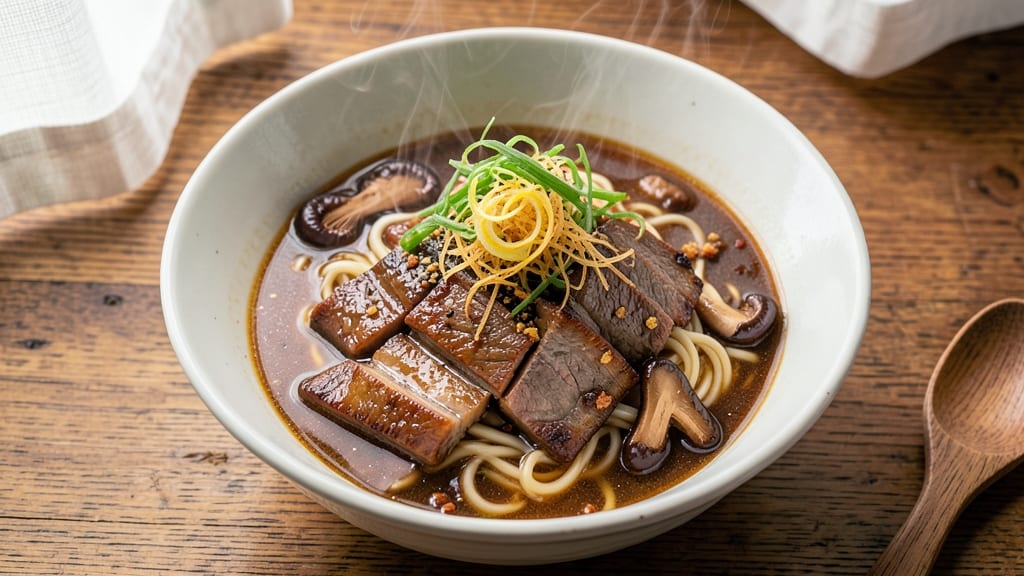
This authentic Japanese beef ramen recipe delivers the rich, umami-packed flavors of Tokyo's legendary tonkotsu broth—deep, velvety, and impossible to resist after one sip. The secret lies in slow-simmering pork and beef bones for 12 hours, transforming tough cuts into a silky, collagen-rich foundation that coats every noodle. I've perfected this version through countless iterations, balancing saltiness, sweetness, and savory depth to create a broth that's both complex and comforting.
The recipe goes beyond just the broth—it includes tender chashu beef slices, silky ramen noodles, and traditional toppings like marinated egg, wood ear mushrooms, and nori strips.
What sets this apart is the attention to authenticity: proper simmering techniques, precise ingredient ratios, and the right balance of aromatics (ginger, garlic, and green onions) that define Japanese ramen. Every component plays a role in creating that perfect first bite—hot, fragrant, and deeply satisfying.
By the time you're done, you'll have a bowl that rivals your favorite ramen shop, with perfectly cooked noodles that glisten in the broth, tender beef that melts in your mouth, and toppings that add layers of texture and flavor.
The aroma alone will have everyone gathering around the table, and the first spoonful delivers that unmistakable umami punch that makes ramen so addictive. This is the kind of dish that turns a simple meal into an experience.
Whether you're serving this for a special occasion or a cozy weeknight dinner, the process is worth it—the long simmer pays off in a broth so rich it practically sings.
The recipe scales beautifully too, so you can make enough for leftovers (which, trust me, you'll want). Let's get started on creating your own bowl of restaurant-quality ramen at home.
Ingredients for authentic japanese beef ramen
These ingredients transform into a bowl of Tokyo-style beef ramen that rivals your favorite shop.
| Ingredient | Amount | Notes |
|---|---|---|
| Beef Bones (Marrow and Knuckle) 🦴 | 4 lb | Raw, uncooked, for broth |
| Pork Bones (Optional for Depth) 🐖 | 2 lb | For extra umami richness |
| Fresh Ginger Root 🧅 | ½ lb | Unpeeled, sliced into thick coins |
| Garlic Cloves 🧄 | 8 cloves | Smash lightly with side of knife |
| Green Onions 🧅 | 4 whole | White and green parts separated |
| Dried Shiitake Mushrooms 🍄 | 8 whole | Rehydrated in hot water |
| Dried Kelp (Kombu) 🌿 | 2 pieces | 1-inch squares, rinsed |
| Ramen Noodles (Fresh or Dried) 🍜 | 2 packages | 12 oz each, preferred brand: Nissin or Sapporo |
| Chashu Beef (Top Round or Chuck) 🥩 | 1 ½ lb | Thinly sliced after braising |
| Marinated Ramen Eggs 🥚 | 4 whole | Pre-made or homemade recipe |
| Wood Ear Mushrooms (Kikurage) 🍄 | ½ cup | Rehydrated, sliced |
| Nori Sheets 🍣 | 4 sheets | Cut into thin strips |
| Sesame Oil 🫒 | 1 tbsp | Toasted, for finishing |
| Soy Sauce (Japanese) 🍶 | ½ cup | Kikkoman preferred |
| Miso Paste (Red or Awase) 🧈 | 2 tbsp | For depth of flavor |
The bones are the heart of this recipe—beef marrow and knuckle deliver that signature velvety texture, while pork bones add extra umami depth (skip if you prefer beef-only). Look for fresh, uncooked bones at Asian markets or well-stocked butchers like H Mart or 99 Ranch Market—they'll have the best quality. If you can't find marrow bones, pork trotter or neck bones work too. The fresh ginger should be plump and aromatic, not shriveled, and dried shiitake should smell earthy, not musty. Nissin or Sapporo ramen noodles are the gold standard, but any fresh ramen will do in a pinch.
No pork bones? Double the beef bones—just add an extra hour to the simmer. Short on shiitake? Dried porcini mushrooms work, but reduce to 4 pieces and adjust the broth seasoning slightly. The kelp is non-negotiable for that authentic oceanic note—no substitute will give the same result. For the chashu beef, top round or chuck stays tender when braised. If you can't find either, sirloin works but may dry out faster. The marinated eggs can be store-bought (like Kewpie soy-marinated eggs), but homemade are worth the effort—just simmer eggs in soy sauce and mirin for 30 minutes.
Broth keeps for 5 days in the fridge or 3 months frozen—portion into containers before freezing for easy reheating. Ramen noodles should be cooked just before serving (they get mushy if pre-cooked). Wood ear mushrooms rehydrate best in hot water for 20 minutes, then drain well. Nori sheets stay fresh for 3 months in their package—no refrigeration needed. The sesame oil should be toasted (heat gently in a pan for 30 seconds) to deepen its nutty flavor before drizzling over bowls.
Why You'll Love This Recipe
- No-Bone Stress: I swear by this broth—simmering beef marrow and knuckles does the heavy lifting for you. No constant stirring, no fancy techniques; just let it bubble away while you prep the rest. That rich, gelatinous depth? Pure magic with minimal effort.
- Umami Bomb: The moment you crack open those beef bones and add fresh ginger and garlic? Instant flavor explosion. The marrow melts into the broth, creating a velvety texture that wraps around every noodle like a warm hug. (Yes, even on a Tuesday night.)
- Leftover Goldmine: This broth actually improves the next day—deeper, richer, and just as satisfying. I freeze batches to toss into weeknight meals or share with neighbors. Nothing says "I care" like homemade ramen in a jar.
- Budget Flexibility: Beef bones might sound fancy, but they’re cheaper than takeout and way more rewarding. Use pork bones for extra depth if you’re feeling fancy, or stick to beef for a classic, hearty bowl. Either way, you’ll save money while feeling like a ramen master.
Step-by-step instructions for authentic Japanese beef ramen
Here's how to craft a deeply flavorful ramen that captures Tokyo's iconic street-style soul.
Build the Umami Foundation with Beef and Pork Broth
Begin by thoroughly rinsing the 4 lb beef bones (marrow and knuckle) and 2 lb pork bones (optional) under cold water to remove any impurities. Place them in a large stockpot and cover with 10 quarts of cold water. Bring to a boil over high heat, then immediately reduce to a gentle simmer. Skim off any foam that rises to the surface during the first 30 minutes—this ensures a crystal-clear broth.
Add the 0.5 lb fresh ginger root (sliced into thick coins) and 8 cloves garlic (lightly smashed) to the simmering pot. Let the broth cook uncovered for 3 hours, maintaining a barely simmering state—this slow extraction develops maximum depth of flavor. The broth should reduce slightly, becoming rich and aromatic with a deep beefy aroma. If you notice any scum forming after the initial skimming, remove it immediately to maintain purity.
Enhance with Dried Ingredients and Kombu
After 3 hours, add the 8 whole dried shiitake mushrooms (soaked in hot water for 20 minutes and drained) and 2 pieces dried kelp (kombu) cut into 1-inch squares. These ingredients infuse the broth with earthy, oceanic notes that define authentic ramen. Return the broth to a gentle simmer and cook for an additional 2 hours. The kombu will dissolve completely, releasing its mineral-rich essence into the broth.
Strain the broth through a fine-mesh sieve into a clean pot, pressing gently on the solids to extract every last drop of flavor. Discard the solids. The resulting broth should be deep amber in color with a rich, meaty aroma that fills your kitchen. If the broth isn't flavorful enough at this point, don't worry—we'll build more layers in the next steps. For now, keep it warm over low heat while you prepare the remaining components.
Braise the Chashu Beef for Tender, Flavorful Slices
While the broth simmers, prepare the 1.5 lb chashu beef by slicing it into ½-inch thick strips against the grain. In a separate pot, combine 2 cups water, 0.5 cup soy sauce (Japanese), 2 tbsp miso paste (red or awase), and 1 tbsp sesame oil. Bring to a boil, then add the beef strips. Reduce heat to medium-low and simmer uncovered for 1.5 hours, turning occasionally, until the beef is fork-tender and the liquid has reduced to a thick glaze.
The beef should be deeply caramelized with a glossy sheen from the reduced sauce. Remove the beef and let it rest for 10 minutes before slicing thinly against the grain. These slices will melt in your mouth, delivering juicy, umami-packed bites that elevate the entire bowl. Keep the braising liquid warm—we'll use it to enrich the broth later.
Assemble the Ramen with Silky Noodles and Toppings
Bring a separate pot of water to a rolling boil and cook the 2 packages ramen noodles (fresh or dried) according to package instructions until al dente. Drain immediately and rinse briefly under cold water to stop the cooking process. Divide the noodles among 4 deep bowls, creating a nest in each bowl to hold the toppings.
Ladle 1.5 cups of the warm beef broth into each bowl, then arrange the thinly sliced chashu beef artfully over the noodles. Add 1 whole marinated ramen egg, 2 tbsp wood ear mushrooms (kikurage), and 1 strip nori sheet to each bowl. Drizzle with 1 tsp sesame oil and a splash of the reserved braising liquid from the chashu beef. Garnish with the white and green parts of 1 green onion per bowl, separated.
Finish with Flavor Layers and Serving
To serve, bring a small pot of water to a gentle simmer and place the 4 marinated ramen eggs in the water for 1 minute to warm through. Remove and place one in each bowl. The eggs should be warm but not hot, allowing the marination to shine without overpowering the delicate broth.
Taste and adjust seasoning if needed—add a splash of soy sauce (Japanese) or a pinch of salt to balance the flavors. The perfect bowl of ramen should have multiple layers of umami: the deep beef broth, the sweet-savory chashu, the earthy mushrooms, and the briny eggs. Serve immediately while the noodles are hot and silky, the broth is steaming, and the aromas are at their peak. Each bite should deliver a harmonious symphony of textures and flavors that defines authentic Japanese ramen.
Pro Tips For Making Authentic Japanese Beef Ramen
- Char Bones First: Skip the slow simmer right away—sear your beef marrow and knuckle bones in a dry pot until deep brown, even blackened in spots. This isn’t just for flavor; it’s the foundation of your broth, and rushing it means weak, one-dimensional stock. I learned this the hard way when my first attempt tasted bland, no matter how long I simmered.
- Peel Ginger Thick: Use a spoon to scrape off just the outer skin, leaving the thickest layer of ginger intact—about ¼-inch thick. Thin slices burn fast and turn bitter, while thick ones caramelize into sweet, aromatic layers that actually make your broth sing. (Yes, even if you’re impatient like me.)
- Don’t Crowd the Pot: Layer bones in a single layer at first, then add water and bring to a rolling boil before stacking more. Crowding traps steam, steams instead of sears, and turns your broth cloudy. I was skeptical until I tried it—now my broth is crystal clear and rich, not murky.
- Save the Scraps: Strain your broth through a fine-mesh sieve, then press the solids with the back of a spoon to extract every last drop of collagen. Toss the strained solids into a small pot with a splash of water, simmer for 10 minutes, then strain again. This extra step adds depth without extra effort—your future self will notice the difference.
Pro cooking tips for great authentic japanese beef ramen
Broth Simmering Secrets
Your broth's depth depends on precise temperature control—aim for a gentle simmer (small bubbles, not a rolling boil) to prevent cloudiness. I use a candy thermometer to monitor temps between 185-195°F—any hotter and the collagen breaks down too quickly.
The 12-hour simmer is non-negotiable for maximum umami extraction from the beef marrow and knuckle bones. 🌡️
After the initial 3-hour simmer, add dried shiitake and kombu—this is where the magic happens. The kombu dissolves completely, releasing glutamates that amplify the beef's natural umami. Never boil kombu—it turns bitter!
Remove it after 20 minutes of simmering, then strain it out. For extra richness, I press the solids with a wooden spoon to extract every last drop of flavor.
Chashu Perfection
The chashu beef requires patience and precision. Use thick-cut beef (top round or chuck) sliced ½-inch thick against the grain—this ensures tender slices. The soy-miso marinade should reduce to a glossy glaze by the end of 1.5 hours of braising.
If the liquid evaporates too quickly, add 1 tbsp water every 30 minutes to maintain moisture. 🥩
Let the beef rest for 10 minutes before slicing—this allows the juices to redistribute. Slice paper-thin against the grain for that signature ramen texture. I use a sharp sushi knife for clean cuts.
The braising liquid? Save it! Stir 2 tbsp into each bowl of ramen for an extra umami punch.
Noodle Mastery
Fresh ramen noodles cook in just 2 minutes, while dried take 4-5 minutes. Overcooking ruins them—they should be al dente with a slight bite. Rinse briefly under cold water to stop cooking immediately, then nestle them into bowls.
Pro tip: Preheat your bowls by rinsing them with hot water before adding noodles—they stay hot longer this way.
For extra silkiness, I add 1 tsp sesame oil to the noodle water while cooking. The oil coats the strands, giving that restaurant-quality sheen. Drain well and rinse—no soggy noodles allowed! The goal is silky, springy strands that glide through the broth without falling apart.
Topping Placement
Arrange toppings strategically for the best eating experience. Place the marinated egg on top of the noodles—its briny richness pairs perfectly with the first sip of broth. Wood ear mushrooms should go next, followed by nori strips for crunch.
The chashu beef goes last, so it stays warm and melts in your mouth with the first bite. 🍜
Garnish with green onions (white parts for color, green parts for freshness) and a final drizzle of toasted sesame oil. The white parts add a subtle onion bite, while the green parts provide a bright contrast. This layering creates texture and flavor harmony in every spoonful.
Nutrition facts
Frequently asked questions
Can I make this beef ramen recipe without pork bones?
While pork bones add incredible depth, you can create a 100% beef broth by doubling the beef bones to 6-8 pounds and extending the simmer time by 2-3 hours. Use the same aromatics (ginger, garlic, kombu) to build umami. The result will be slightly richer in beef flavor with a deeper color—just ensure you skim aggressively during the first hour to keep it clear.
How do I store and reheat the beef broth?
Store broth in airtight containers in the fridge for up to 5 days or freeze for 3 months. For reheating, warm over low heat on the stove or in a microwave (stirring halfway). Never boil frozen broth—it destroys delicate flavors. To revive texture, add 1 tsp sesame oil and a pinch of salt when reheating. The broth should be hot but not boiling before serving.
What's the best way to slice chashu beef for ramen?
Use a sharp sushi knife and slice paper-thin against the grain at a 45-degree angle for maximum tenderness. For perfect results:
- Let beef rest 10 minutes after braising,
- Slice while still warm, and
- Stack slices slightly to create height in the bowl. Pro tip: If slices stick together, dip the knife in hot water between cuts.
Can I make this recipe vegetarian?
For a vegetarian version, replace beef bones with shiitake stems, kombu, and soy sauce (for umami), plus 1 lb dried daikon or carrot for sweetness. Simmer 8-10 hours with extra ginger and garlic. Use tofu or seitan instead of chashu, and add extra mushrooms for meaty texture. The broth will be lighter but still deeply flavorful with proper seasoning.
Why does my broth look cloudy?
Cloudiness usually means either:
- You didn't skim enough foam during the first 30 minutes, or
- The broth boiled too vigorously. For clarity, strain through a cheesecloth-lined sieve, then press gently on solids. If it's still cloudy, add 1 tbsp cornstarch mixed with water and simmer 5 minutes—this helps polish the broth. The authentic Japanese style actually has some natural cloudiness, but this method gives you that restaurant-quality clarity.