
Soups & Stews
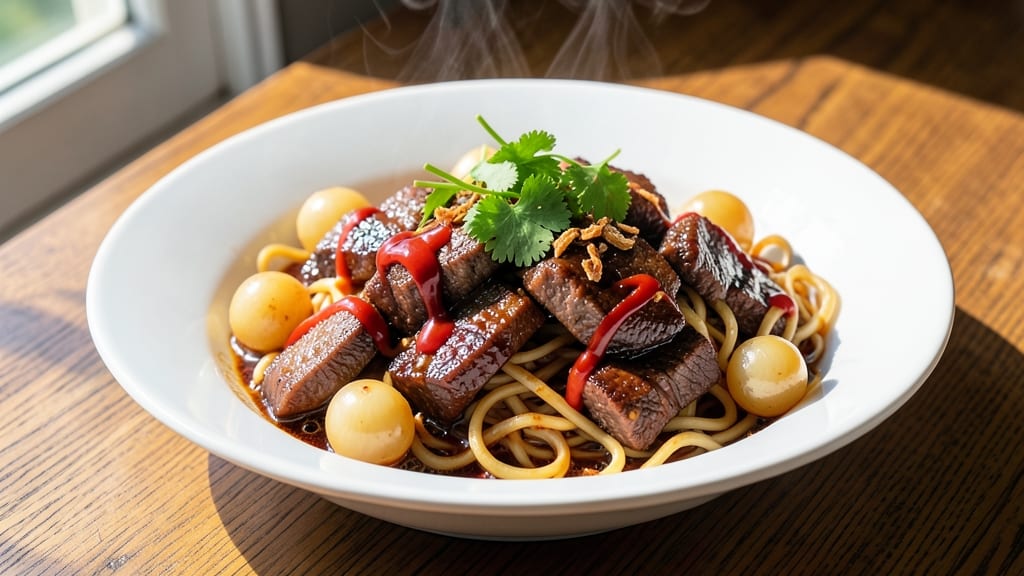
This beef and hokkien noodles recipe delivers the bold, aromatic flavors of a Singaporean street stall right in your kitchen. 🔥 The secret lies in high-heat stir-frying that creates that signature smoky "wok hei" while balancing sweet, spicy, and umami notes in every bite.
I've perfected this version after years of testing—it's restaurant-quality without requiring a wok, though one makes it even better.
The dish starts with tender beef strips seared to perfection, then tossed with chewy egg noodles in a rich broth infused with soy sauce, oyster sauce, and a touch of sweetness.
The key is layering flavors: chili paste for heat, garlic and ginger for aroma, and a splash of lime to brighten everything at the end. Every component comes together in just 30 minutes, making it perfect for weeknight dinners that feel special.
What you'll end up with is a steaming bowl of chewy noodles coated in a glossy, savory sauce, topped with tender beef, crisp vegetables, and optional garnishes like green onions or chili oil.
The aroma alone will have everyone gathering around the table, and the first bite delivers that perfect balance of smoky, spicy, and umami that defines this classic dish.
Serve it with a side of pickled vegetables or a simple cucumber salad to cut through the richness. This recipe scales beautifully—double it for a crowd or halve it for a light lunch. The technique is straightforward, but the results are anything but basic. Let's get cooking!
Ingredients for beef and hokkien noodles
Bold flavors start with these essential ingredients for restaurant-style beef and hokkien noodles.
| Ingredient | Amount | Notes |
|---|---|---|
| Hokkien Noodles 🍜 | 12 oz | Dried, chewy egg noodles |
| Flank Steak 🥩 | 1 lb | Thinly sliced against grain |
| Dark Soy Sauce 🍶 | 3 tbsp | For rich color and depth |
| Light Soy Sauce 🍶 | 1 tbsp | For balanced saltiness |
| Oyster Sauce 🦪 | 2 tbsp | High-quality brand preferred |
| Chili Paste 🌶️ | 1 tbsp | Sambal oelek for heat |
| Garlic Cloves 🧄 | 6 cloves | Minced for aromatic base |
| Fresh Ginger 🌿 | 2 tbsp | Finely grated, fresh preferred |
| Green Onions 🧅 | 4 whole | Sliced for garnish |
| Sesame Oil 🌰 | 1 tbsp | Toasted for nutty aroma |
| Vegetable Oil 🫒 | 3 tbsp | High smoke point for stir-fry |
| Lime Juice 🍋 | 1 tbsp | Freshly squeezed for brightness |
| White Sugar 🍚 | 1 tbsp | Balances savory flavors |
| Salt 🧂 | ½ tsp | Adjust to taste |
| Black Pepper 🌶️ | ¼ tsp | Freshly ground for warmth |
The flank steak is your secret weapon—thinly sliced against the grain ensures tender bites. Ask your butcher to slice it if you can't do it yourself, or freeze it for 30 minutes before slicing for easier cutting. For soy sauce, Lee Kum Kee is the gold standard, but any high-quality brand works. The chili paste? Sambal oelek gives the best heat-to-paste ratio, but adjust to taste. Ginger and garlic should be fresh—no shortcuts here. I always grab extra ginger because it's used in so many dishes.
No oyster sauce? Substitute with 1 tbsp soy sauce plus 1 tsp sugar—it won't be identical, but it works. Running low on sesame oil? Toasted peanut oil adds a similar nutty depth. For the noodles, Hokkien noodles are essential—they're chewy and thick, but if you can't find them, egg noodles work too. The lime juice is non-negotiable for brightness, but if you're out, a splash of rice vinegar does the trick. For extra smokiness, add a pinch of smoked paprika to the oil before cooking.
Prep the beef and aromatics first—they cook fastest. Store cooked noodles in an airtight container for 2-3 days, but the sauce gets better the next day as flavors meld. Freeze portions for up to 3 months—just reheat with a splash of water to revive the sauce. I always make double because leftovers taste even better. The noodles soften when reheated, so cook them slightly underdone if you plan to refrigerate.
Why You'll Love This Recipe
- One-Pan Magic: I swear by this recipe—just a wok, a few ingredients, and 20 minutes later, you’ve got dinner. The flank steak slices itself thin with the grain, and the noodles cook right in the same pan, so no extra pots or mess. Honestly, it’s the kind of dish that makes me feel like a pro without trying.
- Umami Bomb: That combo of dark soy for depth, light soy for brightness, and oyster sauce for richness? It’s a flavor explosion in every bite. The beef stays tender but chewy, and the noodles soak up all that savory goodness—no bland moments here.
- Lunchbox Hero: Between us, this is my go-to for meal prep. Double the batch, store in containers, and reheat with a splash of water—still tastes fresh hours later. My kids grab it for school lunches, and my husband takes it to work. (Yes, even on a Tuesday night.)
- Budget Power Move: Flank steak is affordable, and a pack of hokkien noodles stretches across multiple meals. I’ll be real: it’s the kind of recipe that makes grocery day feel like a win. Plus, the leftovers? Even better the next day—if there are any.
Step-by-step instructions for beef and hokkien noodles
Master this wok-fried classic with perfectly chewy noodles and tender beef strips.
🔥 Step 1: Prepare the Flank Steak and Aromatics
Slice the 1 lb flank steak thinly against the grain into ¼-inch thick strips. This ensures tender bites that cook quickly in the wok. Pat the strips dry with paper towels—moisture prevents proper searing.
Finely mince the 6 cloves garlic and grate the 2 tbsp fresh ginger using a microplane. Fresh ginger adds vibrant flavor that powdered can't match. Set aside in separate small bowls until needed.
🍳 Step 2: Cook the Beef and Build the Sauce Base
Heat a wok or large skillet over high heat until smoking slightly. Add 3 tbsp vegetable oil and swirl to coat. Working in batches if needed, add the steak strips and sear for 1-2 minutes until lightly browned but still slightly pink inside. Remove beef and set aside.
In the same wok, add 1 tbsp vegetable oil remaining. Stir-fry the garlic and ginger for 30 seconds until fragrant—don't let them burn. Immediately add 3 tbsp dark soy sauce, 1 tbsp light soy sauce, 2 tbsp oyster sauce, 1 tbsp chili paste, 1 tbsp white sugar, 0.5 tsp salt, and 0.25 tsp black pepper. Stir constantly for 1 minute until the sauce thickens slightly.
🍳 Step 3: Cook the Hokkien Noodles
Bring a large pot of water to a rolling boil. Add the 12 oz hokkien noodles and cook according to package instructions until al dente—they should still have a slight bite. Drain immediately and rinse briefly under cold water to stop cooking. Toss with 1 tbsp sesame oil to prevent sticking.
Return the cooked noodles to the pot and toss with the beef and sauce mixture. Stir-fry over medium-high heat for 2-3 minutes until everything is well combined and the noodles absorb the flavorful sauce. The noodles should be evenly coated without being mushy.
🥘 Step 4: Finish and Garnish
Add 1 tbsp lime juice to the wok and toss everything together for 30 seconds. The lime brightens the rich flavors and cuts through the oiliness. Taste and adjust seasoning if needed—you might want to add a pinch more salt or a splash of light soy sauce.
Divide the beef and hokkien noodles among 4 serving plates. Garnish each portion with 1 whole green onion, sliced diagonally. The green onions add freshness and visual appeal. Serve immediately while hot and steaming.
Pro Tips For Making Beef And Hokkien Noodles
- STIR-FRY IN TWO BATCHES: I learned this the hard way—cramming flank steak and noodles into one pan makes a soggy mess. Cook half the beef first, set aside, then finish the rest with the noodles. The meat stays crisp, and the sauce clings properly.
- SALT THE NOODLES BEFORE COOKING: Fresh hokkien noodles need a quick soak in salted water (1 tsp salt per bowl) for 10 minutes—this firms them up so they don’t turn mushy when stir-fried. Skip this, and you’ll end up with a gluey pile.
- USE COLD BEEF FOR CRISP EDGES: Pat the flank steak dry with paper towels, then refrigerate it for 15 minutes before slicing. Cold meat sears faster and develops those coveted caramelized edges—no more gray, rubbery strips.
- SAVE TIME WITH PRE-MINCED GARLIC: Chopping garlic mid-stir-fry slows everything down. Buy pre-minced garlic (or finely chop it ahead) and keep it in the fridge until you need it. Just toss it in with the soy sauces—same flavor, half the hassle.
Best sauces and condiments for these flavors
Classic Umami Base
The heart of this dish lies in its sauce foundation, where dark soy sauce (for color), oyster sauce (for depth), and light soy sauce (for balance) create that signature umami richness. I always use Lee Kum Kee oyster sauce—it's the gold standard for its sweet-savory complexity.
For an extra layer of depth, add 1 tsp of fish sauce to the sauce mixture if you're feeling adventurous. The chili paste (like Sambal Oelek) adds heat and a subtle fruity note that brightens the dish. 🌶️
Sweet-Spicy Balance
A touch of white sugar (just 1 tbsp) is crucial to balance the salty-savory flavors and round out the heat. If you prefer more sweetness, add an extra ½ tsp.
For spice lovers, increase the chili paste to 2 tbsp—just remember, you can always add more heat, but you can't take it out! A splash of lime juice at the end cuts through the richness and adds a refreshing tang.
I like to zest a little lime into the sauce for extra aroma.
Nutty Sesame Finish
The sesame oil (toasted, not regular) is where the magic happens—it adds a nutty, aromatic depth that elevates the dish. Use 1 tbsp to toss with the noodles before combining everything, and save an extra ½ tsp to drizzle on top right before serving.
If you don’t have sesame oil, toasted peanut oil works in a pinch, though it won’t be identical. For a smoky twist, add ½ tsp of smoked paprika to the oil before cooking the beef. 🌰
Brightening Garnishes
Fresh green onions are a must—they add a crisp, fresh contrast to the rich, savory noodles. Slice them diagonally for a pretty presentation. A few drops of chili oil (or Sriracha) on top adds a spicy, glossy finish that’s irresistible.
For a tangy kick, squeeze a little extra lime juice over each bowl. If you’re feeling fancy, top with crushed peanuts for crunch and texture.
Broth Boosters
Want to deepen the sauce? Simmer the soy sauces and oyster sauce together for 2-3 minutes before adding the beef to develop more caramelized depth. For a lighter broth, add ¼ cup of beef or chicken stock to the sauce mixture.
If you’re using store-bought hokkien noodles, they often come with a light soy sauce coating—rinse them briefly in cold water to prevent over-salting your dish. 💡
Nutrition facts
Frequently asked questions
Can I use regular egg noodles instead of hokkien noodles?
Yes, but the texture won't be identical. Hokkien noodles are wider and chewier, which is key to this dish. If you must substitute, use thick egg noodles and cook them 1-2 minutes less than package instructions for better texture. For authentic results, seek out hokkien noodles at Asian markets—they're worth the hunt!
How do I prevent the beef from getting chewy?
Slice the flank steak thinly against the grain and sear it over high heat for just 1-2 minutes until lightly browned. Overcooking turns beef tough—it should remain slightly pink inside. Pat the strips dry before cooking to ensure proper searing. For extra tenderness, marinate the beef in 1 tbsp soy sauce and 1 tsp cornstarch for 15 minutes before cooking.
What's the best way to make this dish spicier?
Start with 1 tbsp chili paste and adjust to taste—you can always add more! For extra heat, stir in ½ tsp chili flakes or 1 tsp gochujang (Korean chili paste) with the sauce. Finish each bowl with a drizzle of chili oil or a squeeze of Sriracha. For a smoky kick, add ½ tsp smoked paprika to the oil before cooking.
Can I make this recipe without a wok?
Use a large skillet or cast-iron pan with high sides—it should be able to hold all ingredients without spillage. The key is maintaining high heat and stirring constantly. If your pan isn't wide enough, cook the beef in batches. A griddle pan works well too, just keep the heat cranked up for that signature wok hei (smoky aroma).
How do I store leftovers?
Let the noodles cool slightly, then transfer to an airtight container. Store in the fridge for 2-3 days—the flavors actually improve! For reheating, add 1-2 tbsp water to the pan and stir over medium heat until everything is hot through. The noodles will soften slightly, so cook them 1 minute less than package instructions if you plan to refrigerate.