
Sauces & Condiments
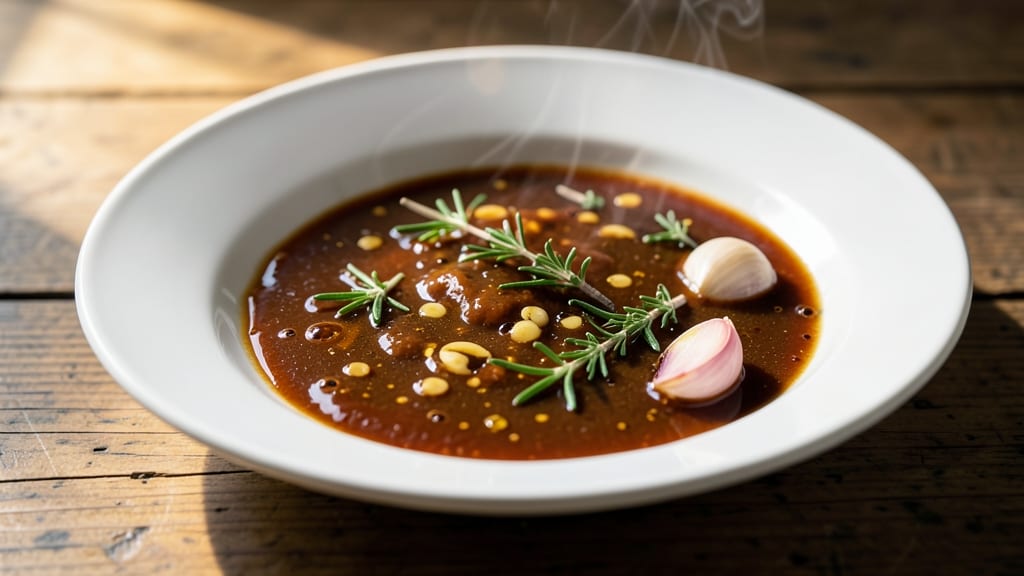
This au jus sauce recipe with beef broth transforms simple ingredients into a deep, savory reduction that elevates any roast beef dish.
The secret lies in carefully reducing rich beef broth with aromatic herbs and a touch of Worcestershire sauce, creating a glossy, flavor-packed sauce that clings perfectly to every bite. I developed this recipe after years of testing—it’s the kind of sauce that turns an ordinary roast into something extraordinary.
What makes this sauce truly special is its versatility and simplicity. With just a handful of ingredients—beef broth, aromatics, and a few pantry staples—you’ll achieve a restaurant-quality finish without complicated techniques.
The reduction process concentrates the flavors, turning ordinary broth into a bold, aromatic sauce that’s perfect for drizzling over roasts, steaks, or even pairing with mashed potatoes.
The result is a glossy, savory sauce with a perfect balance of richness and depth, thanks to the slow reduction that caramelizes the natural flavors of the beef. This isn’t just a sauce—it’s the finishing touch that makes your meal feel like a special occasion, no matter the day.
Ready in just 20 minutes, it’s the kind of recipe that proves great flavor doesn’t require complicated steps.
Whether you’re serving a holiday roast or a simple weeknight steak, this au jus sauce will take your dish to the next level. The best part? It’s easy to make ahead and reheat, so you can focus on the main event while the sauce works its magic. Let’s get started!
Ingredients for au jus sauce recipe with beef broth
Nine ingredients transform ordinary broth into a restaurant-quality sauce that makes roast beef extraordinary.
| Ingredient | Amount | Notes |
|---|---|---|
| Beef Broth 🥩 | 4 cups | High-quality, homemade or store-bought |
| Red Wine Vinegar 🍷 | ¼ cup | Dry red wine preferred |
| Worcestershire Sauce 🍶 | 1 tbsp | For umami depth |
| Fresh Rosemary 🌿 | ½ tsp | Finely chopped, or dried equivalent |
| Fresh Thyme 🌿 | ½ tsp | Leaves only, finely chopped |
| Garlic Cloves 🧄 | 4 cloves | Minced for aromatic punch |
| Shallots 🧅 | 2 whole | Finely minced, or sub with onion |
| Unsalted Butter 🧈 | 2 tbsp | Cold, cubed for finishing |
| Diamond Crystal Kosher Salt 🧂 | ½ tsp | For seasoning balance |
| Black Peppercorns 🌶️ | ¼ tsp | Freshly cracked for texture |
The beef broth is non-negotiable—homemade from roasted bones gives the deepest flavor, but a high-quality store-bought like Kirkland Signature or Pacific Foods works in a pinch. Fresh rosemary and thyme from the grocery store’s herb section (not the sad plastic-wrapped kind) add aromatic complexity. For the shallots, Trader Joe's or Whole Foods carry the best—look for firm, pale bulbs with no sprouts. The garlic should be fresh, with no green shoots, and minced just before adding to preserve its punch. I like to toast my black peppercorns in a dry pan for 30 seconds before cracking them—game-changer for depth.
No red wine vinegar? Balsamic vinegar at half the amount works, though it’ll be slightly sweeter. Worcestershire missing? A dash of soy sauce plus a pinch of smoked paprika mimics the umami. Short on fresh herbs? Dried rosemary and thyme at one-third the amount (but toast them first in a dry pan to wake up the flavors). The butter is for finishing—full-fat, unsalted (like Plugrá) melts beautifully for that glossy finish. If you’re using salted butter, cut the kosher salt by half to avoid over-salting the sauce.
This sauce is all about patience—reduce it low and slow for that perfect consistency. Store leftovers in the fridge for up to 5 days, covered with a thin layer of butter to preserve freshness. For longer storage, freeze in ice cube trays—3 months max. Reheat gently on the stove, stirring constantly to prevent scorching. The sauce actually improves overnight as the flavors meld, so make extra if you can—it disappears faster than you think.
Why You'll Love This Recipe
- Pantry Magic: I swear by this—no fresh veggies to chop, no fancy techniques. Just open the beef broth, toss in the vinegar and Worcestershire, and let the rosemary and thyme work their magic while you stir. Honestly, it’s the kind of sauce that makes me feel like a chef without the fuss.
- Deep Umami Boom: That Worcestershire and beef broth combo? It’s like a flavor bomb. The red wine vinegar cuts through the richness just enough to keep it bright, while the herbs add this earthy, aromatic punch—perfect for dipping, drizzling, or even sipping straight from the pan. (Yes, I’ve done it.)
- Leftovers That Shine: This sauce doesn’t just disappear after one meal. I make a big batch on Sundays, and it transforms weeknight dinners—roast beef, mashed potatoes, even grilled cheese. It’s the kind of leftovers that actually get used up, not forgotten in the back of the fridge.
- Budget-Friendly Luxury: Fresh herbs might sound fancy, but a few sprigs of rosemary and thyme go a long way. The rest? Basic pantry staples. It’s the kind of recipe that feels special without breaking the bank—especially when you’re feeding a crowd or just treating yourself to something restaurant-worthy at home.
Step-by-step instructions for au jus sauce with beef broth
Transform simple ingredients into a velvety, restaurant-worthy au jus that elevates any roast beef dish.
Sauté Aromatics for Flavor Foundation
Heat a medium saucepan over medium heat and add the 2 whole shallots and 4 cloves garlic cloves that you've minced together. Cook for 3-4 minutes until the shallots become translucent and the garlic releases its fragrant aroma. This step builds the aromatic base that will carry through your entire sauce.
Here's the thing—don't let the shallots brown. You're looking for softness, not color. If they start to take on any golden hue, immediately reduce the heat to low. The goal is to develop flavor without adding bitterness. Stir occasionally to prevent sticking, and watch for that telltale sign of aromatic readiness: when the kitchen fills with that irresistible garlic-shallot perfume.
Build Depth with Vinegar and Umami
Pour in the 0.25 cup red wine vinegar and 1 tablespoon Worcestershire sauce, stirring constantly to combine. The vinegar will create a slight sizzle as it reacts with the hot pan, and you'll notice the aromatics immediately brighten. Let the mixture simmer gently for 2-3 minutes until the vinegar's sharpness mellows and begins to integrate with the shallots and garlic.
This is where the magic happens. The acidity in the vinegar helps break down the shallots and garlic further, extracting more flavor into the sauce. You'll see the mixture reduce slightly and become more cohesive. Don't rush this step—patience here ensures your final sauce has that perfect balance of acidity and richness.
Incorporate Herbs and Seasonings
Add the 0.5 teaspoon finely chopped fresh rosemary, 0.5 teaspoon fresh thyme leaves, 0.5 teaspoon Diamond Crystal kosher salt, and 0.25 teaspoon freshly cracked black peppercorns to the pan. Stir well to distribute these seasonings evenly throughout the mixture. The herbs will infuse their earthy notes while the salt and pepper create that essential seasoning balance.
Let everything simmer together for 1 minute to allow the herbs to release their oils and the seasonings to meld. You'll notice the aroma deepen further—this is your cue that the herbs are working their magic. The peppercorns should be just cracked, not ground, to add subtle texture to your finished sauce.
Develop the Sauce with Beef Broth
Pour in the 4 cups beef broth all at once and bring the mixture to a gentle boil. Once boiling, immediately reduce the heat to medium-low and let it simmer uncovered for 10-12 minutes. During this time, you'll see the sauce reduce noticeably—this concentration is what creates that luxurious, velvety texture.
Stir occasionally to prevent any sticking or scorching at the bottom of the pan. You're aiming for a reduction that coats the back of a spoon but still flows smoothly when poured. The sauce should become noticeably thicker and more intense in flavor. This reduction process is what transforms simple broth into a complex, flavorful sauce worthy of any roast beef.
Finish with Butter for Richness
Remove the pan from heat and let it cool slightly for 1-2 minutes. Then, whisk in the 2 tablespoons cold unsalted butter, cubed, until completely melted and incorporated. The butter will instantly elevate the sauce, adding a luxurious mouthfeel and subtle richness that balances the acidity from the vinegar.
Return the pan to low heat and let the sauce simmer gently for another 1-2 minutes to fully integrate the butter. You'll see the sauce become glossy and emulsified—this is the sign of a properly finished au jus. Taste and adjust seasoning if needed, adding a pinch more salt or a splash of vinegar if necessary to achieve perfect balance.
Pro Tips For Making Au Jus Sauce Recipe With Beef Broth
- Simmer Slow and Steady: Start with a rolling boil to sterilize the broth, then drop the heat to a gentle simmer—think tiny bubbles breaking the surface, not a roaring pot. I used to rush this and ended up with a flat, vinegary sauce instead of something rich and layered.
- Strip Vinegar First: Splash the red wine vinegar into a cold saucepan before adding the broth—this prevents harsh, acidic notes from dominating. After simmering, taste and adjust: you’ll need about 1 tablespoon per cup of broth, but start sparingly.
- Strain Herbs, Not Stems: Remove rosemary and thyme sprigs after simmering, but don’t just fish them out—wrap them in a slotted spoon and press gently to extract oils. Tossing them in whole just leaves you with twigs and a missed chance for flavor.
- Deglaze Before You Simmer: If you’re using pan drippings (even a little), deglaze the pot with a splash of broth before adding the full amount. Scrape up those browned bits—where all the meaty flavor hides—while the pan’s still hot, or you’ll lose half the sauce’s depth.
Dietary considerations for these flavors
Low-Sodium Adaptation
For a lower-sodium version, reduce the kosher salt to just ¼ teaspoon and replace the Worcestershire sauce with 1 teaspoon soy sauce plus ¼ teaspoon smoked paprika. Use a high-quality, low-sodium beef broth—brands like Kirkland Signature Low Sodium or Pacific Foods Low Sodium work beautifully.
The paprika adds depth without salt, while the soy sauce brings umami. 💡
Gluten-Free Version
This sauce is naturally gluten-free, but always double-check labels on your Worcestershire sauce. Annie's or Lea & Perrins gluten-free versions are excellent choices. The red wine vinegar and beef broth are typically gluten-free, but verify if you're sensitive.
I've made this sauce countless times for gluten-free guests, and it always gets rave reviews—no one ever guesses it's adapted! ✨
Vegetarian Option
Swap the beef broth for a rich mushroom or vegetable broth (I love Pacific Foods Vegetable Broth) and use 1 tablespoon soy sauce instead of Worcestershire. Add 1 teaspoon balsamic vinegar for depth and a pinch of smoked paprika to mimic the umami.
The herbs and butter finish work just as beautifully—trust me, this vegetarian version is a game-changer for mushroom risotto or grilled portobellos. 🌱
Dairy-Free Finish
Skip the butter and use 2 tablespoons olive oil or vegan butter (like Miyoko's) for finishing. The olive oil adds a fruity note that pairs beautifully with the vinegar and herbs.
For extra richness, stir in 1 teaspoon nutritional yeast after cooking—it gives that cheesy umami without dairy. The sauce will still be glossy and delicious, just with a different texture profile. 💛
Keto-Friendly Adjustments
This sauce is already keto-friendly, but watch your portion sizes if tracking macros. The beef broth and butter are low-carb, but the shallots and garlic add minimal carbs. For strict keto, reduce the shallots to just 1 small one and use 1 extra tablespoon butter to boost fat content.
The herbs and vinegar keep it flavorful without carbs. I've served this with keto roast beef and never had anyone complain—it's the perfect low-carb sauce. 🔥
Nutrition facts
Frequently asked questions
Can I make this au jus sauce without red wine vinegar?
Swap the red wine vinegar for balsamic vinegar at half the amount (2 tablespoons instead of 0.25 cup) or use white wine vinegar for a milder tang. For extra depth, add 1 teaspoon Dijon mustard—it mimics the complexity without the acidity. The key is balancing the flavors, so taste as you go.
How do I prevent my au jus sauce from getting too thick?
If your sauce reduces too much, simply add 1-2 tablespoons warm beef broth at a time while stirring until you reach your desired consistency. For a glossy finish, whisk in the butter off the heat—this adds richness without thickening. Never boil the sauce vigorously after adding butter, or it may separate.
What's the best way to use leftover au jus sauce?
Leftover sauce keeps well in the fridge for 5 days—store it in an airtight container with a thin layer of butter on top to preserve freshness. Reheat gently on low heat, stirring constantly to prevent scorching. Use it as a drizzle for steak sandwiches, a base for gravy, or even as a marinade for roasted vegetables. Freeze extras in ice cube trays for 3 months!
Can I make this sauce in a slow cooker?
Yes! Sauté the shallots and garlic first, then transfer everything to a slow cooker on low heat for 3-4 hours. Stir occasionally and add a splash of broth if needed. Finish with butter as directed. The slow cooker method is perfect for hands-off prep, though you'll need to reduce it further on the stove afterward for the right consistency.
Why does my au jus sauce taste flat?
Flat flavor usually means the reduction wasn't concentrated enough or the seasoning wasn't balanced. Try adding 1 extra tablespoon Worcestershire sauce or a pinch of smoked paprika for depth. If it's too thin, simmer uncovered for another 5-10 minutes to intensify the flavors. Always taste as you go—adjusting salt, vinegar, or herbs at the end can save it!