
Main Courses
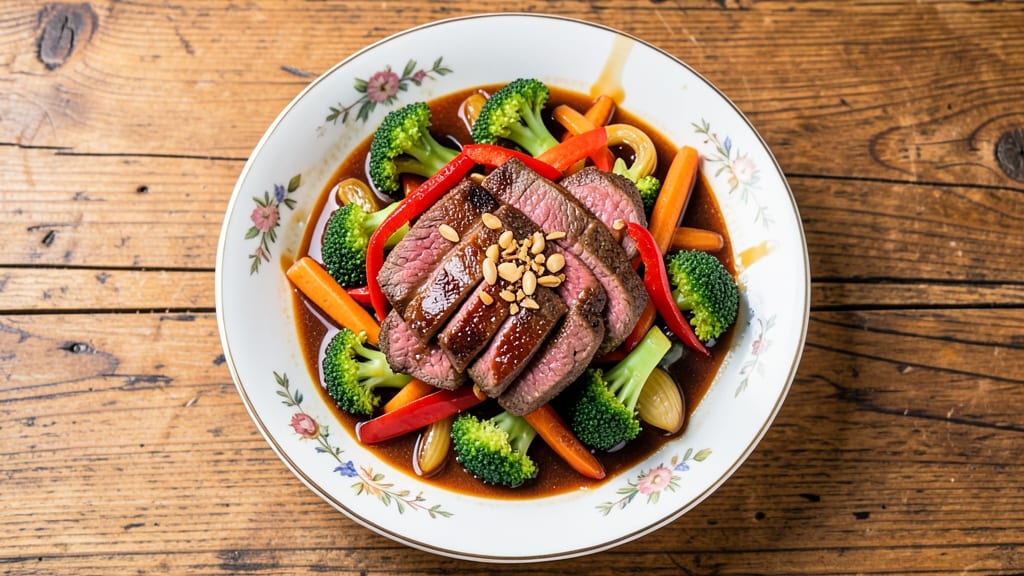
This Asian beef and vegetable stir fry delivers restaurant-quality wok-seared flavor with perfectly tender beef and crisp vegetables in under 30 minutes. The secret lies in high-heat searing and a balanced sauce that marries sweet, umami, and aromatic notes—no takeout needed.
I developed this recipe after years of perfecting stir-fry techniques, ensuring every bite delivers that signature smoky wok hei flavor at home.
What sets this dish apart is the technique: thinly sliced beef cooks quickly over high heat, while vegetables are added in stages to maintain their crisp-tender texture. A homemade sauce—simple but deeply flavorful—ties everything together with ginger, garlic, soy, and a touch of honey.
The result is a dish that’s both restaurant-quality and adaptable to any wok or large skillet.
By the time you plate it, you’ll have a vibrant stir fry with caramelized beef, bright vegetables, and a glossy sauce that clings to every bite. The aroma alone will have everyone at the table asking for seconds.
Serve over steamed rice or noodles for the full experience, or keep it as-is for a quick, satisfying meal.
This recipe works equally well with flank steak, sirloin, or even chicken—just adjust the cooking time. The sauce can be made ahead, and the prep is straightforward, making it perfect for weeknight dinners or meal prep. Let’s get cooking!
Ingredients for asian beef and vegetable stir fry
Restaurant-quality stir fry starts with these carefully chosen ingredients for wok-seared beef and crisp-tender vegetables.
| Ingredient | Amount | Notes |
|---|---|---|
| Flank Steak 🥩 | 1 lb | Thinly sliced against grain |
| Yellow Onion 🧅 | 1 whole | Thinly sliced lengthwise |
| Bell Peppers 🌶️ | 2 whole | Red and green, sliced |
| Broccoli Florets 🥦 | 2 cups | Cut into bite-sized pieces |
| Carrots 🥕 | 2 whole | Julienned into matchsticks |
| Garlic Cloves 🧄 | 4 cloves | Minced for sauce |
| Fresh Ginger 🌿 | 1 tbsp | Finely grated, peeled |
| Low-Sodium Soy Sauce 💧 | ½ cup | For umami depth |
| Honey 🍯 | 1 tbsp | For sweet balance |
| Sesame Oil 🫒 | 1 tbsp | For aromatic finish |
| Vegetable Oil 🫒 | 2 tbsp | High smoke point preferred |
| White Rice Vinegar 🍶 | 1 tbsp | For brightness |
| Cornstarch 🌾 | 1 tbsp | For sauce thickening |
| Sesame Seeds 🌰 | 1 tbsp | Toasted for garnish |
| Salt 🧂 | ½ tsp | Kosher salt preferred |
The beef selection is critical—flank steak delivers that signature stir-fry tenderness when sliced thinly against the grain. Look for well-marbled cuts at Whole Foods or your local butcher shop; the fat renders beautifully during high-heat searing. For vegetables, freshness matters most—bright, crisp broccoli and carrots hold up best to the quick cooking time. Bell peppers should be firm with no soft spots, and yellow onions should have a vibrant color. Asian markets often carry the freshest produce for stir-fries, but any reputable grocery store will work if you pick carefully.
No flank steak? Sirloin or ribeye work equally well—just slice against the grain for tenderness. Fresh ginger loses potency quickly, so if yours smells stale, substitute 1 tsp ground ginger (though fresh is ideal). The sauce can be adjusted for sweetness: reduce honey to 1 tsp if you prefer less sweetness, or add a pinch of red pepper flakes for heat. For a gluten-free version, swap soy sauce for tamari or coconut aminos. The sesame oil should be the toasted, aromatic variety—not the cheap, flavorless kind. And if you can't find white rice vinegar, apple cider vinegar works in a pinch.
Prep vegetables first—they'll wait while the beef cooks. Store any unused beef in an airtight container for up to 3 days, while vegetables keep best in the fridge for 5 days if sealed properly. The sauce can be made ahead and stored for 1 week in the fridge, though it's best used fresh. For meal prep, stir-fry the beef and vegetables separately, then combine with sauce just before serving to maintain crispness. Garnish with toasted sesame seeds right before eating for maximum flavor impact.
Why You'll Love This Recipe
- Here’s what sold me: I make double batches on Sundays, and it’s still delicious cold or reheated. Toss it in containers with rice, and my kids grab it for school lunches—no sad, soggy leftovers here.
- One-Pan Magic: I swear by this for nights when I’d rather not scrub three bowls—just slice, stir, and serve. The flank steak and veggies all hit the same pan, and honestly? That caramelized onion and bell pepper mix is the star without extra effort.
- Umami Bomb: The moment that soy-ginger sauce hits the seared flank steak? Instant flavor explosion. Between us, the broccoli florets stay crisp-tender while the beef gets that perfect chewy bite—like a restaurant bite at home.
- Lunchbox Hero: Here’s what sold me: I make double batches on Sundays, and it’s still delicious cold or reheated. Toss it in containers with rice, and my kids grab it for school lunches—no sad, soggy leftovers here.
Step-by-step instructions for wok-seared beef and vegetable stir fry
This method delivers restaurant-quality texture—crisp vegetables, perfectly seared beef, and a glossy sauce.
Prep and Marinate the Flank Steak
Slice the 1 lb flank steak thinly against the grain into ¼-inch strips. Place the steak in a bowl and add 0.5 tsp salt, 0.5 cup low-sodium soy sauce, and 1 tbsp honey. Mix gently to coat evenly, ensuring the marinade penetrates the meat. Let it sit for 15-20 minutes at room temperature—this ensures even cooking and prevents toughness.
The marinade not only tenderizes but also adds depth of flavor. The soy sauce provides umami, while the honey balances with subtle sweetness. Don't skip this step—it's what transforms tough flank steak into silky, tender slices.
Prep and Par-Cook the Vegetables
Slice the 1 whole yellow onion into thin strips, the 2 whole bell peppers into bite-sized pieces, and cut the 2 cups broccoli florets into even-sized clusters. Julienne the 2 whole carrots into matchsticks. In a large bowl, toss all vegetables with 1 tbsp vegetable oil and 0.5 tsp salt. Set aside.
Heat 1 tbsp vegetable oil in a wok or large skillet over medium-high heat. Add the vegetables in batches, starting with the hardest (carrots) and ending with the softest (bell peppers). Stir-fry for 3-4 minutes until they're brightly colored but still crisp-tender. Remove and set aside—this step ensures the vegetables stay vibrant and not mushy.
Sear the Beef to Perfection
Wipe out the wok with a paper towel to remove any vegetable residue. Heat 1 tbsp vegetable oil over high heat until shimmering. Add the marinated beef in a single layer, spreading it out evenly. Let it sear undisturbed for 1-2 minutes until the edges turn deep golden brown. Stir-fry for an additional 1-2 minutes until the beef is just cooked through—it should still be slightly pink in the center.
Remove the beef and set aside. The high heat is crucial here—it creates that signature wok-seared flavor and texture. If the beef sticks, don't force it; let it cook a bit longer to develop a crust before gently lifting with a spatula.
Build the Glossy Sauce
In the same wok, reduce the heat to medium. Add 4 cloves minced garlic and 1 tbsp finely grated ginger, cooking for 30 seconds until fragrant. Pour in 0.5 cup low-sodium soy sauce, 1 tbsp honey, 1 tbsp white rice vinegar, and 1 tbsp sesame oil. Stir to combine and let the sauce simmer for 1-2 minutes until it thickens slightly.
In a small bowl, whisk 1 tbsp cornstarch with 2 tbsp water to create a slurry. Slowly pour the slurry into the wok, stirring constantly until the sauce reaches a glossy, slightly thickened consistency. This step ensures the sauce clings to the beef and vegetables beautifully.
Combine and Finish
Return the seared beef and par-cooked vegetables to the wok. Toss everything together for 1-2 minutes until everything is evenly coated in the sauce. The vegetables should be hot and vibrant, and the beef should be tender and glossy. Taste and adjust seasoning if needed—add a splash of water or more soy sauce for balance.
Transfer the stir fry to serving plates and garnish with 1 tbsp toasted sesame seeds. Serve immediately over steamed rice for the perfect balance of textures and flavors. The dish should be a harmonious blend of crisp-tender vegetables, perfectly seared beef, and a glossy, umami-rich sauce.
Pro Tips For Making Asian Beef And Vegetable Stir Fry
- Slice Steak Against the Grain: I learned this the hard way—cutting flank steak with the grain means you’ll end up chewing for days. Angle your knife at 45 degrees and slice perpendicular to the muscle fibers for tender, fork-friendly strips. (Yes, it takes a minute longer, but your jaw will thank you.)
- Blanch Broccoli First: Broccoli florets take forever to soften, and they’ll turn mushy if you wait for the beef. Toss them in boiling water for 30 seconds, then shock in ice water. They’ll still hold their shape while the rest of the stir-fry cooks, and you won’t waste time staring at an undercooked center.
- Don’t Crowd the Pan: I used to dump everything in at once, and the onions would steam instead of caramelize. Work in batches: sear the beef first, set it aside, then stir-fry the onions and harder veggies (carrots, bell peppers) until they’re just tender. Add broccoli last—it’s the diva ingredient that needs the least time.
- Use a Cornstarch Slurry: Skip the sad, watery sauce. Mix 1 tablespoon cornstarch with 2 tablespoons water, then stir it into your sauce at the end. The moment it thickens (about 30 seconds), toss in the beef and veggies. It’ll coat everything evenly, and you won’t end up with a gloppy mess. (Trust me, I’ve made that mistake.)
Perfect pairings for this recipe
Rice Pairings
Jasmine rice is my go-to for this stir fry—its delicate floral aroma and slightly sticky texture soak up the sauce beautifully. Cook 1 cup jasmine rice with 1.5 cups water for perfectly fluffy grains. For extra flavor, add ½ tsp sesame oil to the cooking water. 🌾
For a heartier option, try brown rice—it adds a nutty depth that pairs well with the beef's richness. Just increase cooking time to 45 minutes and use 2 cups water per cup of rice.
If you're short on time, microwaveable white rice works in 10 minutes and still delivers great texture.
Noodle Alternatives
Swap rice for udon or soba noodles for a Japanese-inspired twist. Cook 8 oz dried noodles according to package instructions, then toss with the stir fry.
The chewy texture contrasts perfectly with the crisp vegetables. For extra flavor, add 1 tsp toasted sesame oil to the cooked noodles before mixing. 🍜
For a gluten-free option, rice noodles are ideal—they absorb the sauce well and hold their shape. Look for banh pho or vermicelli noodles at Asian markets. Cook them in boiling water for 3-4 minutes, then drain and rinse with cold water to stop cooking.
Side Dish Pairings
A simple cucumber salad adds freshness to balance the rich stir fry. Toss 1 English cucumber (sliced) with 1 tbsp rice vinegar, ½ tsp sugar, and ¼ tsp salt. The cool, crisp texture cuts through the heat of the dish beautifully. 🥒
For a warm side, steamed bok choy with a sprinkle of toasted sesame seeds complements the flavors without overpowering. Blanch 2 heads bok choy for 2 minutes, then finish with 1 tsp sesame oil and a pinch of salt. The slight bitterness balances the sweetness of the stir fry.
Beverage Pairings
A crisp green tea like Sencha cleanses the palate between bites. Its grassy notes complement the umami of the soy sauce and the sweetness of the honey. For a caffeine-free option, try jasmine tea—its floral aroma enhances the dish's aromatic profile. 🍵
For beer lovers, a light Japanese lager like Asahi Super Dry pairs perfectly. The subtle maltiness balances the dish's bold flavors without competing. If you prefer wine, a dry Riesling offers bright acidity that cuts through the richness of the beef and sauce.
Nutrition facts
Frequently asked questions
Can I use a different cut of beef for this stir fry?
Yes! While flank steak is ideal, you can use sirloin or ribeye—just slice against the grain for tenderness. For leaner cuts like top round, marinate for 30 minutes to prevent toughness. Avoid fatty cuts like brisket, as they won't sear properly in a quick stir fry.
How do I get the vegetables to stay crisp-tender?
Cook them in batches over medium-high heat for just 2-3 minutes—they should be bright and slightly firm. Overcrowding the pan steams them instead of crisping. Harder veggies (carrots) go in first, followed by softer ones (bell peppers). Never cover the pan!
What if I don't have a wok?
A heavy-bottomed skillet or cast-iron pan works perfectly—just use high heat and keep stirring. If your pan isn't wide enough, cook in batches. The key is maintaining high heat to create that signature wok-seared flavor, even without a wok.
Can I make this stir fry ahead of time?
Prep the beef and vegetables separately, then store in airtight containers for up to 2 days. Reheat only the beef and sauce together for 1-2 minutes—never reheat veggies with sauce, or they'll turn mushy. For best texture, assemble fresh and serve immediately.
How can I adjust the spice level?
Add ½ tsp red pepper flakes to the sauce for mild heat, or 1 tsp sriracha for a kick. For a smoky version, swap sesame oil for 1 tbsp chili oil in the sauce. Always taste before serving—you can adjust after combining everything.