
Main Courses
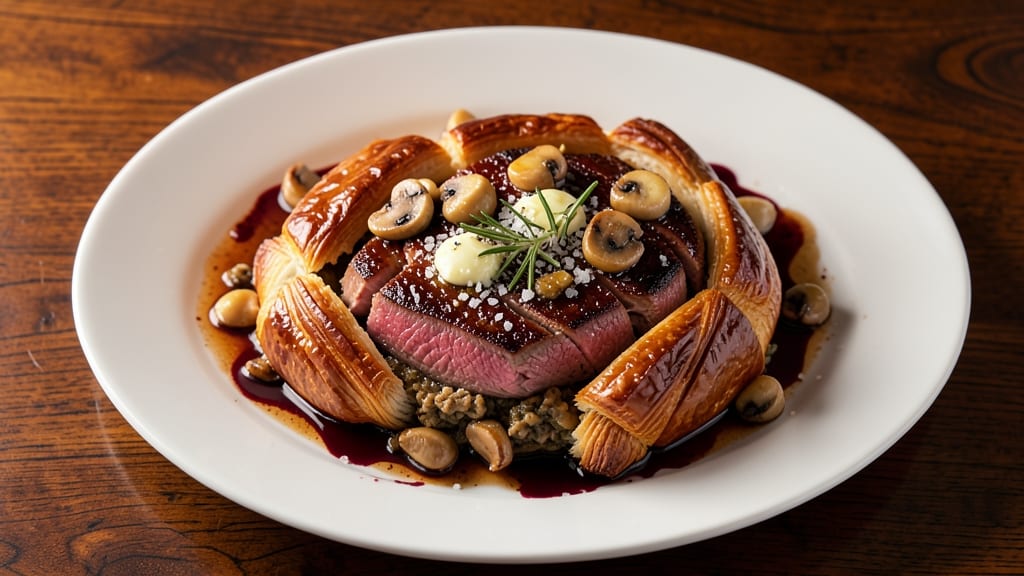
This American beef Wellington recipe transforms a simple beef tenderloin into a showstopping centerpiece with layers of flavor and flaky pastry perfection. The secret lies in a rich duxelles—finely chopped mushrooms sautéed until dry—and a perfectly seared tenderloin wrapped in buttery puff pastry.
What starts as a humble cut of beef becomes an elegant, restaurant-worthy dish that impresses without requiring advanced techniques.
The process begins with searing the beef to lock in juices, followed by layering it with the aromatic duxelles and a blanket of Dijon mustard for depth. Wrapping the tenderloin in puff pastry ensures a tender, melt-in-your-mouth bite with a golden, crisp exterior.
The key? Chilling the wrapped beef before baking to prevent the pastry from puffing prematurely—this guarantees the signature flaky texture you crave.
Once baked to a deep golden brown, the result is a dish that’s as visually stunning as it is delicious—juicy beef at its core, surrounded by earthy mushrooms and encased in buttery, crisp pastry.
Serve it sliced with a bold red wine reduction or roasted root vegetables to complete the plate. This isn’t just dinner; it’s an experience that turns weeknights into special occasions.
With precise knife work and a few strategic chilling steps, you’ll master the technique in no time. The payoff? A dish that feels luxurious but is entirely achievable at home, proving that tender beef and flaky pastry can coexist beautifully. Let’s get started on creating your own masterpiece.
Ingredients for american beef wellington
The key to restaurant-quality Wellington lies in these 14 ingredients—juicy beef, earthy mushrooms, and buttery pastry wrapped in harmony.
| Ingredient | Amount | Notes |
|---|---|---|
| Beef Tenderloin 🥩 | 1 ½ lb | Center-cut, trimmed of fat |
| White Mushrooms 🍄 | 8 oz | Finely chopped, stems removed |
| Shallots 🧅 | 2 whole | Mince finely for duxelles |
| Garlic Cloves 🧄 | 4 cloves | Minced, for depth of flavor |
| Extra-Virgin Olive Oil 🫒 | 2 tbsp | For sautéing mushrooms |
| Unsalted Butter 🧈 | 2 tbsp | European-style preferred |
| Dijon Mustard 🍯 | 2 tbsp | For binding and richness |
| Puff Pastry Sheets 🍞 | 1 sheet | Store-bought or homemade |
| Prosciutto 🥓 | 4 slices | Thinly sliced, optional but recommended |
| Fresh Thyme 🌿 | ¼ cup | Chopped, stems removed |
| Kosher Salt 🧂 | 1 ½ tsp | Diamond Crystal preferred |
| Freshly Ground Black Pepper 🌶️ | ½ tsp | Cracked peppercorns preferred |
| Egg Wash 🥚 | 1 whole | Beaten with 1 tbsp water |
| All-Purpose Flour 🌾 | 1 tbsp | For dusting work surface |
The beef tenderloin is your star—center-cut is non-negotiable for tenderness. Whole Foods or Costco carry excellent cuts, but ask for the most tender section if buying from a butcher. Mushrooms should be cremini or white, finely chopped for that velvety duxelles texture. The shallots and garlic? Freshly minced makes all the difference—no pre-chopped jars here. For the pastry, Pepperidge Farm puff pastry is foolproof, but homemade layers up the wow factor. Prosciutto adds luxury, but skip it if you're keeping this vegetarian-friendly.
No Dijon mustard? Whole-grain mustard thinned with water works in a pinch. The butter in the duxelles is crucial—European-style melts better than American. Short on thyme? Dried thyme at one-third the amount suffices. For the egg wash, pasteurized eggs are safest. The prosciutto can be swapped for thinly sliced ham, but the flavor won’t be identical. If you’re prepping ahead, make the duxelles first—it keeps for 3 days in the fridge. The pastry, though, is best used fresh from the package.
This dish is all about timing—chill the wrapped beef for 30 minutes before baking to prevent puffing. The duxelles can be prepped a day ahead and stored in an airtight container. Puff pastry freezes beautifully—thaw overnight in the fridge before using. Leftovers? Slice and reheat in a 350°F oven for 15 minutes—the pastry stays crisp. For presentation, dust with freshly cracked pepper and a sprinkle of flaky sea salt right before serving.
Why You'll Love This Recipe
- One-Pan Magic: I swear by this for lazy nights—just sear the tenderloin, toss in the mushrooms and shallots, and let the oven do the work. No chopping boards left in the sink, no pots to scrub.
- Rich Umami Bomb: That caramelized mushroom duxelles? Chef’s kiss. The shallots and garlic deepen as they cook, wrapping the beef in layers of savory perfection. (Yes, even my picky husband finishes his.)
- Date Night Ready: Fancy enough for a Friday dinner but simple enough to make when your in-laws drop by. The crusty edge on the beef? Instant restaurant vibes without the pretension.
- Leftovers Win: The beef stays juicy for days—slice it for sandwiches, toss it into salads, or reheat with a splash of red wine. Honestly, I make this just to have leftovers.
Step-by-step instructions for American beef Wellington
This method delivers melt-in-your-mouth beef with golden, flaky pastry every time.
Prepare the Duxelles and Season the Beef
Heat the 2 tablespoons extra-virgin olive oil in a skillet over medium-high heat. Add the 8 ounces finely chopped white mushrooms and cook for 8-10 minutes until all moisture evaporates and they develop a deep golden color. Transfer to a bowl and set aside.
In the same skillet, add the 2 tablespoons unsalted butter, then the 2 whole minced shallots and 4 minced garlic cloves. Cook for 2 minutes until fragrant but not browned. Combine with the mushrooms, then stir in the 2 tablespoons Dijon mustard, 0.25 cup chopped fresh thyme, 1.5 teaspoons kosher salt, and 0.5 teaspoon freshly ground black pepper. Let cool completely.
While the duxelles cools, pat the 1.5-pound beef tenderloin completely dry with paper towels. Season generously with an additional 0.5 teaspoon kosher salt and 0.25 teaspoon black pepper. This step is crucial for both flavor and that perfect crust.
Assemble the Wellington
Preheat your oven to 400°F. Lay out the 1 sheet puff pastry on a lightly floured surface. Roll it out to form a 12x10-inch rectangle using the 1 tablespoon all-purpose flour to prevent sticking. Spread the cooled duxelles evenly over the center of the pastry, leaving a 1-inch border around the edges.
Lay the 4 slices prosciutto over the duxelles in a single layer. Place the seasoned beef tenderloin on top, positioning it horizontally. The pastry should extend about 2 inches beyond the beef on all sides. This extra pastry will help create that signature flaky crust.
Wrap and Score the Pastry
Brush the egg wash over the exposed pastry edges. Fold the sides inward toward the center, overlapping slightly, then roll the entire package up like a jelly roll. Seal the seam by pressing firmly. Transfer to a parchment-lined baking sheet and brush all over with the remaining egg wash.
Using a sharp knife, score the top of the pastry in a diagonal crosshatch pattern (about ½-inch deep cuts). This creates steam vents that prevent puffing and ensure even browning. Let it rest at room temperature for 15 minutes while the oven finishes preheating.
Bake to Golden Perfection
Bake for 30-35 minutes until the pastry is deep golden brown and reaches an internal temperature of 125°F (medium-rare). The pastry should be crisp and flaky, with no soft spots. If the top browns too quickly, loosely cover with foil for the last 5 minutes.
Remove from the oven and let rest for 10 minutes before slicing. This resting period is essential—it allows the juices to redistribute, ensuring each slice remains tender and succulent. Serve with red wine reduction or roasted vegetables for a complete meal.
Pro Tips For Making American Beef Wellington
- SEAR THE MUSHROOMS FIRST: I learned this the hard way—sautéing shallots and garlic before mushrooms makes them watery. Get a hot pan, add olive oil, and cook the mushrooms until they release all their liquid and turn golden. Then toss in the shallots and garlic; they’ll soften perfectly without turning to mush.
- USE COLD MUSHROOM MIX: Skip the pre-sautéed jarred mushroom duxelles unless you’re in a rush. Instead, pulse raw mushrooms, shallots, and garlic in a food processor until finely chopped but not paste-like—about 10 seconds. The cold mix binds better to the beef and doesn’t steam out moisture when wrapped.
- DON’T SKIP THE REST: I know, you’re eager to slice into that perfect crust. But give the wrapped beef a solid 5-10 minutes under foil after searing, even if it’s not fully cooked through. This lets the center adjust temperature evenly, so it’s juicy all the way through—not raw inside and overdone outside.
- UPGRADE WITH THYME: Fresh thyme isn’t just for garnish—it’s the thing that makes this dish smell like a restaurant. Finely chop 2 sprigs and mix it into the mushroom-shallot paste before wrapping. The aroma alone sells the dish, and it pairs perfectly with the beef’s richness. (Yes, even if you’re impatient like me.)
Common mistakes when making perfect results
Overcooking the Beef
Medium-rare is the only doneness level that works for Beef Wellington—any higher and the beef becomes dry. Use a meat thermometer to check for 125°F internal temperature (about 120-125°F for true medium-rare). I’ve ruined multiple Wellingtons by overcooking, so trust your thermometer over guesswork. 🌡️
Skipping the Chill
Never skip the 30-minute chill before baking! This critical step prevents the pastry from puffing prematurely and ensures even cooking. I learned this the hard way when my first attempt turned into a puffy, uneven mess.
Place the wrapped Wellington on a baking sheet in the fridge while you preheat the oven.
Using Cold Beef
Always bring your beef to room temperature before searing—about 30 minutes out of the fridge. Cold beef won’t sear properly, leading to pale, bland slices. I keep mine on the counter wrapped in a clean kitchen towel while I prep the duxelles. Never sear straight from the fridge!
Poor Pastry Handling
Roll the puff pastry to the correct dimensions—about 12x10 inches—to ensure full coverage of the beef. If it’s too small, the pastry will tear when wrapping. I use a rolling pin and flour the surface generously to prevent sticking. Avoid stretching the pastry, which makes it tough.
Uneven Duxelles
Duxelles must be finely chopped (almost paste-like) for that velvety texture. If yours looks chunky, pulse in a food processor until smooth. I use a sharp chef’s knife and chop mushrooms in batches for even consistency. Uneven duxelles create dry spots in the final dish.
Scoring Too Deep
When scoring the pastry, cut only ½-inch deep—deeper cuts can tear the pastry or let filling escape. Use a sharp paring knife and make clean, diagonal lines. I practice scoring on scrap pastry first to get the right pressure. Proper scoring prevents puffing and ensures even browning. 🔪
Nutrition facts
Frequently asked questions
Can I substitute prosciutto in this recipe?
Yes! While prosciutto adds a luxurious saltiness, you can swap it for 4 thin slices of high-quality ham or even thinly sliced pancetta. For a vegetarian version, use extra-thick slices of mushroom or caramelized onions instead. The key is maintaining the same layer thickness to keep the pastry structure intact.
How far ahead can I make the duxelles?
You can prepare the duxelles up to 3 days ahead and store it in an airtight container in the fridge. The flavors actually deepen over time! When ready to use, gently reheat it in a skillet over low heat for 3-5 minutes to remove any moisture before assembling the Wellington. This shortcut saves you 20 minutes of prep time on cooking day.
What's the best way to reheat leftovers?
Slice the Wellington and reheat individual portions in a 350°F oven for 15-20 minutes on a wire rack over a baking sheet. This method keeps the pastry crisp while gently warming the beef. For microwave reheating, cover with a damp paper towel and heat in 20-second bursts—but expect the pastry to soften. Leftovers taste best within 2 days.
Can I use puff pastry from the freezer?
Thaw frozen puff pastry overnight in the fridge. Once thawed, handle it gently to avoid tearing—never stretch it. For best results, use it within 2 hours of thawing. If you're short on time, you can also bake it straight from frozen, adding 5-7 minutes to the baking time. The pastry will still achieve that signature flaky texture.
What wine pairs best with this dish?
A bold Cabernet Sauvignon or Merlot complements the rich beef and earthy mushrooms perfectly. For lighter options, try a Pinot Noir or Syrah. If you prefer white wine, a full-bodied Chardonnay with oak works surprisingly well. Always serve the wine slightly cooler than room temperature (60-65°F) to enhance its flavors.