
Soups & Stews
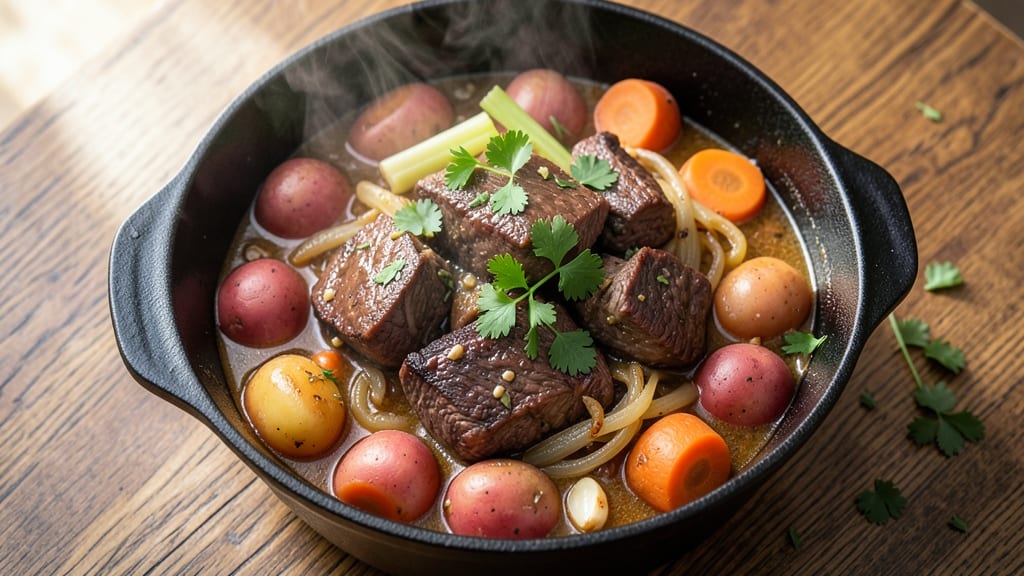
This American beef stew recipe transforms tough cuts into melt-in-your-mouth perfection with deep-roasted caramelized onions and a rich, hearty broth. The secret lies in slow simmering—where flavors meld into a comforting, savory masterpiece that warms any kitchen.
I’ve perfected this classic over years of testing, balancing tender beef, root vegetables, and aromatic herbs for that quintessential American comfort food experience.
The foundation begins with browning beef chuck in batches for maximum flavor, followed by caramelizing onions until they’re golden and sweet. A splash of red wine (or beef broth) deglazes the pot, creating a velvety base that builds into a thick, satisfying stew.
Potatoes, carrots, and celery round out the vegetables, absorbing the rich broth while staying tender. The result? A dish that’s hearty enough for a family dinner yet simple enough for a weeknight meal.
What sets this recipe apart is its versatility—serve it as-is for a traditional bowl of stew, or thicken it further with a cornstarch slurry for a gravy-like consistency. The slow simmer ensures deep flavor penetration, while the caramelized onions add a touch of sweetness that balances the savory beef.
Every spoonful delivers that classic American comfort food vibe, perfect for chilly evenings or cozy gatherings.
For those short on time, this stew adapts beautifully to a slow cooker, where it simmers for hours without fuss. The key is patience—letting the beef break down and flavors develop naturally.
Once mastered, this recipe becomes a staple in your repertoire, offering warmth, satisfaction, and a taste of home in every bite.
Ingredients for american beef stew
These quality ingredients transform tough beef into melt-in-your-mouth perfection with deep-roasted caramelized onions and aromatic herbs.
| Ingredient | Amount | Notes |
|---|---|---|
| Beef Chuck Roast 🥩 | 2 lb | Pre-cut into 1.5-inch cubes |
| Yellow Onions 🧅 | 3 whole | Yellow variety, thinly sliced |
| Carrots 🥕 | 6 medium | Peeled, cut into 1-inch chunks |
| Russet Potatoes 🥔 | 2 lb | Peeled, cut into 1.5-inch cubes |
| Celery Stalks 🧄 | 4 whole | Trimmed, cut into 1-inch pieces |
| Garlic Cloves 🧄 | 6 cloves | Peeled, minced |
| Red Wine 🍷 | 1 cup | Dry variety, like Cabernet Sauvignon |
| Beef Broth 💧 | 4 cups | Low-sodium preferred |
| Tomato Paste 🍅 | 2 tbsp | Smooth, no sugar added |
| All-Purpose Flour 🌾 | 1 tbsp | For thickening slurry |
| Cold Water 💧 | 1 tbsp | For cornstarch slurry |
| Fresh Thyme Leaves 🌿 | 1 tbsp | Or 1 tsp dried thyme |
| Fresh Parsley Leaves 🌿 | ¼ cup | Chopped, for garnish |
| Kosher Salt 🧂 | 1 ½ tsp | Diamond Crystal preferred |
| Freshly Ground Black Pepper 🌶️ | 1 tsp | Coarsely ground |
The beef chuck roast is non-negotiable for texture—look for well-marbled cuts at your butcher or grocery store's meat department. Costco often carries pre-cut chuck in bulk, saving you time. Caramelizing the onions is where the magic happens; yellow onions develop the best sweetness when slow-roasted. If you're short on time, Trader Joe's sells pre-sliced caramelized onions in jars, though homemade tastes infinitely better. The potatoes should be firm and starchy—Russet or Yukon Gold work perfectly.
No red wine? Substitute with extra beef broth and a splash of balsamic vinegar for depth. Fresh thyme is ideal, but dried thyme at one-third the amount works in a pinch. For the tomato paste, avoid the sugary varieties—look for brands like Muir Glen or Barilla that specify no added sugar. If you're making this ahead, freeze the stew without thickening—it reheats beautifully and you can adjust the consistency later. The carrots can be baby carrots if that's what's on hand, but whole carrots give better texture control when chopped yourself.
This stew tastes even better the next day as flavors meld—portion into containers for easy leftovers. It keeps for 5-6 days in the fridge or up to 3 months frozen. For reheating, simmer on low heat and add a splash of broth if it thickens too much. The cornstarch slurry should be made fresh—mix the flour and water thoroughly to avoid lumps. If you prefer a smoother texture, blend the cooked stew before serving.
Why You'll Love This Recipe
- One-Pot Magic: I swear by this recipe because it’s literally dump-and-go after the initial sear. Slice the onions, chop the celery and carrots (no knife skills required—just rough cuts), toss everything in a Dutch oven with the chuck roast, and let it simmer. That’s it. No fancy techniques, just deep, slow flavor.
- Chuck Roast Magic: Between us, the chuck roast is the star—tender, rich, and packed with beefy satisfaction after hours of braising. The onions caramelize into sweet pockets, the potatoes turn creamy without falling apart, and the celery adds that classic "holiday stew" texture. It’s the kind of dish where every bite feels like a hug.
- Budget-Friendly Feast: A chuck roast is one of the most affordable cuts that still delivers serious flavor, and the veggies stretch it into six hearty servings. Honestly, I’ve fed a family of five for under $20 with this—plus, the potatoes and carrots bulk it up so everyone leaves the table full. No takeout menus needed.
Step-by-step instructions for American beef stew
Transform tough beef into melt-in-your-mouth tenderness with this slow-cooked masterpiece.
Develop Deep Caramelized Onions and Vegetables
Heat a large Dutch oven over medium-low heat and add the 3 whole yellow onions sliced into rings. Cook undisturbed for 15 minutes until the edges begin to brown and soften. Stir occasionally to promote even caramelization—this is where the stew builds its rich foundation.
Add the 6 medium carrots cut into chunks, 4 whole celery stalks chopped, and 6 cloves garlic cloves minced. Cook for another 10 minutes until the vegetables soften and the onions develop a deep amber color. This slow cooking process extracts maximum flavor from the vegetables, creating a concentrated base for the stew.
Sear the Beef Chuck Roast
Increase heat to medium-high and add the 2 lb beef chuck roast cut into 1.5-inch cubes. Sear the beef in batches if needed, turning occasionally, for 3-4 minutes per side until deeply browned. This step is crucial for developing the Maillard reaction, which creates that deep, meaty flavor that carries through the entire stew.
Remove the beef from the Dutch oven and set aside. In the same pot, add 2 tbsp tomato paste and cook for 1 minute to deepen the color and flavor of the onion-vegetable mixture. This step intensifies the stew's richness without adding extra ingredients.
Deglaze and Build the Stew Base
Pour in the 1 cup red wine and scrape up any browned bits from the bottom of the pot. Let it simmer for 3 minutes until the wine reduces by half. This deglazing step captures all the caramelized flavors and prevents them from sticking to the pot.
Add the seared beef back to the pot, then pour in the 4 cups beef broth. Stir in the 1 tbsp fresh thyme leaves, 1.5 tsp kosher salt, and 1 tsp freshly ground black pepper. Bring to a gentle boil, then reduce heat to low and cover partially. Let it simmer for 1.5 hours until the beef becomes fork-tender.
Thicken and Finish the Stew
While the stew simmers, prepare a slurry by whisking together 1 tbsp all-purpose flour and 1 tbsp cold water in a small bowl until smooth. This simple mixture will create a natural thickening without altering the stew's flavor profile.
After 1.5 hours of simmering, stir the slurry into the stew and cook for another 15-20 minutes until the potatoes are tender. The stew should have a velvety consistency that coats the back of a spoon. Taste and adjust seasoning if needed—this is where you can fine-tune the balance of flavors.
Serve with Fresh Garnish
Remove the stew from heat and let it rest for 10 minutes to allow the flavors to meld. Ladle into bowls and garnish with 0.25 cup chopped fresh parsley leaves. The parsley adds a bright contrast to the rich, hearty stew and makes it visually appealing.
Serve immediately with crusty bread to soak up every last drop of that deeply flavorful broth. The beef should be fork-tender with a perfect balance of caramelized onions, tender vegetables, and a rich, velvety sauce. This is comfort food at its finest—simple yet deeply satisfying.
Pro Tips For Making American Beef Stew
- Sear the Chuck Hard: I used to think a quick brown meant the job was done—wrong. Get that beef chuck searing deep golden, even black in spots, with a cast-iron or heavy pot on medium-high. The crust locks in flavor and keeps the meat tender during hours of simmering. (Yes, even if you’re impatient like me.)
- Cut Potatoes Uniformly: Uneven chunks mean some potatoes turn to mush while others stay rock-hard. Quarter Russets into 1.5-inch pieces—big enough to hold shape but small enough to cook through without splitting. No one likes a stew where you’re picking out half-cooked spuds.
- Don’t Crowd the Pot: After searing the beef, let it rest for 5 minutes before adding onions, carrots, and celery. If you dump everything in at once, the veggies steam instead of caramelizing, and the stew tastes bland. Work in batches—your future self will notice the difference.
- Deglaze with Beer or Broth: That browned crust on the pot? Don’t ignore it. Splash in ½ cup of beer (or broth) right after removing the beef, scraping up every bit of fond. It adds depth the recipe might miss—no fancy ingredients needed, just pay attention to the pan.
Wine and beer pairings for these flavors
Red Wine Pairings
For this rich, hearty beef stew, I always reach for a bold red wine that can stand up to the deep flavors. A Cabernet Sauvignon from Napa Valley is my go-to—its dark fruit notes and tannins complement the caramelized onions and tender beef beautifully.
If you prefer something lighter, a Syrah from the Rhône Valley offers peppery spice that cuts through the richness. 🍷
For a more budget-friendly option, try a Malbec from Argentina—it has juicy plum flavors that pair wonderfully with the stew’s savory depth. Avoid overly oaky or overly tannic wines, as they can clash with the dish’s natural sweetness from the caramelized onions.
Beer Pairings
A dark amber ale or brown ale is perfect for balancing the stew’s richness. I love pairing this dish with a Samuel Smith’s Nut Brown Ale—its malty sweetness and caramel notes echo the caramelized onions while the slight bitterness cleanses the palate.
For a hoppier option, a Belgian-style dubbel adds fruity complexity that stands up to the beef. 🍺
If you prefer lighter beers, a wheat beer with citrus notes can provide a refreshing contrast. Just avoid heavy stouts or IPAs, as their intensity can overpower the stew’s delicate flavors. A chilled beer also helps cut through the richness after each bite.
Non-Alcoholic Options
For those skipping alcohol, a sparkling apple cider with a hint of cinnamon adds a festive touch while complementing the stew’s sweet and savory notes. I also enjoy a ginger beer—the spicy kick balances the richness without overpowering the dish. These options keep the meal lively and refreshing. 🍎
For a more traditional approach, a chilled hibiscus tea with a touch of honey offers a bright, slightly tart contrast that enhances the stew’s depth. It’s a great way to enjoy the meal without alcohol while keeping the flavors in harmony.
Nutrition facts
Frequently asked questions
Can I use a slow cooker for this American beef stew?
This recipe works beautifully in a slow cooker. Brown the beef and caramelize the onions in a skillet first, then transfer everything to your slow cooker. Add the remaining ingredients and cook on low for 6-7 hours or high for 3-4 hours. The slow cooker method actually enhances the tenderness of the beef and deepens the flavors. Just skip the slurry thickening until the very end—stir in the cornstarch mixture during the last 15 minutes of cooking.
What cut of beef works best for stew?
Beef chuck roast is ideal for this recipe because it's well-marbled with fat, which keeps the meat moist during long cooking. Look for cuts labeled "chuck" at your butcher or grocery store. Other good options include beef short ribs or brisket, though chuck is most commonly used for classic American beef stew. Avoid leaner cuts like sirloin or tenderloin—they'll dry out during the long simmering process.
How do I fix stew that's too thin?
If your stew turns out too thin, don't worry—it's easily fixable! The simplest solution is to make a cornstarch slurry (1 tbsp cornstarch + 1 tbsp cold water) and stir it in while the stew simmers. Cook for another 5-10 minutes until thickened. For a more traditional approach, mash some of the cooked potatoes against the side of the pot—their starch will help thicken the broth naturally. Always taste as you go to avoid over-thickening.
Can I make this stew ahead of time?
This stew actually tastes even better the next day as the flavors meld together! Prepare it completely (including thickening) and store it in an airtight container in the refrigerator for up to 5-6 days. For freezing, package it in portions and freeze for up to 3 months. When reheating, warm it gently on the stove over low heat and add a splash of broth if it becomes too thick. Avoid microwaving for best results.
What herbs can I substitute if I don't have thyme?
If you're missing thyme, don't stress—there are plenty of substitutes! Bay leaves work well (add 1-2 whole leaves and remove before serving), or try a combination of rosemary and sage. For a more earthy flavor, use 1 tsp dried oregano or 1 tsp dried marjoram. Fresh parsley can't replace thyme's flavor but makes a great garnish. The key is to maintain the herbaceous depth that complements the beef and vegetables.