
Main Courses
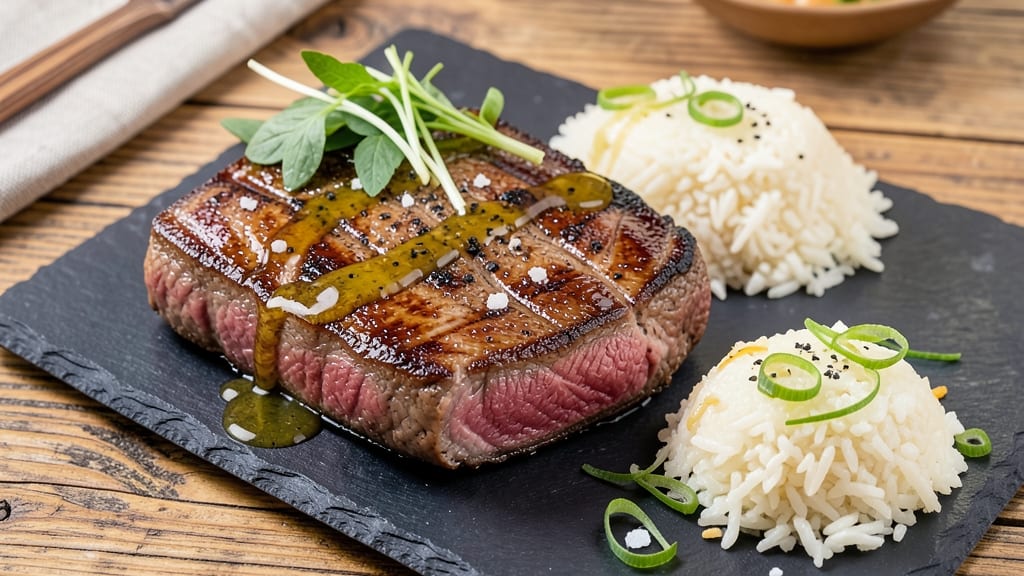
A5 Wagyu beef isn't just a cut—it's an experience where buttery marbling transforms every bite into pure indulgence. This recipe unlocks the secrets to preserving that legendary texture while achieving a perfect sear that locks in juices without overpowering the delicate fat.
What sets A5 apart isn't just the marbling; it's how you cook it—gentle heat, precise timing, and techniques that respect its luxury nature.
The key lies in high-heat searing for just 90 seconds per side, followed by a resting period that lets the fat redistribute. We'll pair this with complementary sides—steamed jasmine rice to soak up the rendered fat and roasted seasonal vegetables to balance the richness.
The goal? A restaurant-quality steak that delivers on every promise of Wagyu's reputation.
What makes this recipe work isn't just the technique—it's the attention to detail. From preheating your pan to 110°F internal temperature for rare, we'll guide you through each step to ensure the marbling stays intact while developing a caramelized crust.
The result? A steak so tender it nearly melts, with fat that renders like butter across your tongue.
Perfect for special occasions or when you want to treat yourself, this A5 Wagyu recipe delivers foolproof results that feel like a five-star meal. The sides we suggest elevate the experience without competing, creating a harmonious plate that showcases the beef's natural brilliance.
Let's get started on a dish that redefines indulgence.
Ingredients for a5 wagyu beef
Luxurious ingredients designed to highlight A5 Wagyu's legendary buttery marbling and delicate texture.
| Ingredient | Amount | Notes |
|---|---|---|
| A5 Wagyu Beef Ribeye 🥩 | 1 ½ lb | Center-cut, 1.5-inch thick, dry-brined overnight |
| Kosher Salt 🧂 | 1 ½ tbsp | Diamond Crystal preferred, coarse grain |
| Freshly Ground Black Pepper 🌶️ | 1 tsp | Cracked peppercorns for intensity |
| Extra-Virgin Olive Oil 🫒 | 2 tbsp | High smoke point, fruity flavor |
| Japanese Ponzu Sauce 🍋 | 2 tbsp | For finishing, store-bought or homemade |
| Jasmine Rice 🍚 | 1 cup | Uncooked, long-grain preferred |
| Vegetable Oil 🫒 | ½ cup | For high-heat searing, neutral flavor |
| Baby Carrots 🥕 | 1 lb | Whole, unpeeled for roasting |
| Yellow Onion 🧅 | 1 whole | Sweet variety, sliced into wedges |
| Fresh Thyme Sprigs 🌿 | 4 whole | For roasted vegetables, stems removed |
| Unsalted Butter 🧈 | 2 tbsp | European-style, cold for basting |
| Flaky Sea Salt 🧂 | 1 tsp | For finishing, Maldon preferred |
The A5 Wagyu ribeye is the star—look for center-cut with visible marbling. US Wellness Meats or Snake River Farms are top sources, but any reputable purveyor will do. The key is thickness: 1.5 inches ensures even cooking. Dry-brine the steak overnight in the fridge—1.5 tbsp Diamond Crystal kosher salt per pound—this enhances flavor without overpowering the beef's natural richness. For sides, jasmine rice soaks up the rendered fat beautifully, while seasonal vegetables balance the dish's indulgence.
No ponzu sauce? Substitute soy sauce with a splash of yuzu juice for brightness. The vegetable oil for searing can be swapped for avocado oil if preferred—just ensure it has a high smoke point (400°F+). For the roasted vegetables, baby carrots and onions work universally, but swap for asparagus or Brussels sprouts in season. The thyme sprigs can be replaced with rosemary if you're out, but thyme's delicate flavor pairs better with the beef's richness. And if you're worried about the butter basting, ghee works too—it's dairy-free and adds a nutty depth.
The A5 Wagyu should rest for 10-15 minutes after cooking—this is non-negotiable for preserving juices. Store leftover steak in an airtight container for 3-4 days, but honestly, it's so rich you'll likely devour it all. The roasted vegetables keep for 5 days in the fridge, while cooked rice reheats beautifully—just add a splash of water and cover. For extra indulgence, freeze portions of the steak for up to 3 months, but thaw slowly in the fridge for best results.
Why You'll Love This Recipe
- I’ll be real: I’ve served this at fancy dinners, but it’s my go-to when I’m too tired to think. Pair it with store-bought rice and steamed greens, and suddenly you’ve got a restaurant-worthy meal that doesn’t require a reservation. (Yes, even on a Tuesday night.)
- Five-Ingredient Magic: Honestly, you’re looking at the shortest ingredient list that still feels like a splurge. A single ribeye, a drizzle of oil, salt, pepper—then that bright ponzu ties it all together without overpowering. No chopping, no blending, just unfussy luxury.
- Butter-Soft Perfection: Between us, the way this wagyu melts with the ponzu’s citrusy tang? It’s the kind of texture that makes you close your eyes mid-bite. The fat renders just enough to coat every slice, but the sear keeps it from turning into a puddle—exactly how steak should be.
- Date Night or Tuesday: I’ll be real: I’ve served this at fancy dinners, but it’s my go-to when I’m too tired to think. Pair it with store-bought rice and steamed greens, and suddenly you’ve got a restaurant-worthy meal that doesn’t require a reservation. (Yes, even on a Tuesday night.)
Step-by-step instructions for A5 Wagyu beef ribeye with roasted vegetables
This method delivers melt-in-your-mouth tenderness with a perfect crust—where buttery marbling meets restaurant-quality sear.
Prepare the Wagyu for Optimal Searing
Remove the 1.5 lb A5 Wagyu Beef Ribeye from the refrigerator and let it sit at room temperature for 30 minutes. This ensures even cooking throughout the thick cut. Pat the surface dry with paper towels—moisture is the enemy of that coveted crust. I like to press firmly, especially around the edges where fat accumulates.
While the steak rests, preheat your oven to 400°F for the roasted vegetables. In a small bowl, combine the 1.5 tbsp Kosher Salt and 1 tsp Freshly Ground Black Pepper. Rub this mixture generously over all sides of the steak, pressing it into the meat so it adheres. The salt will draw out moisture from the surface, creating an ideal crust when seared.
Sear the Wagyu to Perfection
Heat 0.5 cup Vegetable Oil in a heavy skillet over medium-high heat until it shimmers but doesn't smoke. The oil should be hot enough that when you touch a drop of water to it, the sizzle sounds immediate. Add the steak and sear for 4 minutes per side—don't move it during the first 2 minutes to develop that deep crust.
Here's the thing—Wagyu releases its own fat during cooking. After the initial sear, reduce heat to medium and baste the steak with 2 tbsp Unsalted Butter and 2 tbsp Extra-Virgin Olive Oil for 1 minute per side. This basting creates a glossy finish while infusing flavor. The steak is perfect when it reaches 130°F internal temperature for medium-rare (use an instant-read thermometer).
Roast the Vegetable Accompaniments
While the steak rests, prepare the vegetables. Toss the 1 lb Baby Carrots and 1 whole Yellow Onion (sliced into wedges) with 2 tbsp Extra-Virgin Olive Oil, 4 whole Fresh Thyme Sprigs (leaves removed), and 1.5 tbsp Kosher Salt. Spread them on a parchment-lined baking sheet in a single layer—they should touch but not overlap.
Roast in the 400°F oven for 25-30 minutes until the carrots are tender and the onions caramelize at the edges. The thyme leaves will infuse the vegetables with aromatic depth. Remove them from the oven and let them rest for 5 minutes—this prevents them from continuing to cook when you plate everything together.
Rest and Finish the Wagyu
Transfer the seared steak to a cutting board and tent loosely with aluminum foil. Let it rest for 10-15 minutes—this crucial step allows the juices to redistribute throughout the meat. The temperature will rise 5-10°F during this time, so it'll reach your desired doneness by the time you serve it.
To finish, brush the top of the steak with 2 tbsp Japanese Ponzu Sauce and sprinkle with 1 tsp Flaky Sea Salt. The ponzu adds a bright citrus note that cuts through the richness of the Wagyu. Slice the steak against the grain into ½-inch thick portions for maximum tenderness.
Assemble the Perfect Plate
While the steak rests, prepare the 1 cup Jasmine Rice according to package instructions—it should be fluffy and slightly sticky. Divide the rice among four plates, then arrange the roasted carrots and onions alongside. Slice the steak and fan it over the rice and vegetables.
Here's the moment you've been waiting for: the first bite. The Wagyu should be buttery with visible marbling, the crust perfectly crisp, and the vegetables caramelized with aromatic thyme. The ponzu glaze adds a sophisticated finish that elevates this dish from extraordinary to unforgettable. Serve immediately with a crisp white wine to complement the richness.
Pro Tips For Making A5 Wagyu Beef
- SEAR FAST, THEN CHILL: Get that pan screaming hot—like, actually smoking if you can—and sear the ribeye for 30 seconds per side max. Then pull it off and let it rest on a wire rack for 5 minutes. I used to rush this, but the crust stays intact, and the fat doesn’t pool into mush.
- SALT THE PONZU: Taste your ponzu sauce before drizzling—it’s usually salty enough to clash with the beef’s natural richness. If it’s flat, add a pinch of kosher salt and a squeeze of fresh lemon. I learned this the hard way after overpowering a perfect sear with too much umami.
- SKIP THE CROWDED PAN: Don’t toss in extra veggies or sides to “use up” the pan—crowding steams the beef instead of searing it. Cook the ribeye alone first, then move it to a warm plate and finish any aromatics separately. Your crust will thank you.
- REST UNDER FOIL: After resting on the rack, tent the beef loosely with foil for 2–3 minutes before slicing. This keeps the juices from escaping when you cut, especially important for wagyu’s delicate marbling. Yes, it’s an extra step—but your first slice won’t be sad.
Regional styles of this a5 wagyu beef
Japanese Tradition
A5 Wagyu originates from Japan's Kobe and Miyazaki prefectures, where farmers raise cattle with meticulous care—massaging their muscles, feeding them beer and rice, and limiting stress. The A5 grade represents the highest marbling score, with 28+ marbling points and 6+ meat color.
Traditional Japanese techniques focus on thin-slicing and serving rare to preserve the buttery texture. I've seen chefs in Tokyo slice it with a sukiyaki knife for paper-thin cuts that melt on the tongue. 🥩
Texas-Style BBQ
In Texas, A5 Wagyu is often treated like a luxury BBQ centerpiece, served with bold sides like smoked brisket rubs or pepper jelly. The Lone Star approach emphasizes smoke-infused crusts—try searing over hickory or pecan wood for 3-4 minutes per side.
I love pairing it with spicy Texas toast and a glass of Oakville highlands red. The key difference? Texans often serve it medium-rare at 135°F to balance the smoky flavors.
Korean Hanwoo Fusion
South Korea's Hanwoo beef (similar to Wagyu) inspired this fusion style where A5 is marinated in gochujang and sesame oil before grilling. The Koreans focus on charred edges and sweet-spicy glaze.
I once made a version with 1 tbsp gochujang + 1 tbsp honey brushed on after searing—it adds a beautiful contrast to the beef's richness. Serve with kimchi and steamed short-grain rice for a full experience. 🌶️
French Bistro Adaptation
Parisian chefs often prepare A5 Wagyu with French technique: searing in duck fat> (for extra richness) and finishing with reduced red wine sauce. The French approach highlights precise doneness>—125°F for rare>—and pairs it with truffle mashed potatoes> or sautéed mushrooms.
I recommend using Pinot Noir> reduction for a sophisticated touch. The crust should be deep mahogany>, not burnt.
Modern American Plating
Today's American chefs treat A5 Wagyu like a canvas>—slicing it into thin strips> for tacos, searing it with bone marrow butter, or even using it in deconstructed sushi rolls.
The trend is all about presentation>: drizzling with yuzu kosho, garnishing with edible flowers, or serving on a slate platter>. I once saw a chef at Eleven Madison Park> serve it with foie gras mousse>—pure luxury. 💫
Nutrition facts
Frequently asked questions
Can I substitute regular Wagyu for A5?
Technically yes, but you'll miss the legendary buttery texture that defines A5. Regular Wagyu (A4 or lower) has less marbling (20-25 points vs. 28+ for A5), so it won't render fat as beautifully. For the best experience, stick with A5—it's worth the investment for that melt-in-your-mouth quality. If you must substitute, look for USDA Prime with visible marbling.
How do I know when A5 Wagyu is cooked to perfection?
Use an instant-read thermometer for precision: 125°F for rare, 130°F for medium-rare (ideal for Wagyu), or 135°F for medium. The key is to remove it 5°F before your target temp—it'll rise while resting. For rare, the center should look deep red with a glossy sheen. Never overcook; Wagyu's magic happens at lower temps where the fat stays tender.
What's the best way to store leftover A5 Wagyu?
Wrap tightly in plastic wrap, then place in an airtight container. It keeps for 3-4 days in the fridge, but honestly, it's so rich you'll likely finish it sooner! For longer storage, freeze portions for up to 3 months. Thaw slowly in the fridge overnight—never at room temperature. Reheat gently in a skillet over low heat for 2-3 minutes to preserve moisture.
Can I cook A5 Wagyu in the oven instead of pan-searing?
For oven cooking, preheat to 250°F, season the steak, and cook for 15-20 minutes for medium-rare (depending on thickness). The low-and-slow method preserves moisture better than high heat. For extra flavor, add 2 tbsp butter and 1 tbsp olive oil to the pan before searing for 1-2 minutes per side after oven cooking to create a crust.
Why does my A5 Wagyu turn out dry?
Overcooking is the #1 cause—Wagyu's fat melts at lower temps than other beef. Always cook to 130°F max for medium-rare. Other mistakes: cutting too soon (wait 10-15 minutes to rest), using wet ingredients (pat dry before seasoning), or thin cuts (1.5-inch thickness is ideal). The marbling should look glossy and intact when done right.