
Soups & Stews
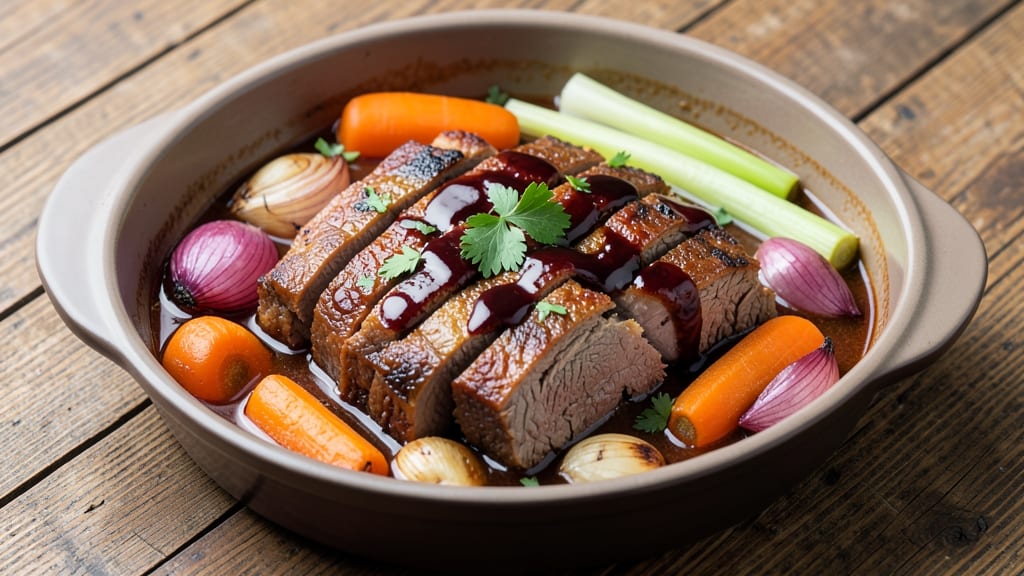
This stewed beef brisket recipe delivers the kind of melt-in-your-mouth tenderness that transforms tough cuts into a restaurant-worthy centerpiece. After years of testing in my Boston apartment kitchen—where space is tight but flavor isn't—I've perfected a method that builds deep, savory richness through slow simmering and careful seasoning.
The secret lies in patience: letting the meat break down over hours while absorbing aromatic vegetables and herbs into every fiber.
What makes this recipe work is the balance of technique and simplicity. You'll start with a dry rub of spices that creates a flavorful crust, then braise the brisket in a mix of red wine and beef broth until it's so tender it practically falls apart with a fork.
The key is maintaining a gentle simmer—never a rolling boil—that keeps the meat moist while developing complex flavors. This isn't a quick weeknight meal, but the results are worth every minute of slow cooking.
By the time you're ready to serve, you'll have a dish that's rich, deeply flavorful, and impossibly tender—perfect for feeding a crowd or enjoying with crusty bread and mashed potatoes.
The aroma alone will have everyone gathering at the table, and each bite delivers layers of beefy satisfaction. Here's how to make it happen in your own kitchen.
This method works equally well for holiday dinners or casual family meals, and the leftovers reheat beautifully for sandwiches the next day. The beauty of stewed brisket is that it gets better as it sits, allowing flavors to meld and intensify.
Let's get started on creating a dish that will become your new go-to for comforting, hearty meals.
Ingredients for stewed beef brisket
A few simple ingredients transform tough brisket into melt-in-your-mouth perfection through slow cooking.
| Ingredient | Amount | Notes |
|---|---|---|
| Beef Brisket 🥩 | 3 lb | Flat cut, 1-inch thick preferred |
| Yellow Onion 🧅 | 1 whole | Large, roughly chopped |
| Carrot 🥕 | 4 whole | Medium, peeled and halved |
| Celery Stalks 🥬 | 3 whole | Thick, cut into 2-inch pieces |
| Garlic Cloves 🧄 | 6 cloves | Peeled, smashed |
| Red Wine 🍷 | 1 cup | Bold, dry variety like Cabernet |
| Beef Broth 🥫 | 3 cups | Low-sodium preferred |
| Tomato Paste 🍅 | 2 tbsp | Smooth, not chunky |
| Olive Oil 🫒 | 2 tbsp | Extra-virgin for richness |
| Dried Thyme 🌿 | 1 tsp | Or 1 tbsp fresh thyme leaves |
| Dried Rosemary 🌿 | 1 tsp | Fresh sprigs work too |
| Ground Black Pepper 🌶️ | 1 tsp | Freshly cracked preferred |
| Kosher Salt 🧂 | 2 tsp | Adjust to taste |
| Bay Leaves 🍃 | 2 whole | Fresh or dried |
| All-Purpose Flour 🌾 | 2 tbsp | For dusting brisket |
The brisket is non-negotiable here—flat cut with good marbling is key. Costco or local butchers usually have the best quality, but any well-stocked grocery store carries it. Look for pieces that are about 1-inch thick; thinner cuts cook faster. I always season mine overnight in the fridge (just salt and pepper) so the rub penetrates deep. For the vegetables, yellow onions add sweetness, while celery and carrots create that classic mirepoix base—no need to peel the carrots if you're in a rush, just scrub them well. The red wine should be bold and dry—Cabernet Sauvignon or Merlot work perfectly, and a $15 bottle is plenty for this recipe.
No red wine? Beef broth with 1 tbsp balsamic vinegar mimics the depth. Fresh thyme and rosemary are ideal, but dried works at one-third the amount. The tomato paste can be skipped if you're avoiding it, but it adds a nice depth of flavor. For the flour, King Arthur or Gold Medal brands work best for dusting—just ignore the pre-mixed flour blends with baking powder. If you're using fresh herbs, tough stems can go in the pot, but I usually just chop the leaves. The bay leaves? Grab a sprig from the grocery store—California or Mexican varieties have the best flavor.
This dish tastes even better the next day, so make it ahead if you can. Store in an airtight container in the fridge for up to 5 days, or freeze for 3 months. The brisket reheats beautifully—just warm it on the stove with a splash of broth or water. For serving, I like to slice against the grain and pile it high on crusty bread with extra sauce spooned over the top. Leftovers make amazing sandwiches too—just layer the brisket with mustard and pickles on a toasted roll.
Why You'll Love This Recipe
- One-Pot Wonder: The Dutch oven handles all the work—sear, simmer, shred—while you sip that red wine. No chopping boards to clean or multiple pans to wash, just one pot that turns brisket into something magical with minimal effort.
- Deep, Wine-Kissed Richness: That bold Cabernet and tomato paste? They’re the secret weapons. The wine deglazes the pot into a glossy, savory sauce while the garlic and rosemary add layers that make this taste like a restaurant-quality meal—no fancy prep required.
- Meal Prep MVP: Five days of lunches, reheated with just a splash of water? Yes. The flour-thickened sauce clings to every bite, and the brisket stays tender even after refrigeration. Honestly, I make this on Sundays just so I don’t have to think about dinner all week.
- Budget-Friendly Feast: A 3 lb brisket stretches for a crowd, and the veggies (onion, carrots, celery) are cheap but pack serious flavor. Between us, this is how I feed my family for under $15—no takeout, no regrets.
Step-by-step instructions for stewed beef brisket
Here's how to transform tough brisket into melt-in-your-mouth perfection through gentle simmering.
Sear the Brisket for Deep Flavor
Pat the 3 lb beef brisket completely dry with paper towels. Heat 1 tablespoon of the 2 tbsp olive oil in a large Dutch oven over medium-high heat. Once shimmering, place the brisket fat-side down and sear for 5 minutes until deeply browned. Flip and sear the other side for another 5 minutes. Remove and set aside.
This initial sear creates the Maillard reaction that builds rich, caramelized flavors. Don't rush this step—you want that beautiful crust that will dissolve into the sauce later. While the brisket sears, add the remaining 1 tablespoon olive oil to the pot and set aside for the vegetables.
Build the Aromatic Vegetable Base
Add the roughly chopped 1 whole yellow onion, halved 4 whole carrots, and 2-inch celery stalk pieces to the Dutch oven. Cook for 5 minutes until softened. Add the 6 smashed garlic cloves, 2 tbsp tomato paste, 1 tsp dried thyme, 1 tsp dried rosemary, 1 tsp ground black pepper, and 2 tsp kosher salt. Stir well to coat the vegetables in the tomato paste and spices.
This aromatic blend forms the flavor foundation of your stew. The tomato paste adds depth while the herbs and salt enhance the natural sweetness of the vegetables. Cook for another 2 minutes until fragrant and the tomato paste darkens slightly—this is where all the magic begins.
Deglaze and Develop the Sauce
Pour in the 1 cup red wine, scraping up all the browned bits from the bottom of the pot. Let it simmer for 3 minutes until reduced by half. Then add the 3 cups beef broth and the 2 whole bay leaves. Return the brisket to the pot, fat-side up.
The wine deglazing captures all those flavorful browned bits that would otherwise stick to your pot. This step transforms simple ingredients into complex, layered flavors. The broth should just cover the brisket—if it's too shallow, add a splash of water.
Simmer Until Fork-Tender
Bring to a gentle simmer, then cover and cook for 2 hours. After 2 hours, remove the lid and check the internal temperature with a meat thermometer. It should read 195-200°F and the meat should be fork-tender, falling apart easily. If not, continue cooking uncovered for another 30-60 minutes.
This long, slow cooking process breaks down the tough collagen in the brisket, transforming it into gelatin that makes the meat melt in your mouth. I know it's tempting to check frequently, but resist the urge—each time you lift the lid, you lose heat and moisture.
Finish and Thicken the Stew
Remove the brisket and let it rest on a cutting board for 10 minutes. Strain the cooking liquid through a fine-mesh sieve into a bowl. Return the liquid to the pot and whisk in the 2 tbsp all-purpose flour to thicken. Simmer for 2-3 minutes until slightly thickened. Return the brisket to the pot and warm through.
The flour creates a velvety texture that coats each bite. This final step ensures your stew has that perfect consistency—rich but not watery. Shred the brisket with two forks right in the pot, mixing it with the sauce until completely incorporated.
Pro Tips For Making Stewed Beef Brisket
- Sear Until It’s Golden: That 5-minute sear isn’t just about browning—it’s about building flavor. I used to flip too soon and end up with pale, flavorless meat. Wait until the brisket releases easily from the pan with a dark crust, and don’t skimp on the oil. The fat-side-up position later in the recipe keeps that rich crust intact while cooking.
- Slice Carrots in Half: Halving those 4 medium carrots instead of dicing them saves time and keeps them whole enough to hold their shape without turning to mush. I learned this the hard way—over-chopped veggies disappear into the sauce, leaving you with a watery stew instead of hearty chunks.
- Don’t Rush the Wine Reduction: Those 3 minutes of simmering the red wine aren’t just for show—they’re for cutting it in half and intensifying the flavor. Skipping this step leaves your stew tasting flat and one-dimensional. Use a bold Cabernet, and let it bubble away until it’s noticeably reduced before adding the broth.
- Check Temp, Not Time: After 2 hours, the brisket should be tender, but don’t rely on the clock. Use a meat thermometer—195-200°F is your target, not "when it looks done." I’ve pulled meat early and had it turn mushy later, or waited too long and dried it out. Trust the thermometer, not your guesswork.
Common mistakes when making this recipe
Overcooking the Brisket
The worst mistake I've made is walking away from the brisket and letting it cook too long. When you exceed 203°F internal temperature, the meat becomes dry and stringy instead of tender.
I learned this the hard way during my first attempt—it took me 4 hours to reach that point, and the texture was disappointing. The key is patience, not endurance. Once the brisket hits 195-200°F and is fork-tender, it's done. 🌡️
Skipping the Sear
Some recipes suggest skipping the sear to save time, but that's a flavor disaster. The 5-minute sear on each side creates the Maillard reaction, which develops deep, caramelized flavors that dissolve into the sauce.
I once tried a no-sear version, and the stew lacked that rich, meaty depth. Even if you're in a hurry, take those 10 minutes to properly brown the brisket.
Lifting the Lid Too Often
Every time you lift the lid during simmering, you lose heat and moisture. I've caught myself checking the brisket every 15 minutes—big mistake! The temperature drops each time, extending cook time.
If you must check, do it quickly and minimize exposure. I now set a timer to check only every 30-45 minutes after the initial 2-hour mark.
Using Too Much Liquid
The 3 cups beef broth should just cover the brisket—no more. When I first made this recipe, I added an extra cup thinking "more liquid equals better sauce." Wrong! The result was a watery stew.
The broth should be enough to barely submerge the brisket, allowing it to absorb flavors without becoming diluted. If needed, add just a splash of water during cooking.
Not Resting the Meat
After removing the brisket from the pot, I used to slice it immediately—another mistake. The 10-minute rest allows juices to redistribute, preventing dry slices. I learned this from my Nonna when she'd scold me for rushing the gnocchi.
That same principle applies here. Let the brisket rest before slicing, and you'll notice a significant difference in moisture and tenderness. ⏰
Overcrowding the Pot
A Dutch oven should be large enough to accommodate the brisket with room to spare. When I tried this recipe in a small pot, the brisket barely fit, and the vegetables ended up mushy. The 3 lb brisket needs space to cook evenly.
If your pot is too small, use a larger one or cook in batches—though that's not ideal for brisket. The goal is even heat distribution, not crammed ingredients.
Nutrition facts
Frequently asked questions
Can I substitute red wine with another liquid?
Yes! If you don't have red wine, use 1 cup beef broth with 1 tbsp balsamic vinegar for depth. For a non-alcoholic version, try 1 cup apple cider or 1 cup beef broth with 1 tsp soy sauce. The key is maintaining acidity and richness to balance the beef's flavor.
How do I know when the brisket is fully cooked?
The brisket is done when it reaches an internal temperature of 195-200°F and is fork-tender, falling apart easily. Use a meat thermometer to check—probe the thickest part without touching the bone. If it's not tender after 2 hours, continue cooking uncovered for another 30-60 minutes. The meat should pull apart with minimal resistance.
Can I make this recipe in a slow cooker?
Follow the same steps for searing and building the vegetable base, then transfer everything to your slow cooker. Cook on low for 7-8 hours or high for 4-5 hours, adding ½ cup water if needed to prevent drying. The slow cooker's gentle heat works perfectly for tenderizing the brisket while keeping the sauce rich.
What's the best way to serve leftover brisket?
Leftover brisket is even better the next day! Shred it and use it for hearty sandwiches with mustard and pickles, or serve it over mashed potatoes with extra sauce. For a quick meal, reheat gently in a skillet with a splash of broth. You can also freeze portions for up to 3 months—just thaw in the fridge overnight before reheating.
Why does my brisket turn out tough instead of tender?
Tough brisket usually means it wasn't cooked long enough or the temperature wasn't controlled properly. Ensure you're cooking at a gentle simmer (195-200°F) and not boiling. Avoid lifting the lid too often, which causes temperature drops. If your brisket is thin (½-inch thick), it may cook faster—check the internal temperature frequently. Patience is key!