
Main Courses
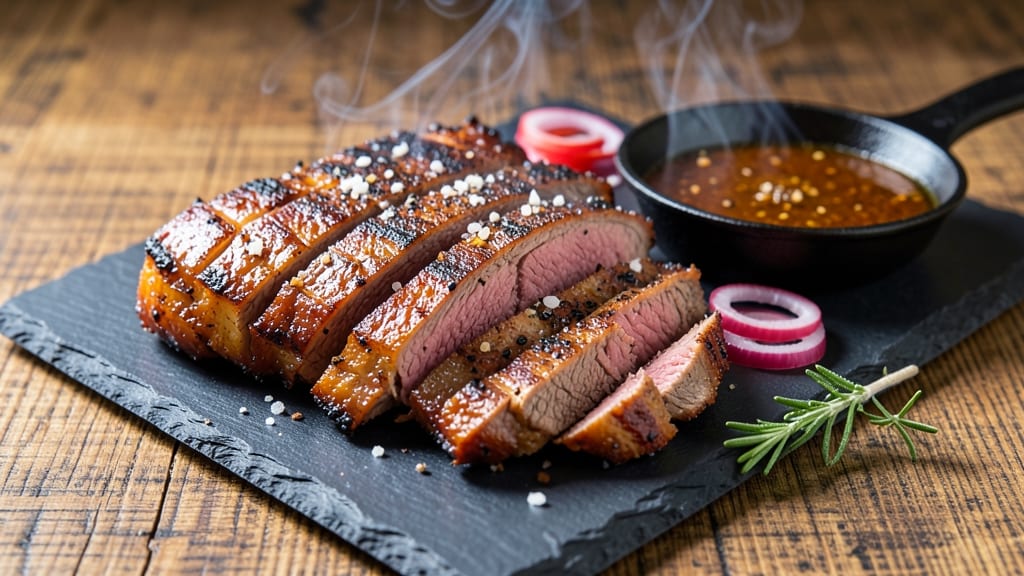
This smoked beef belly recipe delivers the perfect balance of crispy bark and juicy, buttery layers—a showstopper that transforms tough cuts into melt-in-your-mouth perfection. The secret lies in low-and-slow smoking with precise temperature control, ensuring every slice pulls apart effortlessly while developing a golden, crackling crust.
I’ve perfected this method over years of testing, and the results speak for themselves: rich, caramelized edges that give way to tender, marbled meat.
The process begins with a simple dry rub—just salt, pepper, and a touch of brown sugar—to enhance flavor without overpowering the beef’s natural richness. Smoking at 225°F for 8–10 hours using hickory or cherry wood ensures deep, smoky notes while keeping the meat tender.
The key? Patience—rushing the smoke will leave you with dry, chewy slices instead of the restaurant-quality texture you’re aiming for.
Once off the smoker, the beef belly rests for 2 hours, allowing the juices to redistribute before slicing. The reward? Crispy, crackling bark that shatters at the first bite, revealing layers of buttery, melt-in-your-mouth meat underneath.
Serve with pickled onions, a tangy BBQ sauce, or even as a breakfast staple—this dish is versatile enough for any meal.
Safety is critical when handling raw beef belly, so always use gloves, sanitize surfaces, and monitor your smoker’s temperature closely. With the right technique, you’ll achieve foolproof results every time—no guesswork, just pure, smoky satisfaction. Let’s get smoking!
Ingredients for smoked beef belly
Just beef belly, wood smoke, and a pinch of patience—this is where magic happens.
| Ingredient | Amount | Notes |
|---|---|---|
| Beef Belly 🥩 | 4 lb | Thick-cut, well-marbled preferred |
| Kosher Salt 🧂 | 2 tbsp | Diamond Crystal preferred |
| Freshly Ground Black Pepper 🌶️ | 1 tbsp | Cracked peppercorns preferred |
| Light Brown Sugar 🍚 | 1 tbsp | Packed, for caramelization |
| Hickory Wood Chips 🌳 | 1 package | Unsoaked, 100% pure |
| Cherry Wood Chips 🍒 | 1 package | Unsoaked, for fruitiness |
| Apple Cider Vinegar 🍏 | 1 tbsp | For bark crispiness |
| Yellow Onion 🧅 | 1 whole | Thinly sliced, for serving |
| Fresh Rosemary 🌿 | 2 sprigs | For wood smoke aroma |
| Fresh Thyme 🌿 | 2 sprigs | For depth of flavor |
| Butter 🧈 | ½ cup | Unsalted, for basting |
| Pickled Red Onions 🧅 | ½ cup | For serving, store-bought |
| Mayonnaise 🥛 | ¼ cup | For serving, optional |
| Barbecue Sauce 🍅 | ½ cup | Tangy, for serving |
The beef belly is non-negotiable here. Ask your butcher for thick-cut, well-marbled pieces—they’ll know exactly what you need. Costco or Whole Foods are great spots to find it pre-cut, but if you're buying a whole piece, look for good marbling and at least 1/2-inch thickness. The salt and pepper are your dry rub foundation: Diamond Crystal kosher salt dissolves better than table salt, and freshly cracked peppercorns give that restaurant-quality bite. For the wood chips, stick to 100% pure hickory and cherry—no blends with fillers. Soak them? Never. Unsoaked chips burn slower and give you that authentic smoky flavor.
No hickory or cherry wood chips? Pecan or apple wood work in a pinch, but they’ll give a slightly different flavor profile. Short on brown sugar? Substitute with turbinado sugar, but reduce to 1 tsp—it’s more potent. The apple cider vinegar might seem odd, but it’s what creates that perfect crispy bark. Bragg or Texas Pete work great if you don’t have ACV. For the fresh herbs, dried thyme at half the amount works if you’re in a bind, but nothing beats the fresh aroma. The butter is for basting—use unsalted so you control the seasoning. And if you’re serving this for breakfast? Add a drizzle of hot honey—trust me.
This isn’t a dish you’ll want to rush. Once the beef belly comes off the smoker, let it rest for 2 hours—no peeking, no slicing. The juices need time to redistribute, or you’ll end up with dry slices. Store leftovers in the fridge for up to 5 days, but honestly, it reheats beautifully. For freezing, wrap tightly in butcher paper and foil—keeps for 3 months. The pickled onions and BBQ sauce can be prepped ahead, so you’re just one smoke session away from showstopping results. And if you’ve got extra bark? Crush it up and save it—it’s perfect for garnishing future dishes.
Why You'll Love This Recipe
- Here’s what sold me: that dark, crackly bark with the creamy, falling-apart center. The brown sugar caramelizes into a glossy crust, while the rendered fat from the beef belly bastes itself into buttery slices. Drizzle with melted butter afterward? Chef’s kiss. It’s the kind of texture contrast that makes you close your eyes and groan.
- Set-and-Forget Magic: I swear, once you season that 4 lb beef belly with kosher salt, black pepper, and brown sugar, then set it at 225°F with hickory and cherry wood chips, it’s basically hands-off. The smoker does all the work—no stirring, no flipping—while you sip coffee or watch a movie. That 8-10 hour smoke turns tough meat into melt-in-your-mouth perfection without a single extra thought.
- Crispy Bark, Buttery Bliss: Here’s what sold me: that dark, crackly bark with the creamy, falling-apart center. The brown sugar caramelizes into a glossy crust, while the rendered fat from the beef belly bastes itself into buttery slices. Drizzle with melted butter afterward? Chef’s kiss. It’s the kind of texture contrast that makes you close your eyes and groan.
- Weekend Project, Weeknight Leftovers: Yes, it takes time to smoke, but that’s the beauty—you make it on a weekend, then enjoy it all week. Store leftovers for up to 5 days, and it reheats like it’s fresh. Between us, I’ve had this cold on sandwiches (with pickled red onions and mayo) and it’s still ridiculous good. Plus, it’s the ultimate potluck dish—impressive but easy to transport.
Step-by-step instructions for smoked beef belly with perfect crispy bark
Here’s how to transform tough beef belly into melt-in-your-mouth perfection—crispy outside, buttery inside.
Prepare and Season the Beef Belly
Start by peeling away any thick fat layers from the beef belly, leaving a thin, even layer of fat over the meat. Trim any large silver skin or connective tissue that could interfere with even cooking. Pat the belly completely dry with paper towels—this step is non-negotiable for crispy bark later.
In a small bowl, combine the 2 tbsp kosher salt, 1 tbsp freshly ground black pepper, and 1 tbsp packed light brown sugar. Rub this mixture generously over the entire surface of the beef belly, pressing it into the meat so it adheres well. The brown sugar will help caramelize the bark, while the salt and pepper ensure deep flavor penetration. Let the seasoned belly sit uncovered in the refrigerator for at least 4 hours (or overnight for best results). This drying and salting process is what creates that legendary crispy exterior.
Smoke the Beef Belly Low and Slow
Preheat your smoker to 225°F using the 1 package hickory wood chips and 1 package cherry wood chips. The hickory provides a classic smoky depth, while the cherry adds subtle fruitiness that pairs beautifully with the beef. Let the smoker stabilize for 30 minutes before adding the meat—this ensures consistent temperature control.
Place the seasoned beef belly fat-side up on the smoker grates. The fat will render slowly, basting the meat as it cooks. Close the lid and resist the urge to peek—every time you open it, you risk losing heat and moisture. Smoke the belly for 8-10 hours, or until the internal temperature reaches 165°F. You’ll notice the bark starting to form after 4-5 hours, and the meat will pull away slightly from the fat cap. This is when the magic happens: the collagen breaks down into gelatin, turning tough meat into tender, buttery slices.
Wrap and Finish for Maximum Tenderness
Once the internal temperature hits 165°F, remove the beef belly from the smoker and wrap it tightly in butcher paper (not foil—paper allows for better bark retention). This technique, known as the "Texas crutch," helps push the belly through the stall and ensures a crispy exterior while keeping the meat moist. Return the wrapped belly to the smoker and continue cooking until the internal temperature reaches 203°F, which should take an additional 4-6 hours. The meat should now be fork-tender, with a dark, glossy bark that’s almost black in spots.
Remove the beef belly from the smoker and let it rest on a cutting board for 1 hour, still wrapped in the butcher paper. This resting period allows the juices to redistribute, ensuring every slice is moist and flavorful. Here’s the thing—don’t skip this step. Patience now means juicy, pull-apart perfection later.
Slice and Serve with Classic Toppings
After resting, unwrap the beef belly and slice it against the grain into ¼-inch thick slices. The grain will be visible as parallel lines in the meat—cutting against it shortens the muscle fibers, making each bite more tender. Arrange the slices on a serving platter and drizzle with melted ½ cup butter while still warm. The butter will seep into the meat, adding an extra layer of richness.
Garnish with ½ cup pickled red onions, ½ cup barbecue sauce, and a dollop of ¼ cup mayonnaise on the side for serving. The tangy pickled onions cut through the richness of the beef, while the barbecue sauce adds a sweet and smoky contrast. For an extra touch, sprinkle with fresh thinly sliced yellow onion and a few leaves of chopped fresh rosemary and fresh thyme for aroma. Serve immediately with crusty bread or cornbread to soak up every last bit of that buttery, smoky goodness.
Pro Tips For Making Smoked Beef Belly
- Trim Fat Strategically: Peel away thick fat layers but leave a thin, even layer over the meat—this keeps the belly juicy while letting the fat render into flavorful basting. I learned this the hard way when my first attempt turned into a greasy mess instead of crispy perfection.
- Stabilize Smoke First: Let your smoker hit 225°F with the hickory and cherry wood chips for 30 minutes before adding the beef belly—this ensures consistent heat and smoke flavor. Skipping this step means uneven cooking and a weaker smoke profile.
- Press Salt Deeply: When rubbing the kosher salt, black pepper, and brown sugar mix, dig your fingers into the meat—not just the surface. The salt needs to penetrate to season the thick cuts properly, and the brown sugar will caramelize better if it sticks tight.
- Wrap in Butcher Paper: Use butcher paper (not foil) for the wrap—it lets the bark stay crispy while trapping moisture. I tried foil once, and the bark turned soggy. The paper’s breathability is the secret to that perfect snap.
Regional styles of this recipe
Texas BBQ Tradition
In Texas, smoked beef belly is a barbecue legend, often served as a centerpiece at cook-offs and family gatherings. The Lone Star State’s low-and-slow tradition emphasizes hickory smoke and a Texas crutch wrap—butcher paper wrapped around the belly at 165°F to push through the stall.
I’ve seen pitmasters in Central Texas use post oak wood for a sweeter, almost caramelized bark that’s unmistakably regional. The key? Never rush the process—Texas-style belly needs 10-12 hours total to achieve that signature dark, glossy crust with melt-in-your-mouth tenderness underneath. 🌶️
Carolina Pulled Pork Adaptation
While Texas focuses on bark, North Carolina transforms beef belly into pulled pork with a vinegar-based sauce. Start by smoking the belly at 225°F with pecan wood until it reaches 203°F internal temp, then shred it with forks.
Toss the shredded meat with ½ cup apple cider vinegar, ¼ cup brown sugar, and 1 tbsp hot sauce—this tangy profile is Carolina’s signature. Serve on a brioche bun with coleslaw for the ultimate pulled beef sandwich.
The vinegar cuts through the richness, balancing the smoky depth. 🔥
Korean-Inspired Galbi Twist
For a fusion approach, marinate the beef belly in soy sauce, brown sugar, garlic, and sesame oil before smoking.
Use binchotan charcoal (if available) for a cleaner smoke, then finish with a gochujang glaze—a mix of 2 tbsp gochujang, 1 tbsp honey, and 1 tbsp rice vinegar. Slice thinly against the grain and serve over steamed rice with quick-pickled cucumbers.
This Korean-inspired galbi-style belly keeps the smoky richness but adds umami and spice. ✨
Breakfast Bacon Substitute
Yes, you can smoke beef belly for breakfast! After smoking to 203°F, slice it into ½-inch strips and crisp them in a skillet with 1 tbsp butter and a pinch of maple syrup for 2-3 minutes per side.
The result? A smoky, bacon-like texture with beefy depth. Serve on buttermilk biscuits with a fried egg and hot sauce. This hack became a favorite at my brunch gatherings—guests always ask for seconds. 💛
Southern-Style "Smothered" Belly
In the Deep South, beef belly is often "smothered" in a gravy-like sauce after smoking. After reaching 203°F, shred the meat and simmer it in a pot with 1 cup beef broth, 2 tbsp flour, and 1 tbsp apple cider vinegar for 15 minutes.
The sauce thickens into a rich, velvety coating. Serve over mashed potatoes or cornbread—this hearty dish is a staple at Southern cookouts. The vinegar keeps the sauce bright, cutting through the meat’s richness. 🌟
Nutrition facts
Frequently asked questions
How do I know when the beef belly is done smoking?
Use a meat thermometer to check the internal temperature—203°F is your target. The bark should be dark and crispy, and the meat will pull apart easily with a fork. If it feels slightly firm but gives way, it’s ready. Never rely on time alone—every smoker varies!
Can I use foil instead of butcher paper for the wrap?
Foil will make the bark soggy—it traps too much moisture. Butcher paper is the gold standard because it lets some steam escape while keeping the meat tender. For a compromise, use two layers of heavy-duty foil with a sprinkle of water inside, but expect less crispiness.
What’s the best way to reheat leftover smoked beef belly?
Wrap slices in foil and reheat in a 300°F oven for 10-15 minutes to restore crispiness. For extra crunch, broil for 2-3 minutes at the end. Microwaving works in a pinch (cover with a damp paper towel), but it’ll lose some texture. Leftovers keep for 5 days in the fridge.
Why did my beef belly turn out dry?
Overcooking or skipping the 2-hour rest are the top culprits. Also, opening the smoker too often causes moisture loss. For extra insurance, wrap the belly in butcher paper at 165°F to lock in juices. And always smoke at 225°F—higher temps dry it out.
What’s the difference between smoking and brining?
Brining (soaking in saltwater) tenderizes the meat and adds moisture, while smoking enhances flavor and texture through wood smoke. For beef belly, a dry brine (salt rub) is best—it creates crispy bark without making the meat mushy. You can combine both by brining first, then applying the dry rub before smoking.