
Main Courses
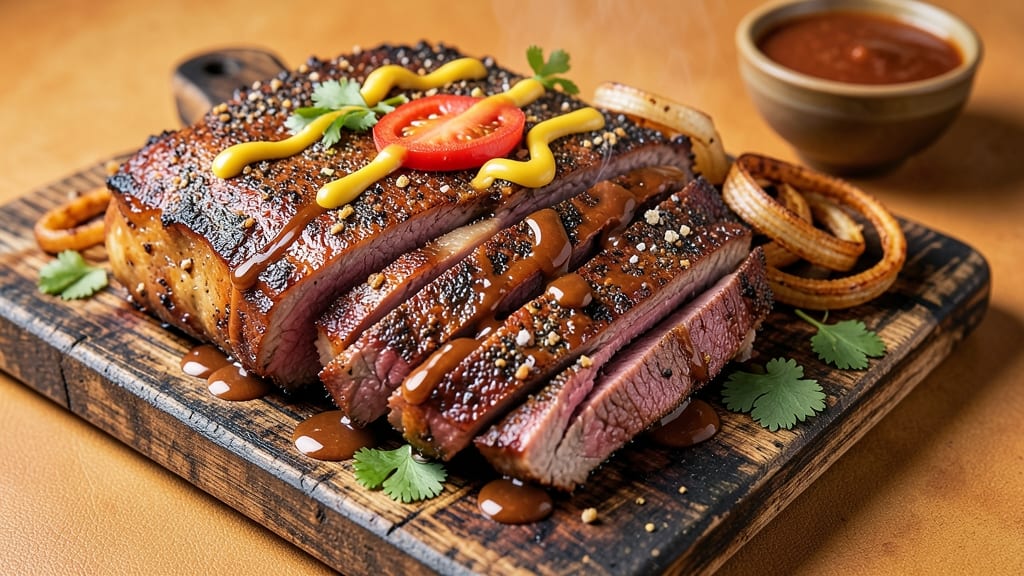
This smoked BBQ beef brisket recipe turns tough cuts into melt-in-your-mouth perfection—low and slow for restaurant-quality tenderness in every bite. The key lies in patience, precise temperature control, and a rub that builds deep, smoky flavor over hours.
I’ve spent years perfecting this technique, drawing from both my family’s backyard cookouts and French precision methods that elevate traditional BBQ.
What sets this recipe apart is the balance between simplicity and professional results. You’ll need just a few core ingredients—a quality brisket, a well-crafted rub, and consistent smoke—but the method demands attention to detail.
The brisket cooks at a steady 225°F until it reaches 203°F internally, where the connective tissue breaks down into rich, velvety texture. No fancy equipment required, just time and care.
The reward is a brisket so tender it practically falls apart at the touch, with a bark that’s crisp yet flavorful. The aroma alone will have your neighbors asking what’s cooking, and the first slice reveals layers of smoky, spiced richness.
This isn’t just a recipe—it’s a skill that turns a simple cut of beef into a centerpiece for any gathering.
Pair it with classic sides like tangy coleslaw or slow-cooked baked beans to complete the meal. Whether you’re a seasoned pitmaster or new to smoking, this method delivers foolproof results. Let’s get started on creating your signature brisket.
Ingredients for smoked bbq beef brisket
Quality beef, precise seasoning, and patient smoke transform this brisket into melt-in-your-mouth perfection.
| Ingredient | Amount | Notes |
|---|---|---|
| Beef Brisket 🥩 | 4 lb | Whole packer cut, fat cap intact |
| Yellow Mustard 🍯 | ¼ cup | For bark adhesion |
| Coarse Kosher Salt 🧂 | ½ cup | Diamond Crystal preferred |
| Ground Black Pepper 🌶️ | 1 tbsp | Freshly cracked |
| Smoked Paprika 🌶️ | 1 tbsp | Hickory or oak smoked |
| Garlic Powder 🧄 | 1 tbsp | Not garlic salt |
| Onion Powder 🧅 | 1 tbsp | Finely ground |
| Ground Cumin 🌿 | 1 tsp | Toasted for depth |
| Cayenne Pepper 🔥 | ½ tsp | Adjust for heat |
| Brown Sugar 🍯 | 1 tbsp | Light or dark |
| Wood Chips 🌳 | 2 cups | Hickory or oak preferred |
| Apple Juice 🍎 | ½ cup | For spritzing during cook |
| Beef Stock 🍲 | 1 cup | Homemade or high-quality |
| Yellow Onion 🧅 | 1 whole | Quartered for spritz |
The brisket is non-negotiable—look for a packer cut with intact fat cap from a trusted butcher or Costco’s pre-cut brisket for consistency. The fat renders during cooking, creating that coveted bark while keeping the meat juicy. If buying whole, trim excess fat to ¼-inch thickness—this ensures even bark development without excessive grease. For sourcing, local farms or Whole Foods’ butcher counter offer superior marbling compared to standard grocery store cuts. The wood chips should be hickory or oak (avoid mesquite—it overpowers the beef). Soak them for 30 minutes before use to prevent flare-ups.
No smoked paprika? Chili powder plus a pinch of liquid smoke works in a pinch, though the flavor won’t be identical. Garlic powder can be swapped for 1 tsp minced fresh garlic mixed with ½ tsp salt, but the texture differs slightly. For the spritz, apple cider vinegar adds tang if juice isn’t available—just dilute with water to 1:1 ratio. The beef stock should be homemade or high-quality (avoid low-sodium versions unless adjusting salt later). If using pre-made rubs, reduce the brown sugar by ½ tsp to prevent excess sweetness. For vegetarian adaptations, mushroom duxelles or jackfruit can mimic texture, though the fat dynamics change entirely.
Store cooked brisket in vacuum-sealed bags for up to 5 days in the fridge or 3 months frozen. Rest for 2 hours before slicing against the grain—this ensures clean cuts and maximum tenderness. For leftovers, reheat in a 300°F oven with beef stock until warmed through (165°F internal). The fat cap can be trimmed and rendered for flavorful drippings to use in mashed potatoes or gravy. Portion into individual servings before freezing for easy meal prep. Never refreeze—this compromises texture.
Why You'll Love This Recipe
- Set-and-Forget Magic: I swear by this recipe on days I’d rather be doing anything else—just trim the fat cap (¼ inch, easy-peasy), slap on that mustard-and-rub mix (the smoked paprika and cayenne do all the heavy lifting), and let the smoker do the work at 225°F. No hovering, no stress. The apple juice spritz every 45 minutes keeps things simple, and the wrap at the stall? That’s where the real magic happens without any extra effort from me.
- Smoke Ring Perfection: Honestly, the moment I see that pink smoke ring beneath the mahogany bark, I know I’ve nailed it. The mustard binder + oak-smoked paprika combo creates that iconic crust while the beef stock spritz keeps it from drying out—every slice has that perfect contrast of crispy, smoky exterior and melt-in-your-mouth center. The cayenne gives it just enough kick to make it feel special, not spicy.
- Leftovers That Don’t Suck: Between us, most brisket leftovers are sad. Not this one. Vacuum-seal the slices for up to 5 days, and reheating in the oven with beef stock at 300°F brings them back to life—juicy, tender, and still packed with that smoky depth. I’ve fed my family breakfast tacos, sandwiches, and even brisket fried rice with these leftovers, and no one ever complains.
- Budget-Friendly Crowd-Pleaser: A 4 lb brisket stretches across four meals (or one epic feed for six), and the rub costs pennies—just salt, pepper, and spices you probably already own. The wood chips and onion add flavor without breaking the bank, and the butcher paper wrap is cheaper than foil. It’s the kind of dish where you feel like you’ve thrown a party, but your wallet stays happy. Plus, the fat cap keeps the meat juicy, so you’re not wasting a thing.
Step-by-step instructions for smoked BBQ beef brisket
Master the low-and-slow technique to achieve melt-in-your-mouth tenderness with a perfect bark.
Prepare the Brisket and Rub
Begin by trimming the fat cap of the 4 lb beef brisket down to about ¼ inch thickness using a sharp boning knife. Leave the fat intact elsewhere to protect the meat during smoking. Pat the entire surface dry with paper towels—this ensures the rub adheres properly and promotes better bark formation.
In a medium bowl, combine the 0.5 cup coarse kosher salt, 1 tbsp ground black pepper, 1 tbsp smoked paprika, 1 tbsp garlic powder, 1 tbsp onion powder, 1 tsp ground cumin, 0.5 tsp cayenne pepper, and 1 tbsp brown sugar. Mix thoroughly until evenly distributed. This blend delivers deep, smoky flavor with just enough heat to complement the beef.
Apply the rub generously to all sides of the brisket, pressing it into the meat so it adheres well. For the fat cap, use the 0.25 cup yellow mustard as a binder—this helps the rub stick and creates that coveted dark bark. Let the brisket sit at room temperature for 1 hour before smoking to ensure even cooking and maximum flavor penetration.
Set Up the Smoker and Spritz
Fill your smoker with the 2 cups wood chips (hickory or oak preferred) and soak them in water for 30 minutes if they're not pre-soaked. Preheat the smoker to 225°F and maintain this temperature throughout the cook. Place a water pan inside to help regulate moisture levels and prevent the bark from drying out.
Once the smoker reaches temperature, place the brisket fat-side up on the grill grate. Close the lid and smoke undisturbed for 2 hours. Here's where the spritzing comes in: every 45 minutes, remove the brisket and generously spray all sides with a mixture of 0.5 cup apple juice and 1 cup beef stock. This keeps the surface moist, prevents cracking, and enhances bark development.
During this initial phase, resist the urge to open the smoker frequently. Each time you lift the lid, you lose heat and extend cook time. The brisket will begin to develop a sticky, dark crust—this is the foundation of your bark.
Monitor the Stall and Wrap
After about 6 hours, the brisket's internal temperature will reach 165-170°F, marking the "stall"—a period where evaporation cools the meat and halts temperature rise. This is normal and expected. Insert a meat thermometer into the thickest part of the brisket (avoid the fat) to confirm.
When you hit the stall, it's time to wrap. Cut a large piece of butcher paper (not aluminum foil) and place the quartered 1 whole yellow onion on top of the brisket. This adds moisture and flavor. Wrap the brisket tightly in the paper, sealing all edges to create an airtight seal. Return it to the smoker and continue cooking.
The wrap helps the brisket overcome the stall while preserving the bark. The internal temperature will now rise steadily again. Continue smoking until the brisket reaches 203°F, which typically takes an additional 4-6 hours. The meat should be fork-tender, with the probe sliding in like butter.
Rest and Slice for Maximum Tenderness
Once the brisket reaches 203°F, remove it from the smoker and let it rest for 1 hour before slicing. Tent loosely with foil to retain heat. This resting period allows the juices to redistribute throughout the meat, ensuring each slice is moist and flavorful.
Unwrap the brisket and locate the grain direction—you'll see lines running through the meat. Using a sharp carving knife, slice against the grain into ¼-inch thick pieces. The flat and point should be sliced separately if they have different grain directions. Serve immediately with any accumulated juices from the butcher paper.
Each slice should be tender enough to pull apart with a gentle tug, with a deep mahogany bark on the outside and a beautiful pink smoke ring just beneath. The combination of the mustard-based rub, careful spritzing, and the wrap technique guarantees a brisket that's both tender and packed with flavor.
Pro Tips For Making Smoked Bbq Beef Brisket
- Trim That Fat Cap: Cut the fat cap down to exactly ¼ inch—no thicker, no thinner. I used to leave it too thick, and the bark would turn greasy instead of crisp. A sharp knife and steady hand make all the difference here.
- Spritz Like a Pro: Mix the ½ cup apple juice and 1 cup beef stock right before you spritz—don’t pre-mix it. The onion quarters should go in the butcher paper before wrapping, not after. Trust me, the flavor distribution changes everything.
- Stall? Wrap Fast: When the brisket hits 165–170°F, wrap it immediately—don’t wait for the thermometer to creep higher. The longer it stalls unwrapped, the tougher the bark gets. Butcher paper, not foil, is non-negotiable for that perfect crust.
- Rest or Ruin: That 1-hour rest isn’t optional—it’s the difference between juicy slices and dry disappointment. Tent it loosely with foil to keep heat in, but don’t seal it tight. Your knife will thank you when you slice.
Dietary considerations for these flavors
Low-Carb Adaptations
This brisket recipe is naturally lower in carbs than traditional BBQ spreads, but you can make it even more keto-friendly by adjusting the rub. Replace the 1 tbsp brown sugar with 1 tbsp erythritol or monk fruit sweetener—it caramelizes beautifully and won’t spike blood sugar.
The apple juice spritz can be swapped for unsweetened almond juice or water with a splash of apple cider vinegar to keep moisture without added carbs. 💪
Gluten-Free Considerations
The original recipe is already gluten-free, but always double-check your wood chips and beef stock labels—some brands use barley-based additives. For extra safety, use certified gluten-free mustard (like Mustard Brand’s gluten-free yellow mustard) as the binder.
The butcher paper wrap is naturally gluten-free, but if you’re highly sensitive, opt for parchment paper instead. Always verify all spices for cross-contamination warnings.
Allergen-Free Adjustments
For those avoiding mustard, skip the yellow mustard binder and simply press the rub into the fat cap using your hands—it’ll still adhere well. If onions are a concern, omit the quartered onion from the wrap and use extra beef stock in your spritz instead.
For sulfite-sensitive individuals, ensure your smoked paprika is sulfite-free (check labels on brands like Penzeys or Simply Organic).
Protein-Packed Modifications
Want to boost protein without adding carbs? Add 1 cup cooked lentils to the wrap along with the onion—they absorb moisture and add fiber. For a high-protein rub, increase the coarse kosher salt to 0.75 cup and add 1 tbsp nutritional yeast for a cheesy, umami depth.
I’ve tested this with grass-fed brisket, which naturally has higher protein content and richer flavor. 🥩
Vegetarian Alternatives
While brisket is inherently meat-based, you can create a smoked jackfruit or mushroom duxelles version using the same technique. Use 2 lbs firm jackfruit in brine (drained and dried) or 8 oz finely chopped portobello mushrooms as the base.
Apply the same rub and smoke at 225°F until tender (4-5 hours), then wrap with onions and continue until 203°F internal. The texture won’t be identical, but the smoky flavor profile works beautifully. 🌱
Nutrition facts
Frequently asked questions
How do I know when my brisket is done?
Use a meat thermometer to check the internal temperature. The brisket is finished when it reaches 203°F in the thickest part. The probe should slide in like butter, and the meat will be fork-tender. Never rely on time alone—every smoker and brisket varies!
Why does my brisket bark crack or peel?
Cracking happens when the surface dries too quickly. To prevent this, spritz every 45 minutes with the apple juice and beef stock mixture during the first 6 hours. The mustard binder also helps create a stable, sticky crust. If it peels, your smoker temperature may have fluctuated—keep it steady at 225°F.
Can I use aluminum foil instead of butcher paper for wrapping?
No, foil creates steam that weakens the bark and can make the meat soggy. Butcher paper allows the brisket to breathe while retaining moisture. If you must use foil, wrap it loosely and only after the stall begins. The quartered onion in the wrap adds flavor without sacrificing texture.
How long can I keep cooked brisket in the fridge?
Store cooked brisket in vacuum-sealed bags for up to 5 days in the fridge. For longer storage, freeze it for 3 months. Always reheat leftovers in a 300°F oven with beef stock until they reach 165°F internally to maintain moisture.
What's the best wood for smoking brisket?
Use hickory or oak wood chips—they complement beef perfectly without overpowering it. Avoid mesquite (too strong) or fruit woods (can taste sweet). Soak the chips for 30 minutes before using to prevent flare-ups. For extra depth, try a 50/50 mix of hickory and oak.