
Snacks
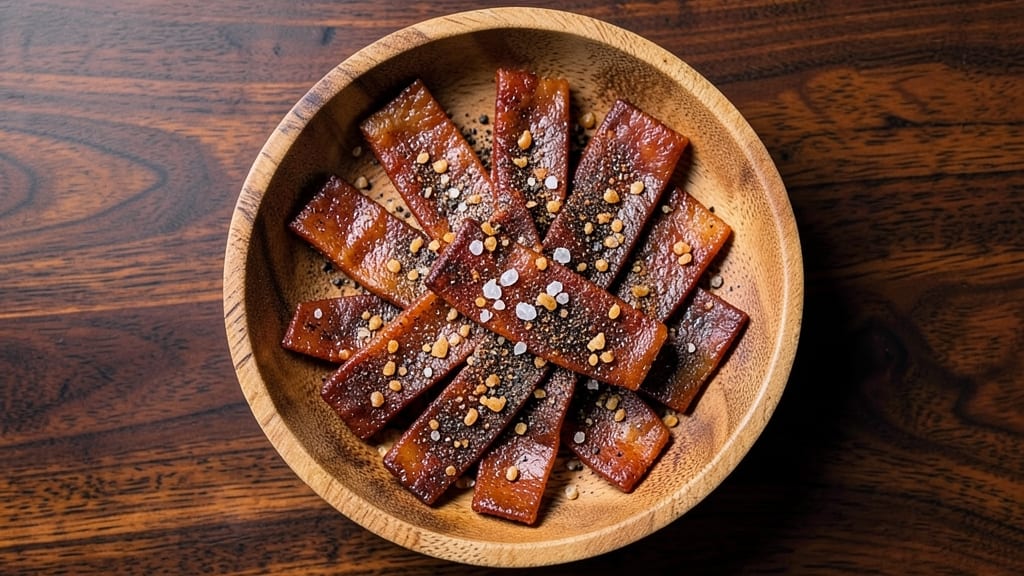
This old-fashioned beef jerky recipe delivers the smoky-sweet, chewy satisfaction of traditional handcrafted jerky that keeps for months in your pantry. The secret lies in a precise balance of salt, sugar, and spices—no shortcuts—that transforms tough cuts of beef into a portable, protein-packed snack.
I’ve perfected this method over years of testing, ensuring every batch achieves that perfect texture and flavor profile that rivals (or surpasses) store-bought versions.
The process begins with selecting the right cut—top round or flank steak—and slicing it against the grain for maximum tenderness. A dry cure of coarse salt and brown sugar draws out moisture while building flavor, followed by a smoky-sweet spice blend that infuses depth without overpowering.
Whether you use an oven, dehydrator, or smokehouse, the drying method is critical to achieving that classic chewy texture without risking spoilage.
What you’ll end up with is jerky that’s richly flavored, perfectly chewy, and shelf-stable for months when stored properly. The smoky-sweet notes from the spice blend linger with every bite, making it ideal for hiking, travel, or as a protein boost between meals.
This isn’t just jerky—it’s a traditional, time-tested method that delivers restaurant-quality results at home.
Ready to make jerky that lasts? The key is patience—each step, from curing to drying, ensures a product that’s both delicious and long-lasting. Let’s get started with a method that’s been trusted for generations.
Ingredients for old fashioned beef jerky
Pantry essentials and a few specialty spices transform tough beef into restaurant-quality jerky.
| Ingredient | Amount | Notes |
|---|---|---|
| Top Round Beef 🥩 | 2 lb | Thinly sliced against grain |
| Coarse Kosher Salt 🧂 | ½ cup | Diamond Crystal preferred |
| Light Brown Sugar 🍚 | ½ cup | Packed firmly, no substitutes |
| Ground Black Pepper 🌶️ | 2 tbsp | Freshly cracked for intensity |
| Smoked Paprika 🌶️ | 2 tbsp | Spanish paprika for authentic flavor |
| Granulated Garlic 🧄 | 1 tbsp | Not garlic powder |
| Ground Cumin 🌿 | 1 tbsp | Toasted for enhanced aroma |
| Onion Powder 🧅 | 1 tbsp | Finely milled for even distribution |
| Cayenne Pepper 🔥 | ½ tbsp | Adjust for heat preference |
| Apple Cider Vinegar 🍎 | ¼ cup | For tenderizing and preservation |
| Worcestershire Sauce 🍶 | 2 tbsp | High-quality for umami depth |
| Liquid Smoke 🌫️ | 1 tbsp | Optional for enhanced smokiness |
The beef cut is non-negotiable—top round or flank steak delivers the best texture. Most butchers will slice it against the grain for you, but if you're doing it yourself, freeze the meat solid first for cleaner cuts. Costco and Whole Foods carry pre-sliced jerky beef in the meat section, which saves time. For the salt, Diamond Crystal kosher salt dissolves more evenly than table salt, creating a superior cure. Brown sugar should be packed firmly into the measuring cup—light brown sugar gives a better balance of sweetness and moisture retention than white.
No smoked paprika? Regular paprika plus a pinch of liquid smoke mimics the flavor, though it won't be identical. Substituting granulated garlic for garlic powder works, but minced fresh garlic infused in oil (strained before use) adds complexity. The apple cider vinegar is critical—white vinegar in a pinch, but the acidity level differs. For Worcestershire, Lea & Perrins is the gold standard, though any high-quality brand will work. The liquid smoke is optional but recommended for that authentic campfire taste—use a food-safe brand like Colman's to avoid off-flavors.
Store the cured beef in an airtight container in the refrigerator for 24 hours before drying to ensure even flavor penetration. Once dried, jerky keeps for up to 6 months in a cool, dark pantry when stored in vacuum-sealed bags or airtight containers with oxygen absorbers. For longer shelf life, freeze portions for up to 12 months. The spice blend itself can be made ahead and stored in a dark glass jar for 3 months, preserving its potency.
Why You'll Love This Recipe
- No Oven Fuss: I swear by this method because it’s all about that low-and-slow magic—just set it to 175°F and walk away. No babysitting, no burnt edges, just perfectly dried jerky that actually tastes like it belongs in a deli, not a sad microwave bag.
- Sweet-Smoky Obsession: That combo of brown sugar and smoked paprika? Chef’s kiss. The vinegar keeps it tender, the Worcestershire adds this deep, savory punch, and the liquid smoke (if you use it) makes it taste like it was slow-smoked over hickory—without the hassle.
- Hike-Worthy Snack: Between us, this jerky is my go-to for camping, tailgates, or when I’m too lazy to pack lunch. It’s lightweight, shelf-stable for months, and the cayenne gives it just enough kick to keep things interesting—no soggy sandwiches required.
- Budget Meal Prep: A 2-lb round of beef and a handful of pantry spices turn into pounds of jerky, and it’s cheaper than buying pre-made. Plus, once it’s dried, I grab a handful for breakfast, toss it in salads, or stash it in my gym bag—no waste, all flavor.
Step-by-step instructions for old fashioned beef jerky
This method delivers authentic, shelf-stable jerky with a perfect balance of sweetness and smokiness.
Prepare the Meat and Marinade Base
Begin by slicing the 2 lb Top Round Beef against the grain into strips approximately ¼-inch thick. Use a sharp knife for clean cuts and avoid stretching the meat, which can make it tough. Arrange the slices on a wire rack set over a baking sheet to prevent sticking.
In a large mixing bowl, combine the 0.5 cup Coarse Kosher Salt, 0.5 cup Light Brown Sugar, 2 tbsp Ground Black Pepper, 2 tbsp Smoked Paprika, 1 tbsp Granulated Garlic, 1 tbsp Ground Cumin, 1 tbsp Onion Powder, and 0.5 tbsp Cayenne Pepper. Mix thoroughly to create an even spice blend—this ensures every piece of jerky gets consistent flavor. The coarse kosher salt will help tenderize the meat while the brown sugar adds that classic sweetness.
Marinate the Beef for Maximum Flavor
In a separate bowl, whisk together the 0.25 cup Apple Cider Vinegar, 2 tbsp Worcestershire Sauce, and 1 tbsp Liquid Smoke. The vinegar acts as a natural tenderizer and preservative, while the Worcestershire sauce adds depth. The liquid smoke enhances the smoky flavor without requiring actual smoking equipment.
Pour the marinade over the spice mixture in the bowl with the beef strips. Use your hands to coat each piece thoroughly, pressing the spices into the meat. This step is critical—uneven coating leads to inconsistent flavor and texture. Let the beef marinate for at least 4 hours (or overnight for deeper flavor penetration). Cover and refrigerate during this time to prevent bacterial growth.
Dry the Jerky for Shelf Stability
Preheat your oven to 175°F—this low temperature ensures slow, even drying without cooking the meat. Line a baking sheet with parchment paper and arrange the marinated beef strips in a single layer, ensuring they don't overlap. The goal is to dry the jerky thoroughly, which requires 6-8 hours of uninterrupted drying time.
Check the jerky periodically after 4 hours. It should feel leathery and no longer moist to the touch. If any pieces stick to the parchment, gently lift them with a spatula to expose all surfaces to the dry heat. The 175°F temperature is non-negotiable—higher heat risks cooking the jerky instead of drying it properly. For best results, prop the oven door open slightly with a wooden spoon to allow moisture to escape.
Test for Doneness and Store Properly
Remove the jerky from the oven when it's completely dry and flexible but not brittle. It should snap with a clean break rather than bend like raw meat. Let it cool completely on a wire rack before storing—this prevents condensation from forming in the packaging.
Transfer the cooled jerky to an airtight container or vacuum-sealed bag. Store in a cool, dark place where it will remain stable for 2-3 months. For longer storage, freeze the jerky in portion-sized bags for up to 6 months. The combination of vinegar, salt, and low-temperature drying creates a product that's both flavorful and shelf-stable.
Pro Tips For Making Old Fashioned Beef Jerky
- Toast That Cumin: Skip the toasted cumin step? Don’t. I learned this the hard way—my jerky smelled like dust until I popped 1 tablespoon of ground cumin in a dry skillet for 2 minutes until fragrant. That smoky aroma ties everything together, especially when paired with the smoked paprika.
- Salt First, Then Sweeten: Mix the 0.5 cup coarse kosher salt and 0.5 cup packed brown sugar before adding the beef. The salt dissolves better into the sugar, creating a sticky, flavor-packed paste that clings to every strip. Trust me, your jerky will taste like it spent hours marinating instead of just 4.
- Don’t Rush the Vinegar: The 0.25 cup apple cider vinegar isn’t just for flavor—it’s the secret to tender jerky. If you’re short on time, at least let the beef sit in the marinade for 4 hours covered in the fridge. Overnight is ideal, but skipping this step means jerky that’s tougher and less shelf-stable.
- Prop That Door: Your oven’s 175°F setting is non-negotiable, but propping the door open with a wooden spoon makes all the difference. It lets moisture escape without letting heat rise, so your jerky dries evenly in 6-8 hours instead of turning into leather. (Yes, I’ve tried both ways.)
Essential equipment for this recipe
Oven Essentials
Your oven becomes the workhorse for drying jerky, but precision matters. Set it to 175°F—no higher—to prevent cooking while ensuring thorough drying. I use a digital thermometer like the ThermoWorks OvenTherm to verify accuracy, as many ovens fluctuate.
Line a baking sheet with parchment paper (not aluminum foil) to prevent sticking, and prop the door open 1 inch with a wooden spoon to allow moisture escape. 🌡️
Dehydrator Advantage
A dehydrator like the Nesco FD-75A offers consistent 160°F drying with no oven heat fluctuations. Arrange strips on mesh trays with 1-inch spacing between pieces for airflow.
Run it for 8-12 hours—check after 6 hours to avoid over-drying. The gentle heat preserves texture better than ovens, especially for beginners. ⚡
Wire Rack Setup
Invest in a wire cooling rack (like the OXO Good Grips) to elevate jerky during drying. This prevents soggy spots from pooling marinade. Place it over a rimmed baking sheet to catch drips.
For extra airflow, I stack two racks vertically in my oven, doubling batch size without crowding. 💡
Smokehouse Option
For authentic smoky flavor, use a smokehouse like the Masterbuilt 200711 at 165°F with hickory or applewood chips. Smoke for 4-6 hours before switching to dry-only mode for 2-4 more hours. The smoke enhances the liquid smoke in the marinade, creating restaurant-quality depth. 🌫️
Storage Containers
Store finished jerky in vacuum-sealed bags (like FoodSaver) or amber glass jars with oxygen absorbers to extend shelf life. For pantry storage, use dark-colored, airtight containers to block light. I portion jerky into quart-sized bags for easy grab-and-go access. 📦
Safety Gear
Protect your hands with nitrile gloves when handling raw beef and spices. A sharp chef's knife (like Wüsthof) and cutting board (preferably plastic for meat safety) are essential. Keep a thermometer handy to verify 165°F internal temp before storage—this ensures food safety. 🛡️
Nutrition facts
Frequently asked questions
Can I use flank steak instead of top round?
Yes! Flank steak works perfectly—it's lean, flavorful, and slices beautifully against the grain. The texture will be slightly more tender than top round, but both cuts deliver that classic jerky chew. Just trim any visible fat first to avoid rancidity during storage.
How do I know when the jerky is fully dried?
Properly dried jerky should be leathery, flexible, and snap when bent—not brittle like a cracker. If it still feels moist after 8 hours at 175°F, continue drying for another 1-2 hours. Over-drying makes it tough, so aim for that perfect "chewy but not rubbery" texture.
Can I skip the liquid smoke if I don't have it?
Omit the liquid smoke and increase smoked paprika to 3 tbsp instead. For extra depth, add ½ tsp of hickory extract (food-grade) to the marinade. The flavor won't be identical, but it'll still taste delicious and authentic.
Why does my jerky turn out too salty?
Too much salt can happen if you don't rinse the meat after curing. After the 24-hour marinade, pat strips dry with paper towels to remove excess moisture (and salt). For future batches, reduce salt to ⅓ cup if your beef is already well-seasoned. Taste test a small piece before drying!
How long can I marinate the beef?
The longer, the better—up to 48 hours in the fridge for maximum flavor penetration. Beyond that, the acidity from vinegar may start breaking down the meat fibers. For best results, marinate 12-24 hours for a perfect balance of tenderness and safety.