
Main Courses
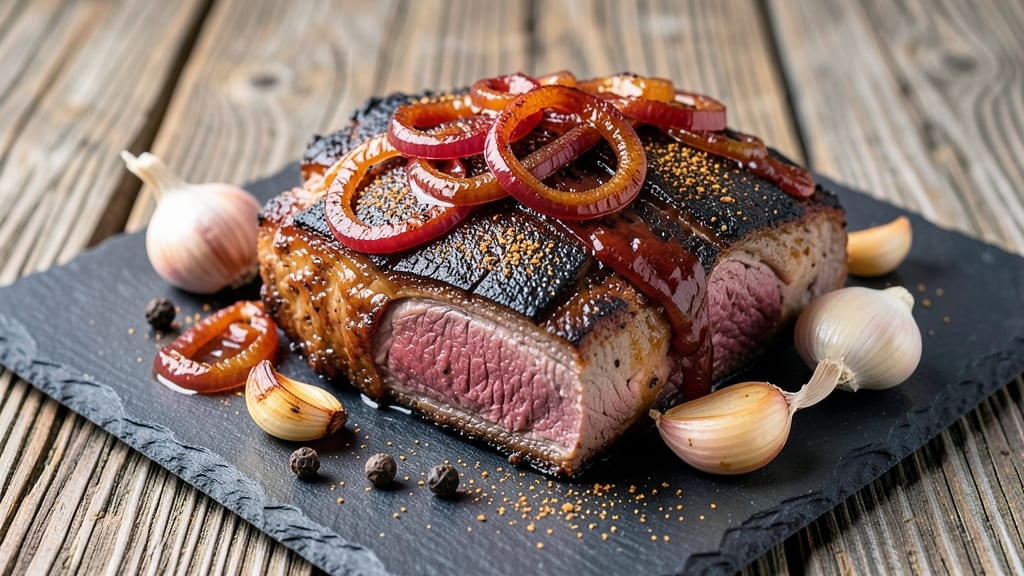
Mastering Kamado Joe beef brisket transforms tough cuts into melt-in-your-mouth perfection through precise low-and-slow techniques. The key lies in temperature control, charcoal management, and patience—something my Boston butcher swore would never work in a home Kamado.
After years of trial and error, I’ve perfected a method that delivers that coveted bark and tender interior every time.
This recipe relies on indirect heat and charcoal management to maintain a steady 225°F for hours, ensuring even cooking without flare-ups. The secret weapon? A reverse sear at the end to create that prized smoke ring while keeping the meat juicy.
Unlike traditional smokers, the Kamado’s ceramic design retains heat efficiently, making it ideal for long cooks without constant monitoring.
What you’ll end up with is a brisket so tender it practically falls apart at the touch, with a deep mahogany bark and a smoke ring that signals professional-level results. The crust is crisp enough to stand up to a knife, while the interior remains moist and flavorful.
This isn’t just a brisket—it’s a centerpiece that turns any gathering into a memorable feast.
Pair it with classic sides like smoky baked beans, crisp slaw, and cornbread for the full experience. The beauty of this method is its flexibility—whether you’re feeding a crowd or meal prepping for the week, the same principles apply. Let’s get started on your smoke-ringed masterpiece.
Ingredients for kamado joe beef brisket
The backbone of your Kamado masterpiece—just a few key ingredients transform tough beef into melt-in-your-mouth perfection.
| Ingredient | Amount | Notes |
|---|---|---|
| Beef Brisket (Packer Cut) 🥩 | 8 lb | Whole packer cut, fat cap intact |
| Kosher Salt 🧂 | ½ cup | Diamond Crystal preferred |
| Black Peppercorns 🌶️ | 2 tbsp | Freshly cracked, coarse grind |
| Garlic Cloves 🧄 | 10 cloves | Peeled, smashed for rub |
| Yellow Onion 🧅 | 1 whole | Yellow or red, grated |
| Smoked Paprika 🌶️ | 2 tbsp | High-quality, no fillers |
| Ground Coriander 🌿 | 1 tbsp | Freshly ground preferred |
| Mustard Powder 🍯 | 1 tsp | Yellow or Dijon |
| Charcoal Chunks 🔥 | 10 lb | Lump charcoal, hardwood |
| Apple Wood Chips 🍎 | 2 cups | Soaked 1 hour minimum |
| Hickory Wood Chips 🌳 | 1 cup | Complements apple wood |
| Beef Tallow or Bacon Fat 🥓 | ½ cup | For spritzing during cook |
| Beef Broth 💧 | 1 cup | Low-sodium, for spritzing |
| Yellow Mustard 🍯 | 2 tbsp | For final glaze |
| Brown Sugar 🍚 | 2 tbsp | Light or dark, for glaze |
The beef is non-negotiable. Packer cut brisket from a trusted butcher—like Boston Butcher or Snake River Farms—has the perfect fat cap for bark and moisture. Look for vibrant color and good marbling; the fat should feel firm but pliable. If you're buying online, US Wellness Meats ships packer cuts with the fat intact, which is crucial for that coveted bark. The wood chips? Traeger brand or Cooks Wood are my go-tos—they're consistent and free from additives. Soak them for at least an hour before using, or they'll burn too quickly and create bitter smoke.
No smoked paprika? Substitute with half chili powder and half sweet paprika, but you'll lose that deep, smoky complexity. Short on coriander? Skip it entirely—it's more about depth than necessity. For the wood chips, if apple isn't available, cherry or pecan work beautifully. The mustard powder can be swapped for white wine powder if you're aiming for a more French-inspired profile. For the spritz, beef broth plus a splash of apple cider vinegar adds brightness. And if you're meal prepping, cook the full brisket and freeze portions—it reheats like a dream, with even more tender meat.
This brisket is a marathon, not a sprint. The rub can be prepped 2 days ahead—store it in an airtight container. The wood chips? Keep them in a sealed bag in the fridge for up to 2 weeks, but bring to room temp before using. Once cooked, the brisket keeps 5-7 days in the fridge, wrapped tightly in butcher paper. For long-term storage, freeze in portions—it stays tender for up to 3 months. Pro tip: Let it rest 2 hours before slicing against the grain, or you'll lose all that juicy goodness.
Why You'll Love This Recipe
- Prep Ahead Like a Pro: Honestly, I make this rub two days early—just toss the kosher salt, cracked peppercorns, and grated onion in a container, and it’s ready when you are. No last-minute scrambling, just pull it out, add the garlic and smoked paprika, and you’re set. That’s how you turn a weekend project into a weekday win.
- Smoke Ring Magic: There’s nothing like slicing into that perfect pink ring—it’s the hallmark of a brisket done right. The apple and hickory wood chips give it a deep, sweet-smoky flavor, while the mustard powder in the rub keeps it from being too heavy. Trust me, the moment you see that ring, you’ll know you nailed it.
- Leftovers That Taste Better: Between us, the second day is often better than the first. That bark stays crispy, the meat gets even more tender, and you can reheat slices in the Kamado Joe for a few minutes to keep them juicy. Pack it for lunches, freeze portions, or serve it cold in sandwiches—it’s the ultimate flexible protein.
- Budget-Friendly Feast: An 8 lb brisket feeds a crowd without breaking the bank, and the ingredients? Most are pantry staples. The beef tallow and wood chips add luxury, but you’re not spending a fortune. Plus, the rub costs pennies—just salt, pepper, and a handful of spices. That’s a win for your wallet and your taste buds.
Step-by-step instructions for Kamado Joe beef brisket
Here's the method that delivers that legendary smoke ring and tender fall-apart texture every time.
Prepare the Brisket and Create the Rub
Begin by trimming the fat cap of the 8 lb Beef Brisket (Packer Cut) to about ¼-inch thickness using a sharp boning knife. Leave the fat intact on the sides and edges to protect the meat during the long cook. Pat the entire surface dry with paper towels—this step is crucial for developing that prized bark.
In a small bowl, combine the 0.5 cup Kosher Salt, 2 tbsp Black Peppercorns (freshly cracked), 2 tbsp Smoked Paprika, 1 tbsp Ground Coriander, and 1 tsp Mustard Powder. Grind the peppercorns in a mortar and pestle or spice grinder until you achieve a coarse texture. Add the 10 cloves Garlic Cloves (peeled and smashed) and the grated 1 whole Yellow Onion to the dry mixture. Mix thoroughly until you have a well-adhering paste.
Apply the rub generously to all sides of the brisket, pressing firmly so it sticks. Let the brisket sit at room temperature for 1 hour before smoking. This resting period allows the rub to penetrate deeply and ensures even cooking.
Set Up the Kamado Joe for Low-and-Slow Cooking
Soak the 2 cups Apple Wood Chips and 1 cup Hickory Wood Chips in water for at least 1 hour. This prevents them from burning too quickly and ensures a steady stream of flavorful smoke. Arrange 5 lb of the 10 lb Charcoal Chunks in a pyramid shape in the bottom of the Kamado Joe, leaving space for the wood chips.
Light the charcoal using a chimney starter and let it burn until it's covered with a thin layer of white ash. Once the charcoal reaches a consistent temperature, spread the soaked wood chips evenly over the hot coals. Close the lid and let the smoker heat up to 225°F. This temperature is critical for achieving that perfect smoke ring while keeping the meat tender.
Place the brisket fat-side up on the cooking grate. Position it away from direct heat sources to maintain even cooking. Close the lid and resist the urge to peek—every time you open it, you lose heat and moisture, potentially ruining the bark.
Smoke the Brisket and Manage the Stall
Smoke the brisket undisturbed for 6 to 8 hours, or until the internal temperature reaches 165°F to 170°F. This is when you'll encounter "the stall," a period where the internal temperature stops rising as moisture evaporates. Don't panic—this is normal and expected.
Once the stall begins, prepare a mixture of 0.5 cup Beef Tallow or Bacon Fat and 1 cup Beef Broth in a spray bottle. Spritz the brisket generously with this mixture every 30 minutes. This technique, known as the "Texas crutch," helps the brisket push through the stall while maintaining moisture. Wrap the brisket tightly in butcher paper (not aluminum foil) to trap steam and continue cooking.
Return the wrapped brisket to the Kamado Joe and continue smoking until the internal temperature reaches 200°F to 205°F. This usually takes an additional 4 to 6 hours. The brisket is done when a probe slides in easily with no resistance, indicating it's probe-tender.
Apply the Final Glaze and Rest
Remove the brisket from the Kamado Joe and let it rest on a cutting board for 15 minutes. This brief rest allows the juices to begin redistributing within the meat. In a small bowl, mix the 2 tbsp Yellow Mustard and 2 tbsp Brown Sugar to create a glossy glaze. Brush this mixture generously over the entire surface of the brisket.
Return the brisket to the Kamado Joe and cook for an additional 10 to 15 minutes. This step caramelizes the glaze, creating a sticky, flavorful crust that enhances the bark. Monitor the temperature closely—you want the bark to achieve a deep mahogany color without burning.
Once the glaze is set and the bark is perfectly crisp, remove the brisket from the Kamado Joe and let it rest for at least 1 hour, wrapped in butcher paper. This resting period is essential for ensuring juicy, tender slices. The internal temperature will rise slightly during this time due to carryover cooking, reaching around 208°F to 210°F.
Slice and Serve
Unwrap the brisket and locate the grain direction by looking for the natural lines in the meat. Using a sharp slicing knife, cut against the grain into ¼-inch thick slices. The flat and point cuts have different grain directions, so adjust your angle accordingly for maximum tenderness.
Serve the brisket immediately while still warm. Each slice should be fork-tender with a dark, crispy bark on the outside and a beautiful pink smoke ring just beneath. The glaze should add a sweet and tangy contrast to the rich, smoky flavors. Pair with classic barbecue sides like coleslaw or baked beans for a complete meal.
Pro Tips For Making Kamado Joe Beef Brisket
- Trim That Fat Smart: The fat cap should be even at ¼-inch—thicker spots won’t render properly, and thinner ones risk burning. I used to eyeball it, but now I run a ruler along the knife blade to keep it consistent. Uneven fat means uneven bark, and nobody wants a brisket with patchy crusts.
- Soak Wood Chips Right: That 1-hour minimum soak isn’t just a suggestion—it’s the difference between flavorful smoke and acrid, bitter fumes. I learned this after my first batch tasted like a campfire mishap. Use a bowl of water, not just a quick rinse, and let them sit fully submerged until they’re limp and ready.
- Spritz Like a Pro: The Texas crutch (0.5 cup tallow + 1 cup broth) needs to be hot when you spritz—lukewarm liquid just steams the brisket. Heat the mixture in a small saucepan until it’s warm but not boiling, then spray in quick bursts. Cold spritzes shock the meat and stall progress even more.
- Glaze Fast, Rest Longer: That final 10–15 minutes with the mustard-brown sugar glaze is make-or-break—rush it, and the sugar burns. Work fast, then double the rest time to 1.5 hours if you’re unsure. The brisket’s temp will climb another 10°F during rest, and cutting too soon means dry slices. Trust the process.
Dietary considerations for this kamado joe beef brisket
Gluten-Free Adaptations
This brisket recipe is naturally gluten-free, but the butcher paper wrap during the stall can sometimes contain trace gluten. I always double-check the packaging—Reynolds Wrap or Starfresh Butcher Paper are both gluten-free certified.
For the glaze, ensure your mustard and brown sugar are certified gluten-free brands like French's or Whole Foods 365. The rub ingredients are all gluten-free, but if you're highly sensitive, grind your own spices to avoid cross-contamination. 🌾
Low-Carb/Keto Options
For keto dieters, this brisket is already compliant—just skip the glaze or use a sugar-free alternative. I swap the 2 tbsp brown sugar with 2 tbsp erythritol or monk fruit sweetener for the same caramelization without carbs. The mustard remains unchanged (most yellow mustards are keto-friendly).
The fat cap on the brisket provides natural fats, making this a perfect low-carb protein source. Pair with cauliflower mash or zucchini noodles for a full keto meal. 🥩
Dairy-Free Considerations
The original recipe doesn't include dairy, but if you're avoiding it entirely, check your mustard—some brands contain whey. French's Classic Yellow Mustard is dairy-free, but always verify labels. The beef tallow in the spritz is animal fat, not dairy, so no substitutions are needed there.
For extra flavor, add 1 tbsp apple cider vinegar to the spritz mixture for brightness. The butcher paper and wood chips are also dairy-free, so this remains a clean recipe for lactose-intolerant eaters. 🧀
Allergen-Friendly Swaps
For nut allergies, ensure your wood chips are nut-free—Traeger brand or Cooks Wood are safe choices. If you're allergic to garlic or onions, omit them from the rub and boost the smoked paprika to 3 tbsp for depth.
For mustard allergies, replace the glaze with 2 tbsp honey (if vegan, use agave) mixed with 1 tbsp Dijon mustard substitute (like mustard-free coleslaw seasoning). Always confirm ingredient labels, especially for store-bought spices. 🚫
Meal Prep Adaptations
This brisket is perfect for meal prep—just cook the full 8 lb brisket and portion it into airtight containers with ¼-inch slices. Store in the fridge for 5-7 days or freeze for 3 months.
Reheat portions in a skillet with 1 tbsp beef broth over medium-low heat for 5-7 minutes to restore moisture. For reheating from frozen, thaw overnight in the fridge first. The bark will soften slightly, but the meat remains tender. 📅
Nutrition facts
Frequently asked questions
Why does my Kamado Joe brisket turn out dry even after following the low-and-slow method?
The most common culprits are opening the lid too often or not managing the stall properly. Every time you peek, you lose 50°F of heat and moisture. During the stall (165°F-170°F), use the Texas crutch—spritz with 0.5 cup beef tallow + 1 cup beef broth every 30 minutes—and wrap in butcher paper to trap steam. Also, never rush the cook: 200°F-205°F internal temp is non-negotiable for tenderness.
Can I use a different wood chip blend? What about fruit woods?
The apple + hickory combo is ideal because apple adds sweetness while hickory provides depth, but you can experiment! Cherry or pecan work well too—just avoid overly resinous woods like cedar. For fruit woods, peach or plum add a lighter, floral note, but soak them 2 hours minimum to prevent bitter smoke. Stick to 1 cup total of wood chips for balanced flavor.
How do I know when the brisket is done without a meat thermometer?
Look for three key signs: probe-tender (a knife slides in like butter), a deep mahogany bark, and a pink smoke ring just beneath the surface. The point cut should feel slightly softer than the flat cut. If you're unsure, check the flat cut's internal temp—it should reach 200°F-205°F after the stall. The bark should be crisp enough to stand up to a knife but not burn.
What's the best way to reheat leftover brisket without drying it out?
Slice the brisket into ¼-inch portions and reheat in a skillet over medium-low heat with 1 tbsp beef broth per 4 slices. Cover with a lid for 3-5 minutes max—just until warmed through. For frozen slices, thaw overnight in the fridge first, then reheat as above. Microwaving steals moisture, so avoid it. The glaze may soften slightly, but the meat stays tender.
Can I cook a smaller brisket (like 4-5 lbs) using this method?
Yes, but adjust the cook time and charcoal. A 4-5 lb brisket will finish in 4-5 hours total (vs. 10-12 hours for 8 lbs). Use 3-4 lb charcoal and 1 cup total wood chips. The key is maintaining 225°F—add charcoal as needed to avoid temperature drops. The stall will still happen, so spritz and wrap as directed. Just reduce the final glaze to 1 tbsp mustard + 1 tbsp brown sugar.