
Main Courses
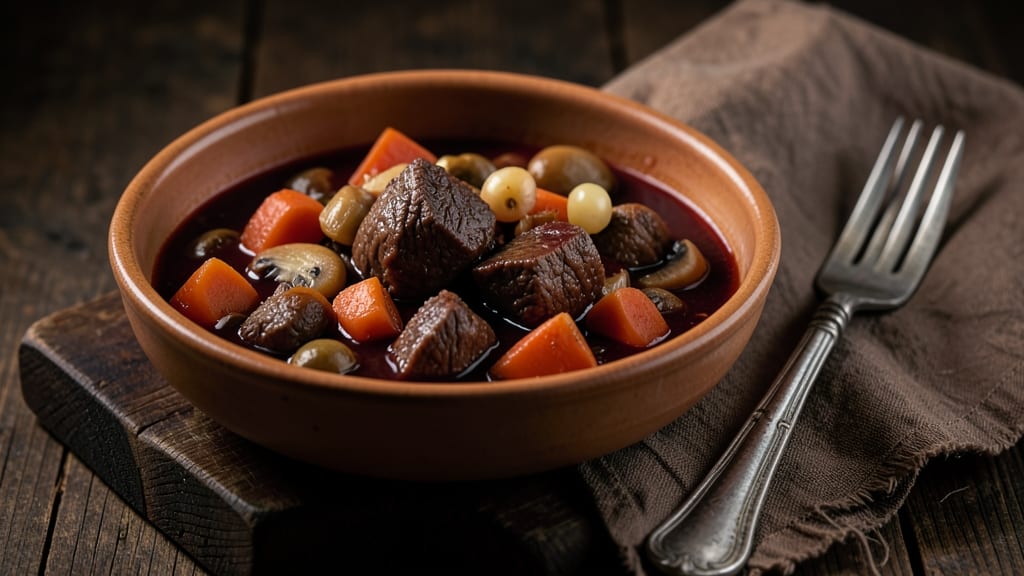
The original Julia Child’s beef bourguignon recipe turns a weeknight dinner into a rich, rustic celebration of French comfort food. The secret lies in slow-braising beef until it's fork-tender, then simmering it in a deep red wine reduction that captures all the rich, complex flavors.
I've recreated this iconic recipe with precise techniques—browning the meat, deglazing with wine, and letting it develop over hours—just as Julia intended.
What makes this dish truly special is the balance of textures and flavors: tender beef, earthy mushrooms, caramelized onions, and a sauce so velvety it coats every bite. The long braising time (3+ hours) is what transforms tough cuts into melt-in-your-mouth perfection.
This isn't just a recipe; it's an experience that brings the warmth of a Parisian bistro to your kitchen.
The result is a dish that's rich, deeply flavorful, and impossible to resist—each bite delivers layers of savory, slightly sweet, and tangy notes from the wine. The aroma alone will have everyone gathering around the table, and the presentation is as impressive as the taste.
Serve it with crusty bread or buttery potatoes to soak up every last drop of that luxurious sauce.
Whether you're hosting a dinner party or simply craving a restaurant-quality meal at home, this beef bourguignon delivers. The techniques are approachable, and the reward is unmatched. Let's get started on recreating Julia Child's masterpiece.
Ingredients for julia child's beef bourguignon original
Rich, rustic ingredients that transform tough beef into melt-in-your-mouth perfection with deep red wine.
| Ingredient | Amount | Notes |
|---|---|---|
| Beef Chuck Roast 🥩 | 2 lb | Cut into 1.5-inch chunks |
| Yellow Onions 🧅 | 2 whole | Peeled, cut into wedges |
| Carrots 🥕 | 4 whole | Peeled, cut into chunks |
| Garlic Cloves 🧄 | 6 cloves | Peeled, smashed |
| Fresh Thyme 🌿 | ¼ cup | Stems removed, chopped |
| Fresh Parsley 🌿 | ¼ cup | Chopped, for garnish |
| Cremini Mushrooms 🍄 | 1 lb | Trimmed, quartered |
| All-Purpose Flour 🌾 | 2 tbsp | For dredging beef |
| Dry Red Wine 🍷 | 2 cups | Bold, like Cabernet Sauvignon |
| Beef Broth 🥛 | 2 cups | Homemade or high-quality |
| Tomato Paste 🍅 | 2 tbsp | Smooth, not chunky |
| Olive Oil 🫒 | ½ cup | Extra-virgin for richness |
| Salt 🧂 | 1 ½ tsp | Kosher or sea salt |
| Black Pepper 🌶️ | 1 tsp | Freshly ground |
| Bay Leaves 🍃 | 2 whole | Dried, for depth |
The beef is everything here. Chuck roast is ideal—it's tough enough to braise but melts when slow-cooked. Look for good marbling at Whole Foods or your butcher shop; the fat renders beautifully. If you can't find chuck, chuck-eye steak works too. The mushrooms? Cremini or wild varieties add earthiness—skip the button mushrooms. For wine, Cabernet Sauvignon or Merlot from a decent bottle (not cooking wine) makes all the difference. I always grab two cups from whatever's open in my fridge—no need to splurge on a whole bottle.
No red wine? Beef broth with a splash of balsamic vinegar works in a pinch, but the flavor won't be the same. Fresh thyme is best, but dried at half the amount gets you close. The tomato paste can be that squeeze tube from Trader Joe's—it's perfect for small batches. For the flour, King Arthur or Bob's Red Mill are my go-tos, but any all-purpose works. The onions? Yellow or pearl both caramelize beautifully—just make sure they're sweet, not bitter. And if you're short on parsley, cilantro or basil add a nice twist (though traditionalists will scoff).
This dish tastes even better the next day—honestly, 3-4 days in the fridge is ideal as the flavors meld. Freeze portions for up to 3 months if you're making a big batch. I always double the recipe and freeze half; it's perfect for lazy weeknights. Store the sauce separately if reheating—just warm it gently on the stove. The beef reheats beautifully in the sauce, so no need to defrost it fully. Leftovers? Crusty bread or mashed potatoes are mandatory for soaking up every last drop.
Why You'll Love This Recipe
- One-Pot Magic: I swear by this recipe for lazy Sundays—just brown the beef, toss in the onions and carrots, then let the red wine and broth work their magic. No flipping pans, no extra dishes. That Dutch oven does all the heavy lifting while you sip your wine and pretend you’re in a Parisian bistro.
- Wine-Infused Magic: The moment you deglaze with that bold Cabernet Sauvignon, your kitchen smells like a French countryside dinner. The thyme and bay leaves deepen the flavor, while the tomato paste adds this subtle, savory richness that makes the sauce sing. Honestly, I’ve never tasted beef broth taste so good.
- Leftovers That Lie: Between us, this dish gets better the second day. The beef practically falls apart, and the sauce thickens into a velvety blanket. Three or four days in the fridge? Yes, because nobody wants to admit they ate it all in one sitting. (I won’t tell if you won’t.)
- Budget-Friendly Luxury: You’re getting a restaurant-quality meal for a fraction of the price—thanks to affordable chuck roast and pantry staples. The mushrooms and wine elevate it, but the real secret is that flour-dredged beef and those caramelized onions. It’s the kind of dish where you feel fancy without breaking the bank.
Step-by-step instructions for Julia Child's beef bourguignon
Here's how to recreate Julia's legendary beef bourguignon with rich, velvety sauce and tender beef every time.
Prepare the Beef for Browning
Pat the 2 lb beef chuck roast dry with paper towels—this ensures maximum browning. Cut it into 1.5-inch chunks, discarding any large fat deposits. In a small bowl, mix the 2 tbsp all-purpose flour with 1 tsp salt and ½ tsp black pepper. Toss the beef chunks in this mixture until evenly coated, shaking off any excess flour.
Heat 2 tbsp of the 0.5 cup olive oil in a heavy Dutch oven over medium-high heat. Working in batches if needed, brown the beef for 3-4 minutes per side until deeply golden. This step builds the foundation for the sauce's depth of flavor. Remove the beef and set aside, leaving the browned bits in the pot—these are pure flavor gold.
Build the Vegetable Base
In the same Dutch oven, add the remaining 0.3 cup olive oil and heat over medium. Add the 2 whole yellow onions cut into wedges and cook for 5 minutes until softened. Add the 4 whole carrots cut into chunks and cook for another 5 minutes. Stir in the 6 peeled and smashed garlic cloves and cook for 30 seconds until fragrant.
Add the 1 lb cremini mushrooms trimmed and quartered, along with the 2 tbsp tomato paste. Stir well and cook for 3 minutes until the mushrooms release their moisture and begin to brown. This vegetable medley forms the heart of the dish, balancing the richness of the beef.
Deglaze and Simmer in Red Wine
Pour in the 2 cups dry red wine, scraping up all the browned bits from the bottom of the pot. Bring to a gentle simmer and cook for 5 minutes until the wine reduces by about half. Add the 2 cups beef broth, the 0.25 cup chopped fresh thyme, the 2 whole bay leaves, and the remaining ½ tsp black pepper. Return the beef to the pot.
Bring to a boil, then reduce heat to low. Cover partially and simmer for 1 hour and 30 minutes, stirring occasionally, until the beef is fork-tender. This slow cooking transforms tough chuck roast into melt-in-your-mouth perfection. The sauce should be thick and rich, coating the beef beautifully.
Finish with Fresh Herbs
Remove the beef and vegetables from the pot and strain the sauce through a fine-mesh sieve into a clean saucepan. Discard the thyme stems and bay leaves. Return the sauce to medium heat and simmer for 5 minutes to reduce slightly if needed. Stir in the 0.25 cup chopped fresh parsley just before serving.
Slice the beef against the grain and arrange it over the vegetables in a warm serving dish. Ladle the sauce generously over the top. The result should be tender beef swimming in a glossy, wine-infused sauce with perfectly cooked vegetables. Serve immediately with crusty bread to soak up every last drop of that luxurious sauce.
Pro Tips For Making Julia Child'S Beef Bourguignon Original
- Brown in Batches: I used to try to brown all the beef at once, and it ended up steaming instead of searing—disaster. Work in batches, even if it takes a little longer, and let the oil heat back up between rounds. That golden crust on the beef is where all the flavor hides.
- Don’t Skip the Wine Reduction: After adding the 2 cups of wine, let it bubble away until it’s reduced by half—about 5 minutes of steady simmering. Skipping this step means a thinner, less flavorful sauce. It’s worth the wait; the concentrated wine is what makes this dish sing.
- Slice the Carrots Evenly: Uneven carrot chunks mean some cook fast and turn mushy while others stay tough. Cut them all into similar-sized pieces—about 1-inch chunks—so they soften at the same time. No one wants a sad, half-cooked carrot in their bourguignon.
- Strain the Sauce Like a Pro: Use a fine-mesh sieve and press the veggies with a spoon to get every last bit of flavor out of the sauce. Don’t rush it—let it drain slowly. That’s where the richness comes from, not some sad, watery leftover sludge.
Regional styles of this dish
French Bistro Classic
Julia Child’s original recipe reflects the heart of French bistro cooking from the 1960s, where rich, slow-braised dishes were staples. The red wine reduction is key—traditional French cooks used Burgundy wines like Pinot Noir, but bold Cabernet Sauvignon works beautifully too.
This version stays true to Julia’s method of browning beef deeply and letting it simmer until fork-tender, just like in Parisian bistros. The dish is all about comfort and depth of flavor, not flashy techniques. 🍷
Americanized Adaptations
Julia’s recipe became a cornerstone of American home cooking in the 1970s, thanks to her iconic TV show. Many home cooks simplify it by using store-bought beef broth instead of homemade, or swap cremini mushrooms for button mushrooms.
Some versions even add tomato paste (as in this recipe) to balance the wine’s acidity—a nod to American tastes. The long braising time (3+ hours) remains unchanged, though modern cooks often use slow cookers for convenience. 🥘
Modern Twists
Today’s chefs put a contemporary spin on bourguignon while keeping Julia’s core techniques. Some add shallots for extra sweetness or a splash of brandy when deglazing. Others use wild mushrooms or duck confit instead of beef for a richer profile.
The sauce reduction time is often shortened slightly (to 2 hours) for faster weeknight meals, but purists insist on the full 3-hour simmer for maximum tenderness. 🌿
Regional French Variations
In Burgundy, the birthplace of bourguignon, cooks use local Pinot Noir wine and pearl onions for a sweeter touch. The Lyon region adds lardons (diced bacon) and olive tapenade for a savory contrast.
Meanwhile, Parisian bistros stick to Julia’s classic approach—beef, mushrooms, and thyme—but often serve it with crusty baguette instead of potatoes. The key difference? Burgundy’s version is lighter, while Parisian style leans richer and heartier. 🗺️
Julia’s Signature Touches
Julia’s recipe stands out for its precision and patience. She insisted on browning beef in batches to avoid overcrowding, and always deglazed with wine to capture those fond-rich flavors. The tomato paste (a modern addition) wasn’t in her earliest versions but became standard for balancing acidity.
Her final step—straining the sauce and finishing with fresh parsley—elevates the dish from rustic to refined. These details are what make it uniquely hers. ✨
Global Influences
In Italy, bourguignon-inspired dishes often swap red wine for Chianti and add rosemary or sun-dried tomatoes. Spanish versions might include smoked paprika or chorizo, while German cooks sometimes replace wine with dark beer for a malty twist.
The Japanese take uses dashi broth and shiitake mushrooms for umami depth. Despite these variations, Julia’s original remains the gold standard—a testament to its timeless appeal. 🌍
Nutrition facts
Frequently asked questions
Why does Julia Child's recipe call for browning the beef in batches?
Browning in batches prevents overcrowding, which keeps the beef searing properly instead of steaming. This creates those flavor-packed browned bits (fond) that form the base of the rich sauce. Julia insisted on this step to ensure maximum depth of flavor in every bite.
Can I substitute red wine with something else if I don't have any?
For best results, use a mix of 2 cups beef broth plus 2 tablespoons balsamic vinegar to mimic the acidity and depth. If you must use cooking wine, dilute it with extra broth—never use it straight. The wine's alcohol evaporates during cooking, but its flavor profile is irreplaceable for authenticity.
How do I know when the beef is fully tender?
The beef should easily shred with a fork when pierced. Julia's recipe requires 1.5-2 hours of simmering, but timing varies based on cut thickness. For extra assurance, check at 1 hour and test a small piece—if it's still tough, return it to the pot for another 30 minutes.
What's the best way to reheat leftovers without drying out the sauce?
Reheat gently on the stove over low heat, adding 1-2 tablespoons beef broth if the sauce thickens too much. Never microwave—it creates a skin on the sauce. For best texture, warm the beef and sauce separately, then combine just before serving to maintain that velvety consistency.
Can I make this in a slow cooker instead of a Dutch oven?
Yes! Brown the beef first in a skillet, then transfer everything to the slow cooker. Cook on low for 6-7 hours or high for 3-4 hours. The sauce may be thinner—reduce it on the stove before serving. Julia's original method uses oven braising, but slow cookers work beautifully for modern convenience.