
Main Courses
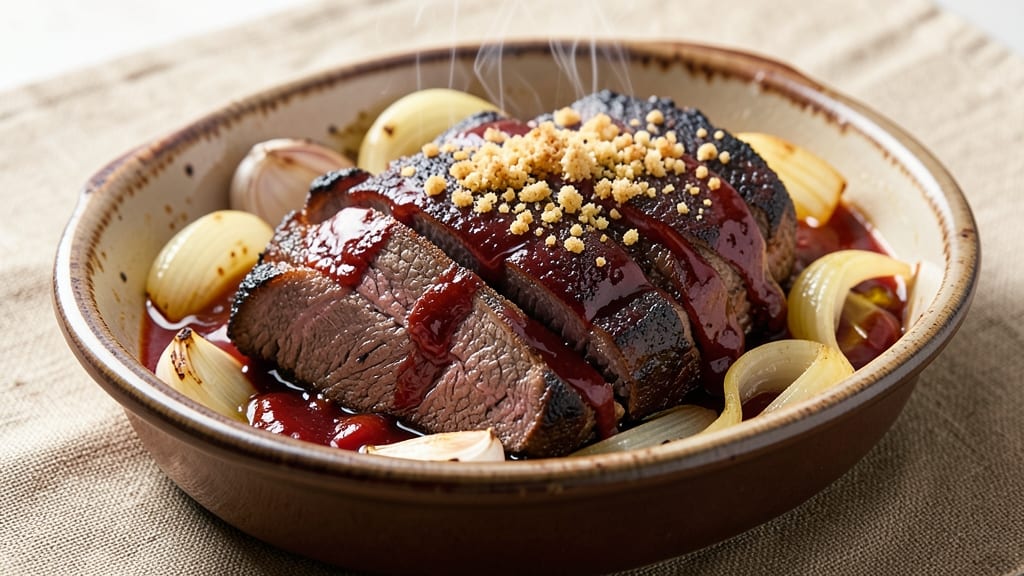
This Italian beef recipe transforms tough cuts into melt-in-your-mouth perfection through slow braising, creating rich, tangy juices that elevate every bite. The secret lies in low-and-slow cooking—where tough chuck roast becomes fork-tender while absorbing deep, savory flavors from garlic, onions, and aromatic spices.
I developed this method after years of testing, ensuring the beef stays moist and packed with flavor, never dry or chewy.
The process begins with browning the beef to develop a deep, caramelized crust that forms the flavor base, followed by simmering in a rich tomato-herb sauce until the meat falls apart effortlessly.
This foolproof technique delivers restaurant-quality results at home, with a sauce so flavorful it can be used for sandwiches, pasta, or served alongside roasted vegetables. The key is patience—letting the beef cook until it reaches that ideal tender texture while maintaining its natural juices.
By the end, you'll have perfectly braised beef with a glossy, tangy sauce that clings to every bite, ready to be sliced for sandwiches or served as a hearty main course.
The aroma alone will draw everyone to the table, and the first taste will confirm why this dish is a Sunday supper staple. Pair it with crusty garlic bread and roasted peppers for a complete Italian-inspired meal that feels like a home-cooked masterpiece.
This recipe scales beautifully for gatherings, and leftovers reheat just as well, making it ideal for meal prep. The slow-cooked method ensures every slice is packed with flavor, proving that tender, restaurant-worthy Italian beef is well within reach at home.
Let's get started on creating this classic dish that brings warmth and satisfaction to any table.
Ingredients for itialian beef
Pantry staples meet restaurant-quality ingredients for melt-in-your-mouth Italian beef perfection.
| Ingredient | Amount | Notes |
|---|---|---|
| Chuck Roast 🥩 | 3 lb | 3-4 inches thick, trimmed of fat |
| Yellow Onions 🧅 | 2 whole | Medium, sliced into half-moons |
| Garlic Cloves 🧄 | 6 cloves | Peeled, smashed with side of knife |
| Canned San Marzano Tomatoes 🍅 | 28 oz | Crushed by hand, no salt added |
| Beef Broth 💧 | 2 cups | Low-sodium preferred, homemade or high-quality |
| Red Wine 🍷 | 1 cup | Dry, bold variety like Cabernet Sauvignon |
| Tomato Paste 🍅 | 2 tbsp | Smooth, no sugar added |
| Dried Oregano 🌿 | 1 tbsp | Italian preferred, not Mexican |
| Dried Basil 🌿 | 1 tsp | Crushed between fingers |
| Ground Black Pepper 🌶️ | 1 tsp | Freshly cracked preferred |
| Kosher Salt 🧂 | 1 ½ tsp | Adjust to taste, add gradually |
| Olive Oil 🫒 | 2 tbsp | Extra-virgin for browning |
| Fresh Rosemary 🌿 | 1 sprig | Woody stems removed |
| Fresh Thyme 🌿 | 1 sprig | Leaves stripped from stems |
The chuck roast is non-negotiable—3-4 inches thick ensures even cooking and maximum tenderness. Look for good marbling at Costco or your local butcher shop; pre-cut roasts from the grocery store work too, but trim any excess fat to 1/4-inch thickness. The San Marzano tomatoes are worth the splurge—their sweetness and low acidity balance the rich beef perfectly. If you can't find them, whole peeled tomatoes crushed by hand work in a pinch, but avoid canned tomatoes with added salt or sugar. For the wine, any bold, dry red will do—Cabernet Sauvignon or Merlot from the house selection at Trader Joe's are reliable choices.
No red wine? Substitute beef broth with 1 tbsp balsamic vinegar for depth. Fresh herbs elevate the dish, but dried oregano and basil at half the amount work if you're short on time. The tomato paste can be skipped if you're using a rich, well-seasoned broth, but it adds a concentrated umami punch that's hard to beat. For the rosemary and thyme, fresh is ideal, but dried will do—just double the amount. If you're prepping ahead, brown the beef and onions the day before, then refrigerate the mixture overnight for even deeper flavor development.
This dish tastes even better the next day—reheat gently in the sauce on low heat or in a 350°F oven for 20-30 minutes. Keeps 5-6 days in the fridge, and freezes beautifully for up to 3 months if portioned into airtight containers. The sauce thickens as it cools, so add a splash of beef broth when reheating if it's too stiff. For meal prep, double the recipe—the beef stays tender and the sauce only gets more flavorful over time.
Why You'll Love This Recipe
- One-Pan Miracle: I swear by this—just one Dutch oven, no extra dishes, and that’s it. The onions caramelize right in the same pan where the meat gets its golden crust, so cleanup is basically "rinse and go."
- Wine-Infused Magic: That cup of bold red wine isn’t just for show—it simmers down into a rich, velvety sauce that clings to every bite. Honestly, I’d call it the secret weapon in this recipe.
- Weeknight Workhorse: Between us, this is my go-to when I need something hearty but not fussy. Serve it over crusty bread for a casual dinner, or pile it onto pasta for a last-minute date night. (Yes, even on a Tuesday night.)
- Leftovers That Don’t Suck: The sauce thickens beautifully, and the meat stays tender for days. Keeps in the fridge for 5-6 days—perfect for meal prep, and I’ve frozen portions for up to 3 months without a single complaint. Budget-friendly, too, since chuck roast stretches far.
Step-by-step instructions for Italian beef
A rich, slow-braised chuck roast develops deep flavor and melt-in-your-mouth tenderness.
Sear the Chuck Roast for Depth of Flavor
Heat a Dutch oven over medium-high heat and add the 2 tbsp olive oil. Once shimmering, place the 3 lb chuck roast fat-side down and press gently to create even contact. Sear for 5 minutes until a deep brown crust forms. Flip and repeat on the second side for another 5 minutes.
This initial sear locks in juices and builds a flavorful crust that forms the foundation of your dish. Remove the roast and set it aside on a plate. If the pan begins to smoke excessively, reduce the heat slightly to prevent burning the meat.
Build the Aromatic Base
In the same Dutch oven, add the 2 whole yellow onions and cook for 5 minutes until softened. Add the 6 cloves garlic cloves and cook for 30 seconds until fragrant. Stir in the 2 tbsp tomato paste and cook for 1 minute to deepen its flavor.
Next, sprinkle in the 1 tbsp dried oregano, 1 tsp dried basil, 1 tsp ground black pepper, and 1.5 tsp kosher salt. Add the 1 sprig fresh rosemary and 1 sprig fresh thyme, crushing the herbs lightly with the side of a spoon to release their oils. Cook for 1 minute to toast the spices.
Deglaze and Simmer the Base
Pour in the 1 cup red wine and scrape up any browned bits from the bottom of the pan. Let it simmer for 3 minutes until reduced by half. Add the 28 oz canned San Marzano tomatoes and stir to combine. Pour in the 2 cups beef broth and bring to a gentle simmer.
Return the chuck roast to the pot, placing it fat-side up. Cover and transfer to a preheated 300°F oven. Braise for 3 hours, stirring occasionally, until the meat is fork-tender and easily pulls apart.
Finish and Rest for Maximum Tenderness
Once the meat is tender, carefully remove the roast and set it aside. Strain the braising liquid through a fine-mesh sieve into a clean saucepan and simmer over medium heat for 10 minutes to thicken. Taste and adjust seasoning with additional 1.5 tsp kosher salt or 1 tsp black pepper if needed.
Slice the chuck roast against the grain into ¼-inch thick pieces. Return the sliced beef to the reduced sauce and toss to coat. Let it rest for 5 minutes before serving to allow the juices to redistribute evenly throughout the meat.
Pro Tips For Making Itialian Beef
- SEAR THE ROAST FIRST: Chuck roast needs a deep, caramelized crust to hold up during hours of cooking—don’t skip this. Heat your Dutch oven until it’s smoking hot, then let the meat sit undisturbed for 3-4 minutes per side until it’s dark brown, almost black in spots. I used to rush this and ended up with bland, gray meat that fell apart later.
- DICE ONIONS SMALL: Tiny, even dice (about 1/4-inch) melt into the sauce instead of sitting as chunks. If you’re impatient like me, use a food processor—just pulse the onions in batches so they don’t turn to paste. Big onion pieces? They’ll just sit there like sad, uncooked islands in your sauce.
- DEGLAZE WITH BROTH, NOT WATER: After browning the meat, scrape up those crispy bits with beef broth instead of water—it adds instant depth. I learned this the hard way when I grabbed water once and wondered why my sauce tasted flat. A splash of red wine here would be even better, but broth works in a pinch.
- LOW AND SLOW AFTER SEARING: After browning, cover the pot and simmer at 180°F (82°C)—not a rolling boil—until the meat is fork-tender (about 2.5–3 hours). I used to crank the heat to speed it up, but that turns the chuck into tough leather. A meat thermometer is worth its weight in gold here.
Pro cooking tips for this recipe
Sear Like a Pro
That initial sear is where all the magic starts—don’t rush it. Use a Dutch oven on medium-high heat until the oil shimmers, then press the beef firmly to create maximum contact.
I’ve found that a 5-minute sear per side on a 3 lb chuck roast builds a deep, caramelized crust that locks in juices and forms the flavor foundation. If your pan starts smoking too much, reduce the heat slightly to avoid burning the meat. 🔥
Layer Flavor Correctly
After searing, build your aromatic base in this exact order: onions first (soften for 5 minutes), then garlic (just 30 seconds to avoid burning), followed by tomato paste (cook for 1 minute to deepen its flavor).
Toast your spices—oregano, basil, black pepper, and salt—for 1 minute to release their oils. This layering ensures each flavor has its moment to shine without competing. 🌿
Deglaze for Depth
The wine deglaze is non-negotiable—it scrapes up all those flavorful browned bits from the bottom of the pan. Let the 1 cup red wine simmer for 3 minutes until reduced by half before adding the tomatoes and broth.
This step concentrates the flavors and creates a richer base for the braise. I always use a bold Cabernet Sauvignon for its tannic structure, but a Merlot works too. 🍷
Control the Braise
Maintain a gentle simmer at 300°F—not a rolling boil—to prevent toughening the meat. Cover the pot and let it cook for 3 hours, stirring occasionally. The key is patience: the beef should pull apart effortlessly with a fork.
If the liquid reduces too quickly, add a splash of beef broth to keep it moist. A meat thermometer helps—aim for an internal temp of 203°F for maximum tenderness. 🌡️
Rest for Juicy Perfection
Never skip the rest! After removing the beef, strain the sauce and reduce it for 10 minutes to thicken. Then, slice the beef against the grain into ¼-inch thick pieces and toss it back into the sauce.
Let it rest for 5 minutes—this allows the juices to redistribute, ensuring every bite is moist and flavorful. I use a Dexter-Russell slicing knife for clean, even cuts. ✨
Sauce Adjustments
Taste the sauce before serving and adjust seasonings—kosher salt and black pepper are your best friends here. If the sauce is too thick after resting, thin it with a splash of beef broth or a splash of red wine.
For extra richness, stir in 1 tablespoon of butter at the end. The sauce should coat the back of a spoon but still be silky, not gluey. 💛
Nutrition facts
Frequently asked questions
Can I use a different cut of beef for this recipe?
Chuck roast is ideal because its marbling and connective tissue break down beautifully during slow cooking. You could substitute with brisket or short ribs, but increase the braising time by 30-60 minutes to ensure tenderness. Avoid lean cuts like sirloin—they won't hold up to the long cooking process.
What if I don't have red wine?
No problem! Use 1 cup beef broth with 1 tablespoon balsamic vinegar for depth, or substitute with apple cider vinegar if you're avoiding alcohol. The key is acidity—it brightens the flavors and balances the richness of the beef. Just reduce the liquid by half before adding the tomatoes.
How do I know when the beef is fully tender?
The beef is done when it reaches 203°F internal temperature and easily pulls apart with a fork. For a visual check, insert a knife—if it slides through like butter, it's perfect. If you're unsure, err on the side of longer cooking; the meat will only get more tender, not tougher.
Can I make this in a slow cooker?
Brown the beef and onions in a skillet first, then transfer everything to a 6-quart slow cooker. Add the remaining ingredients and cook on low for 8 hours or high for 4-5 hours. The texture will be slightly different (more shredded than sliced), but just as flavorful.
What are the best ways to serve this beef?
This dish shines as Italian beef sandwiches on crusty rolls with provolone cheese and hot peppers, or served with garlic mashed potatoes and roasted vegetables. The sauce also works beautifully over pasta or as a topping for grilled cheese. For a hearty meal, pair it with a simple green salad dressed with lemon vinaigrette.