
Main Courses
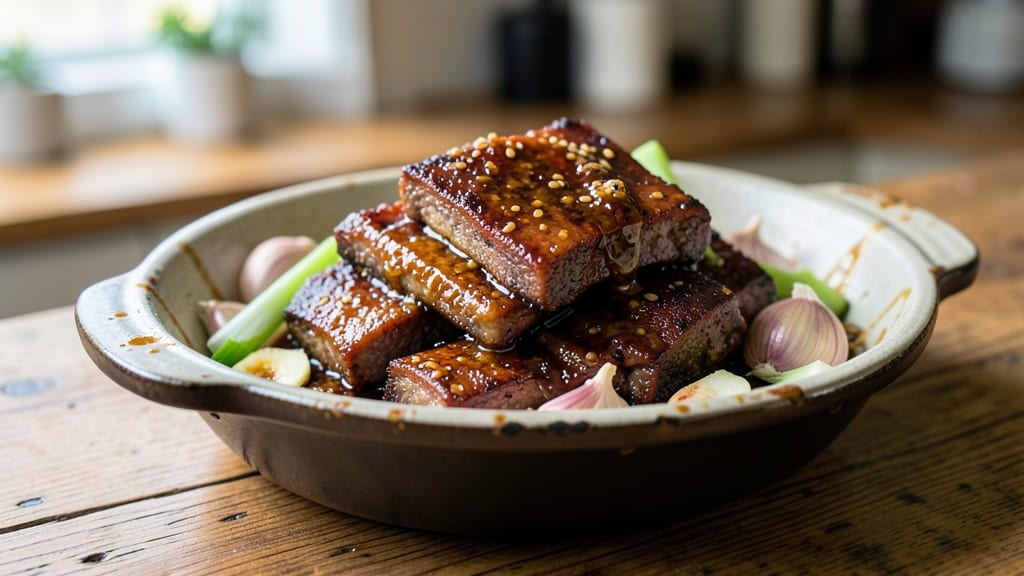
This Asian braised beef short ribs recipe delivers restaurant-quality depth and tenderness that transforms tough cuts into melt-in-your-mouth perfection. The secret lies in a slow-cooked soy-ginger marinade that infuses every bite with layers of umami and aromatic complexity.
I developed this method after years of experimenting with traditional Chinese braising techniques, ensuring the ribs stay juicy while developing a caramelized exterior. The result is a dish that feels both comforting and sophisticated—ideal for family dinners or special occasions when you want to impress.
The process begins with a marinade of soy sauce, brown sugar, garlic, and ginger, which tenderizes the meat while building rich flavor. After searing the ribs for color and depth, they braise in the same pot for hours, allowing the collagen to break down into a velvety sauce.
This one-pot technique keeps cleanup minimal while delivering maximum flavor, making it perfect for weeknight cooking that still feels like a celebration. The slow cooking transforms tough short ribs into fork-tender slices that practically fall apart.
What makes this recipe truly special is how the flavors evolve as it simmers—starting with bright, tangy notes from the vinegar and garlic, then deepening into a complex, caramelized umami richness.
The aroma alone will have everyone gathering at the table, and each bite delivers that perfect balance of sweet, savory, and smoky.
Serve over steamed jasmine rice or with pickled vegetables to cut through the richness, and you’ll have a dish that feels like a warm embrace from a bustling Asian kitchen.
This method works equally well with beef chuck or short ribs, and you can adjust the sweetness by adding more brown sugar or honey for a glossy finish. The braising liquid reduces into a thick, flavorful sauce that clings to every bite, making it a dish that improves with leftovers.
Whether you're feeding a crowd or meal prepping for the week, this recipe delivers professional-quality results with simple techniques and pantry staples.
Ingredients for asian braised beef short ribs
Pantry staples meet restaurant-quality umami. Simple ingredients transform tough ribs into tender perfection.
| Ingredient | Amount | Notes |
|---|---|---|
| Beef Short Ribs 🥩 | 3 lb | Bone-in, 2-inch thick cuts |
| Soy Sauce 🥢 | ½ cup | High-quality, preferably Japanese |
| Brown Sugar 🍯 | ½ cup | Packed, light or dark |
| Garlic Cloves 🧄 | 8 cloves | Peeled, smashed for infusion |
| Fresh Ginger 🌿 | ½ cup | Julienned or grated finely |
| White Wine 🍷 | 1 cup | Dry, like Sauvignon Blanc |
| Beef Broth 💧 | 2 cups | Low-sodium preferred |
| Sesame Oil 🫒 | 1 tbsp | Toasted, for aroma |
| Cornstarch 🌾 | 1 tbsp | For thickening sauce |
| Neutral Oil 🫒 | 2 tbsp | Like vegetable or canola |
| Green Onions 🧅 | ¼ cup | Sliced, for garnish |
| Sesame Seeds 🌱 | 1 tbsp | Toasted lightly |
| Salt 🧂 | 1 tsp | Kosher or sea salt |
| Black Pepper 🌶️ | ½ tsp | Freshly ground |
The ribs are the star—bone-in, 2-inch cuts ensure maximum flavor and tenderness. Look for well-marbled beef at Whole Foods or your local butcher. If using frozen, thaw overnight in the fridge. The soy sauce should be Japanese-style for deeper umami, and the brown sugar should be packed—this helps create that signature caramelized glaze. Fresh ginger and garlic are non-negotiable here; frozen won’t cut it for the aromatic depth. For the wine, dry whites like Sauvignon Blanc work best—they balance the sweetness without overpowering.
No Japanese soy sauce? High-quality tamari or even Worcestershire sauce in a pinch will work, though the flavor profile shifts slightly. Substituting honey for brown sugar? Use half the amount—it’s sweeter and lacks the caramelization. Frozen ginger? Grate it fresh anyway—it’s worth the extra minute. The beef broth should be low-sodium to control seasoning. If you’re short on time, store-bought braising liquid (like Kitchen Basics) works fine. For the sesame oil, toast it lightly in a dry pan before adding to the sauce—this deepens the nutty aroma without overpowering.
This dish tastes even better the next day as flavors meld. Store leftovers in the fridge for up to 5 days, or freeze for 3 months. The sauce thickens as it cools, so add a splash of water or broth when reheating. For meal prep, portion into containers with a little sauce—steamable rice pouches work perfectly. Garnish with green onions and sesame seeds just before serving to keep them crisp. The ribs and sauce can be reheated separately if needed, but combining them in a pot with a splash of water ensures maximum moisture.
Why You'll Love This Recipe
- One-Pot Magic: I swear by recipes that don’t require a million dishes—just one heavy pot, a little patience, and you’re done. The ribs sear right in the same pot where they braise, so cleanup is basically just wiping out one container. Honestly, that’s half the battle won before you even start cooking.
- Sweet-Savory Crunch: Between the deep umami of the soy sauce, the caramelized brown sugar glaze, and the bright pop of fresh ginger and garlic, every bite is a flavor explosion. The sauce clings to the ribs like a hug—sticky, glossy, and packed with layers that make you reach for seconds without thinking.
- Weeknight Crowd-Pleaser: This isn’t just a fancy dinner—it’s the kind of dish that disappears at family gatherings, impresses guests, and still feels like a cozy weeknight meal. The ribs are rich enough for a dinner party but simple enough to make when you’re too tired to think. Plus, the leftovers? Even better the next day.
- Make-Ahead Money-Saver: Between us, this recipe is my secret weapon for stretching a budget without sacrificing flavor. The ribs braise all day (or even overnight) and taste better for it, so you’re not stuck babysitting the stove. Store leftovers for up to 5 days, and you’ve got a freezer-friendly feast for months—no takeout needed.
Step-by-step instructions for Asian braised beef short ribs
Here's the method for tender, flavor-packed ribs with a glossy glaze.
Sear the Beef Short Ribs for Depth of Flavor
Pat the 3 lb beef short ribs dry with paper towels to remove any surface moisture. This ensures a proper sear instead of steaming. Heat 2 tablespoons neutral oil in a large, heavy pot over medium-high heat until shimmering.
Working in batches if needed, add the ribs to the pot in a single layer. Sear for 3-4 minutes per side until deeply browned with a crust forming. The ribs should release easily when ready to flip. Transfer the seared ribs to a plate and set aside. Don't clean the pot—those browned bits are full of flavor that will form the sauce base.
Build the Aromatic Braising Base
In the same pot, reduce heat to medium and add 8 smashed garlic cloves and 0.5 cup finely grated fresh ginger. Cook for 1 minute until fragrant but not browned. Add 0.5 cup soy sauce, 0.5 cup brown sugar, and 1 cup white wine, scraping up any browned bits from the bottom with a wooden spoon.
Bring the mixture to a simmer for 3-4 minutes until slightly reduced. The sauce should coat the back of a spoon. Return the seared ribs to the pot, along with 2 cups beef broth. The liquid should come about halfway up the ribs. Sprinkle with 1 teaspoon salt and 0.5 teaspoon black pepper. Bring to a gentle simmer.
Braise Until Fork-Tender
Cover the pot and transfer to a preheated 325°F oven. Braise for 2.5 to 3 hours until the ribs are fork-tender and easily pull away from the bone. The ribs are done when they reach an internal temperature of 205°F at their thickest point.
About 30 minutes before the ribs are done, uncover the pot and increase the oven temperature to 375°F. This helps thicken the sauce and caramelize the edges. Stir occasionally to prevent sticking. The sauce should reduce to a glossy consistency that coats the ribs.
Thicken and Finish the Sauce
Remove the ribs from the pot and transfer them to a serving platter. Place the pot back on the stovetop over medium heat. In a small bowl, whisk together 1 tablespoon cornstarch and 1 tablespoon sesame oil until smooth. Slowly pour this mixture into the braising liquid while stirring constantly.
Simmer for 2-3 minutes until the sauce thickens to a glossy, coatable consistency. Taste and adjust seasoning if needed. Stir in 1 tablespoon toasted sesame seeds and 0.25 cup sliced green onions, reserving a few for garnish. Pour the finished sauce over the ribs.
Rest and Serve
Let the ribs rest for 10 minutes before serving. This allows the juices to redistribute, ensuring each bite is moist and flavorful. Serve the ribs with the sauce spooned over the top, garnished with the reserved sliced green onions.
The ribs should be tender enough to pull apart with a fork, with a glossy, slightly caramelized sauce clinging to each piece. The aroma of toasted sesame and fresh ginger will fill your kitchen, signaling a perfectly braised dish.
Pro Tips For Making Asian Braised Beef Short Ribs
- Brown Sugar First: Toss the ribs with brown sugar before adding any liquid—it caramelizes faster and sticks to the meat. I used to add it later, and the sauce never got that deep, glossy sweetness that makes this dish sing.
- Sear in Batches: Don’t overcrowd the pan when searing—work in 2-3 batches if needed. Rushing this step means the ribs won’t develop that rich, nutty crust that holds up through braising, and you’ll end up with steam instead of sear marks.
- Parboil the Ginger: Peel and lightly parboil the ginger slices for 2 minutes before adding to the braise. It softens faster and releases flavor more evenly—no more chewing through tough raw ginger chunks in every bite.
- Deglaze with Soy: After searing, splash in half the soy sauce right away and let it bubble for 30 seconds. This pulls up all the browned bits (fond) that would otherwise turn your sauce dull—trust me, it makes a real difference in depth of flavor.
Best sauces and condiments for this asian braised beef short ribs
Classic Soy-Ginger Sauce
This foundational sauce blends ½ cup soy sauce, ½ cup brown sugar, 1 cup white wine, and 2 cups beef broth for a perfect balance of umami and sweetness.
The key is simmering it until reduced by 30%—this concentrates the flavors and creates that signature glossy sheen. I always add 1 tbsp toasted sesame oil at the end to elevate the aroma.
For extra depth, a splash of 1 tbsp Shaoxing wine (available at Asian markets) adds authentic complexity. 💫
Spicy Sesame Glaze
Transform your braising sauce into a fiery finish by adding 1 tbsp gochujang (Korean chili paste) and 1 tsp sriracha during the final 5 minutes of simmering. For a smoother heat, blend ½ cup red pepper flakes into the sauce first.
This variation pairs perfectly with steamed jasmine rice and quick-pickled cucumbers to balance the heat. The glaze thickens beautifully when reduced with 1 tsp cornstarch slurried in water.
Sweet and Tangy Hoisin Finish
Stir 2 tbsp hoisin sauce and 1 tbsp rice vinegar into the reduced braising liquid for a Cantonese-inspired twist. The tangy vinegar brightens the rich beef flavors, while hoisin adds a sticky, slightly sweet dimension.
For extra richness, whisk in 1 tbsp melted butter at the end. This works especially well when served with stir-fried bok choy or mandarin orange slices for a refreshing contrast. 🍊
Umami Bomb Mushroom Sauce
Sauté 1 cup sliced shiitake mushrooms and ½ cup shallots in the pot after searing the ribs. Deglaze with ½ cup dry sherry before adding the soy-ginger marinade. The mushrooms deepen the umami profile while adding a meaty texture.
Finish with 1 tsp fish sauce for an extra layer of savory complexity. This version feels luxurious and pairs beautifully with egg noodles or steamed dumplings.
Caramelized Onion Topping
Caramelize 2 large yellow onions in 1 tbsp butter until deep amber, then sprinkle with 1 tsp brown sugar to intensify the sweetness. Spoon these onto the ribs just before serving for a sweet-savory contrast.
The onions add texture and a beautiful visual element. For extra flair, drizzle with 1 tbsp balsamic glaze right before eating—it cuts through the richness perfectly. 🌟
Quick Pickled Vegetable Pairing
While the ribs braise, make a simple quick pickle by combining ½ cup rice vinegar, 1 tbsp sugar, and 1 tsp salt with 1 cup thinly sliced radishes and carrots. Let sit for 15 minutes before serving.
The bright acidity cleanses your palate between bites of rich ribs. For a spicy kick, add ½ tsp red pepper flakes to the pickling liquid. This side is ready in minutes and elevates the entire meal. 🥕
Nutrition facts
Frequently asked questions
How do I know when the beef short ribs are fully tender?
The ribs are done when they reach an internal temperature of 205°F at their thickest point and can be easily pulled apart with a fork. For best results, use a meat thermometer to avoid overcooking. The sauce should also reduce to a glossy consistency that coats the ribs, signaling the collagen has fully broken down.
Can I use a slow cooker instead of an oven for this recipe?
Transfer the ribs and sauce to a slow cooker after searing, then cook on low for 8-10 hours or high for 5-6 hours. The ribs will be just as tender, though the sauce may need thickening with cornstarch at the end. Skip the final 375°F step—slow cookers can't achieve that caramelization.
What's the best way to reheat leftovers without drying them out?
Reheat ribs and sauce separately in a pot with a splash of beef broth or water. Cover and warm over low heat for 10-15 minutes, or use the microwave with a damp paper towel covering for 2 minutes. The sauce will thicken further—thin it with a little liquid if needed. Never reheat dry, or the ribs will lose moisture.
Why did my sauce turn out too thin?
This usually happens if the ribs weren't fully submerged during braising or the pot wasn't covered tightly. For future batches, ensure the liquid reaches halfway up the ribs and use a tight lid. To fix thin sauce, whisk 1 tbsp cornstarch with water and stir into the hot sauce until thickened. Simmer for 2-3 minutes more.
Can I make this recipe with frozen short ribs?
Yes, but thaw them completely in the fridge overnight first. Pat them dry thoroughly before searing—excess moisture will steam the meat instead of browning it. The cooking time remains the same, as frozen ribs will absorb heat gradually during the braising process.