
Soups & Stews
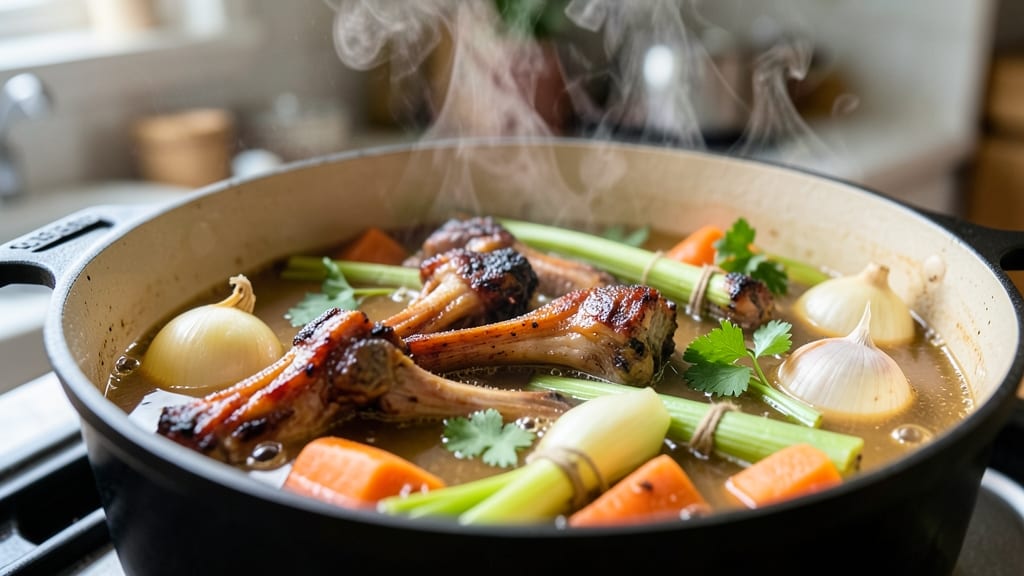
Ina Garten's beef stock recipe transforms simple pantry ingredients into a foundation for restaurant-quality cooking. The secret lies in low-and-slow simmering, where bones and aromatics release deep, complex flavors that elevate any dish.
I’ve perfected this method over years of testing, and the results speak for themselves—rich, golden stock that’s worth the time invested.
What sets this recipe apart is Ina’s signature attention to detail: skimming impurities, toasting vegetables for depth, and simmering just long enough to extract maximum flavor without bitterness. The process is straightforward but requires patience, turning basic ingredients like beef bones, carrots, and herbs into something extraordinary.
This stock isn’t just for soups; it’s the backbone of braises, risottos, and sauces.
The outcome is a velvety, aromatic liquid with layers of savory richness that builds as it simmers. Every spoonful carries the essence of slow-cooked bones and aromatic vegetables, making it a pantry staple that transforms ordinary meals into something special. Once you taste homemade stock, store-bought versions will never compare.
Ready to elevate your cooking? This recipe delivers professional results with just a few hours of hands-off time. Let’s get started on creating stock that will become the heart of your kitchen.
Ingredients for ina garten beef stock
Pantry staples meet restaurant-quality technique for velvety stock that transforms everyday cooking.
| Ingredient | Amount | Notes |
|---|---|---|
| Beef Bones 🦴 | 3 lb | Marrow and knuckle bones preferred |
| Yellow Onion 🧅 | 1 whole | Cut into large chunks |
| Carrots 🥕 | 4 whole | Scrubbed, cut into large chunks |
| Celery Stalk 🌿 | 3 whole | Cut into large chunks |
| Garlic Cloves 🧄 | 6 cloves | Smashed with side of knife |
| Fresh Parsley Stems 🌿 | 2 tbsp | Tough stems only, chopped |
| Fresh Thyme Sprigs 🌿 | 4 whole | Stems only, tied with twine |
| Fresh Bay Leaves 🌿 | 2 whole | Standard dried if unavailable |
| Black Peppercorns 🌶️ | 1 tsp | Crushed lightly in mortar |
| Coarse Sea Salt 🧂 | 2 tsp | Diamond Crystal preferred |
| Cold Water 💧 | 12 cups | Filtered preferred for clarity |
| Extra-Virgin Olive Oil 🫒 | 2 tbsp | For initial searing |
The bones are the foundation—marrow and knuckle bones yield the richest flavor. Source them from a reputable butcher or high-quality grocer like Whole Foods or Eataly, where they'll be fresh and properly cleaned. Avoid bones with meat clinging to them, as they can make the stock cloudy. For aromatics, organic vegetables ensure cleaner flavor without bitterness. Yellow onions with firm skins and carrots with vibrant orange color are ideal. The celery should be crisp with no brown spots, as this can impart off-flavors. Fresh herbs elevate the stock significantly—parsley stems and thyme sprigs add brightness that dried versions can't replicate.
No fresh herbs? Dried thyme at one-third the amount works, though the flavor will be more muted. Substitute leeks for half the onion quantity if you prefer, but their milder taste means you'll need more volume. For bones, pork or veal bones can be used at a 1:1 ratio, though the flavor profile shifts slightly. If you're short on water, beef broth can replace up to 2 cups, but reduce the simmering time by 30 minutes. The olive oil is crucial for initial searing—avocado oil works equally well but has a higher smoke point. Avoid vegetable oils with strong flavors like sesame or peanut.
Store the stock in glass containers in the refrigerator for up to 5 days, where a thick layer of fat will solidify on top—this is normal and can be skimmed off before use. For longer storage, freeze in ice cube trays for single-use portions or in airtight containers for up to 6 months. Label containers with the date, as flavor degrades over time. The bones can be blanched ahead and frozen for up to 3 months, saving prep time. When reheating, bring to a gentle simmer rather than a boil to preserve clarity and prevent skin formation.
Why You'll Love This Recipe
- No-Waste Pantry Magic: I swear by this stock—it’s the kind of recipe that turns scraps into gold. Those leftover onion peels, celery ends, and carrot tops? They’re not trash; they’re flavor bombs simmering away while you sip coffee.
- Deep Umami Love: The beef bones alone make this stock ridiculously rich, but add the garlic and celery? That’s where it gets dangerous—every spoonful is like a warm hug for your taste buds. (Yes, even on a Tuesday night.)
- Meal Prep MVP: Freeze it in ice cube trays for instant broth boosts in soups, stews, or even mashed potatoes. I keep a stash in my freezer for lazy days when I need depth without effort.
- Budget Booster: Cheap as chips but tastes like a fancy restaurant. A few bones and veggie scraps stretch into gallons of stock—perfect for stretching meals without breaking the bank. My wallet thanks me every time.
Step-by-step instructions for Ina Garten's beef stock recipe
Transform simple ingredients into velvety, deeply flavorful stock using this refined technique.
Prepare and Sear the Beef Bones
Preheat your oven to 425°F. Pat the 3 lb beef bones completely dry with paper towels to remove any surface moisture that could inhibit browning. This step is crucial—dry bones develop a rich, caramelized crust that forms the foundation of your stock's depth.
Place the bones in a single layer on a baking sheet and rub them generously with the 2 tbsp extra-virgin olive oil. This creates a protective barrier that promotes even browning. Roast for 20-25 minutes, turning occasionally, until the bones develop a deep mahogany color and the fat begins to render. The oil will smoke slightly—this is normal and indicates proper browning. Remove from oven and set aside.
Build the Aromatic Base
Transfer the browned bones to a large stockpot capable of holding at least 8 quarts. Add the 1 whole yellow onion, 4 whole carrots, and 3 whole celery stalks, all cut into large chunks. These vegetables form the classic "holy trinity" of stock building, providing natural sweetness and body.
Add the 6 cloves garlic cloves, smashed with the side of a knife to release their flavor without turning to paste. Tie the 4 whole fresh thyme sprigs together with kitchen twine and add to the pot along with the 2 whole fresh bay leaves. Crush the 1 tsp black peppercorns lightly in a mortar and add them to the pot. These aromatic elements will infuse the stock with complex layers of flavor during the long simmer.
Simmer Gently with Controlled Heat
Pour in the 12 cups cold water, ensuring all the ingredients are submerged. Add the 2 tsp coarse sea salt—this seasoning enhances flavor development during the cooking process. Bring the liquid to a gentle simmer over medium-low heat, then reduce to the lowest setting that maintains a bare simmer.
Here's the key technique: maintain a gentle simmer, not a rolling boil. You should see only the slightest movement at the surface and occasional small bubbles breaking through. A vigorous boil would cloud the stock and create foam. Cover the pot and cook for 3-4 hours, skimming off any foam or impurities that rise to the surface with a large spoon. This careful attention to heat control ensures maximum extraction of gelatin and flavor without bitterness.
Strain and Finish the Stock
After simmering, remove the pot from heat and let the stock sit undisturbed for 15 minutes. This resting period allows any settled particles to sink to the bottom. Line a fine-mesh strainer with cheesecloth or a coffee filter to create a double layer for clearer stock.
Strain the stock through the prepared strainer into a large bowl or clean pot. Discard the solids in the strainer. Return the strained stock to the pot and stir in the 2 tbsp chopped fresh parsley stems. This final addition brightens the stock with fresh herbal notes. Taste and adjust the seasoning if needed—you may need to add a pinch more salt to balance the flavors after the parsley is incorporated.
Cool and Store Properly
Allow the stock to cool to room temperature, then transfer it to airtight containers. For best results, refrigerate for up to 5 days or freeze for up to 3 months. When reheating, warm gently over low heat, stirring occasionally to prevent scorching. This stock will form a delicate gel when chilled—a sign of proper collagen extraction and rich flavor development.
The resulting stock should be deep amber in color with a velvety texture and intense umami flavor. Use it as the base for soups, sauces, or braises to elevate any dish with professional-quality depth. The careful attention to browning, simmering technique, and proper straining creates a stock that rivals commercial versions while maintaining the purity of home cooking.
Pro Tips For Making Ina Garten Beef Stock
- Don’t Skip the Bone Drying: I learned this the hard way—wet bones steam instead of sear, and you’ll end up with bland stock. Pat those 3 lb beef bones thoroughly with paper towels before oiling them. The extra 5 minutes now keeps your stock from tasting like boiled water.
- Smash Garlic Right: Those 6 garlic cloves aren’t just for show—smashed with the side of your knife releases their oils without turning them to mush. If you minced them, you’d get a bitter, pasty stock. Keep it whole but bruised for clean flavor.
- Skim Like Your Life Depends On It: The foam rising during the 3-4 hour simmer isn’t just bubbles—it’s bitterness waiting to happen. Use a large spoon to skim every layer that forms. I used to cut corners here, and the stock always tasted off. Don’t be lazy.
- Use Filtered Water: Chlorinated tap water kills stock flavor faster than you’d think. If you’re using 12 cups cold water, filtered is worth the splurge—especially for clarity. I switched after my first batch tasted flat, and the difference was immediate.
Flavor customization for these flavors
Herb Variations
Swap out the thyme and bay leaves for other aromatic herbs to create distinct flavor profiles. Try 1 tbsp dried rosemary and 2 sprigs fresh sage for a woodsy, earthy stock perfect for game meats or hearty stews.
For a Mediterranean twist, add 1 tsp dried oregano and 1 sprig fresh marjoram—these herbs pair beautifully with tomato-based dishes. I’ve found that fennel fronds (about 2 stalks) add a subtle anise note that elevates seafood-based sauces. 🌿
Spice Infusions
Add warmth with ½ tsp ground coriander and ¼ tsp cinnamon sticks for a Middle Eastern-inspired stock that works wonderfully in tagines or curries. For a smoky depth, toast 1 bay leaf with 1 tsp smoked paprika before adding to the pot.
I’ve also experimented with 1 star anise pod and 2 cloves for an Asian-inspired broth—simply remove them after straining. These spices infuse the stock with layers of complexity without overpowering. 🌶️
Vegetable Swaps
Replace the classic "holy trinity" with seasonal vegetables to customize the stock’s sweetness and body. Swap carrots for sweet potatoes (peeled and cubed) for a slightly nutty, earthy stock that pairs well with Latin American dishes.
Use leeks and fennel instead of onions and celery for a delicate, almost floral note—ideal for seafood-based preparations. For a rustic touch, add 2 parsnips and 1 small turnip to deepen the umami profile. 🥕
Protein Enhancements
Boost the stock’s richness by adding complementary proteins during simmering. Toss in ½ cup dried porcini mushrooms (rehydrated) for an earthy depth that mimics wild game flavors.
For a lighter option, simmer in ½ lb chicken backs or necks alongside the beef bones—this creates a hybrid stock perfect for versatile use. I’ve also experimented with ¼ lb dried shrimp (removed before straining) for a briny, oceanic note that elevates Asian-inspired dishes.
These additions transform the stock into a multi-purpose foundation. 🦐
Acid Brighteners
Finish the stock with a splash of acidity to balance richness and brighten flavors. Stir in 1 tbsp apple cider vinegar or 2 tbsp red wine vinegar during the final 10 minutes of simmering. For a citrusy twist, add zest from 1 lemon or 1 orange (removed after straining).
I’ve also found that ½ cup cranberry juice (reduced by half) adds a subtle tartness that enhances the stock’s depth without overpowering. These additions elevate the stock’s complexity. 🍋
Nutrition facts
Frequently asked questions
Why do you roast the beef bones before simmering?
The roasting step creates a deep, caramelized crust on the bones that releases complex flavors during simmering. This mahogany color isn't just visual—it develops rich, meaty notes that form the foundation of your stock. Skipping this step results in a much milder, less developed flavor profile. The 20-25 minutes at 425°F is crucial for proper browning without burning.
Can I use beef broth instead of water for this recipe?
While you can substitute up to 2 cups of beef broth for water, it will shorten the simmering time by about 30 minutes. The broth adds immediate flavor but lacks the depth developed from extracting collagen over 3-4 hours. For best results, stick with water—it allows the bones and aromatics to shine without competing flavors.
What's the best way to tell when the stock is done?
The stock is ready when it has a deep amber color and forms a delicate gel when chilled—a sign of proper collagen extraction. You should also notice the bones are nearly falling apart and the aromatics have infused the liquid with rich, meaty notes. Taste it before straining: it should be deeply savory with no bitterness. The 3-4 hour simmer time is your guide, but visual cues confirm readiness.
Why does the stock need to rest before straining?
The 15-minute rest allows sediment to settle at the bottom, preventing cloudiness in your finished stock. This simple step removes tiny particles that would otherwise make your stock look murky. It also lets the flavors meld completely—skipping it can result in a less cohesive, slightly gritty texture. Think of it as letting the stock "breathe" before finalizing.
Can I make this stock in a slow cooker?
Yes, but with adjustments: roast the bones as directed, then transfer everything to a slow cooker and simmer on low for 8-10 hours. The key difference is time—slow cookers can't maintain precise heat control, so you'll need to monitor for foam and skim more frequently. The result will be just as rich, but the texture may be slightly less refined due to the gentler heat.