
Main Courses
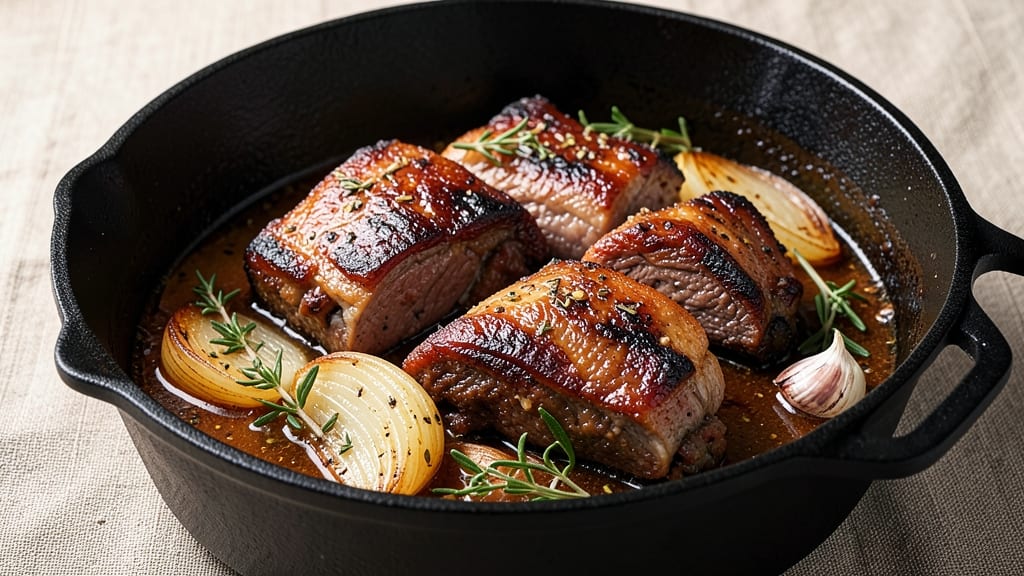
Mastering Gordon Ramsay-style braised beef short ribs transforms tough cuts into melt-in-your-mouth perfection through precise technique and patience. The method combines high-heat searing, deep flavor development, and slow cooking to create a dish that's rich, tender, and restaurant-worthy at home.
I've refined this recipe over years of testing, ensuring every step delivers the signature caramelized fond and velvety sauce Ramsay makes famous.
What sets this recipe apart is the combination of proper browning—essential for building flavor—and the slow braising process that breaks down collagen into gelatin, making the meat fall-apart tender. The red wine reduction adds depth, while aromatics like garlic, thyme, and bay leaf create layers of complexity.
This isn't just braised beef; it's a technique that elevates simple ingredients into something extraordinary.
By the time you serve this dish, you'll have perfectly seared short ribs with a glossy, caramelized crust and a sauce so rich it coats every bite. The texture is what makes it unforgettable: tender yet firm, with a mouthfeel that's both satisfying and elegant.
Serve with creamy mashed potatoes or roasted root vegetables to complete the meal.
This recipe delivers professional results without requiring advanced skills—just attention to detail and time. The slow cooking makes it ideal for weekends or meal prep, while the deep flavors ensure it's worth the effort. Let's get started on creating a dish that will impress even the most discerning palates.
Ingredients for gordon ramsay braised beef short ribs
Precision-cut beef and aromatic herbs form the foundation of this restaurant-quality braise.
| Ingredient | Amount | Notes |
|---|---|---|
| Beef Short Ribs 🥩 | 4 lb | Bone-in, 2-3 inches thick |
| Extra-Virgin Olive Oil 🫒 | ½ cup | High-quality, fruity variety |
| Yellow Onion 🧅 | 1 whole | Diced, medium size |
| Garlic Cloves 🧄 | 8 cloves | Peeled, smashed |
| Fresh Thyme 🌿 | ¼ cup | Stems removed, chopped |
| Fresh Rosemary 🌿 | ¼ cup | Needles only, chopped |
| Bay Leaves 🍃 | 2 whole | Dried, standard size |
| Dry Red Wine 🍷 | 1 cup | Bold, full-bodied |
| Beef Broth 💧 | 2 cups | Homemade or high-quality |
| Tomato Paste 🍅 | 2 tbsp | Smooth, unsweetened |
| Dijon Mustard 🍯 | 1 tbsp | High-quality, grainy |
| Kosher Salt 🧂 | 2 tsp | Diamond Crystal preferred |
| Freshly Ground Black Pepper 🌶️ | 1 tsp | Coarse grind |
| All-Purpose Flour 🌾 | 2 tbsp | For dusting |
The beef short ribs are non-negotiable—look for bone-in cuts with good marbling at your butcher or specialty grocer like Whole Foods or D'Artagnan. Thickness matters: 2-3 inches ensures proper searing and slow cooking. If your butcher doesn't have them pre-cut, request French-cut ribs (rib bones removed) for easier handling. The wine should be bold and dry—Cabernet Sauvignon or Merlot work best. For herbs, fresh is essential: dried thyme and rosemary won't deliver the same depth of flavor. The tomato paste? San Marzano is the gold standard, but any high-quality brand will work. If you're short on time, the Dijon mustard can be swapped for a teaspoon of whole-grain mustard powder mixed with water.
No red wine? Substitute with beef broth and a splash of balsamic vinegar—it adds complexity without altering the technique. Fresh herbs wilt during braising, so double the amount of dried herbs if substituting, but remember dried lacks the same aromatic punch. The flour isn't for thickening—it's for dusting the ribs before searing to create that signature caramelized crust. If you're concerned about gluten, omit it entirely; the sauce will still develop richness from the meat's natural juices. For the beef broth, homemade is ideal, but Kitchen Basics or Pacific Foods brands deliver professional results. The key is high-quality, low-sodium—you'll be adding salt later.
Store any unused beef broth in the fridge for up to 1 week or freeze for 6 months. The fresh herbs should be wrapped in damp paper towels and sealed in a bag—keeps them vibrant for 5-7 days. For the ribs, if you're not cooking them immediately, pat them dry and store in the fridge for up to 2 days or freeze for 3 months. The caramelized fond is best used immediately, but you can scrape it into a jar with a splash of broth and freeze for up to 1 month. Reheat gently on the stove, adding a little water to loosen the fond before reducing. This braise tastes even better the next day as flavors meld—plan accordingly.
Why You'll Love This Recipe
- One-Pan Magic: I swear by this recipe when I don’t want to scrub three dishes. The Dutch oven does all the heavy lifting—sear, braise, reduce—while I sip that red wine (the 1 cup you’ll use) and pretend I’m in a Parisian bistro. Minimal chopping, zero fuss, and the ribs practically cook themselves after the initial sear.
- Fond Obsession: That caramelized sauce clinging to the ribs? Chef’s kiss. The moment you reduce the braising liquid by half, you’re left with a glossy, umami-packed glaze that turns every bite into a flavor explosion. The thyme and rosemary (0.25 cup each) infuse the sauce so deeply, it’s like the herbs melted into the meat itself.
- Weeknight Crowd-Pleaser: This isn’t just a Sunday special—it’s my go-to for game nights or when friends drop by unannounced. The ribs feed four generously, and the leftovers? Even better the next day. (Between us, I’ve reheated them three times and still crave the tender, saucy goodness.)
- Budget-Friendly Luxury: Beef short ribs might sound fancy, but this recipe stretches every ingredient. The 4 lb bone-in ribs give you more meat than you’d expect, and the aromatics (onion, garlic, herbs) add depth without breaking the bank. Plus, the beef broth you don’t use keeps for a week—perfect for soups or future braises. No waste, all flavor.
Step-by-step instructions for braised beef short ribs
This method delivers melt-in-your-mouth tenderness with a deep, caramelized fond - the signature of Ramsay's approach.
Sear the Short Ribs to Develop Deep Flavor
Pat the 4 lb beef short ribs completely dry with paper towels - moisture is the enemy of proper searing. Heat a heavy Dutch oven over medium-high heat until very hot, then add 0.5 cup extra-virgin olive oil. Working in batches if needed, place the ribs bone-side down and sear undisturbed for 5-7 minutes until deeply browned on one side. Flip and repeat on the other side.
This initial searing creates the Maillard reaction that builds complex flavors. I press down gently on the ribs during the first minute to prevent curling and ensure even contact with the pan. Don't rush this step - properly seared ribs will have a rich, caramelized crust that forms the foundation of your braise.
Build the Aromatic Base and Deglaze
Remove the seared ribs from the pot and set aside. In the same Dutch oven, add 1 whole yellow onion and cook for 5 minutes until softened. Add 8 cloves garlic cloves, 0.25 cup fresh thyme, 0.25 cup fresh rosemary, and 2 whole bay leaves, stirring for 1 minute until fragrant.
Stir in 2 tbsp tomato paste and cook for 2 minutes until it darkens slightly. This step develops the base flavors that will infuse the beef. Immediately pour in 1 cup dry red wine, scraping up all the browned bits from the bottom with a wooden spoon. Let this reduce by half - you'll know it's ready when the liquid clings to the back of a spoon.
Create the Braising Liquid and Return the Ribs
Add 2 cups beef broth, 1 tbsp Dijon mustard, 2 tsp kosher salt, and 1 tsp freshly ground black pepper to the pot. Return the seared ribs to the Dutch oven, bone-side up. The ribs should be about 2 inches submerged in the liquid - if not, add a splash of water or broth.
Bring to a gentle simmer, then cover tightly with a lid. The key here is patience - braising requires 2.5 to 3 hours on low heat until the meat is fork-tender. I like to check the ribs after 2 hours - they're ready when they slide off the bone easily and the meat reaches 205°F internally. The liquid should have reduced significantly but still coat the ribs.
Finish with the Caramelized Fond
Remove the ribs from the braising liquid and set aside on a plate. Place the Dutch oven over medium-high heat and reduce the braising liquid by half - this concentrated sauce is what creates the signature fond. Skim off any excess fat that rises to the surface.
Return the ribs to the pot and spoon the reduced sauce over them. Let everything heat through for 2-3 minutes until the ribs are coated in this rich, glossy sauce. The fond should cling beautifully to the meat, creating that perfect balance of tender beef and deep, caramelized flavors.
Pro Tips For Making Gordon Ramsay Braised Beef Short Ribs
- Press for Crust: That first minute when you sear the ribs is when the magic happens—press down hard with a spatula to flatten any bulges. I used to skip this and end up with patchy browning, so now I treat it like a stubborn lid: force it flat. The goal is even contact with the pan, not just pretty sear marks.
- Smash the Garlic: Don’t just peel those 8 cloves—smash them with the flat side of your knife first. This releases more flavor and prevents them from floating intact in the wine. I learned this after finding whole garlic cloves in my braise, and now my sauce tastes like it actually has garlic in it.
- Reduce Wine Slowly: When you pour in the 1 cup dry red wine, walk away for 3-4 minutes instead of hovering. The wine needs time to reduce by half—rushing it turns the sauce into a thin, vinegary mess. I used to stir constantly, and the liquid would never concentrate properly. Let it do its thing.
- Skim the Fat: After braising, skim the fat from the reduced sauce while it’s still hot—don’t wait. A slotted spoon works best, and trust me, you’ll regret leaving it. That excess fat makes the fond greasy instead of glossy. I now do this right after removing the ribs, and the sauce clings like silk.
Creative variations of these flavors
French-Inspired Red Wine Braise
For a more refined touch, use dry Bordeaux red wine instead of your standard Cabernet. The higher acidity cuts through the richness beautifully. I add 1 sprig of fresh tarragon along with the thyme and rosemary for an authentic French bistro flavor.
Finish with a splash of 1 tsp cognac when deglazing to add depth. 🍷
Asian-Inspired Five-Spice Braise
Swap the red wine for 2 cups beef broth and add 1 tbsp Chinese five-spice powder along with the salt and pepper. Include 1-inch ginger, 1 star anise pod, and 1 tbsp soy sauce to the braising liquid.
The five-spice adds warmth while the ginger brightens the dish. Serve with jasmine rice for a fusion twist.
Smoky Chipotle Version
Infuse the braising liquid with smoky depth by adding 2 chipotle peppers in adobo sauce (minced) along with the tomato paste. Use 1 cup beef broth instead of red wine and add 1 tsp ground cumin for earthiness.
The chipotle adds a subtle heat that pairs perfectly with the rich beef. Garnish with fresh cilantro before serving.
Creamy Mushroom Enhancement
For a luxurious finish, stir in 1 cup sliced wild mushrooms (cremini or shiitake) along with the onions. After braising, whisk in ½ cup heavy cream with the reduced sauce for a velvety texture. The mushrooms add umami that complements the beef beautifully. 🍄
Slow Cooker Adaptation
Transform this into a hands-off version by searing the ribs as directed, then transferring everything to a 6-quart slow cooker. Cook on low for 8 hours or high for 5 hours.
The slow cooker maintains moisture while developing deep flavors. Finish by reducing the sauce on the stovetop before serving.
Spicy Cajun Twist
Add 1 tbsp Cajun seasoning (like Tony Chachere's) when searing the ribs, and include 1 jalapeño pepper (seeded and sliced) with the onions. Use 1 cup chicken broth instead of red wine for a lighter base.
The Cajun spices bring bold, spicy heat that contrasts wonderfully with the tender beef. Serve with cornbread for a Southern-inspired meal.
Nutrition facts
Frequently asked questions
Why do I need to sear the short ribs before braising?
The high-heat sear creates the Maillard reaction, which develops deep, caramelized flavors in the crust. This step is crucial for building the rich fond that Ramsay's method relies on. Skipping it results in bland, watery beef instead of tender, flavor-packed meat.
Can I use bone-in or boneless short ribs for this recipe?
Bone-in ribs are traditional and add flavor, but boneless work too—just reduce braising time by 30 minutes. Bone-in ribs need 2.5-3 hours while boneless reach tenderness in 2-2.5 hours. The bone also helps stabilize the meat during cooking.
What's the best way to store leftovers?
Let the ribs cool completely, then store in an airtight container with some braising liquid. They keep for 3-4 days in the fridge or 3 months frozen. Reheat gently in the sauce on low heat to maintain moisture. The flavors actually improve overnight!
My ribs aren't tender enough after 3 hours. What went wrong?
Check your heat level—braising requires low and slow cooking. If your oven runs hot, reduce to 275°F instead of 300°F. Also verify the ribs were fully submerged in liquid. If they're still tough, return them to the pot with extra broth and cook another 30-60 minutes.
How do I make this dish ahead of time for a dinner party?
Prepare everything up to the braising step, then refrigerate the seared ribs and aromatics overnight. On serving day, complete the braise and keep warm in a 200°F oven while you finish other dishes. The slow cooking makes it perfect for meal prep—just reheat gently before serving.