
Appetizers
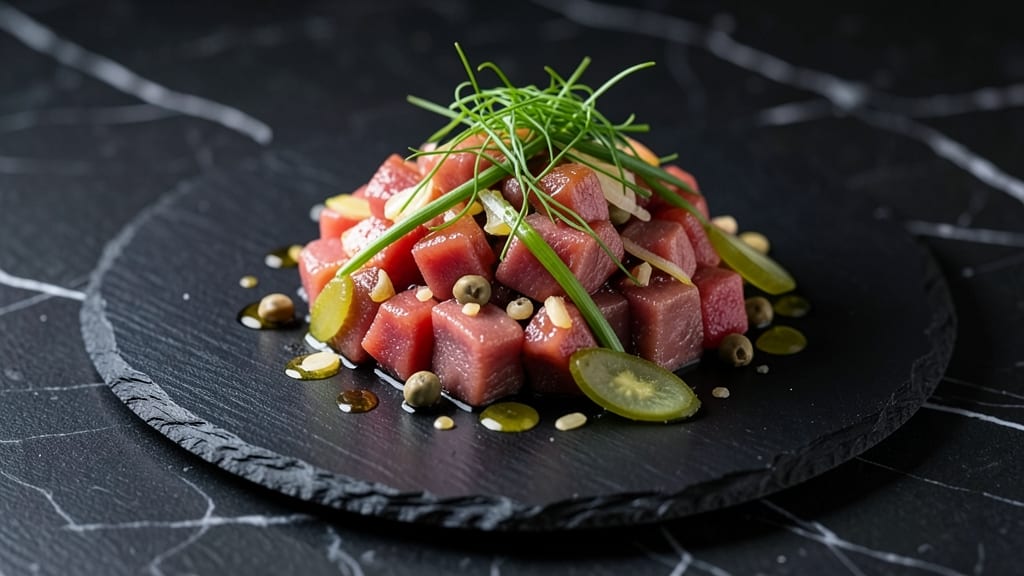
Gordon Ramsay's beef tartare recipe transforms raw beef into a perfect culinary masterpiece with its precise seasoning balance and restaurant-quality texture. This dish requires careful handling, but the result is a harmonious blend of tender beef, rich flavors, and elegant presentation that rivals any high-end restaurant.
The secret lies in using only the finest cuts and mastering the mincing technique to achieve that signature velvety consistency.
What sets this tartare apart is its foolproof method for balancing bold flavors without overpowering the natural taste of the beef. We'll cover every step—from selecting the right cut to achieving the ideal seasoning blend—while emphasizing critical food safety precautions for handling raw meat.
The dish pairs beautifully with traditional accompaniments like toasted bread, capers, and a perfectly runny egg yolk, creating a symphony of textures and tastes.
The final result is a dish that's both visually stunning and deeply satisfying—crisp edges on the toasted bread contrast with the tender, finely minced beef, while the egg yolk adds a luxurious richness.
This recipe delivers professional-quality results at home, proving that raw meat can be transformed into something extraordinary with the right technique and attention to detail.
Whether you're preparing for an intimate dinner or impressing guests, this beef tartare recipe will elevate your culinary skills while maintaining the elegance of classic French cuisine. Let's get started on creating this masterpiece in your own kitchen.
Ingredients for gordon ramsay beef tartare
Only the finest cuts and precise seasonings transform raw beef into restaurant-quality tartare.
| Ingredient | Amount | Notes |
|---|---|---|
| Beef Tenderloin 🥩 | 1 ½ lb | Center-cut, trimmed of fat and silver skin |
| Extra-Virgin Olive Oil 🫒 | ½ cup | High-quality, fruity, cold-pressed |
| Capers 🫒 | 2 tbsp | Nonpareils, rinsed and drained |
| Shallots 🧅 | 3 whole | Finely minced, about 2 tbsp |
| Cornichons 🥒 | 4 whole | Chopped, about 2 tbsp |
| Fresh Chives 🌿 | 2 tbsp | Finely chopped, stems and leaves |
| Diamond Crystal Kosher Salt 🧂 | 1 tsp | Finely ground, sea salt preferred |
| Freshly Ground Black Pepper 🌶️ | ½ tsp | Coarsely ground, freshly cracked |
| Freshly Squeezed Lemon Juice 🍋 | 1 tbsp | From organic Meyer lemons |
| Unsalted Butter 🧈 | 2 tbsp | Cold, cubed, for finishing |
| Large Egg Yolks 🥚 | 2 whole | Fresh, room temperature |
| Toasted Baguette Slices 🍞 | 4 whole | Crusty, lightly buttered |
| Ice-Cold Water 💧 | ½ cup | For rinsing beef between mincing |
The beef selection is non-negotiable—center-cut tenderloin delivers that signature tenderness. Whole Foods Market or specialty butchers carry the best, but standard grocery stores often stock it too. Look for vibrant color and minimal marbling; trim any visible fat or silver skin before mincing. The cold chain is critical—keep the beef refrigerated until ready to use, and work in a clean, sanitized space. For the olive oil, California Extra Virgin brands like Corto or Colavita elevate the dish with their rich, fruity profiles. Capers should be nonpareils—the smaller size distributes flavor evenly without overpowering. Cornichons add brightness, so choose the small, crisp variety available at Whole Foods or French markets.
No capers? Pickled green olives work in a pinch, but reduce the amount to 1 tbsp to avoid saltiness. Shallots can be swapped for red onion (finely minced), but they add a sharper bite. Fresh chives are ideal, but dried chives at half the amount suffice if necessary. The lemon juice should be freshly squeezed—bottled juice lacks brightness. For the egg yolks, room temperature is crucial; they should be perfectly runny when cooked. If you're concerned about raw eggs, use pasteurized yolks instead. The butter should be cold and cubed—this creates those signature crispy edges when toasted. For a vegetarian twist, high-quality seitan can replace beef, though texture will differ.
The beef must be handled with gloved hands and kept cold throughout—never leave it at room temperature for more than 20 minutes. Store the minced beef in an airtight container lined with plastic wrap, pressing it directly against the beef to prevent oxidation. The finished tartare keeps for up to 2 days in the fridge, though the egg yolks should be added just before serving. For presentation, arrange the tartare on a chilled platter and garnish with the butter cubes—toss them in the air and catch them on the tartare for dramatic flair. The baguette should be toasted fresh; pre-sliced bread loses crispness quickly. Serve immediately for the best texture and flavor balance.
Why You'll Love This Recipe
- I’ll be real: this tartare is my go-to for when I’m hosting last-minute. The beef and seasonings (those briny capers and sharp cornichons) stay fresh for two days—just hold off on the egg yolks until serving. Toss in the yolks and butter right before guests arrive, and suddenly you’ve got restaurant-worthy flavor without the stress.
- Here’s the secret: beef tenderloin is pricey, but you’re using the entire 1.5 lb for one dish. No scraps, no waste—just pure, luxurious flavor. And the rest? Olive oil, eggs, baguette—all pantry staples that stretch. It’s fancy enough to feel special, but the ingredients won’t break the bank if you’re smart about it.
Step-by-step instructions for gordon Ramsay beef tartare
Mastering this dish requires precision—every cut, every ingredient, every moment matters.
Prepare the Beef Tenderloin for Perfect Texture
Begin by rinsing the 1.5 lb beef tenderloin under 0.5 cup ice-cold water to remove any surface impurities. Pat it thoroughly dry with paper towels—this ensures a clean, professional texture. Place the beef in the freezer for 15 minutes to firm it up slightly, making it easier to handle and dice uniformly.
Remove the beef from the freezer and trim off any remaining fat or silver skin using a sharp chef's knife. For the finest texture, I recommend using a mandoline set to 1/8-inch thickness to create delicate slices. Work quickly to maintain the cold temperature, which preserves the meat's integrity. Arrange the slices on a plate and cover with plastic wrap to keep them chilled until ready to use.
Finely Dice and Season the Beef
Using the same mandoline or a very sharp knife, carefully dice the chilled beef slices into 1/4-inch cubes. The goal is to achieve an even, restaurant-quality texture—no large chunks should remain. Place the diced beef in a large mixing bowl and set aside.
In a small bowl, combine the 2 tbsp capers, 3 whole minced shallots, 4 whole chopped cornichons, 2 tbsp finely chopped fresh chives, 1 tsp diamond crystal kosher salt, and 0.5 tsp freshly ground black pepper. Sprinkle this mixture evenly over the diced beef, ensuring every piece is coated. Gently fold with a rubber spatula to distribute the seasoning uniformly. Avoid overmixing, as this can break down the meat fibers prematurely.
Incorporate the Olive Oil and Lemon Juice
Drizzle 0.5 cup extra-virgin olive oil over the seasoned beef in a slow, steady stream. Using the rubber spatula, gently fold the oil into the mixture until fully incorporated. This step is critical—it coats each piece of beef, enhancing flavor and moisture while preventing dryness.
Add 1 tbsp freshly squeezed lemon juice and continue folding until the beef is uniformly moistened. The acidity of the lemon juice brightens the dish, balancing the richness of the beef and olive oil. Taste the mixture and adjust seasoning if needed, adding a pinch more salt or pepper as necessary. The tartare should be vibrant, well-seasoned, and just slightly glossy from the oil.
Create the Classic Egg Yolk and Butter Finishing Sauce
In a small, chilled bowl, whisk together the 2 whole large egg yolks and 2 tbsp unsalted butter until smooth and fully combined. The mixture should be pale yellow and slightly thickened. Place this bowl in an ice bath to keep it chilled while you prepare the tartare for serving.
Just before serving, gently fold the egg yolk and butter mixture into the beef tartare. This step adds a luxurious creaminess and richness that elevates the dish. The cold temperature of the tartare helps stabilize the egg yolks, preventing them from scrambling. Fold just until combined—overmixing can make the texture too dense.
Serve on Toasted Baguette Slices
Toast the 4 whole toasted baguette slices lightly in a dry skillet over medium heat until golden and crisp. Spread a generous portion of the beef tartare onto each slice, mounding it slightly in the center. The toasted baguette provides the perfect crunchy base to contrast the silky texture of the tartare.
Serve immediately, ensuring each portion is garnished with an additional sprinkle of freshly chopped chives and a pinch of freshly ground black pepper. The dish should be vibrant, perfectly seasoned, and served at room temperature for the best texture and flavor. Pair with a crisp white wine or a dry martini for an authentic dining experience.
Pro Tips For Making Gordon Ramsay Beef Tartare
- Freeze the Beef First: That 15-minute chill in the freezer isn’t optional—it turns the tenderloin from squishy to handleable, so you can dice it into those perfect 1/4-inch cubes without turning them into beef paste. I learned this the hard way when my first batch turned into a mushy mess.
- Rinse with Ice Water: Don’t just rinse the beef under cold water—use the full 0.5 cup of ice-cold water from the recipe. It’s not just about cleaning; the shock of the ice keeps the meat firm while you work, so your slices stay neat and your texture stays restaurant-worthy.
- Fold, Don’t Stir: When mixing in the olive oil and lemon juice, use a rubber spatula and fold gently—like you’re tucking in a blanket, not beating egg whites. Overmixing turns the beef into a dense, dry clump, and nobody wants that. Trust the process.
- Whisk Egg Yolks Cold: Whisk those 2 egg yolks in a chilled bowl, then pop the whole thing in an ice bath while you finish the tartare. Warm yolks scramble when they hit the cold beef, and nobody wants scrambled eggs in their tartare—just that silky, luxurious finish.
Essential equipment for perfect results
Precision Cutting Tools
Your knife game makes or breaks tartare texture. I swear by a sharp chef's knife (like the Wüsthof Ikon) for hand-chopping, but a mandoline set to 1/8-inch thickness is my secret weapon for that restaurant-quality consistency.
The 1.5 lb beef tenderloin needs to be sliced first, then diced to 1/4-inch cubes—never rush this step. For extra precision, I use a sharpener like the Work Sharp to maintain that razor edge. 🔪
Food Safety Essentials
Raw beef demands serious safety gear. Always work on a sanitized cutting board (I use polypropylene boards from OXO) and keep everything below 40°F. Wear food-safe gloves—I prefer nitrile gloves from Uline—and never reuse cutting surfaces.
A digital meat thermometer (like the ThermoWorks Thermapen) helps verify your beef stays cold. The 0.5 cup ice-cold water rinse before mincing is non-negotiable for cleanliness. ❄️
Mixing & Storage Containers
A stainless steel mixing bowl (like the Ziploc Stainless Steel) keeps your tartare chilled while you work. For storage, I line glass Pyrex containers with plastic wrap pressed directly against the beef to prevent oxidation.
The 13 ingredients all need to be measured precisely, so a gram scale (like the Escali Primo) ensures perfect proportions. Never store tartare in metal containers—they can react with the lemon juice and olive oil. 🥫
Egg Yolk Prep Tools
The egg yolk and butter finishing sauce requires chilled bowls. I use small glass ramekins placed in an ice bath to keep them stable. A whisk (like the Macalla brand) ensures smooth emulsification.
For plating, tweezers help place the 2 tbsp cold butter cubes dramatically on top. Keep a small bowl of ice water nearby to refresh your hands between handling raw beef and eggs. 🥚
Toasted Baguette Setup
Toast your 4 baguette slices in a dry skillet over medium heat until golden. A small offset spatula helps flip them evenly. For extra crispiness, I use a toaster oven set to 375°F for 3-4 minutes.
Keep the toasted bread in a warm oven (200°F) until serving to maintain crunch. A small plate with extra chives and black pepper nearby lets guests customize their garnish. 🍞
Garnish Presentation
For that Michelin-star finish, I use tweezers to place chive sprigs and butter cubes artfully. A small bowl of lemon wedges adds brightness, while black pepper mills let diners adjust spice levels.
For dramatic flair, toss butter cubes in the air and catch them on the tartare—it’s a chef’s classic. Keep everything chilled until the last moment for perfect texture. ✨
Nutrition facts
Frequently asked questions
Can I use a different cut of beef for tartare?
Gordon Ramsay recommends center-cut beef tenderloin for its tenderness, but you can use filet mignon or strip steak in a pinch. Avoid fatty cuts like ribeye—they won't yield the same delicate texture. Trim all visible fat and silver skin first, and keep the beef below 40°F throughout the process to maintain safety and quality.
How do I prevent the egg yolks from scrambling?
Keep everything ice-cold—use chilled bowls and an ice bath while whisking the yolks with butter. Fold the mixture into the tartare just before serving and avoid overmixing. The cold temperature stabilizes the yolks, preventing them from cooking. If they start to thicken, place the bowl back in the ice bath immediately.
What if I don't have capers or cornichons?
Substitute 2 tbsp pickled green olives for capers and 1 tbsp finely chopped pickles for cornichons. Reduce salt by half if using olives, as they're already briny. For brightness, add an extra 1 tbsp lemon juice to compensate for the missing acidity. The flavor profile will differ slightly but still deliver a delicious result.
Can I make beef tartare ahead of time?
Prepare the tartare mixture up to 2 days ahead and store it in an airtight container lined with plastic wrap pressed directly against the beef. Add the egg yolks and butter right before serving to maintain texture. Keep everything refrigerated until the last moment to ensure food safety and optimal flavor.
What's the best way to toast the baguette slices?
Toast the bread in a dry skillet over medium heat for 1-2 minutes per side until golden and crisp. For extra crunch, use a toaster oven at 375°F for 3-4 minutes. Keep the toasted slices warm in a 200°F oven until serving to prevent sogginess. Lightly butter the warm bread just before adding the tartare for that classic touch.