
Main Courses
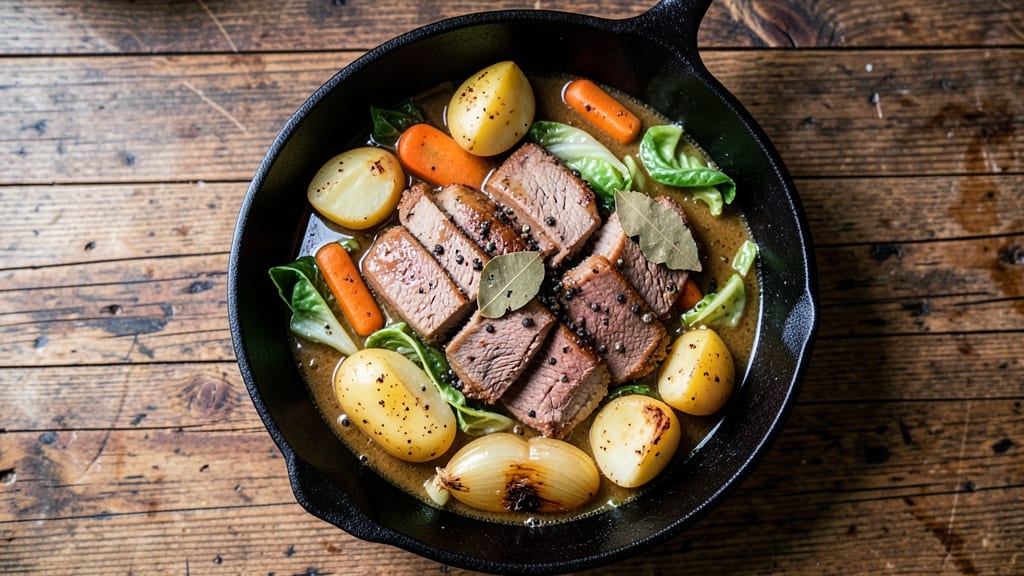
Martha Stewart’s corned beef and cabbage delivers the slow-cooked richness and tender perfection of a St. Patrick’s Day classic. This recipe transforms tough cuts into melt-in-your-mouth beef while balancing briny cabbage with aromatic spices—just like the Irish-American tradition promises.
The secret lies in hours of gentle simmering, where flavors meld into a harmonious, deeply satisfying dish that feels like a hug in a bowl.
What sets this version apart is Martha’s precise method: a well-seasoned corned beef brisket simmered until fork-tender, paired with cabbage that softens just enough to absorb the savory broth. The slow cook transforms simple ingredients—potatoes, carrots, and onions—into hearty sides that complement the star.
Every bite delivers the perfect balance of saltiness, sweetness, and earthy depth, making it a dish worth the wait.
By the time the pot bubbles over with golden, aromatic broth, you’ll have a restaurant-quality meal that’s ready to serve with crusty bread or buttery mashed potatoes.
The leftovers? Even better the next day, as flavors deepen and the beef becomes impossibly tender. This isn’t just dinner—it’s a celebration of tradition, slow-cooked to perfection.
For those who love customization, adjust the seasoning blend or add a splash of stout beer to the broth for extra depth. The recipe scales effortlessly, whether feeding a family or hosting a gathering. Let’s bring this classic to your table with confidence—one slow-cooked bite at a time.
Ingredients for corned beef and cabbage martha stewart
Classic slow-cooked richness begins with these hearty, traditional ingredients—each playing its part in Martha’s St. Patrick’s Day masterpiece.
| Ingredient | Amount | Notes |
|---|---|---|
| Corned Beef Brisket 🥩 | 4 lb | Pre-salted, 4-5 lb cut preferred |
| Green Cabbage 🥬 | 2 lb | Green or purple, 1/2 head each |
| Russet Potatoes 🥔 | 2 lb | Medium size, peeled and quartered |
| Carrots 🥕 | 1 lb | Whole, scrubbed, cut into 2-inch pieces |
| Yellow Onions 🧅 | 2 whole | Medium size, peeled and halved |
| Bay Leaves 🌿 | 2 whole | Dried, standard size |
| Black Peppercorns 🌶️ | 1 tbsp | Whole, lightly crushed |
| Allspice Berries 🍃 | 1 tsp | Ground or whole, lightly crushed |
| Mustard Seeds 🌼 | 1 tsp | Yellow or brown, whole |
| Apple Cider Vinegar 🍎 | ½ cup | For broth acidity |
| Water 💧 | 8 cups | For initial broth |
| Dark Beer 🍺 | 1 cup | Stout or porter, optional |
| Fresh Parsley 🌿 | ¼ cup | Chopped, for garnish |
| Kosher Salt 🧂 | 2 tbsp | For seasoning broth |
The corned beef brisket is the centerpiece, and quality matters here. Seek out a 4-5 lb cut from your butcher—look for good marbling and a deep red color rather than pale or grayish meat. Costco or Whole Foods often carry pre-salted briskets, but if you’re buying unsalted, plan to cure it overnight with salt, peppercorns, and allspice. For the cabbage, green or purple varieties work best—they hold their texture longer than savoy. Avoid pre-shredded; whole heads keep better and cook more evenly. The potatoes should be russet or Yukon Gold—their waxy texture prevents them from turning mushy during the long simmer.
No corned beef brisket? A 4-5 lb beef chuck roast works in a pinch—just increase the salt and allspice by 50% since it’s unsalted. Swap the beer for 1 cup beef broth if you’re avoiding alcohol, but the stout adds depth that’s hard to replicate. For the cabbage, savoy cabbage (if available) adds a delightful texture, though green or purple will suffice. The apple cider vinegar is key—it brightens the broth and balances the richness. If you’re short on time, pre-cut frozen potatoes and carrots save chopping, though fresh always tastes better. The mustard seeds can be omitted if you dislike their bite, but they add a subtle complexity that’s worth keeping.
This dish tastes even better the next day, so double the batch if you’re feeding a crowd. Store leftovers in the broth to keep them moist—4-5 days in the fridge or 3 months in the freezer. For reheating, simmer gently on the stove or microwave in 30-second bursts, stirring between each. The cabbage will soften further, absorbing even more of that golden, aromatic broth. Garnish with fresh parsley just before serving—it adds a pop of color and freshness that cuts through the richness. The beer-infused broth freezes beautifully, so save it for future soups or stews.
Why You'll Love This Recipe
- One-Pot Magic: I swear by this recipe when I’m too tired to scrub pots—just toss everything in one deep skillet, cover it, and let it simmer. The corned beef brisket practically melts into tender perfection while the potatoes and cabbage soak up all that salty, savory goodness without a single extra dish.
- Deep, Savory Crunch: That first bite? The crispy outer layer of the potatoes gives way to the brisket’s rich, peppery depth, and the cabbage stays just firm enough to hold its shape. Honestly, the way the onions caramelize on the bottom—chef’s kiss—makes this taste like a restaurant dish, not a weeknight meal.
- Leftovers for Days: Between us, this stew only gets better after the first day. The flavors meld into something even more cohesive, and I’ll often reheat portions for lunch or freeze half for when I’m too lazy to cook. (Yes, even on a Tuesday night.) The brisket stays juicy, and the cabbage doesn’t turn to mush—it’s my go-to for lazy afternoons.
- Budget-Friendly Crowd-Pleaser: A whole corned beef brisket feeds six for under $20, and the veggies stretch it even further. I’ve made this for game days, family dinners, and even potlucks—everyone asks for the recipe, and my wallet thanks me for it. Plus, the cabbage and carrots use up whatever’s left in the crisper, so nothing goes to waste.
Step-by-step instructions for Martha Stewart’s slow-cooked corned beef and cabbage
Here’s the method that delivers tender beef, perfectly cooked vegetables, and richly flavored broth every time.
Prepare the Corned Beef and Vegetables
Rinse the 4 lb Corned Beef Brisket under cold water to remove any surface cure, then place it in a large stockpot. Add the 2 whole Yellow Onions, peeled and halved, along with the 2 whole Bay Leaves and 1 tbsp Black Peppercorns, lightly crushed. Pour in the 8 cups Water and bring to a boil over high heat. Once boiling, reduce to a gentle simmer and let the beef cook uncovered for 2 hours. This initial simmer helps tenderize the meat and extract deep flavors.
While the beef simmers, prepare the vegetables. Remove the 2 lb Green Cabbage from its core and cut into 6 wedges, leaving the leaves intact. Peel and quarter the 2 lb Russet Potatoes into 1-inch pieces. Scrub the 1 lb Carrots and cut them into 2-inch chunks. Set these aside—they’ll cook later in the broth.
Build the Flavor Base and Simmer
After the 2-hour simmer, carefully remove the Corned Beef Brisket from the pot and set it aside on a plate. Strain the cooking liquid through a fine-mesh sieve into a clean pot, discarding the solids. Return the broth to the heat and bring it to a rolling boil. Add the 0.5 cup Apple Cider Vinegar, 1 cup Dark Beer, 1 tsp Allspice Berries, 1 tsp Mustard Seeds, and 2 tbsp Kosher Salt, stirring to dissolve. This step deepens the broth’s complexity—don’t skip it.
Add the Green Cabbage wedges, Russet Potatoes, and Carrots to the pot. Return the Corned Beef Brisket to the broth, ensuring it’s fully submerged. Cover the pot and return it to a simmer over medium-low heat. Let it cook for 1.5 to 2 hours, or until the vegetables are fork-tender and the beef is easily shreddable with a fork. The broth should be rich and slightly reduced, coating the vegetables in a velvety sauce.
Rest and Garnish for Serving
Once the vegetables are tender, turn off the heat and let the stew rest for 15 minutes, covered. This resting period ensures the flavors meld and the broth thickens slightly. Use a slotted spoon to transfer the Corned Beef Brisket to a cutting board and shred it into large, bite-sized pieces with two forks. Return the shredded beef to the pot and stir gently to combine.
Taste the broth and adjust seasoning if needed—add a pinch of Kosher Salt if it’s bland or a splash of Apple Cider Vinegar for brightness. Ladle the stew into bowls and garnish each serving with 0.25 cup Fresh Parsley, chopped. The parsley adds a fresh contrast to the hearty, savory flavors. Serve immediately with crusty bread or buttered potatoes to soak up every last drop of that irresistible broth.
Pro Tips For Making Corned Beef And Cabbage Martha Stewart
- Rinse the Brisket: That pre-salted cure on corned beef is stubborn—give it a thorough cold-water rinse before starting. I used to skip this and ended up with a broth that tasted more like a salt lick than a stew.
- Crush Those Spices: Lightly crush the black peppercorns and allspice berries with the flat of a knife or mortar and pestle. Whole spices just float around like decorative pebbles—crushing them releases flavor into the broth where it belongs.
- Don’t Crowd the Pot: The cabbage wedges and potatoes need room to breathe. If you pack them in too tight, they’ll steam instead of simmer slowly in the rich broth. Toss them in one at a time, giving each piece a little space to soften properly.
- Save the Broth: That initial 2-hour simmer creates the foundation for the whole dish—don’t pour it down the drain when straining. The strained broth is what carries all the deep, savory flavors, so keep it all and build the second simmer from there.
Flavor customization for this corned beef and cabbage martha stewart
Spice Level Boost
For those who love heat, add ½ tsp cayenne pepper or 1 tsp smoked paprika to the broth during the final simmer. I also recommend tossing 1-2 sliced jalapeños into the pot with the vegetables—they’ll soften and infuse the broth with subtle fire.
For a smoky kick, swap ½ cup of the water for chipotle-infused beer (like Deschutes Brewery’s Black Butte Porter). 🌶️
Sweet and Tangy Twist
Balance the richness with sweet and tangy flavors by adding 2 tbsp brown sugar and 1 tbsp Dijon mustard to the broth during the final simmer. The sugar caramelizes slightly, while the mustard adds depth.
For extra brightness, stir in 2 tbsp apple cider vinegar at the end—this cuts through the fat beautifully. Garnish with thinly sliced apples or dried cranberries for a festive touch.
Herb Infusions
Swap the 2 whole bay leaves for 1 sprig fresh thyme and 1 sprig fresh rosemary for a fragrant, earthy aroma. I also love adding 1 tbsp fresh sage during the final hour of cooking—it adds a piney note that pairs perfectly with the beef.
For a Mediterranean twist, include ½ tsp dried oregano alongside the allspice berries. 🌿
Umami Depth
Elevate the dish with umami-rich additions like 2 slices of bacon (crisped and removed before serving) or 1 tbsp fish sauce stirred into the broth. For a vegetarian-friendly option, add 1 tbsp soy sauce or 2 tbsp Worcestershire sauce during the final simmer.
These ingredients add a savory complexity that makes the stew even more satisfying. 💫
Creamy Finish
For a luxurious finish, stir in ½ cup sour cream or ¼ cup crème fraîche just before serving. The creaminess contrasts beautifully with the tender beef and cabbage. For a lighter option, top each bowl with ¼ cup shredded Gruyère cheese and let it melt slightly over the heat.
This adds a nutty, cheesy richness without overwhelming the dish.
Vegetable Variations
Swap out the carrots for turnips or parsnips for a slightly sweeter, earthier flavor. Add ½ cup frozen peas during the final 15 minutes of cooking—they’ll brighten the dish with their freshness.
For a heartier stew, include ½ cup chopped kale or 1 cup chopped Brussels sprouts (trimmed and halved). These additions keep the dish vibrant and nutritious without sacrificing tradition. 🥕
Nutrition facts
Frequently asked questions
Why do you simmer the beef separately first?
This 2-hour head start tenderizes the tough brisket and extracts deep flavors into the broth. Skipping this step can leave the meat chewy—especially important for a 4 lb cut that needs extra time to break down. The initial simmer also removes excess surface salt, balancing the seasoning later.
Can I use a slow cooker instead of stovetop?
Follow the same steps but transfer everything to a 6-quart slow cooker after the initial beef simmer. Cook on low for 6-7 hours or high for 3-4 hours, adding the vegetables and broth at the start. The slow cooker’s gentle heat mimics the stovetop’s results perfectly.
What if my cabbage turns mushy?
Overcooking is the usual culprit. Remove the cabbage wedges when the potatoes are tender (1.5 hours max) and keep them warm separately. For extra structure, add them back to the pot just 15 minutes before serving. Purple cabbage holds up slightly better than green—swap if needed!
Is the beer really necessary?
No, but it adds malty depth that water can’t replicate. If omitting, use 1 cup beef broth instead. Stout or porter works best—avoid light beers. For non-alcoholic versions, swap for apple cider or extra broth. The apple cider vinegar remains essential for brightness.
How do I reheat leftovers without drying them out?
Simmer gently on the stove with 2-3 tbsp broth until heated through (10-15 minutes). Microwave in 30-second bursts, stirring between each, and cover with a damp paper towel. Never skip the broth—it keeps everything moist. Leftovers taste even better the next day!