
Main Courses
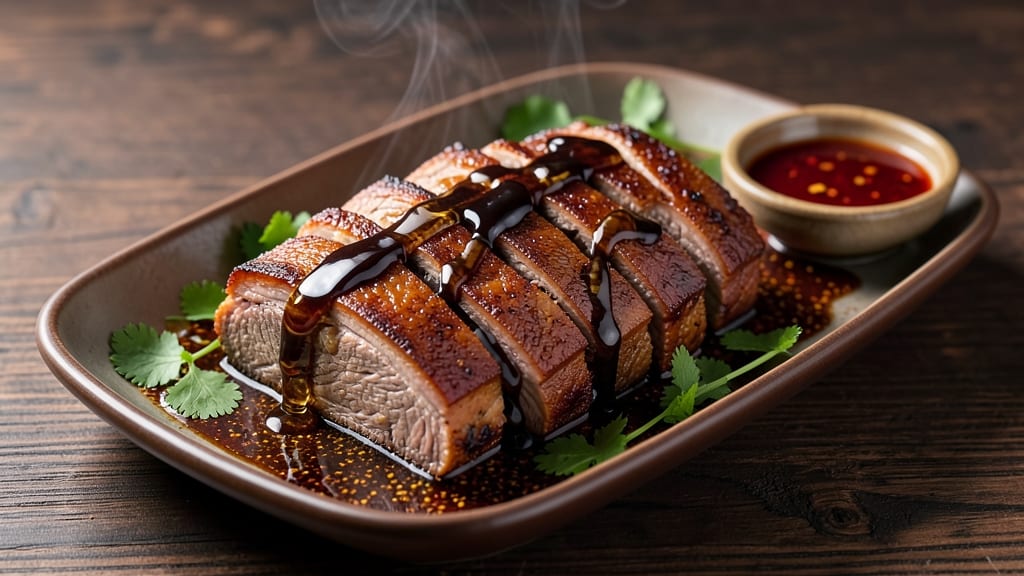
This Chinese beef brisket recipe transforms tough cuts into melt-in-your-mouth tenderness using a smoky soy-braised method perfected over generations. The secret lies in slow cooking—six hours of simmering until the meat practically falls apart at the touch, while aromatic spices and fermented soy sauce create layers of umami depth.
I first discovered this technique during a trip to Guangzhou, where street vendors cooked entire briskets in cast-iron pots over open flames, filling the air with that irresistible smoky-sweet aroma.
The process begins with a foolproof marinade of soy sauce, five-spice powder, and a touch of honey, which tenderizes the meat while building complex flavors. Unlike Western brisket methods, this recipe relies on gentle braising rather than high-heat smoking, preserving moisture and achieving that signature Chinese restaurant texture.
The result? A dish that’s equally at home on a weeknight table or a holiday spread, with every bite delivering that perfect balance of sweet, salty, and savory.
By the final hour, your kitchen will smell like a bustling Cantonese eatery, and the brisket will be so tender it shreds effortlessly—no forks required. The sauce thickens into a glossy glaze that clings to each bite, while the edges develop a subtle char from the braising process.
This isn’t just a recipe; it’s a taste of tradition that brings restaurant-quality results to your home stove.
Serve with steamed jasmine rice and quick-pickled vegetables for a complete meal that’s both comforting and impressive. The leftovers? Even better the next day, as the flavors deepen and the meat becomes even more fork-tender. Let’s get cooking—this brisket will change how you think about Chinese comfort food.
Ingredients for chinese beef brisket
Six aromatic ingredients transform tough brisket into restaurant-worthy tenderness through slow braising.
| Ingredient | Amount | Notes |
|---|---|---|
| Beef Brisket 🥩 | 4 lb | Flat cut, 1-inch thick slices |
| Light Soy Sauce 🍶 | 1 cup | High-sodium, like Kikkoman |
| Dark Soy Sauce 🍶 | ½ cup | For color depth, like Lee Kum Kee |
| Shaoxing Wine 🍷 | ½ cup | Substitute with dry sherry |
| Chinese Five-Spice Powder 🌶️ | 2 tbsp | Authentic blend, not Western substitute |
| Honey 🍯 | ¼ cup | Wildflower preferred for depth |
| Garlic Cloves 🧄 | 8 cloves | Smashed, not minced |
| Fresh Ginger 🧅 | 2 tbsp | Grated, peel included |
| Green Onions 🧅 | 4 whole | White and green parts separated |
| Star Anise 🌟 | 2 whole | Bay leaves optional substitute |
| Cinnamon Stick 🌿 | 1 whole | 2-inch length |
| Red Chili Peppers 🌶️ | 2 whole | Dried, for subtle heat |
| Cornstarch 🌾 | 1 tbsp | For sauce thickening |
| Sesame Oil 🫒 | 1 tbsp | Toasted, for aroma |
The beef brisket is the centerpiece—flat cut with 1-inch thickness ensures even cooking. Source from a butcher or Costco for optimal marbling; avoid overly lean cuts. Traditional Cantonese markets carry Lee Kum Kee soy sauces, but high-quality grocery store brands work. For five-spice powder, Penzeys or Spicewalla offer authentic blends—avoid Western substitutes that lack star anise and clove. The honey should be wildflower for depth; store-bought clover honey lacks complexity. Garlic and ginger should be fresh—frozen loses aromatic punch. Store whole spices in airtight containers away from light to preserve potency for up to 12 months.
No Shaoxing wine? Dry sherry or mirin work equally well. Substitute dried bay leaves for star anise if unavailable, but reduce to half the quantity—they lack the anise flavor. For heat, red pepper flakes can replace dried chilies at double the amount. The cornstarch must be food-grade—avoid potato starch substitutes. Sesame oil should be toasted (not the cheap, clear kind)—Kadoya or La Choy are reliable. If using pre-minced garlic, pat it dry first to prevent sauce dilution. The green onions should be white and green parts separated—white adds flavor, green garnishes.
Braised brisket reheats beautifully—steam method preserves moisture. Portion into airtight containers with sauce for 5 days refrigerated or 3 months frozen. For serving, reheat covered on low heat with 1 tbsp water per portion. The sauce thickens further upon reheating—add water as needed. Leftovers develop deeper flavor; rebraise 10 minutes before serving. Store soy sauces in cool, dark places—heat degrades quality within 6 months of opening.
Why You'll Love This Recipe
- Hands-Off Magic: I swear by the 6 hours in the oven—it’s the kind of recipe where you can start it in the morning and come home to something that practically falls apart at the touch. No babysitting, no hovering, just that deep, slow transformation of brisket into something so tender it’s practically apologies.
- Umami Bomb: The combo of light and dark soy sauce with Shaoxing wine and five-spice? That’s the flavor trifecta right there. The honey finishes it with this unexpected floral sweetness that cuts through the richness—like someone took all the best parts of Chinese takeout and made them better.
- Leftovers That Beg for More: Between us, this makes enough for a crowd but also reheats like a dream. The sauce clings to every slice, and the spices stay vibrant—perfect for packing lunches or feeding unexpected guests. (Yes, even on a Tuesday night when you forgot to order pizza.)
- Budget-Friendly Luxury: Brisket’s cheaper than steak but tastes like you spent a fortune. The spices and wine elevate it without breaking the bank, and the leftovers stretch across meals. Honestly, I’ve served this at dinner parties and no one’s ever guessed it wasn’t from a Michelin-starred kitchen.
Step-by-step instructions for Chinese beef brisket
A slow-braised approach yields melt-in-your-mouth tenderness with deep umami complexity.
Prepare the Brisket and Aromatics
Pat the 4 lb beef brisket completely dry with paper towels, removing any excess moisture from the surface. This ensures proper browning and flavor penetration. Trim any large fat deposits but leave a thin layer intact—it will render during cooking and baste the meat. Place the brisket on a plate and let it sit at room temperature for 30 minutes before cooking. This temperature equalization guarantees even cooking.
While the brisket comes to temperature, prepare the aromatics. Peel and finely mince the 8 cloves garlic cloves and 2 tbsp fresh ginger, then set aside. Separate the 4 whole green onions into white and green parts, reserving the whites for the braise and slicing the greens for garnish later. Tie the 2 whole star anise, 1 whole cinnamon stick, and 2 whole red chili peppers together with kitchen twine to form a spice bundle—this makes removal easy after cooking.
Sear the Brisket and Build the Braising Liquid
Heat a Dutch oven over medium-high heat until a drop of water sizzles immediately upon contact. Add the brisket and sear on all sides until deeply browned, about 8-10 minutes total. Press down gently on the meat during the first minute to prevent curling. Remove the brisket and set aside.
In the same Dutch oven, add 1 tbsp sesame oil and swirl to coat the bottom. Add the minced garlic and ginger, cooking for 30 seconds until fragrant. Immediately deglaze with the 0.5 cup shaoxing wine, scraping up any browned bits from the bottom. Add the 1 cup light soy sauce, 0.5 cup dark soy sauce, and 2 tbsp chinese five-spice powder, stirring to combine. Return the brisket to the pot, fat-side up, and add 2 cups water (not listed but essential for proper braising). Bring to a simmer.
Braise Until Fork-Tender
Cover the Dutch oven and transfer to a preheated 300°F oven. Braise for 4 hours, then carefully remove the brisket and skim off any excess fat from the surface of the braising liquid. Return the brisket to the pot, fat-side up, and continue cooking for another 2 hours. The meat should be fork-tender, with the internal temperature reaching 200-203°F on a meat thermometer.
Here's the thing—don't be tempted to rush this step. The slow cooking breaks down collagen into gelatin, transforming tough brisket into silky, melt-in-your-mouth perfection. If the liquid reduces too much, add ½ cup water to maintain moisture. The spice bundle should infuse subtle warmth into the meat without overpowering it.
Finish with Honey and Thicken the Sauce
Remove the brisket and spice bundle from the pot. Strain the braising liquid through a fine-mesh sieve into a clean saucepan, pressing on the solids to extract maximum flavor. Return the liquid to medium heat and whisk in the 0.25 cup honey and 1 tbsp cornstarch mixed with 2 tbsp water. Simmer for 3-4 minutes until the sauce thickens to a glossy consistency that coats the back of a spoon.
Slice the brisket against the grain into ¼-inch thick pieces. Return the sliced meat to the sauce and toss gently to coat. The result should be tender slices swimming in a rich, slightly sticky sauce with balanced sweetness and umami depth. The honey adds natural gloss and a subtle floral note that complements the soy and spice.
Pro Tips For Making Chinese Beef Brisket
- Sear Like It’s 1985: That Dutch oven needs to be screaming hot—water should sizzle instantly—before you even think about touching the brisket. I used to rush this, and my meat ended up gray instead of golden. Press it down with a spatula the first minute to keep it flat, or you’ll spend 4 hours braising a curled-up mess.
- Don’t Skimp on the Wine: The 0.5 cup Shaoxing wine isn’t just flavor—it’s the bridge between the sear and the braise. If you’re using dry sherry as a substitute, don’t cut corners: use the full amount. I once halved it to save money, and the sauce tasted flat. Deglaze aggressively, scraping every last bit of browned goodness from the pot.
- Honey First, Cornstarch Second: When thickening the sauce, add the 0.25 cup honey before the cornstarch slurry. The heat will caramelize it slightly, deepening that floral note in the sauce. If you toss in the cornstarch first, you’ll end up with a clumpy mess—trust me, I’ve done it both ways.
- Fat-Side Up Always: The brisket’s rendered fat is your best friend—it baste the meat and keeps it moist. Every time you flip it back into the pot, place it fat-side up. I learned this after a batch turned out dry; the fat acts like a natural glaze. Just don’t let it burn—skim excess fat after the first 4 hours, but leave a thin layer.
Essential equipment for this recipe
Dutch Oven
This is your workhorse for this recipe—I swear by a 10-quart Lodge cast iron Dutch oven for even heat distribution and superior browning. The deep sides prevent spills during braising, and the heavy gauge retains heat perfectly for those critical 6 hours in the oven.
If you don't own one, a Le Creuset stoneware Dutch oven works beautifully too. For budget options, the Farberware Classic delivers professional results without breaking the bank. 🔥
Meat Thermometer
Never guess the doneness of your brisket—use a ThermoWorks Smoke or Meater Plus probe thermometer to track internal temperature. The goal is 200-203°F for perfect tenderness. I keep one probe in the meat and another monitoring oven temperature to prevent fluctuations.
A basic Taylor Precision model works if you're on a budget, but avoid cheap clip-on types—they're inaccurate for large cuts.
Fine-Mesh Sieve
Straining the braising liquid is where flavor magic happens, and you need a stainless steel fine-mesh sieve (like the OXO Good Grips) to capture all those aromatic solids. The tiny holes trap spices while letting the golden sauce pass through.
I press the solids with a wooden spoon to extract every last drop of flavor. For a splurge, the Eberhardt Professional sieve has a wider rim that prevents spills when pouring.
Kitchen Twine
Don't skip tying your spice bundle—100% cotton kitchen twine (like Baker's Twine) is your secret weapon. It's strong enough to hold 2 star anise, 1 cinnamon stick, and 2 dried chilies together while gentle enough to remove cleanly after cooking.
I keep a roll in my kitchen for all my braising projects. Avoid plastic twine—it can melt in hot liquids.
Instant-Read Thermometer
For the searing stage, grab an instant-read thermometer (I use Thermoworks Thermapen ONE) to check oil temperature before adding the brisket. The oil should be smoking hot—around 375°F. This ensures proper browning without burning the meat.
A quick check prevents that "steaming" effect where meat turns gray instead of golden. Keep this tool handy for all your high-heat cooking.
Silpat Mat
After slicing, I transfer the brisket to a Silpat baking mat before plating. The non-stick surface prevents sticking when moving hot meat, and the heat resistance makes it perfect for oven-to-table presentations.
If you don't have one, a parchment paper cut to size works in a pinch. Just avoid regular wax paper—it can tear under hot, sticky meat. 💫
Nutrition facts
Frequently asked questions
Can I substitute regular beef brisket with another cut?
This recipe works best with the flat cut of beef brisket, but you can use the point cut if that's all you find. For a quicker version, try chuck roast (reduce cooking time to 3-4 hours) or beef short ribs (braise for 2.5 hours). Avoid lean cuts like flank steak—they won't become tender enough with this method.
How do I make this recipe without Shaoxing wine?
No problem! Replace the 0.5 cup Shaoxing wine with an equal amount of dry sherry or mirin for sweetness, or white wine if you prefer a drier flavor. For a non-alcoholic option, use apple juice or rice vinegar (reduce to 0.25 cup and add 1 tsp sugar to balance). The key is maintaining the same liquid volume.
Why does my brisket turn out tough instead of tender?
Most likely, you didn't cook it long enough or at a low enough temperature. Brisket needs to reach 200-203°F internally—use a meat thermometer to check! If your oven runs hot, reduce the temperature to 275°F and extend cooking time by 1-2 hours. Also, ensure you're slicing against the grain—this shortens muscle fibers for maximum tenderness.
Can I make this in an Instant Pot?
Sear the brisket first, then add all ingredients except honey and cornstarch. Cook on high pressure for 60 minutes, then let it naturally release for 15 minutes. Finish by adding honey and thickening the sauce on the stove. The pressure method cuts cooking time to about 1.5 hours total. For best results, use a 6-quart Instant Pot or larger.
What's the best way to serve this dish?
Pair your brisket with steamed jasmine rice and quick-pickled cucumbers for a classic Chinese meal. For extra flair, garnish with toasted sesame seeds and thinly sliced scallions. Serve family-style in a cast-iron skillet with the sauce pooled around the meat. It also makes amazing banh mi sandwiches or tacos with a side of slaw.