
Main Courses
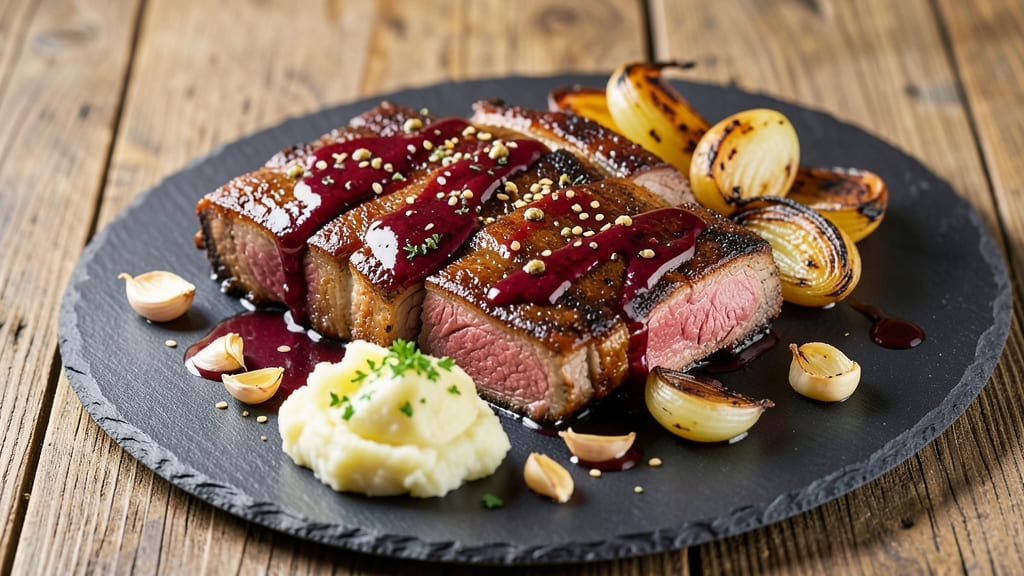
Transforming tough boneless beef shoulder ribs into melt-in-your-mouth perfection is where slow-braising meets culinary magic. 🌟 After years of perfecting this technique—especially that crucial low-and-slow approach—I’ve cracked the code for restaurant-quality tenderness without the fuss of bone-in cuts.
The secret lies in the marinade’s acidity cutting through connective tissue while the long braise breaks it down into buttery, fork-tender strands.
This method requires just four key ingredients beyond the ribs themselves: a balance of garlic, onion, soy sauce, and a splash of vinegar that works its magic overnight.
The ribs emerge with a deep, caramelized crust from the braising liquid, while the meat inside practically dissolves at the touch of a fork. No fancy equipment needed—just patience and a heavy pot.
What you’ll end up with is a dish that feels indulgent yet simple to prepare, perfect for feeding a crowd or meal prepping for the week. The rich, savory sauce clings to every strand, making each bite worth the wait.
Pair it with crusty bread to soak up every last drop, or serve alongside roasted vegetables for a complete meal.
Here’s where the real transformation happens: the ribs start tough but finish so tender they’ll have your guests asking for seconds before they even sit down. Let’s get to the recipe—your taste buds won’t regret it.
Ingredients for boneless beef shoulder ribs
Four key ingredients transform tough ribs into melt-in-your-mouth perfection.
| Ingredient | Amount | Notes |
|---|---|---|
| Boneless Beef Shoulder Ribs 🥩 | 2 ½ lb | Trimmed of excess fat |
| Garlic Cloves 🧄 | 6 cloves | Peeled, smashed slightly |
| Yellow Onion 🧅 | 1 whole | Chopped into chunks |
| Soy Sauce 🍶 | ½ cup | Low-sodium preferred |
| Red Wine Vinegar 🍷 | ¼ cup | For acidity balance |
| Beef Broth 💧 | 2 cups | Low-sodium preferred |
| Olive Oil 🫒 | 2 tbsp | For searing ribs |
| Fresh Rosemary 🌿 | ¼ cup | Chopped, stems removed |
| Fresh Thyme 🌿 | 0.17 oz | About 6 sprigs |
| Bay Leaves 🍃 | 2 whole | For depth of flavor |
| Salt 🧂 | 1 ½ tsp | Kosher or sea salt |
| Black Peppercorns 🌶️ | ½ tsp | Freshly cracked |
| Crusty Bread 🍞 | 1 loaf | For serving, optional |
The beef is the star, so pick the right cut. Boneless beef shoulder ribs are ideal—they’re leaner than spare ribs but still packed with connective tissue that melts into tenderness. Costco or local butchers often carry them pre-trimmed, but if you’re buying a whole piece, trim off any thick fat caps. Look for vibrant color and good marbling—this means better flavor and juiciness. If you can’t find boneless, bone-in ribs work too, but you’ll need to adjust the cooking time by about 30 minutes.
No red wine vinegar? Apple cider vinegar or balsamic works just as well—it’s all about that acidity to tenderize the meat. Fresh herbs are ideal, but dried rosemary or thyme at half the amount will do in a pinch. The soy sauce should be low-sodium—you don’t want to over-salt the dish. For the beef broth, store-bought low-sodium works fine, but homemade is always better if you’ve got it. The olive oil matters here too—use something with a higher smoke point, like light olive oil, for searing without burning.
This dish tastes even better the next day, so make extra if you can. Store leftovers in the fridge for up to 5 days—the flavors deepen as the sauce reduces. For freezing, portion into airtight containers with the sauce and it’ll keep for 3 months. The crusty bread? Toast it first—it’ll soak up the sauce like a dream. If you’re prepping ahead, you can even freeze the ribs raw in the marinade for up to 2 months—just thaw overnight in the fridge before cooking.
Why You'll Love This Recipe
- One-Pot Magic: I swear by this recipe because it’s literally one pan, one cleanup. No chopping boards full of scraps, no multiple dishes to wash—just that Dutch oven, a spatula, and done. The ribs sear right in the same pot where they braise, so you’re not juggling a million things.
- Crispy-Tender Perfection: That sear? Chef’s kiss. The ribs get this caramelized crust from the olive oil, then melt like butter inside—thanks to the slow braise with garlic, rosemary, and thyme. The red wine vinegar cuts through the richness, balancing the soy sauce so every bite is bold but never overpowering.
- Weeknight Workhorse: Honestly, this is my go-to when I need something impressive but low-stress. The 2.5-hour cook time means you can prep in the morning, walk in after work, and have a restaurant-quality meal ready. Plus, the sauce? It’s so good you’ll want to drizzle it on everything—pasta, eggs, even toast.
- Leftovers That Taste Better: Between us, the second day is often my favorite. The sauce reduces into this glossy, concentrated glaze, and the ribs get even more fall-apart tender. Store them for up to 5 days, and they’re still the star of the show—no sad, dry meat here. Freeze it too, and you’ve got a 3-month stash of flavor bombs.
Step-by-step instructions for slow-braised beef shoulder ribs
Here's how to transform tough cuts into melt-in-your-mouth ribs—simple, hands-off, and foolproof.
🔥 Step 1: Sear the Ribs for Deep Flavor
Heat a large Dutch oven over medium-high heat until hot. Add the 2 tablespoons olive oil and let it shimmer for 1 minute. Pat the 2.5 lb boneless beef shoulder ribs completely dry with paper towels—this ensures maximum browning.
Place the ribs in the pot in a single layer, working in batches if needed. Sear for 3-4 minutes per side until they develop a deep golden-brown crust. Real talk: don't crowd the pan or they'll steam instead of sear. I press down gently on the ribs during the first minute to prevent curling and ensure even contact with the pan.
👨🍳 Step 2: Build the Aromatic Base
Remove the seared ribs and set them aside. In the same pot, add the 1 whole yellow onion and 6 cloves garlic cloves. Cook for 5 minutes until the onion softens and begins to caramelize at the edges. This step forms the flavor foundation for your braise.
Stir in the 0.25 cup fresh rosemary, 0.17 oz fresh thyme, and 2 whole bay leaves. Cook for another 1 minute until fragrant—you should smell that fresh, herby aroma. Here's where it gets fun: add the 0.5 cup soy sauce and 0.25 cup red wine vinegar, scraping up all those browned bits from the bottom of the pot. This deglazing captures all that meaty flavor we just created.
🍳 Step 3: Braise Until Fork-Tender
Return the ribs to the pot and pour in the 2 cups beef broth. Sprinkle with the 1.5 teaspoons salt and 0.5 teaspoon black peppercorns. Bring to a gentle simmer, then reduce heat to low—you're looking for just tiny bubbles breaking the surface, not a rolling boil.
Cover the pot and let it cook for 2.5-3 hours until the ribs are fork-tender. The ribs are done when they pull apart easily with minimal resistance. I know it's tempting to check constantly, but resist the urge—this slow cooking is what makes them tender. If the liquid reduces too much before the ribs are done, add a splash of water or broth to maintain moisture.
⏰ Step 4: Rest and Serve with Crusty Bread
Once the ribs are tender, remove them from the pot and transfer to a serving platter. Let them rest for 10 minutes before serving. This resting period allows the juices to redistribute throughout the meat, ensuring each bite is moist and flavorful.
Ladle the braising liquid through a fine-mesh strainer into a saucepan and simmer for 5-7 minutes to thicken slightly if desired. Serve the ribs with the reduced sauce spooned over the top and a warm loaf crusty bread on the side for soaking up those delicious juices. The ribs should be so tender they practically fall apart at the touch, with a rich, caramelized exterior and deep, savory flavors throughout.
Pro Tips For Making Boneless Beef Shoulder Ribs
- Press for Crust: When searing the ribs, press them down gently with a spatula during the first minute—this flattens any curls and guarantees that golden crust on every surface. I used to skip this and ended up with uneven browning, so don’t be shy with the pressure.
- Smash That Garlic: Don’t just chop the 6 cloves of garlic—slightly smash them with the flat side of your knife first. This releases more flavor into the onions while they caramelize, and it prevents whole cloves from sitting untouched at the bottom of the pot.
- Don’t Boil the Broth: A rolling boil turns tough—keep the broth at a gentle simmer with just tiny bubbles breaking the surface. I learned this the hard way when my ribs came out chewy instead of fork-tender, and it’s the difference between success and starting over.
- Save the Browned Bits: When deglazing with soy sauce and red wine vinegar, scrape every last bit of caramelized onion and garlic from the bottom of the pot. That’s where half the flavor hides, and skipping it means a weaker sauce. Use a wooden spoon—it’s more effective than a metal one for lifting stuck-on bits.
Creative variations of this boneless beef shoulder ribs
Italian-Inspired Version
Swap the soy sauce for ½ cup tomato paste mixed with ¼ cup red wine and add 1 tsp dried oregano to the braising liquid. I learned this trick from my Nonna—she’d always say, "Tomato brings the soul to the meat."
Add ½ cup pitted Kalamata olives and ¼ cup sun-dried tomatoes during the last 30 minutes of cooking for Mediterranean flair. 🌿
Smoky BBQ Twist
Replace the beef broth with 2 cups BBQ sauce (I love Sweet Baby Ray's Original) and add 1 tbsp smoked paprika to the searing oil. Cook the ribs uncovered for the first 1 hour to develop a smoky crust, then add the BBQ sauce and continue braising.
Top with pickled jalapeños before serving for a tangy kick.
Asian Fusion Adaptation
Boost the umami by adding 2 tbsp hoisin sauce and 1 tbsp grated ginger to the braising liquid. Garnish with thinly sliced scallions and serve over steamed jasmine rice instead of crusty bread. This version works especially well with low-sodium soy sauce and a splash of rice vinegar for brightness.
Spicy Cajun Style
Toss the ribs with 1 tbsp Cajun seasoning before searing, then add 1 tbsp hot sauce (like Crystal) to the braising liquid. Finish with chopped green onions and a sprinkle of fresh cilantro.
The heat from the Cajun spices pairs perfectly with the slow-braised tenderness, creating a New Orleans-inspired dish that’s anything but basic. 🌶️
Herb-Forward Spring Version
Lighten up the flavor profile by using white wine vinegar instead of red and adding 1 tbsp fresh tarragon and 1 tbsp fresh parsley to the herbs. Serve with a spring pea and mint salad to complement the bright, fresh flavors.
This version is perfect for warmer months when you want something lighter but still hearty.
Nutrition facts
Frequently asked questions
Why do I need to pat the ribs dry before searing?
Patting the 2.5 lb boneless beef shoulder ribs completely dry ensures maximum browning when searing. Moisture creates steam instead of a crust, soaking up all that flavorful caramelization.
Can I use bone-in ribs instead of boneless?
Yes, but adjust the cooking time by about 30 minutes longer. Bone-in ribs need extra time to tenderize. Just watch for the fork-tender test rather than relying on time. The sauce will still cling beautifully to the meat.
What if my braising liquid reduces too quickly?
Add a splash of water or beef broth to maintain moisture. The goal is a gentle simmer, not a dry pot. You can always thicken the sauce later by simmering it uncovered for 5-7 minutes at the end.
How do I know when the ribs are fully tender?
Use the fork test: the ribs should pull apart easily with minimal resistance. If they still feel slightly firm, return them to the pot for another 30 minutes. The sauce should coat the back of the fork when you lift them.
Can I make this in a slow cooker?
Sear the ribs first, then transfer everything to your slow cooker. Cook on low for 6-7 hours or high for 3-4 hours. The slow cooker's gentle heat works perfectly for this tenderizing method.