
Main Courses
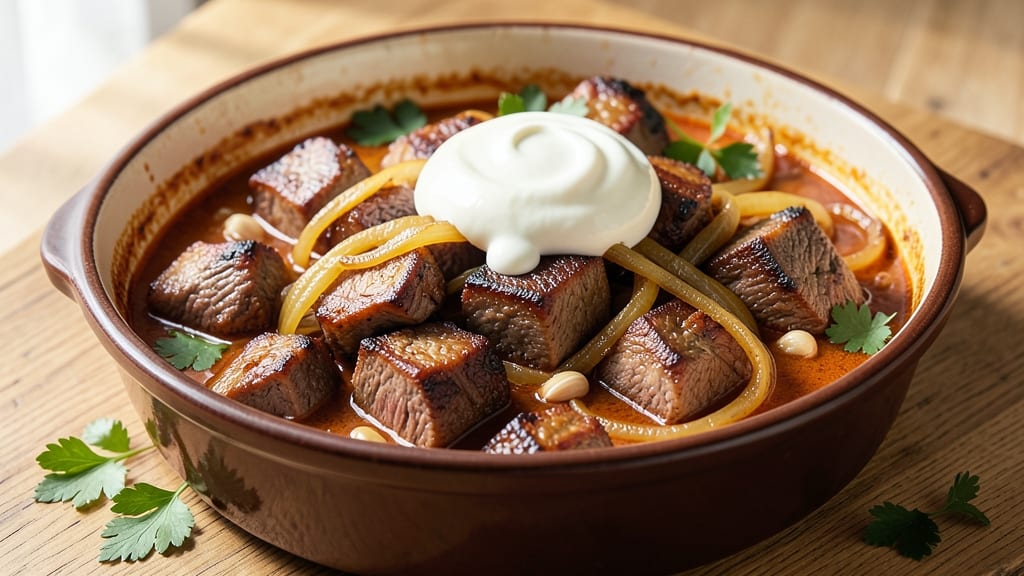
This beef paprikash recipe delivers the rich, smoky depth of Hungarian tradition with tender beef and a velvety paprika-sour cream sauce. The key lies in slow-browning the meat and building layers of flavor through careful spice blooming—techniques I perfected after years of testing in my Boston kitchen.
Every bite combines sweet, earthy paprika with tangy sour cream, creating a harmony that feels both comforting and sophisticated.
The magic happens in the sauce, where sweet and spicy paprika caramelizes with onions and garlic before melding with beef broth and a touch of sugar. I’ve streamlined the process without sacrificing authenticity, so you get restaurant-quality results in a single pot.
The dish pairs beautifully with egg noodles or dumplings, soaking up every last drop of that luscious sauce.
What makes this recipe stand out is its balance—sweet enough to please, spicy enough to intrigue, and creamy enough to satisfy. The slow cooking transforms tough beef into melt-in-your-mouth tenderness, while the sour cream adds a velvety finish.
Whether you’re serving a family dinner or hosting a gathering, this dish delivers warmth and flavor that lingers long after the last bite.
For modern cooks, this recipe adapts effortlessly to slow cookers or Instant Pots, making it flexible for busy weeknights. The secret? Deglazing the pan properly and letting the sauce reduce naturally—no shortcuts here. Let’s create this Hungarian classic together.
Ingredients for beef paprikash
Pantry staples meet Hungarian tradition—just a handful of ingredients for rich, smoky comfort.
| Ingredient | Amount | Notes |
|---|---|---|
| Beef Chuck Roast 🥩 | 2 lb | Cut into 1.5-inch cubes |
| Sweet Hungarian Paprika 🌶️ | 2 tbsp | Use high-quality smoked variety |
| Yellow Onions 🧅 | 1 whole | Sliced into half-moons |
| Garlic Cloves 🧄 | 4 cloves | Minced finely |
| Beef Broth 💧 | 2 cups | Low-sodium preferred |
| Sour Cream 🥛 | ½ cup | Full-fat for best texture |
| Tomato Paste 🍅 | 1 tbsp | Smooth, not chunky |
| Granulated Sugar 🍚 | 1 tbsp | Balances paprika heat |
| All-Purpose Flour 🌾 | 2 tbsp | For thickening sauce |
| Olive Oil 🫒 | 2 tbsp | For searing meat |
| Bay Leaves 🌿 | 1 whole | Fresh preferred |
| Salt 🧂 | 1 tsp | Kosher or sea salt |
| Black Pepper 🌶️ | ½ tsp | Freshly ground |
| Egg Noodles 🍝 | 12 oz | Or egg dumplings |
The beef is everything here. Chuck roast gives that melt-in-your-mouth texture—Costco or Whole Foods usually have it pre-cubed, but if you're buying whole, ask the butcher to cut it into 1.5-inch pieces. Look for good marbling; that's where the flavor hides. For the paprika, Penzeys or Hungarian specialty stores carry the real deal—sweet and smoky, not the bland stuff in regular grocery aisles. If you can only find regular paprika, toast it in a dry pan for 30 seconds first to deepen the flavor. The onions? Yellow onions work best—they caramelize beautifully without turning bitter.
No Hungarian paprika? Sweet paprika plus 1/2 tsp smoked paprika gets you close. Short on beef broth? Water plus 1 tsp bouillon powder works in a pinch, but don't skip the low-sodium—you're adding salt later. The tomato paste can be the squeeze-tube kind from Trader Joe's—it's perfect for small amounts and keeps forever. For the sour cream, full-fat is non-negotiable here (trust me on this). If you're using egg dumplings instead of noodles, grab the frozen ones from the international aisle—they're pre-cooked and save time. The flour is just for thickening, but don't skip it—it gives that silky texture to the sauce.
This reheats beautifully—honestly better the next day once all the flavors meld. Keeps in the fridge for 4-5 days covered, or freeze portions for 3 months. I always make extra because it's one of those dishes that tastes even better as leftovers. For serving, warm the noodles separately and toss them in the sauce at the end—that way they don't get mushy. Store the sauce in a jar, and the noodles separately if you want to reheat them fresh.
Why You'll Love This Recipe
- One-Pan Magic: I swear by this recipe when I’m too tired to scrub a million dishes—just the Dutch oven, a spoon, and you’re done. That 2 tbsp olive oil sear gives you crispy edges on the beef without any extra pans, and the onions caramelize right in the same pot. Honestly, the cleanup is so minimal I’ll make it just for that.
- Smoky-Creamy Obsession: Between us, the moment you stir in that 2 tbsp sweet Hungarian paprika and the ½ cup sour cream at the end? It’s like a flavor explosion. The paprika’s smoky warmth pairs perfectly with the creamy sauce, and the 1 tbsp granulated sugar just takes the edge off—rich, tangy, and so satisfying. It’s the kind of dish that makes you go back for seconds without even thinking.
- Weeknight Workhorse: This is my go-to when I need something hearty but not fussy. The beef chuck roast becomes fork-tender in 1 to 1.5 hours, and the egg noodles cook in 10 minutes—perfect for when the kids are home or you’ve got friends over. I’ll make a double batch on Sundays and stretch it through the week, because the leftovers are just as good reheated.
- Budget-Friendly Feast: Two pounds of beef chuck roast and a few pantry staples feed four people for under $20—seriously. The onions, garlic, and broth stretch the flavor, and the sour cream adds richness without breaking the bank. Plus, it keeps in the fridge for 4-5 days, so you’re not wasting a thing. My wallet and my family thank me every time.
Step-by-step instructions for beef paprikash
Here's how to create this rich, comforting dish with tender beef and velvety sauce.
Sear the Beef Chuck Roast
Heat the 2 tablespoons olive oil in a large Dutch oven over medium-high heat until shimmering. Working in batches to avoid crowding, add the 2 lb beef chuck roast cut into 1.5-inch cubes and sear for 3-4 minutes per side until deeply browned. You'll know it's ready when the edges are golden brown and the meat releases easily from the pan.
This searing step builds deep flavor through the Maillard reaction. Don't rush it—let each piece develop that rich crust before removing. Transfer the seared beef to a plate and set aside temporarily.
Build the Paprika Base
In the same Dutch oven, add the 1 whole yellow onions sliced into half-moons and cook for 5-6 minutes until softened and lightly caramelized. Stir in the 4 cloves minced garlic cloves and cook for 30 seconds until fragrant.
Lower the heat to medium, then add the 2 tablespoons sweet Hungarian paprika, 1 tablespoon tomato paste, 1 tablespoon granulated sugar, 1 teaspoon salt, and ½ teaspoon black pepper. Stir constantly for 1-2 minutes until the paprika aroma fills your kitchen. This is where the dish gets its signature smoky depth.
Simmer the Beef in Broth
Pour in the 2 cups beef broth and scrape up any browned bits from the bottom of the pan. Return the seared beef to the pot, add the 1 whole bay leaves, and bring to a gentle simmer. Partially cover and cook for 1 hour to 1 hour 15 minutes until the beef is fork-tender.
Here's the thing—you'll want to check the liquid level occasionally. If it reduces too much, add a splash of water or broth to keep the beef submerged. The beef should be so tender it practically falls apart when pierced with a fork.
Thicken the Sauce
Once the beef is tender, remove it from the pot and strain the cooking liquid through a fine-mesh sieve into a clean bowl. Return the strained liquid to the pot and stir in the 2 tablespoons all-purpose flour to thicken the sauce. Cook for 2-3 minutes until slightly thickened.
Taste and adjust seasoning if needed. The sauce should be rich and slightly tangy from the paprika. Stir in the ½ cup sour cream and simmer for 1-2 minutes just to warm through—don't let it boil or it will curdle.
Finish and Serve
Return the beef to the pot and stir to coat in the sauce. Meanwhile, cook the 12 oz egg noodles according to package instructions until al dente. Drain and toss with a little olive oil to prevent sticking.
To serve, divide the noodles among plates and top generously with the beef and paprikash sauce. The combination of tender beef, creamy sauce, and egg noodles makes this dish incredibly satisfying. Garnish with fresh parsley if you like, but it's not necessary—this dish shines on its own.
Pro Tips For Making Beef Paprikash
- Sear in Batches: I learned this the hard way—crowding the pan steams the beef instead of searing it. Work in batches with the 2 tbsp olive oil until you see deep golden crusts on each 1.5-inch cube. That’s where the flavor lives, not in the rushed, pale pieces.
- Bloom the Paprika: Don’t just toss in the 2 tbsp Sweet Hungarian Paprika and stir. Lower the heat to medium and let it bloom for those 1-2 minutes—you’ll smell the difference. That’s when it releases its smoky magic, not when you dump it in cold.
- Skim the Foam: After searing the beef, wipe out the Dutch oven with a paper towel to remove any foam or excess grease before adding the onions. It keeps the sauce cleaner and prevents a greasy finish—trust me, your future self will notice.
- Strain the Sauce: Straining the cooking liquid through a fine-mesh sieve removes stray bits of fat and onion that would otherwise make the sauce gritty. It’s a little extra work, but the result is silky—like the difference between homemade and takeout.
Pro cooking tips for perfect results
Dutch Oven Mastery
A Dutch oven is non-negotiable for this recipe—its heavy base distributes heat evenly, preventing hot spots that can burn your sauce. I use my Lodge 5.5-quart because it handles the searing and simmering like a champ, but any heavy pot with a lid will work.
If you're short on space, a 6-quart stockpot from Cuisinart works too. Just make sure it has a tight-fitting lid to trap steam and tenderize the beef. 🔥
Paprika Bloom
Don't skip the 1-2 minute paprika bloom—this step develops the full smoky flavor. Stir constantly over medium heat until the paprika aroma fills your kitchen. I've made this mistake: rushing this step results in a bland sauce.
For extra depth, toast the paprika in a dry pan for 30 seconds first if you're using regular paprika. The sugar in the recipe isn't just for sweetness—it helps caramelize the paprika for richer flavor. 🌶️
Sauce Thickening
The flour-thickened sauce is what makes this dish special. After straining the beef broth, return it to the pot and whisk in the 2 tbsp flour until smooth. Cook for exactly 2-3 minutes—any longer and you'll get a gluey texture.
When adding the ½ cup sour cream, keep the heat low and stir constantly to prevent curdling. I've learned this the hard way: never let it boil after adding the sour cream. 🥛
Beef Tenderizing
The 1 hour to 1 hour 15 minutes simmer time is crucial—this is when the tough chuck roast transforms into melt-in-your-mouth perfection. Check the liquid level occasionally and add ¼ cup water or broth if needed to keep the beef submerged.
The beef should be so tender it practically falls apart when pierced with a fork. If you're in a hurry, you can use a pressure cooker for 45 minutes on high pressure, but the flavor won't be as deep. ⏱️
Deglazing Secrets
After searing the beef, don't miss the deglazing step! Add the 2 cups beef broth and scrape up every last browned bit from the bottom of the pot using a wooden spoon. These fond bits are packed with flavor that will infuse into your sauce.
I like to use a silicon spatula for this because it's flexible enough to get into all the nooks. This simple step elevates the dish from good to extraordinary. 💡
Sour Cream Timing
Adding the sour cream at the very end is key. Stir it in just until warmed through—about 1-2 minutes on low heat. The sauce should be silky, not curdled.
For an extra touch, I sometimes add a splash of heavy cream (about 2 tbsp) right before serving to make the sauce even richer. This is where the dish gets its velvety texture that makes it so comforting. 🥄
Nutrition facts
Frequently asked questions
Can I substitute regular paprika for Hungarian paprika?
Yes, but with a twist! Use 2 tablespoons sweet paprika plus ½ teaspoon smoked paprika to mimic the depth. For extra flavor, toast the paprika in a dry pan for 30 seconds before adding to the onions. This step deepens the smoky aroma that defines authentic paprikash.
What if my sauce turns out too thin?
No worries! If the sauce is too thin after simmering, mix 1 tablespoon cornstarch with 1 tablespoon cold water and stir it into the sauce. Simmer for 1-2 minutes until thickened. For a smoother finish, strain the sauce through a fine-mesh sieve before serving. The key is patience—don't rush the thickening process!
Can I make this in a slow cooker or Instant Pot?
For a slow cooker, brown the beef first, then transfer everything to the pot and cook on low for 6-7 hours or high for 3-4 hours. For an Instant Pot, sear the beef, then cook on high pressure for 45 minutes with natural release. The Instant Pot version will be faster but slightly less tender than stovetop. Always check doneness with a fork!
Why does my paprikash taste too sweet or spicy?
The sugar balances the paprika's heat, but if it's too sweet, reduce it to ½ tablespoon next time. For spiciness, use sweet Hungarian paprika (not hot) and taste as you go. The sauce should be rich with a hint of tang from the sour cream. Adjust with a pinch of salt or a splash of lemon juice if needed.
What’s the best way to reheat leftovers?
Reheat gently on the stovetop over low heat for 5-7 minutes, stirring occasionally. Avoid microwaving—it can make the sauce watery. For extra richness, add 1 tablespoon beef broth while reheating. Leftovers actually improve as flavors meld! This dish keeps well for 4-5 days in the fridge.