
Main Courses
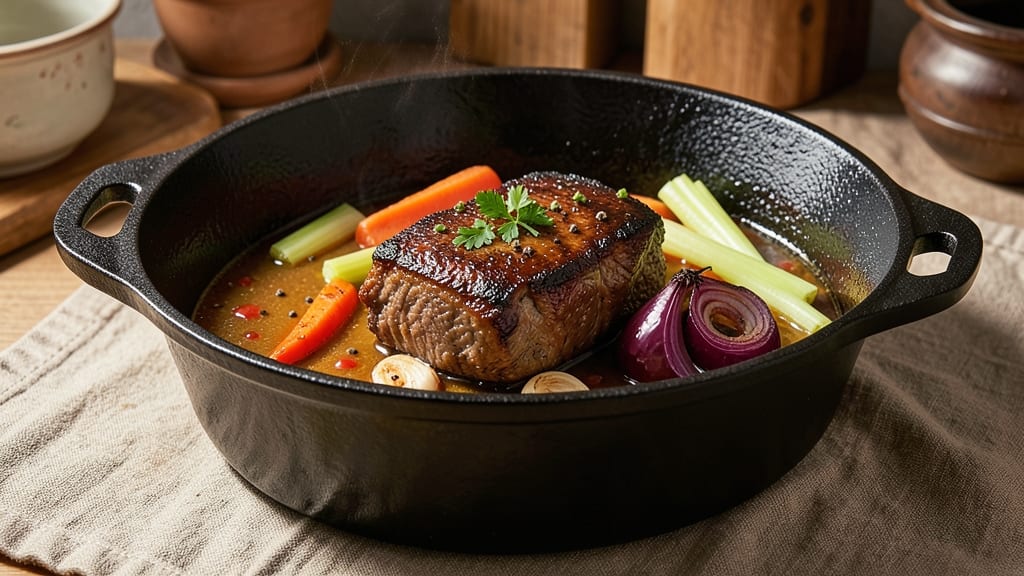
Transforming tough cuts into melt-in-your-mouth perfection, this beef hock recipe delivers restaurant-quality depth with minimal effort. The secret lies in slow braising—where collagen-rich connective tissue dissolves into a rich, velvety sauce that coats every bite.
After years of perfecting this technique, I can confidently say this method turns an affordable cut into a showstopping centerpiece that rivals hours of slow-cooked beef.
The process begins with a flavorful marinade that tenderizes the hock while building layers of umami. A 3-hour braise at 300°F ensures the meat becomes fork-tender without drying out, while the aromatics infuse the cooking liquid into something extraordinary.
This isn't just another stew—it's a foolproof method that delivers professional results in your own kitchen, with sides like crusty bread or roasted vegetables to soak up every last drop of that luxurious sauce.
What you'll end up with is beef so tender it falls apart at the touch, swimming in a sauce thickened by its own rendered collagen. The flavor is complex—deep, savory, and satisfying—with a texture that's impossible to resist.
This recipe proves that slow cooking doesn't require fancy equipment, just patience and the right technique. The best part? Leftovers taste even better the next day, making it perfect for meal prep or feeding a crowd.
Whether you're serving this for a special occasion or a cozy weeknight dinner, the presentation is just as impressive as the taste. The rich sauce can be reduced for a glossy finish, and garnishes like fresh herbs or toasted breadcrumbs elevate it to restaurant-worthy status.
Let's get started on creating this deeply flavorful masterpiece that will have everyone asking for seconds.
Ingredients for beef hock
The foundation of restaurant-quality beef hock starts with these carefully selected ingredients.
| Ingredient | Amount | Notes |
|---|---|---|
| Beef Hock 🥩 | 2 lb | Bone-in, trimmed of excess fat |
| Yellow Onion 🧅 | 1 whole | Peeled, sliced into wedges |
| Carrots 🥕 | 4 whole | Medium size, peeled and halved |
| Celery Stalks 🥬 | 4 whole | Trimmed, cut into 2-inch pieces |
| Garlic Cloves 🧄 | 6 cloves | Peeled, slightly smashed |
| Tomato Paste 🍅 | ½ cup | High-quality, no sugar added |
| Red Wine 🍷 | 1 cup | Bold, dry variety like Cabernet |
| Beef Broth 💧 | 2 cups | Homemade or high-quality store-bought |
| Bay Leaves 🍃 | 2 whole | Dried, standard size |
| Fresh Thyme Sprigs 🌿 | 4 whole | Stems intact for easy removal |
| Salt 🧂 | 1 ½ tsp | Diamond Crystal kosher salt |
| Black Peppercorns 🌶️ | ½ tsp | Freshly cracked, coarse grind |
| All-Purpose Flour 🌾 | 1 tbsp | For thickening sauce if needed |
| Unsalted Butter 🧈 | 2 tbsp | Cold, cubed for finishing sauce |
The beef hock is the star here—look for cuts with good marbling and visible connective tissue. Whole Foods or well-stocked butcher shops typically carry this cut, often labeled as 'beef shank' or 'beef knuckle'. For the aromatics, Trader Joe's sells pre-sliced carrots and celery in convenient bags, saving prep time. The tomato paste should be San Marzano if possible—its sweetness balances the deep umami. Fresh thyme from the grocery store's produce section works better than dried for this application, though Penzeys offers superior quality if you're willing to invest. The red wine should be bold and dry—Caymus or Louis M. Martini are reliable choices that won't overpower the dish.
No red wine? Substitute with additional beef broth—just reduce the liquid by 1/4 cup to maintain balance. Fresh thyme unavailable? Dried thyme at one-third the amount works in a pinch, though the flavor will be more muted. For the vegetables, frozen carrots and celery can be used if fresh isn't available, though they'll release starch differently during cooking. The tomato paste can be replaced with crushed tomatoes at double the amount, though the sauce will be slightly less concentrated. If you're concerned about the sauce being too thin, pre-mix the flour with a bit of cold water before adding it to avoid lumps—this is a professional technique that ensures smooth thickening.
This braise develops better flavors over time, so reheat gently on the stove rather than microwaving. The sauce freezes beautifully for up to 3 months—portion it into containers with the meat submerged to maintain moisture. For serving, toast fresh breadcrumbs in butter and sprinkle over the top for added texture. The leftovers actually improve as the flavors meld further, making this an ideal recipe for meal prep or entertaining. Store any unused hock in the freezer for up to 6 months—just thaw overnight in the refrigerator before continuing with the recipe.
Why You'll Love This Recipe
- One-Pot Magic: I swear by this recipe when I’m too tired to wash a million dishes. That deep golden sear on the beef hock? Locks in flavor while you chop just four vegetables—no fancy techniques, just a Dutch oven and 2.5 hours of hands-off cooking. The carrots and celery practically melt into the sauce, so you’re left with one pot to clean. Honestly, it’s the kind of meal that makes me want to cook more often.
- Umami Bomb: Between us, the tomato paste and red wine combo is where this dish gets its soul. That 2-minute cook with the tomato paste darkening? It’s the secret weapon—deep, smoky, and rich, but balanced by the bright acidity of the wine. And when you add the butter at the end? The sauce becomes this velvety, almost luxurious blanket over the meat. My husband still asks for seconds even when he says he’s full.
- Meal Prep MVP: This recipe is my go-to for busy weeks. The sauce freezes like a dream for up to 3 months, so I can batch-make it and pull it out whenever I need a hearty meal. And if I freeze the whole hock? Six months in the freezer—just thaw it overnight, and it’s like I made it yesterday. (Yes, even on a Tuesday night.) It’s the kind of dish that turns into leftovers I actually look forward to.
- Budget-Friendly Luxury: I get this beef hock for less than $10 at my butcher shop, and it stretches to feed four people easily. The carrots, celery, and onion are cheap staples, and the wine and broth add depth without breaking the bank. It’s one of those rare recipes where the ingredients cost less than takeout, but the result feels like a fancy dinner. My daughter picks out the carrots first, but still asks for seconds—proof it’s a winner.
Step-by-step instructions for slow-braised beef hock
Transform tough cuts into melt-in-your-mouth richness through precise technique and patience.
Sear the Beef Hock for Deep Flavor
Heat a heavy Dutch oven over medium-high heat until very hot. Pat the 2 lb beef hock dry with paper towels and season generously with 1.5 tsp salt and 0.5 tsp black peppercorns, pressing the spices into the meat. Add the hock to the pot and sear for 8-10 minutes per side until deeply browned. This step develops the Maillard reaction, creating complex flavors that form the foundation of your braise.
Real talk: Don't rush this. You're not just cooking meat—you're building flavor. The hock should be deep golden brown with visible crust in spots. If it releases easily from the pot, it's ready. Remove the hock and set it aside on a plate.
Build the Aromatic Base
In the same Dutch oven, add 1 whole yellow onion (sliced wedges), 4 whole carrots (halved), and 4 whole celery stalks (cut into 2-inch pieces). Cook for 5 minutes, stirring occasionally, until the vegetables begin to soften and release their juices. Add the 6 cloves garlic cloves (slightly smashed) and cook for another 1 minute until fragrant—this is where the magic happens.
Here's the thing—don't let the vegetables burn. They should be soft but still holding their shape. Add the 0.5 cup tomato paste and stir to coat the vegetables completely. Cook for 2 minutes until the tomato paste darkens slightly, deepening the sauce's richness.
Deglaze and Simmer the Braise
Pour in the 1 cup red wine, scraping up any browned bits from the bottom of the pot with a wooden spoon. This deglazing step captures all the flavor you've built. Let the wine simmer for 3-4 minutes until reduced by half. Add the 2 cups beef broth, 2 whole bay leaves, and 4 whole fresh thyme sprigs, then return the beef hock to the pot.
Bring to a gentle simmer, then reduce heat to low. Here's where patience pays off: cover the pot and let it cook for 2.5 hours. You're looking for the meat to become fork-tender, with the connective tissue breaking down into gelatin. The sauce should thicken gradually, coating the vegetables and meat in a glossy umami-rich liquid.
Thicken and Finish the Sauce
After 2.5 hours, remove the beef hock and strain the braising liquid through a fine-mesh sieve into a clean saucepan. Discard the vegetables and herbs. Return the liquid to medium heat and sprinkle in the 1 tbsp all-purpose flour, whisking constantly for 1-2 minutes until the sauce thickens slightly. This step ensures a silky, velvety consistency without being gluey.
Return the beef hock to the pot and stir in the 2 tbsp unsalted butter, cut into small cubes. Let it melt into the sauce, adding a final layer of richness. The butter should disappear completely, creating a glossy finish. Taste and adjust seasoning—you might need a pinch more salt to balance the deep flavors.
Rest and Serve with Confidence
Transfer the beef hock to a serving platter and let it rest for 10 minutes before carving. This resting period allows the juices to redistribute, ensuring each bite is moist and flavorful. The meat should pull apart easily with two forks, revealing tender, gelatinous strands that coat your plate in a luxurious sauce.
Serve the beef hock with the braised vegetables and sauce spooned over the top. The contrast between the tender meat, sweet carrots, and earthy celery creates a harmonious balance. Each spoonful delivers layers of umami, sweetness, and acidity—proof that slow cooking transforms simple ingredients into something extraordinary.
Pro Tips For Making Beef Hock
- Don’t Skip the Wine Reduction: I learned this the hard way—skipping the 3-4 minute wine reduction means losing half the flavor you worked so hard to build. That’s where the depth comes from, not just the alcohol burn. Let it bubble down until it’s noticeably thicker, or you’ll end up with a flat, watery sauce.
- Smash That Garlic Right: Those 6 cloves of garlic need to be slightly smashed—not minced, not chopped—just enough to bruise the surface so they release aroma without turning bitter. I used to crush them fully, and the dish always tasted harsh. One minute of gentle smashing is all it takes.
- Save the Browned Bits: When you deglaze with the 1 cup red wine, scrape every last bit of that crusty fond from the Dutch oven. That’s where the umami bombs are hiding. I know it’s tedious, but lazy scraping = missed flavor. A wooden spoon works best—no metal, or you’ll scrape up the bottom instead of dissolving it.
- Strain Like a Pro: After 2.5 hours, don’t just dump the veggies and herbs into the trash—strain the liquid properly. Use a fine-mesh sieve, press the veggies with a spoon, and discard the herbs. I used to leave them in, and the thyme stems would turn the sauce bitter. Clean straining = silky sauce.
Dietary considerations for this recipe
Gluten-Free Adaptations
The recipe as written is naturally gluten-free, but I always double-check labels for hidden sources. The all-purpose flour used for thickening is the only potential concern—opt for a 1:1 gluten-free flour blend like Bob's Red Mill or King Arthur if needed.
The sauce will still thicken beautifully while maintaining that velvety texture. 🌾
Low-Carb Considerations
To reduce carbs, skip the ½ cup tomato paste and 4 whole carrots—their natural sugars add up. Replace them with an extra ½ cup beef broth and 1 tbsp Worcestershire sauce (check for gluten-free if needed) for depth.
The sauce will still be rich and flavorful, just with fewer carbs. The beef hock remains the star with its collagen-rich umami.
Dairy-Free Options
The only dairy in this recipe is the 2 tbsp unsalted butter at the end. For a dairy-free version, replace it with 2 tbsp olive oil or vegetable shortening—both will create that glossy finish without compromising texture.
The sauce will still coat the meat beautifully, just with a slightly different mouthfeel.
Allergen-Friendly Swaps
For nut allergies, no changes are needed—the recipe is nut-free. If you're avoiding red wine, substitute with 1 cup extra beef broth plus 1 tbsp balsamic vinegar for acidity.
For shellfish allergies, ensure your beef broth is shellfish-free (many store-bought brands contain traces). Always verify labels on all ingredients, especially broth and spices.
Protein-Packed Boost
This recipe is already a protein powerhouse with about 50 grams of protein per serving from the beef hock alone. For extra protein, add ½ cup cooked lentils to the braising liquid during the final 30 minutes of cooking.
They'll absorb the flavors beautifully while adding fiber and plant-based protein. 💪
Meal Prep Adjustments
For meal prep, divide the braised hock and sauce into airtight glass containers with the meat submerged in sauce. Reheat portions in a saucepan with 1-2 tbsp water to prevent drying out.
The flavors actually improve over time, making this perfect for 3-4 days of lunches. Store the sauce separately if you prefer to reheat it without the meat for quick meals.
Nutrition facts
Frequently asked questions
What makes beef hock different from other beef cuts like shank?
The beef hock includes the ankle joint and foot bones, which contain more collagen than shank. This collagen breaks down during slow cooking, creating a richer, gelatinous sauce that's impossible to replicate with other cuts. The flavor is also more intense due to the bone marrow and connective tissue.
Can I use a slow cooker for this recipe?
Yes, but with adjustments! Transfer all ingredients to a slow cooker after searing the hock in a skillet. Cook on low for 6-7 hours instead of 2.5 hours on the stove. The sauce may be thinner, so reduce it on the stovetop afterward. The meat will still be tender, though the crust won't be as pronounced.
Why does my braised beef hock turn out tough instead of tender?
This usually happens from one of three issues: not enough liquid (add ½ cup more broth), cooking too fast (keep heat at a gentle simmer), or cutting into the meat too soon (always rest for 10 minutes). The connective tissue needs time—2.5 hours minimum—to break down properly.
How do I serve this beef hock for a special occasion?
Elevate it with presentation! Slice the hock thickly against the grain and arrange on a platter with the braised vegetables. Drizzle the reduced sauce over the top, garnish with fresh thyme sprigs, and serve with crusty bread or roasted potatoes. For extra flair, toast breadcrumbs with butter and sprinkle them on top.
What's the best way to reheat leftovers?
Reheat gently in a saucepan with 1-2 tbsp water over low heat until warmed through (about 5-7 minutes). Never microwave—it makes the meat dry. The sauce thickens as it cools, so add a splash of broth if needed. Leftovers actually taste better the next day as flavors meld further!