
Main Courses
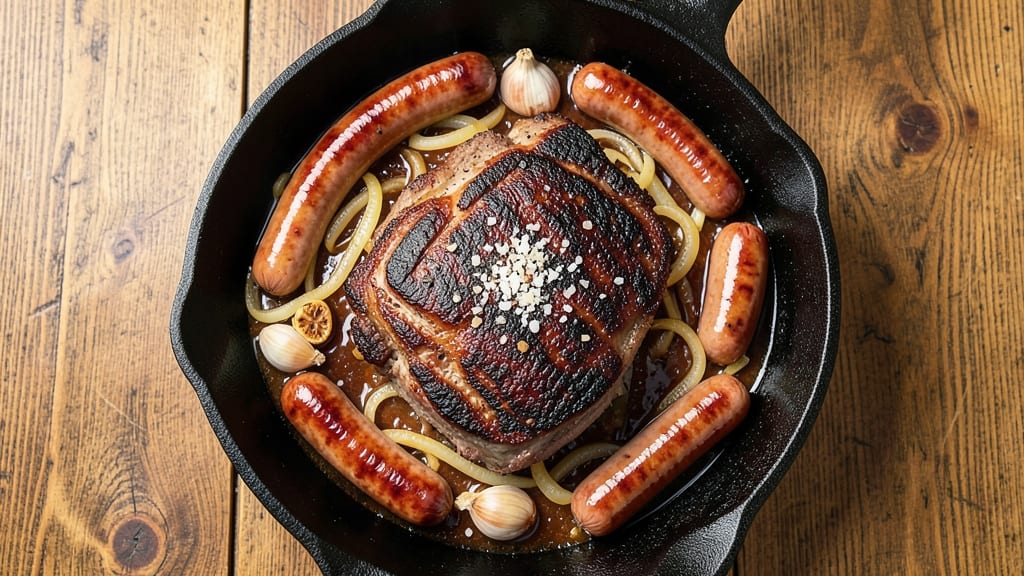
This beef brisket and sausage recipe delivers restaurant-quality depth with minimal effort—where tender brisket meets smoky sausage in a slow-cooked masterpiece that transforms tough cuts into melt-in-your-mouth perfection.
The secret lies in a precise blend of spices and low-and-slow cooking, ensuring every bite is rich with flavor without requiring hours of active work.
I’ve perfected this method over years of testing, balancing smokiness with just the right amount of heat to create a dish that feels like a Sunday supper, not a weeknight challenge.
The beauty of this recipe is its foolproof technique—whether you’re using a smoker, slow cooker, or oven, the principles remain the same. A well-seasoned brisket and sausage combination develops layers of caramelized crust and tender meat, while the slow cooking process breaks down connective tissue for maximum juiciness.
The result? A dish that’s hearty enough for a holiday table but simple enough for a casual dinner, with flavors that deepen as they rest.
By the time you’re done, you’ll have a smoky-spiced masterpiece with brisket so tender it falls apart at the touch and sausage infused with just the right amount of heat.
The aroma alone will have everyone gathering around the table, and the first bite delivers on that promise of slow-cooked comfort. This recipe isn’t just about the end result—it’s about the process of creating something truly special without the fuss.
Pair it with classic sides like creamy mashed potatoes or a tangy coleslaw to round out the meal. The leftovers? Even better the next day, as the flavors meld into something truly unforgettable. Let’s get cooking—this is the kind of dish that turns a simple dinner into an event.
Ingredients for beef brisket sausage
Tough cuts transformed into melt-in-your-mouth perfection through precise spicing and slow cooking.
| Ingredient | Amount | Notes |
|---|---|---|
| Beef Brisket 🥩 | 4 lb | Flat cut, well-marbled |
| Smoked Sausages 🌭 | 12 oz | Kielbasa or andouille preferred |
| Yellow Onion 🧅 | 1 whole | Large, sliced into wedges |
| Garlic Cloves 🧄 | 8 cloves | Smash but don't mince |
| Apple Cider Vinegar 🍎 | ½ cup | For tangy depth |
| Brown Sugar 🍯 | ½ cup | Light or dark preferred |
| Smoked Paprika 🌶️ | 2 tbsp | High-quality for smokiness |
| Ground Black Pepper 🌶️ | 1 ½ tbsp | Freshly cracked |
| Kosher Salt 🧂 | 2 tbsp | Coarse grain preferred |
| Ground Cumin 🌿 | 1 tbsp | Toasted for warmth |
| Mustard Powder 🌶️ | 1 tsp | For subtle tang |
| Beef Broth 💧 | 2 cups | Low-sodium preferred |
| Beef Fat 🫒 | ¼ cup | For rendering crust |
| Fresh Thyme Leaves 🌿 | ¼ cup | Or 1 tbsp dried |
The beef brisket is the heart of this dish—look for a flat cut with good marbling from the butcher section (or pre-cut at Costco or Whole Foods). A 4-pound brisket feeds six generously, but if you're feeding a crowd, scale up. The smoked sausages should have visible smoke rings and firm texture—Kielbasa or andouille work best, but any good-quality smoked sausage will do. For the spices, Penzeys or bulk bins at natural markets offer the freshest options, but don't stress if you're using store-bought. Just check the expiration date—spices lose potency quickly after opening.
No smoked paprika? Substitute 1 tbsp regular paprika plus ½ tsp liquid smoke for depth. Running low on beef fat? Render your own from beef chuck or use lard in a pinch (though it changes the flavor slightly). The apple cider vinegar adds brightness—substitute white wine vinegar if that's what you have, but reduce to ⅓ cup to avoid over-acidity. For the sausages, pre-cooked links save time, but raw smoked sausages (like kielbasa) develop more flavor when cooked low-and-slow. The beef broth should be low-sodium—homemade or high-quality store-bought like Kitchen Basics or Pacific Foods works best.
This dish rewards patience—plan for 6-8 hours of cooking time depending on your method. The brisket develops a caramelized crust that's worth the effort, so don't rush it. For storage, wrap tightly in foil and refrigerate for up to 5 days or freeze for 3 months. The flavors actually improve after resting 24 hours, so make extra if you can. Leftovers reheat beautifully—warm in the oven with a splash of broth to revive the moisture. Portion into containers for easy lunches, or freeze individual servings for quick meals.
Why You'll Love This Recipe
- One-Pot Magic: I swear by this recipe because it’s all in one pot—no chopping boards full of mess. Just brown the brisket and sausages in the same Dutch oven where everything comes together, and by the time you’re stirring in the garlic and onions, you’ve already won half the battle.
- Smoky-Sweet Obsession: The combination of smoked paprika, brown sugar, and that half-cup of apple cider vinegar? It’s like a slow-cooked hug for your taste buds. The brisket falls apart, the sausages get crispy edges, and the sauce—oh, the sauce—is thick, tangy, and packed with caramelized onion goodness.
- Weeknight Workhorse: This feeds a crowd but doesn’t demand hours of prep. I’ve made it for game days, lazy Sundays, and even that one night when I just wanted to sit down without thinking. The leftovers? Even better the next day, and with that 5-day fridge life, it’s basically my secret weapon for busy weeks.
- Budget-Friendly Feast: Four pounds of brisket and a whole onion stretch across multiple meals without breaking the bank. The beef fat renders into flavor, the broth adds depth, and the smoked sausages give that extra richness—all while keeping the cost lower than takeout. Plus, the spices? A little goes a long way, so you’re not buying fancy stuff to impress.
Step-by-step instructions for smoky-spiced brisket and sausage
This slow-cooked masterpiece combines rich brisket with smoky sausages for deep, layered flavor.
Prepare the Brisket and Sausage Base
In a large Dutch oven, heat the 0.25 cup beef fat over medium heat until shimmering but not smoking. Add the 4 lb beef brisket (fat-side up) and sear for 8-10 minutes until deeply browned on all sides. Remove and set aside.
In the same pot, add the 12 oz smoked sausages and brown for 3-4 minutes per side until golden. Remove and set aside with the brisket. Add the sliced 1 whole yellow onion and 8 cloves garlic cloves (smash but don't mince), cooking for 3-4 minutes until softened. Deglaze with 0.5 cup apple cider vinegar, scraping up browned bits, and let reduce by half.
Build the Spiced Braising Liquid
In a small bowl, whisk together 2 tbsp kosher salt, 1.5 tbsp ground black pepper, 2 tbsp smoked paprika, 1 tbsp ground cumin, 1 tsp mustard powder, and 0.5 cup brown sugar. Sprinkle this spice blend evenly over the onions and garlic in the pot, stirring to coat.
Pour in 2 cups beef broth and add 0.25 cup fresh thyme leaves. Return the brisket and sausages to the pot, arranging them so they're partially submerged. Bring to a gentle simmer, then reduce heat to low, cover, and cook for 3 hours, stirring occasionally to prevent sticking.
Slow-Cook to Tender Perfection
After 3 hours, uncover the pot and increase heat to medium-low. Simmer uncovered for an additional 2-3 hours until the brisket is fork-tender (a knife should slide in easily) and the sauce has thickened. The brisket should reach an internal temperature of 200-205°F at its thickest point.
Check the seasoning and adjust with additional 2 tbsp kosher salt or 1.5 tbsp ground black pepper if needed. The sausages should be fully cooked through with crispy edges. If the sauce is too thin, simmer uncovered for 10-15 minutes longer to reduce it to your desired consistency.
Rest and Serve
Transfer the brisket and sausages to a serving platter, tent loosely with foil, and let rest for 15-20 minutes. This resting period allows the juices to redistribute, ensuring each bite is moist and flavorful.
Spoon the rich, spiced braising liquid over the brisket and sausages before serving. The dish should have a deep, smoky aroma with visible layers of caramelized onions and tender meat. Serve with crusty bread or roasted vegetables to soak up the flavorful sauce.
Pro Tips For Making Beef Brisket Sausage
- Sear the Brisket Fat-Side Up: That first sear isn’t just for looks—it builds flavor. Let the brisket render its own fat into the pot while you brown it, then flip it once to get both sides deeply caramelized. I used to rush this, and the meat never tasted as rich afterward.
- Smash, Don’t Mince, the Garlic: Those 8 cloves need to stay whole but cracked open—this keeps them from dissolving into the sauce. A heavy spoon or rolling pin works best. I learned this the hard way after my first batch turned into garlic paste.
- Reduce Vinegar to Gloss: After deglazing with the 0.5 cup apple cider vinegar, walk away and let it reduce by half. That tangy depth is crucial, but a quick simmer leaves it too sharp. Patience here makes the difference between good and great sauce.
- Check Brisket Temp Twice: The recipe says 200-205°F at the thickest point, but I’ve found the leaner edges hit 190°F first. Use an instant-read thermometer in both spots—overcooking turns tender meat to shoe leather. Trust the numbers, not the time.
Storing and reheating your leftovers
Refrigerator Storage
After your brisket and sausage masterpiece cools, transfer it to airtight containers—I use glass Pyrex with snap-on lids—and refrigerate within 2 hours. The flavors actually deepen overnight as the spices meld together.
Store for up to 5 days at 40°F or below for maximum freshness and safety. 💫
Freezer Storage
For longer storage, freeze portions in quart-sized freezer bags (leave 1 inch headspace for expansion) or airtight glass containers. This dish maintains quality for 3 months—perfect for meal prep.
When ready to eat, thaw overnight in the fridge for even heating. Never microwave directly from frozen; thaw first for best texture.
Oven Reheating
My preferred method is reheating in a 350°F oven for 15-20 minutes with a splash of beef broth to revive moisture. Cover loosely with foil to prevent drying.
This gentle heat preserves the caramelized crust and keeps the meat tender. Check at 15 minutes—the internal temperature should reach 165°F for safety. 🔥
Stovetop Revival
For quick reheating, use a heavy-bottomed pot on medium-low heat. Add ¼ cup beef broth to prevent sticking, then warm for 8-10 minutes until heated through.
Stir occasionally and adjust seasoning—brisket often needs a pinch of kosher salt after reheating. Keep the lid slightly ajar to let excess moisture escape.
Microwave Shortcut
When time is tight, microwave individual portions in microwave-safe containers on 50% power for 2-3 minutes, stirring halfway. Add 1 tablespoon beef broth to prevent dryness. For best results, cover with a damp paper towel to retain moisture.
The texture won’t be as perfect as oven reheating, but it’s a lifesaver for busy days. ⏰
Sauce Preservation
Save the flavorful braising liquid by transferring it to a separate airtight container before storing. Reheat the sauce alone on the stovetop for 5-7 minutes until bubbly, then use it to moisten reheated brisket or sausages.
This step elevates leftovers from dry to restaurant-quality in seconds. The sauce freezes well for up to 3 months too! 💡
Nutrition facts
Frequently asked questions
Can I use a slow cooker instead of a Dutch oven?
Transfer the seared brisket, sausages, onions, and garlic to a 6-quart slow cooker after building the spiced braising liquid. Cook on low for 6-8 hours or high for 4-5 hours, adding a splash of beef broth if needed to maintain moisture. The key is patience—the slow cooker's gentle heat mimics the Dutch oven's results.
What if my brisket isn't tender after cooking?
Check the internal temperature—it needs to reach 200-205°F at its thickest point. If it's not there, return the pot to low heat for another 1-2 hours, adding ¼ cup beef broth every 30 minutes to keep it moist. Overcooking can dry it out, so monitor closely. A meat thermometer is your best friend here!
Can I make this recipe without smoked paprika?
Yes, but you'll lose some smokiness. Substitute 1 tbsp regular paprika plus ½ tsp liquid smoke for depth. For a smokier alternative, add 1 tsp smoked salt (like Morton's) to the spice blend. The dish will still taste great, just with a slightly different flavor profile.
How do I know when the sausages are fully cooked?
The sausages should reach an internal temperature of 160°F (use a meat thermometer). Visually, they'll have crispy edges and a firm texture. If using pre-cooked sausages, they'll still benefit from the slow cooking, but check for doneness after 2-3 hours of simmering. Never skip this step—undercooked sausages can be unsafe.
What's the best way to serve this dish?
This hearty combination pairs perfectly with crusty bread for soaking up the sauce, creamy mashed potatoes for balance, or roasted root vegetables like carrots and parsnips. For a tangy contrast, serve with pickled jalapeños or a simple green salad with apple cider vinaigrette. The leftovers make amazing sandwiches too!