
Main Courses
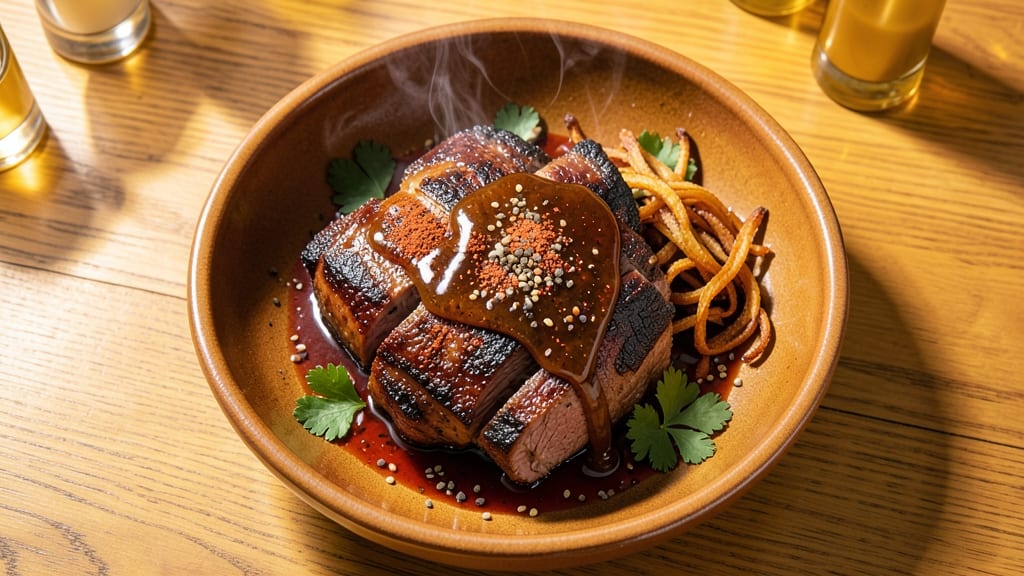
This beef brisket for Hanukkah recipe transforms a traditional centerpiece into a slow-smoked masterpiece that honors the holiday’s spirit of warmth and celebration.
The marriage of smoky depth, honey’s sweetness, and spiced rum’s bold warmth creates a dish that feels both nostalgic and elevated—perfect for gathering loved ones around the table.
I developed this method after years of perfecting brisket for family gatherings, ensuring it delivers tender, juicy perfection without sacrificing the festive flavors Hanukkah deserves.
The key to success lies in the slow-smoking process, which breaks down the tough brisket into melt-in-your-mouth tenderness while infusing it with layers of flavor.
A dry rub of smoked paprika, coriander, and garlic sets the foundation, while the honey and spiced rum glaze adds a caramelized richness that pairs beautifully with traditional sides like latkes or kugel. This recipe serves eight or more, making it ideal for hosting—just like the holiday itself.
By the time you pull this brisket from the smoker, you’ll have a dish that’s rich, aromatic, and dripping with sauce—ready to be sliced and served with pride.
The smoky aroma alone will fill your home with the cozy, festive energy of Hanukkah, while the tender meat and sweet-spiced glaze make every bite unforgettable. Pair it with a bold red wine or a festive spiced rum cocktail for the ultimate holiday experience.
Whether you’re a seasoned pitmaster or a home cook looking to impress, this method delivers restaurant-quality results with minimal fuss. The slow process ensures deep flavor penetration, while the honey-spiced glaze adds a touch of holiday magic. Here’s how to make it shine for your celebration.
Ingredients for beef brisket for hanukkah
The brisket is the heart of Hanukkah—smoky, sweet, and rich with holiday spirit.
| Ingredient | Amount | Notes |
|---|---|---|
| Beef Brisket 🥩 | 6 lb | Whole packer cut, good marbling |
| Kosher Salt 🧂 | ½ cup | Diamond Crystal preferred |
| Freshly Ground Black Pepper 🌶️ | 2 tbsp | Coarsely ground |
| Smoked Paprika 🌶️ | 2 tbsp | High quality, not dusty |
| Ground Coriander 🌿 | 1 ½ tbsp | Toasted for depth |
| Garlic Powder 🧄 | 1 ½ tbsp | Freshly ground preferred |
| Onion Powder 🧅 | 1 ½ tbsp | No added salt |
| Dried Thyme 🌿 | 1 tbsp | Or 1 tbsp fresh thyme |
| Brown Sugar 🍚 | ¼ cup | Light or dark |
| Honey 🍯 | ½ cup | Wildflower preferred |
| Spiced Rum 🍹 | ½ cup | Like Captain Morgan |
| Apple Cider Vinegar 🍏 | 2 tbsp | For tangy balance |
| Yellow Onion 🧅 | 1 whole | Sliced for glaze |
| Fresh Garlic Cloves 🧄 | 6 cloves | Minced for glaze |
| Wood Chips 🌳 | 2 cups | Hickory or cherry |
The brisket cut is everything here. Packer cut from Costco or Whole Foods gives the best marbling—look for thick fat caps, not skinny ones. If buying from a butcher, ask for the whole packer (not pre-trimmed). The fat renders down during smoking, keeping the meat juicy. I always grab mine a day ahead to let it sit at room temp before smoking—2 hours max—which helps the rub cling better. For the wood chips, Traeger or Butcher's Broth brands are my go-to; they're consistent and won't leave bitter ash.
No smoked paprika? Regular paprika plus a pinch of liquid smoke works in a pinch (start with 1/4 tsp). The coriander can be swapped for ground cumin at half the amount, but you'll lose some citrusy depth. For the glaze, maple syrup replaces honey one-to-one, though it's less floral. The spiced rum is non-negotiable for that festive kick—Captain Morgan or Kraken are my picks, but any aged rum will do. If you're avoiding alcohol, extra apple cider vinegar plus a splash of molasses mimics the tangy-sweet balance. And yes, you can make this in an oven with a smoker box if you don't have a dedicated smoker.
The brisket reheats like a dream—165°F internal temp is your target before slicing. Wrap it in foil with a splash of beef broth and reheat at 275°F for 1 hour. For leftovers, it keeps 5 days in the fridge or 3 months frozen (portion into vacuum-sealed bags for best results). The glaze can be made ahead and reheated with the meat. Pro tip: Save the rendered fat—it's liquid gold for latkes or mashed potatoes. And trust me, the first slice is always the best—save it for yourself.
Why You'll Love This Recipe
- Hanukkah Showstopper: I’ll be real—this brisket is the kind of dish that makes guests pause mid-conversation. The smoky bark from the 2 cups hickory wood chips and the sticky-sweet glaze (thanks to the 0.5 cup honey and apple cider vinegar) turn it into the star of your table, no sides needed.
- One-Time Prep: Honestly, the hardest part is waiting. You mix the rub—0.5 cup kosher salt, smoked paprika, and ground coriander—coat the brisket, and let it cure overnight. After that? Set it and forget it for 10 hours at 225°F. Less active work than chopping potatoes for latkes, and way more impressive.
- Leftovers for Days: Between us, this recipe is my secret weapon for lazy afternoons. The brisket keeps for 5 days in the fridge, so you can serve it at Hanukkah, then turn leftovers into sandwiches, tacos, or even a quick hash. The spiced rum in the rub adds depth that freezes beautifully too—just vacuum-seal it for 3 months.
- Budget Crowd-Pleaser: A 6 lb brisket feeds a family of 8 (or 4 very hungry people like mine). The brown sugar and garlic powder keep costs low while delivering restaurant-quality flavor. Plus, the wood chips and honey might seem fancy, but they’re worth every penny for that first bite—crispy, tender, and packed with warmth.
Step-by-step instructions for slow-smoked beef brisket
Here's how to transform a tough cut into tender, flavorful brisket perfect for Hanukkah celebrations.
Prepare the Brisket Rub and Season
In a large bowl, combine the 0.5 cup kosher salt, 2 tbsp freshly ground black pepper, 2 tbsp smoked paprika, 1.5 tbsp ground coriander, 1.5 tbsp garlic powder, 1.5 tbsp onion powder, 1 tbsp dried thyme, 0.25 cup brown sugar, 0.5 cup honey, and 0.5 cup spiced rum. Mix until the dry ingredients are fully incorporated and the wet ingredients create a thick paste.
Pat the 6 lb beef brisket dry with paper towels, then generously coat all sides with the rub mixture, pressing it into the meat. Place the brisket on a wire rack set over a baking sheet, fat side up, and refrigerate uncovered for 12-24 hours. This dry cure enhances flavor penetration and creates that coveted bark. The longer it rests, the deeper the seasoning will go.
Smoke the Brisket Low and Slow
Soak the 2 cups wood chips (hickory or cherry) in water for 30 minutes, then drain. Set up your smoker for 225°F using the soaked chips. Place the brisket in the smoker, fat side up, and smoke undisturbed for 8-10 hours until the internal temperature reaches 165-170°F. This is where the stall occurs—don't rush it. The bark should be deep mahogany and the meat should pull back slightly from the edges.
Here's the thing—resist opening the smoker during this phase. Every time you peek, you risk losing heat and moisture. The smoke should be thin and blue, not thick white. If the bark isn't developing as expected, increase the heat slightly to 250°F for the last hour to encourage browning.
Create the Glaze and Finish
While the brisket smokes, prepare the glaze by combining 1 whole yellow onion (finely sliced), 6 cloves fresh garlic cloves (minced), 0.5 cup honey, 2 tbsp apple cider vinegar, and 1 tbsp dried thyme in a small saucepan. Simmer over medium heat for 10-12 minutes until reduced by half and slightly thickened. Strain out the solids, leaving a glossy, aromatic liquid.
Once the brisket reaches 165-170°F, remove it from the smoker and brush generously with the glaze. Return it to the smoker and continue cooking until the internal temperature reaches 200-203°F (about 2-3 more hours). The glaze will caramelize beautifully, creating a sticky, sweet crust that contrasts perfectly with the smoky bark.
Rest and Slice for Maximum Tenderness
Wrap the brisket tightly in butcher paper and place it in a cooler or insulated container. Let it rest for 2-3 hours—this is non-negotiable. The resting period allows the juices to redistribute, ensuring each slice is moist and flavorful. The brisket should be fork-tender, with a probe sliding in like butter.
Slice the brisket against the grain into ¼-inch thick pieces. Serve immediately with the pan juices drizzled over the top. The combination of smoky, sweet, and spiced flavors makes this brisket ideal for Hanukkah feasts, where it can be served as the centerpiece alongside latkes and other traditional dishes.
Pro Tips For Making Beef Brisket For Hanukkah
- Toast That Coriander: DESCRIPTION:
- Stall? Embrace It: DESCRIPTION:
- Glaze Early, Apply Late: DESCRIPTION:
- Paper Wrap Like a Pro: DESCRIPTION:
Troubleshooting this recipe
Bark Not Forming
If your brisket isn’t developing that beautiful mahogany bark, it’s likely due to too much moisture in the smoker. I’ve found that keeping the smoker door closed as much as possible (even when adding wood chips) helps maintain a dry environment.
If needed, increase the temperature to 250°F for the final hour to encourage browning. Also, ensure your wood chips are properly soaked—dry chips produce more steam than smoke. 🔥
Meat Too Tough
Overcooking is the #1 cause of tough brisket. Use a meat thermometer to monitor internal temperature—203°F is the perfect endpoint, not higher. If your brisket hits 165°F but feels firm, wrap it in butcher paper (not foil) and return to the smoker until it reaches 200°F.
The paper allows the bark to crisp while keeping the meat moist. Never skip the 2-3 hour rest—this is when juices redistribute for tenderness.
Glaze Too Runny
The honey glaze should be thick and syrupy, not watery. If it’s too thin, simmer it uncovered for an extra 5-10 minutes until it coats the back of a spoon. For a sticky, caramelized finish, brush the glaze on twice—once at 165°F and again at 190°F.
If the glaze crystallizes, gently reheat it with 1 tsp water to restore smoothness. A light torch can also help caramelize the surface if you’re short on time.
Uneven Cooking
Briskets often cook unevenly because the flat and point sections have different thicknesses. Place the thicker end (usually the point) toward the heat source in your smoker. If one side cooks faster, rotate the brisket 90 degrees (not 180) every 2 hours to even out the heat exposure.
For electric smokers, use a drip pan to collect rendered fat—this helps regulate temperature and prevents flare-ups.
Smoker Temperature Fluctuations
Temperature swings are common in home smokers. Invest in a dual-probe thermometer (like the ThermoWorks Smoke) to monitor both the smoker and meat temps. If your smoker drops below 200°F, add extra wood chips or charcoal to stabilize heat.
For gas smokers, adjust the vents—open the air intake slightly if temps are too high, or close it a bit if they’re too low. Consistency is key for even cooking.
Rum Flavor Too Strong
If the spiced rum overpowers the dish, reduce it to ¼ cup and add 1 tbsp orange zest for brightness. For a non-alcoholic version, replace the rum with apple cider and 1 tbsp molasses.
The rum’s job is to add depth, not dominate—think of it as a liquid spice. If you’re concerned, let the brisket rest uncovered in the fridge for 4 hours before serving to allow some alcohol to evaporate.
Nutrition facts
Frequently asked questions
Can I make this brisket without a smoker?
Use an oven with a smoker box or aluminum foil packet filled with 2 cups wood chips (hickory or cherry) soaked in water. Set your oven to 225°F and place the brisket on a rack over a tray. Smoke for 8-10 hours, checking occasionally to maintain temperature. For extra smoke flavor, add more chips every 2 hours. The key is patience—low and slow is non-negotiable for tenderness!
How do I pair this brisket with traditional Hanukkah sides?
This rich, smoky brisket pairs beautifully with classic Hanukkah dishes. Serve it alongside crispy latkes, creamy kugel, or roasted root vegetables. For a festive touch, add a side of apple and walnut salad to balance the sweetness. The honey glaze also complements challah or crusty bread—perfect for soaking up those delicious juices!
Why does the recipe call for a 2-3 hour rest?
The rest is critical for juices to redistribute after cooking. When brisket hits 203°F, the muscles relax and absorb fluids back into the meat. Skipping this step means dry, tough slices. Wrap the brisket in butcher paper (not foil) to maintain bark crispness while keeping it warm. Trust the process—your patience will pay off with fork-tender perfection!
Can I use a different wood chip flavor?
While hickory or cherry chips work best, you can experiment with applewood for a sweeter profile or pecan for nuttiness. Avoid strong flavors like mesquite—they can overpower the brisket. Soak all chips for 30 minutes before use to prevent flare-ups and ensure steady smoke. The goal is subtle wood notes, not a campfire taste!
What’s the best way to reheat leftovers?
Slice leftovers and reheat in a 350°F oven for 15-20 minutes with a splash of beef broth to keep them moist. For a quick fix, use a skillet over medium heat with 1 tbsp butter until warmed through. Avoid microwaving—it turns brisket tough. Store leftovers for 5 days in the fridge or 3 months frozen in vacuum-sealed bags.