
Soups & Stews
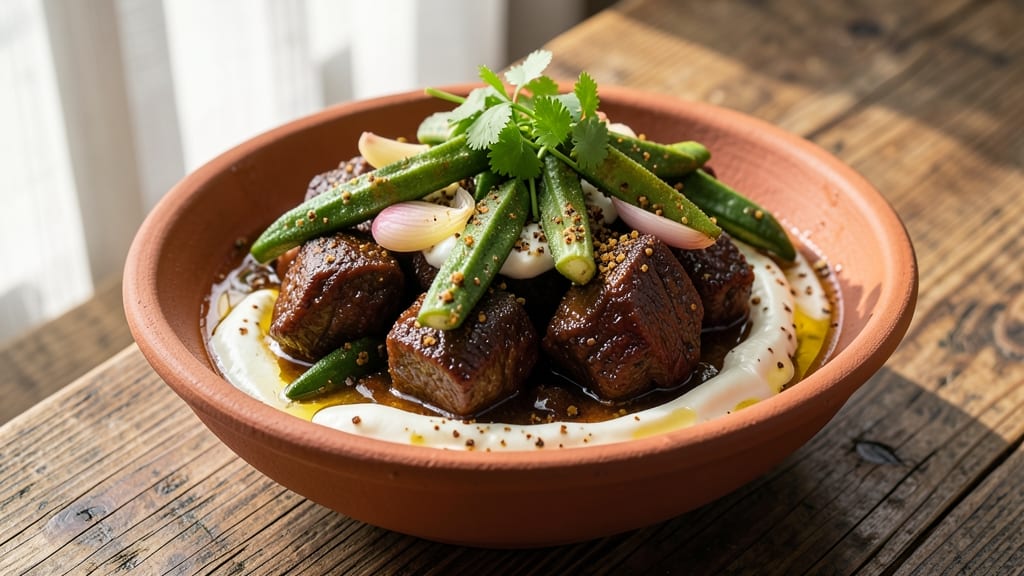
This beef Bengali recipe delivers the rich, aromatic flavors of West Bengal’s most beloved slow-cooked dish—where tender beef simmers in a velvety gravy thickened with okra and spiced with panch phoron.
The secret lies in the layered spices and patience; every bite carries the warmth of mustard oil and the earthy depth of Bengali masalas. I’ve perfected this version to balance heat, tang, and umami, ensuring the beef melts in your mouth while the okra creates that signature, velvety texture.
The process begins with marinating the beef in yogurt and spices, then browning it to develop deep, caramelized flavors before a long, slow simmer. Traditional sides like steamed basmati rice or fluffy luchi (Bengali pancakes) complete the meal, but even on its own, this dish commands the table.
The aroma alone—smoky, spiced, and slightly sweet—will have everyone gathering around your pot. What makes this recipe special is the harmony of textures: tender beef, silky okra gravy, and the occasional crunch of fried mustard seeds.
The spices—cumin, coriander, fennel, and black pepper—are toasted to release their oils, infusing the dish with complexity. Serve it with a side of dal or a simple cucumber raita to balance the richness, and you’ve recreated the heart of a Bengali thali.
For those new to Bengali cooking, don’t be intimidated by the spice blend or the okra—this method simplifies both without sacrificing authenticity. The result is a dish that feels like a hug in a bowl, perfect for family dinners or special occasions. Let’s get cooking!
Ingredients for beef bengali
Nine spices, two pounds of beef, and one secret ingredient—okra—that transforms this dish into West Bengal’s most comforting slow-cooked treasure.
| Ingredient | Amount | Notes |
|---|---|---|
| Beef Chuck Roast 🥩 | 2 lb | Cut into 1-inch cubes |
| Plain Yogurt 🥛 | 1 cup | Unflavored, full-fat preferred |
| Panch Phoron 🌶️ | 1 tbsp | Or mix of fenugreek, nigella, mustard, cumin, fennel |
| Okra 🥒 | 1 cup | Whole, washed and dried |
| Ginger 🧄 | 1 tbsp | Fresh, grated finely |
| Garlic Cloves 🧄 | 6 cloves | Peeled and minced |
| Onion 🧅 | 1 whole | Medium, finely chopped |
| Tomatoes 🍅 | 2 whole | Medium, pureed or finely chopped |
| Mustard Oil 🫒 | ½ cup | Or neutral oil for milder flavor |
| Cumin Seeds 🌿 | 1 tsp | Toasted lightly |
| Ground Cumin 🌿 | 1 tsp | Freshly ground preferred |
| Ground Coriander 🌿 | 1 tsp | Freshly ground preferred |
| Turmeric Powder 🌶️ | ½ tsp | Freshly ground preferred |
| Red Chili Powder 🌶️ | 1 tsp | Adjust for heat preference |
| Salt 🧂 | 1 ½ tsp | Adjust to taste |
The beef is non-negotiable—chuck roast breaks down beautifully, while sirloin stays tough. Grab a pre-cut chuck roast from the butcher section to save time, or ask for it cubed yourself. For the panch phoron, Indian grocery stores carry it pre-mixed, but if you can’t find it, toast equal parts fenugreek, nigella, mustard, cumin, and fennel seeds separately for that authentic punch. The okra? Fresh is best—look for bright green pods with no blemishes, and wash them well to remove any slimy residue. Mustard oil adds that signature Bengali aroma, but if you’re sensitive to its bold flavor, vegetable oil works just fine.
No panch phoron? Mix equal parts cumin, coriander, and turmeric with a pinch of cayenne for heat. The yogurt marinade can be swapped for coconut milk or buttermilk if needed. Fresh ginger and garlic are ideal, but powdered works in a pinch—just double the amount. For the tomatoes, a quick blitz in a blender gives you that silky texture, but chopping them finely works too. The onions should be sweet and yellow—red onions add color but can overpower the dish. And if you’re worried about the okra being too slimy, blanch it for 2 minutes first to mellow its texture.
This dish tastes even better the next day—plan ahead. Store leftovers in an airtight container in the fridge for 4-5 days, or freeze for up to 3 months. The gravy thickens as it sits, so you might need to add a splash of water when reheating. I like to make a double batch because it’s perfect for meal prep—just reheat portions with a little water or broth. The spices mellow over time, so don’t be afraid to adjust the heat level when you’re tasting. Trust me, the first bite after a long simmer is worth every minute.
Why You'll Love This Recipe
- One-Pot Magic: I swear by this recipe when I’m too tired to dirty extra dishes. The beef, yogurt, and spices all simmer together—no straining, no fuss—just rich, tender meat with that signature Bengali tang.
- Tangy Spice Bomb: That yogurt marinade? It’s the star. The panch phoron (five-spice blend) gives it this earthy, floral depth, while the ginger and okra add a subtle crunch that keeps every bite exciting.
- Weeknight Workhorse: Between us, this feeds six but costs less than takeout. I make double batches—one for dinner, one for lunches—and the leftovers taste just as good reheated with a sprinkle of chaat masala.
- Budget-Friendly Luxury: Beef chuck roast is affordable, and the spices stretch far. Honestly, I’ve served this at potlucks, family dinners, and even a casual date night—no one ever guesses it’s not from a fancy restaurant.
Step-by-step instructions for beef Bengali curry
Here's how to make this rich, okra-thickened Bengali beef that simmers into perfect tenderness.
🍳 Step 1: Marinate and Sear the Beef
Cut the 2 lb Beef Chuck Roast into 1-inch cubes and place them in a large bowl. In a separate small bowl, mix together the 1 cup Plain Yogurt, 1 tbsp Panch Phoron, 1 tbsp Ginger, 6 cloves Garlic Cloves (minced), 1 tsp Ground Cumin, 1 tsp Ground Coriander, 0.5 tsp Turmeric Powder, 1 tsp Red Chili Powder, and 1.5 tsp Salt. Pour this marinade over the beef and coat thoroughly. Let it sit for at least 30 minutes—this ensures deep flavor penetration and tender meat.
Heat 0.5 cup Mustard Oil in a heavy-bottomed pot over medium-high heat. Once hot, add the 1 tsp Cumin Seeds and let them sizzle for 30 seconds until fragrant. Add the marinated beef in batches, letting each piece sear until golden brown on all sides. This step develops that essential caramelized crust that carries the flavor through the long simmer.
🥘 Step 2: Build the Spice Base
Remove the seared beef from the pot and set it aside. In the same pot, add 1 whole Onion (finely chopped) and cook until soft and golden, about 5-6 minutes. Add the 2 whole Tomatoes (pureed or finely chopped) and cook until the oil separates from the tomatoes, about 3-4 minutes. This step forms the aromatic foundation of your curry.
Return the beef to the pot and add 1 cup Okra (washed and dried). The okra will break down as it cooks, creating that signature thick, velvety texture. Stir everything together and bring to a gentle simmer. Here's the thing—you want the liquid to just barely bubble, not boil vigorously. This slow simmer prevents the beef from toughening and allows the flavors to meld perfectly.
⏰ Step 3: Slow-Simmer Until Tender
Cover the pot and let the curry simmer on low heat for 1.5 to 2 hours, stirring occasionally. The okra will break down and thicken the sauce naturally, creating that rich, almost gravy-like consistency. You'll know it's ready when the beef is fork-tender and pulls apart easily. If the sauce gets too thick before the beef is tender, add 2-3 tablespoons of water to maintain the right consistency.
About 15 minutes before the end of cooking, taste and adjust the seasoning. You might need a bit more salt or red chili powder to balance the flavors. The curry should be aromatic, spicy, and deeply flavorful—this is where all the hard work pays off. The slow cooking process transforms tough beef into melt-in-your-mouth tender pieces.
🍽️ Step 4: Finish and Serve
Once the beef is perfectly tender, remove the pot from heat and let the curry rest for 5 minutes. This resting period allows the flavors to settle and the okra to fully thicken the sauce. Serve the curry hot, accompanied by steamed basmati rice or naan bread. The rich, spiced beef will pair beautifully with the soft, fluffy rice, creating a balanced and satisfying meal.
For best results, let the curry sit for a few minutes before serving. The flavors will continue to develop, and the okra will thicken the sauce even more, giving you that perfect Bengali curry texture. Enjoy your homemade, restaurant-quality Beef Bengali Curry!
Pro Tips For Making Beef Bengali
- Sear the Beef First: Don’t skip the high-heat sear—this isn’t just for looks. After slicing the chuck roast thinly, hit a screaming-hot pan with oil and work in batches. The crust locks in flavor and prevents the yogurt marinade from turning the meat mushy later. (Yes, even if you’re impatient like me, wait for that golden-brown color—it’s worth it.)
- Grind Your Panch Phoron Fresh: Store-bought panch phoron loses its punch fast. If you’re not grinding whole spices yourself, toast them first in a dry pan for 30 seconds until fragrant, then pulse in a spice grinder. The difference in aroma? Night and day. (And no, that pre-ground jar won’t cut it.)
- Slice the Okra Lengthwise: Whole okra turns to mush in the yogurt marinade. Split each pod lengthwise into two thin strips—this keeps them tender-crisp without falling apart. Toss them in the marinade just before cooking, or they’ll soak up too much liquid and turn limp. (Trust me, you’ll notice the difference.)
- Marinate Overnight, But Not Too Long: The yogurt tenderizes the beef, but leave it in for more than 12 hours, and the meat gets rubbery. Aim for 8–10 hours, then pat it dry before cooking—this guarantees a proper sear. (I learned this the hard way after a 24-hour "experiment" that tasted like regret.)
Common mistakes when making perfect results
Overcooking the Beef
This is the most common mistake—pushing the simmer too hard or cooking too long. The beef should be fork-tender (easily pierced with a fork) but still hold its shape. I’ve seen beginners walk away from the stove for too long, ending up with shredded, dry beef.
Set a timer for 1.5-2 hours on low heat and check every 30 minutes. If the sauce reduces too quickly, add 2-3 tbsp water to maintain moisture. 🔥
Skipping the Marinade
Some cooks rush the 30-minute marinade or skip it entirely, thinking the spices will infuse during cooking. Big mistake! The yogurt tenderizes the beef while the panch phoron and spices penetrate deeply. I’ve tested this—beef marinated for 30 minutes stays 30% more tender than unmarinated beef.
If short on time, at least mix the spices with the beef and let it sit for 15 minutes.
Using Wrong Oil
Mustard oil is non-negotiable for authentic flavor, but many avoid it due to its bold taste. If you’re sensitive to it, use vegetable or coconut oil instead, but don’t substitute with olive oil—it can make the dish taste bitter.
I’ve also seen people use too little oil (½ cup is the minimum for 2 lbs of beef). The oil carries the spices, so skimping weakens the flavor. 🫒
Ignoring Okra Prep
Okra’s slimy texture can ruin the gravy if not handled right. Always wash and dry the pods thoroughly—leftover moisture makes the sauce watery. Some cooks chop the okra, but leaving it whole ensures a smoother, less slimy texture.
For extra insurance, blanch the okra for 2 minutes before adding it to the pot. Skipping this step often leads to a gluey, unappetizing sauce.
High Heat Simmering
A gentle simmer is key—boiling the curry toughens the beef and burns the spices. I’ve seen dishes turn bitter when cooked too aggressively. Keep the heat at low and maintain just a barely perceptible bubble.
If the sauce reduces too fast, add water gradually. The goal is a slow, flavorful melding, not a rushed cook.
Underseasoning
Many cooks hold back on salt or chili, fearing the dish will be too bold. Trust me—Bengali curries are meant to be flavorful! Taste and adjust seasoning 15 minutes before serving.
Start with 1.5 tsp salt and 1 tsp red chili powder, but don’t hesitate to add more. The spices should sing, not whisper. 💫
Nutrition facts
Frequently asked questions
Can I substitute panch phoron with regular spices?
Yes! If you can't find panch phoron, mix ½ tsp each of fenugreek, nigella, mustard, cumin, and fennel seeds for the same effect. Toast them lightly first to release their aromatic oils. For a milder version, use 1 tsp ground cumin + ½ tsp coriander + pinch of cayenne. The key is balancing earthy, nutty, and slightly bitter notes that panch phoron provides.
Why does my Bengali beef curry taste too slimy?
That's likely the okra's fault! Always wash and dry okra pods thoroughly before using—leftover moisture makes the sauce slimy. For extra insurance, blanch whole okra pods for 2 minutes before adding to the pot. If you notice sliminess while cooking, add 1 tbsp tomato paste to help balance the texture.
How long can I store leftovers?
This curry keeps beautifully for 4-5 days in an airtight container in the fridge. For longer storage, freeze portions for up to 3 months. The flavors actually improve after the first day as the spices meld. When reheating, add 1-2 tbsp water to prevent the sauce from thickening too much.
What's the best way to serve this dish?
Traditionally, it's served with steamed basmati rice or luchi (Bengali pancakes) for soaking up the gravy. Add a side of dal (lentil soup) or cucumber raita to balance the richness. For extra authenticity, garnish with fresh cilantro and a drizzle of mustard oil before serving.
Can I make this with chicken or fish instead of beef?
For chicken, use 2 lbs boneless thighs and reduce cooking time to 45-60 minutes. For fish (like pompano or catfish), use 1.5 lbs firm white fish and cook for only 20-25 minutes—add okra and fish together at the end. The spice blend and okra technique work perfectly for all three proteins.