
Soups & Stews
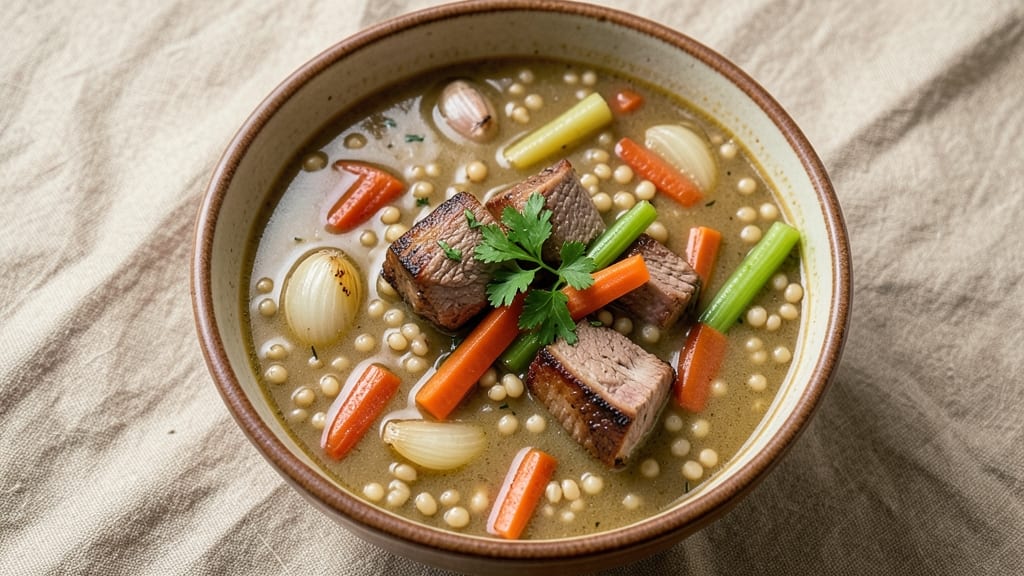
This beef barley soup recipe without tomatoes delivers the ultimate hearty comfort in every steaming bowl—rich, nutty, and deeply satisfying without relying on acidic tomatoes.
The secret lies in slow-cooked beef, toasted barley, and umami-packed mushrooms that develop layers of flavor as they simmer, creating a broth so flavorful it tastes like it's been simmering for hours.
I've perfected this version to balance earthy barley with tender beef, ensuring each spoonful delivers that classic, warming embrace you crave when temperatures drop.
The beauty of this recipe is its simplicity: just a handful of quality ingredients working together to create restaurant-quality depth. You'll start with a well-seared beef chuck roast—the key to intense flavor—before letting it simmer until fork-tender.
Toasted barley adds that signature nutty texture, while mushrooms and aromatic vegetables build the broth's complexity without needing tomatoes. The result is a soup that's both traditional and modern, with enough depth to stand alone or pair with crusty bread.
What makes this version special is how the flavors evolve as it simmers. The beef becomes impossibly tender while the barley absorbs the broth's richness, creating a perfectly balanced soup with every bite—meaty, hearty, and comforting. The aroma alone will have everyone gathering around the table, and the taste?
That's where the magic happens. This is the kind of soup that warms you from the inside out, making it worth every minute of simmering time.
Once you try this recipe, you'll understand why it's become a weeknight staple—easy to prepare but impossible to resist. The technique is straightforward, the ingredients are simple, and the results are consistently delicious.
Whether you're feeding a crowd or saving leftovers for days, this beef barley soup delivers unmatched comfort in every bowl. Let's get started on creating your own pot of this classic dish.
Ingredients for beef barley soup recipe without tomatoes
Six ingredients build the base—beef, barley, and aromatic vegetables—with wine and herbs to deepen the flavor.
| Ingredient | Amount | Notes |
|---|---|---|
| Beef Chuck Roast 🥩 | 2 lb | Cut into 1-inch cubes, trimmed of fat |
| Pearl Barley 🌾 | 1 cup | Uncooked, rinsed thoroughly |
| Yellow Onion 🧅 | 1 whole | Medium size, chopped |
| Carrots 🥕 | 4 medium | Peeled, cut into 1-inch chunks |
| Celery Stalks 🧆 | 3 whole | Trimmed, cut into 1-inch pieces |
| Garlic Cloves 🧄 | 4 cloves | Peeled, smashed |
| Cremini Mushrooms 🍄 | 8 oz | Sliced, stems removed |
| Beef Broth 💧 | 6 cups | Low-sodium preferred |
| Dry Red Wine 🍷 | ½ cup | Bold variety like Cabernet |
| Fresh Thyme 🌿 | 2 sprigs | Stems removed |
| Fresh Parsley 🌿 | ¼ cup | Chopped, for garnish |
| Bay Leaves 🌿 | 2 whole | Dried, removed before serving |
| Olive Oil 🫒 | 2 tbsp | Extra-virgin for searing |
| Salt 🧂 | 1 ½ tsp | Kosher or sea salt |
| Black Peppercorns 🌶️ | 1 tsp | Freshly cracked |
The beef chuck roast is non-negotiable here. Look for well-marbled cuts at Whole Foods or your local butcher—they'll have the best quality. If you're buying pre-cubed, check for even-sized pieces (about 1-inch cubes) to ensure consistent cooking. The barley should be pearl barley, not instant—it needs time to develop that nutty texture. For the mushrooms, cremini or baby bella work best—their meaty texture holds up during simmering. If you're short on time, Trader Joe's sells pre-sliced mushrooms in the frozen section, which saves chopping.
No red wine? Substitute with an extra 1 cup of beef broth plus 1 tbsp balsamic vinegar—it adds depth without alcohol. Fresh thyme is ideal, but dried works at half the amount. The carrots and celery can be swapped for leeks or fennel if you're feeling fancy. For the barley, if you can't find pearl barley, wild rice blend gives a similar chewy texture. The broth? Low-sodium is key—you'll be adding plenty of salt later. If you're using store-bought broth, low-sodium chicken broth works in a pinch, but beef is best for authentic flavor.
This soup tastes even better the next day—flavors meld beautifully after 24 hours. Store leftovers in the fridge for 5 days or freeze for 3 months. For freezing, portion into airtight containers with a layer of broth on top to prevent freezer burn. When reheating, start with a splash of water or broth to loosen the soup. The barley will soften further, so it's perfect for quick lunches. Garnish with fresh parsley just before serving—brightens up the rich flavors.
Why You'll Love This Recipe
- One-Pot Magic: I swear by this recipe—just dump everything in one pot, add water, and walk away. The beef chuck roast practically melts into tender shreds while the barley soaks up all the flavor, no extra pots or pans needed.
- Deep Umami Bomb: That slow-cooked beef chuck? It’s the star—rich, savory, and packed with natural depth. The onions and celery caramelize just enough to add a sweet, earthy backbone, while the barley gives it that satisfying chew.
- Meal Prep MVP: Make a double batch on Sunday, and you’ve got lunch sorted for the week. The flavors actually get better as it sits, and reheating is a breeze—just stir and warm, no fuss.
- Budget-Friendly Powerhouse: This soup costs me pennies per serving but feels like a fancy restaurant dish. Chuck roast stretches far, barley adds bulk without breaking the bank, and the veggies are pantry staples—no specialty shopping needed.
Step-by-step instructions for beef barley soup
Here's how to build rich, nutty depth without tomatoes—just hearty beef and barley.
Sear the Beef for Deep Flavor
Heat the 2 tablespoons olive oil in a large Dutch oven over medium-high heat until shimmering. Pat the 2 lb beef chuck roast dry with paper towels and cut into 1-inch cubes, trimming any visible fat. Working in batches, sear the beef for 2-3 minutes per side until deeply browned. This step develops the Maillard reaction, which forms the soup's foundational richness.
As you sear, place the browned beef in a bowl and set aside. Don't crowd the pot—this prevents the temperature from dropping. The beef should release easily from the pan when ready to flip. If it sticks, add a splash of dry red wine to deglaze momentarily, but return it to the pan immediately to continue browning.
Build the Vegetable Base
In the same Dutch oven, add the chopped yellow onion, 1-inch celery pieces, and 1-inch carrot chunks over medium heat. Cook for 5-6 minutes, stirring occasionally, until the vegetables soften and the onion becomes translucent. This step ensures the vegetables release their natural sweetness and form the aromatic backbone of the soup.
Add the smashed garlic cloves and sliced cremini mushrooms, cooking for another 3-4 minutes until the mushrooms release their moisture and the garlic becomes fragrant. Sprinkle with 1 teaspoon salt and 1 teaspoon black peppercorns at this stage to season the vegetables while they cook. The mushrooms will break down slightly, adding an earthy depth to the soup.
Deglaze and Simmer the Broth
Pour in the ½ cup dry red wine, scraping up any browned bits from the bottom of the pot with a wooden spoon. This deglazing step captures all the caramelized flavors you've built so far. Let the wine simmer for 2-3 minutes until it reduces by half and the alcohol cooks off, leaving behind a concentrated, rich flavor.
Add the 6 cups beef broth, 2 sprigs fresh thyme, and 2 whole bay leaves. Stir to combine, then bring the mixture to a gentle boil. Once boiling, reduce the heat to low and let it simmer uncovered for 30 minutes. This initial simmer allows the broth to infuse with the flavors of the vegetables and wine, creating a flavorful base for the soup.
Add Barley and Cook Until Tender
Rinse the 1 cup pearl barley thoroughly under cold water to remove any dust or impurities. Add it to the simmering broth along with the seared beef. Stir gently to ensure the barley is evenly distributed. The barley should be fully submerged in the broth—if not, add a small amount of water to cover it completely.
Return the soup to a gentle simmer and cook for 45-50 minutes, stirring occasionally, until the barley is tender and the beef is fork-tender. The barley should hold its shape but be soft to the bite. If the soup reduces too much and the barley isn't fully cooked, add a splash of water or broth to maintain the liquid level. The soup should have a hearty, comforting consistency—thick enough to coat the back of a spoon but still easy to ladle.
Finish and Serve with Fresh Herbs
Remove the 2 sprigs fresh thyme and 2 whole bay leaves from the soup. Taste and adjust the seasoning with additional salt or black peppercorns if needed. The soup should be rich, savory, and well-balanced, with a deep umami flavor from the beef and nutty notes from the barley.
Ladle the soup into bowls and garnish each serving with ¼ cup fresh parsley. The parsley adds a bright, fresh contrast to the rich, hearty flavors of the soup. Serve immediately while hot, with crusty bread on the side to soak up every last drop of the comforting broth. This soup is best enjoyed fresh, as the flavors continue to develop and meld together as it sits.
Pro Tips For Making Beef Barley Soup Recipe Without Tomatoes
- Brown the Chuck Twice: I learned this the hard way—rushing the beef browning means flavorless broth. Sear the chuck roast in batches over medium-high heat until deep brown (about 4-5 minutes per side), then push it aside, scrape the pan clean, and sear the onions, carrots, and celery in the same drippings for 8-10 minutes. That caramelized crust is the foundation of your soup.
- Parboil the Barley First: Pearl barley’s texture changes dramatically if you toss it in raw. Toast it in the pot for 2 minutes over medium heat (just until fragrant), then add 2 cups of hot broth and simmer for 10 minutes before adding the rest of the liquid. This prevents a gummy, undercooked mess—your barley will be tender but still hold its shape.
- Don’t Crowd the Pot: I used to dump everything in at once, and the beef would barely simmer, let alone break down. Start with the chuck roast, onions, carrots, and celery in a deep pot, then add just enough broth to cover everything by 1 inch. Let it bubble freely for 10 minutes before adding the barley—this guarantees the meat tenderizes properly.
- Use Carrot Tops (If You Have Them): Sounds weird, but it works: toss the leafy tops of your carrots into the pot with the veggies. They add a subtle earthy note that deepens the broth’s flavor without overpowering it. If you skip this, at least chop the carrots into even ½-inch slices—they’ll cook faster than whole sticks and avoid a mushy texture.
Troubleshooting this recipe
Broth Too Thin?
If your soup looks too watery after simmering, don’t panic—this is an easy fix. The barley absorbs liquid as it cooks, so if it’s still undercooked and the broth is too thin, simply reduce the heat to low and let it simmer uncovered for an additional 15-20 minutes.
This allows excess moisture to evaporate while the barley continues to soften. For a quicker fix, stir in 1-2 tablespoons of cornstarch mixed with 2 tablespoons cold water and simmer for 5 minutes until thickened. 💫
Barley Undercooked?
Pearl barley needs time to develop its nutty texture, but if it’s still firm after 50 minutes, it’s likely because the broth wasn’t acidic enough to break down the starches.
Add 1 tablespoon of apple cider vinegar or lemon juice to the pot, stir, and simmer for another 10-15 minutes. Alternatively, swap out ½ cup of the broth for ½ cup of water and continue cooking—this dilutes the broth slightly, giving the barley more room to soften.
Always check the barley’s texture before serving; it should be tender but still hold its shape.
Beef Too Tough?
Overcooking is the usual culprit for tough beef, but even if it seems dry, there’s hope. Remove the beef from the pot and shred it with two forks, then return it to the soup. The long simmer will help redistribute the juices.
For extra tenderness, add 1 cup of beef broth to the pot, cover, and let it sit off the heat for 10 minutes before serving.
If the beef was seared properly but still tough, next time try sous-viding the beef at 160°F for 6-8 hours before adding it to the soup—this guarantees melt-in-your-mouth texture. 🥩
Mushrooms Too Mushy?
If your cremini mushrooms turn to mush during cooking, it’s likely because they were sliced too thin or cooked too long. To prevent this, slice them ¼-inch thick and add them after the onions and carrots have softened (about 3-4 minutes before the end of cooking).
For a firmer texture, stir in the mushrooms only in the last 10 minutes of simmering. If they’ve already turned mushy, drain them slightly in a colander and pat dry with a paper towel before returning them to the pot—this removes excess moisture and helps them retain their shape.
Flavor Too Mild?
A lackluster flavor usually means the broth didn’t develop enough depth. Boost umami by adding 1 teaspoon of soy sauce or Worcestershire sauce to the pot and simmering for 5 minutes.
For a deeper, meatier taste, stir in 1 tablespoon of beef bouillon powder or 1 teaspoon of fish sauce (trust me, it works!).
If the soup tastes bland but the ingredients are fresh, try toasting the barley in a dry pan for 2 minutes before adding it to the pot—this enhances its nutty flavor. Finally, finish with a splash of balsamic vinegar or a sprinkle of smoked paprika to add complexity. ✨
Broth Too Salty?
Over-salting is a common mistake, but it’s fixable. If the broth tastes too salty, add ½ cup of cold water or unsalted broth to the pot and stir well. Simmer for 5 minutes to let the flavors rebalance.
For a more dramatic fix, remove ½ cup of the broth and stir in ½ cup of unsalted broth or water, then return the soup to heat. If you’re using store-bought broth, always opt for low-sodium to avoid this issue in the first place.
Taste as you go—adding liquid gradually helps dilute the salt without thinning the soup too much.
Nutrition facts
Frequently asked questions about beef barley soup without tomatoes
Can I use a different type of barley?
Pearl barley is traditional, but you can substitute with wild rice blend or hulless barley for a slightly chewier texture. Avoid instant barley—it cooks too quickly and loses that nutty depth. If using wild rice, reduce cooking time by 10 minutes since it softens faster than pearl barley.
What's the best cut of beef for this recipe?
Beef chuck roast is ideal because it stays tender when slow-cooked. For extra richness, use brisket or short ribs, but increase simmering time by 15-20 minutes. Avoid lean cuts like sirloin—they dry out. If you can't find chuck, stew meat works well too.
How do I make this soup vegetarian?
Replace the beef with mushrooms (16 oz) and lentils (1 cup), and use vegetable broth instead. Add 1 teaspoon soy sauce or miso paste for umami depth. For extra heartiness, include 1 cup diced potatoes that cook alongside the barley.
Can I make this soup in a slow cooker?
Brown the beef in a skillet first, then transfer everything to your slow cooker. Cook on low for 6-7 hours or high for 3-4 hours. The slow cooker's gentle heat enhances the beef's tenderness. Just add the barley 30 minutes before serving to prevent overcooking.
Why does my soup taste bland?
Blandness usually means the broth didn't develop enough flavor. Boost it by adding 1 tablespoon beef bouillon or 1 teaspoon fish sauce (trust me, it works!). Also check your salt—taste as you go! For extra depth, toast the barley in a dry pan for 2 minutes before adding it to the pot.