
Main Courses
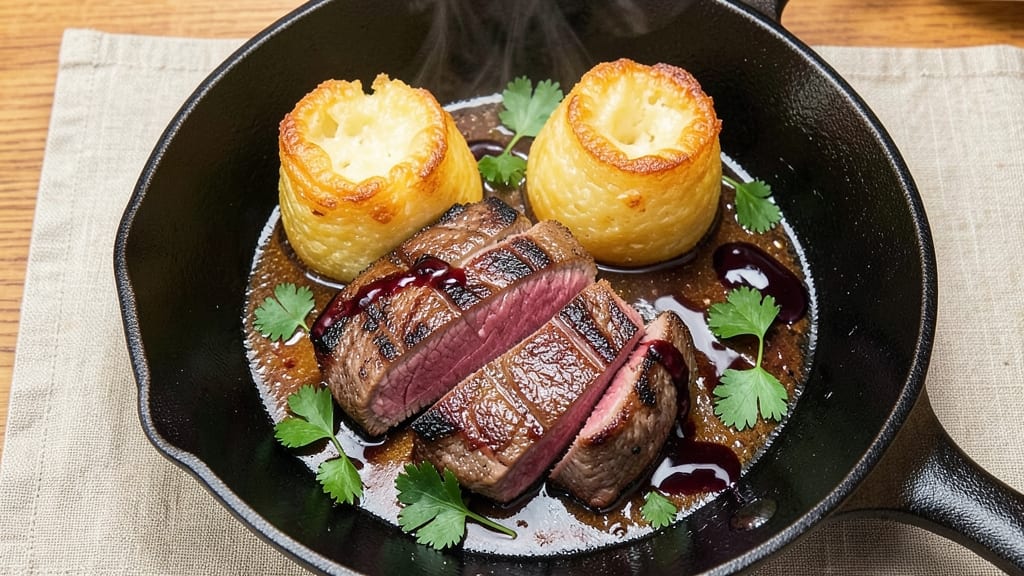
This beef and Yorkshire pudding recipe delivers the ultimate British Sunday roast experience—crispy, golden Yorkshire puddings crowned with perfectly cooked beef and rich gravy.
The secret lies in baking the puddings at high heat while the beef roasts, ensuring they puff up into airy, shatteringly crispy crowns that soak up every drop of savory gravy.
I developed this method after years of trial and error, and it never fails to impress even the most skeptical dinner guests.
The beauty of this dish is its simplicity: a tender beef roast (ribeye, sirloin, or even a beef Wellington) paired with classic Yorkshire puddings that transform a simple meal into something restaurant-worthy.
The batter for the puddings is light and airy, requiring just eggs, flour, and milk—no fancy ingredients, just precise technique. While the beef roasts in the oven, the pudding batter bakes in a hot pan, creating those signature crispy edges and soft centers that make every bite unforgettable.
What you’ll end up with is a plate that looks and tastes like it belongs in a London pub—juicy, perfectly cooked beef with crispy Yorkshire puddings that act as edible spoons for the rich gravy.
The puddings stay light and airy inside while developing a golden crust that contrasts beautifully with the savory meat. This is comfort food at its finest, a dish that feels indulgent yet comes together with straightforward steps.
The gravy ties everything together, made from the beef drippings and enriched with a splash of red wine or beef stock. Serve with roasted vegetables or a simple green salad to round out the meal. Here’s how to bring this classic British dish to your table with foolproof results.
Ingredients for beef and yorkshire pudding
Fourteen ingredients transform into a British classic with crispy crowns and savory gravy.
| Ingredient | Amount | Notes |
|---|---|---|
| Ribeye Steak 🥩 | 1 ½ lb | Bone-in preferred for flavor |
| Large Eggs 🥚 | 4 whole | Room temperature for even baking |
| All-Purpose Flour 🌾 | 1 cup | Sifted for light batter |
| Whole Milk 🥛 | 1 cup | Room temperature preferred |
| Unsalted Butter 🧈 | ½ cup | Cold, cubed for gravy |
| Beef Stock 💧 | 1 cup | Homemade or quality store-bought |
| Red Wine 🍷 | ¼ cup | Dry, bold variety |
| Fresh Rosemary 🌿 | 1 tbsp | Chopped, for seasoning |
| Fresh Thyme 🌿 | 1 tbsp | Chopped, for seasoning |
| Carrots 🥕 | 4 whole | Medium size, peeled |
| Yellow Onion 🧅 | 1 whole | Medium size, peeled |
| Salt 🧂 | 1 ½ tsp | Kosher or sea salt |
| Ground Black Pepper 🌶️ | ½ tsp | Freshly ground preferred |
| Cornstarch 🌾 | 1 tbsp | For gravy thickening |
The beef is the foundation—ribeye with bone delivers the richest flavor, but sirloin works too. Look for cuts with good marbling at Whole Foods or your local butcher; avoid pre-cut steaks from the grocery store's meat counter if they feel dry. The carrots and onion should be firm and bright, not rubbery or sprouting. For the Yorkshire puddings, room-temperature eggs and milk are non-negotiable—they bake more evenly. I always buy large eggs from the store's refrigerated section, and I let them sit out for 30 minutes before using. The flour should be all-purpose, not self-rising, and sifted for a light batter.
No ribeye? Sirloin or even a beef Wellington works—just adjust cooking time. Short on whole milk? Evaporated milk at half the amount gets you close, but the texture won't be identical. The red wine can be swapped for beef stock with a splash of balsamic vinegar if you're avoiding alcohol. Fresh rosemary and thyme are ideal, but dried at one-third the amount works in a pinch. For the gravy, if you don't have cornstarch, all-purpose flour works too—just use twice the amount. The carrots can be baby carrots if that's what's in the fridge, but whole carrots add better flavor to the roasting pan.
Store the roasted beef in an airtight container for 3-4 days in the fridge, or freeze for 3 months. The Yorkshire pudding batter can be mixed ahead and refrigerated for up to 24 hours, but let it sit at room temperature for 30 minutes before baking. Gravy reheats beautifully—simmer on the stove for 5 minutes or microwave for 1 minute. I always make extra gravy and freeze it in ice cube trays for quick future meals. The carrots and onion can be roasted ahead and reheated in the gravy for a complete one-pan meal.
Why You'll Love This Recipe
- One-Pan Magic: I swear by this—just sear the ribeye, pour the batter, and let the oven do the work. No flipping, no fussing, no extra dishes. That golden crust on the pudding? It’s basically edible gold.
- Steakhouse at Home: The ribeye stays juicy and caramelized, while the yorkshires deliver that perfect crispy-top, pillowy-inside magic. Honestly, it’s the closest I’ve gotten to a Sunday roast without the hours of prep.
- Weeknight or Weekend: Throw this together when you’re craving something special but don’t want to slave over it. The batter’s ready in minutes, and the steak cooks while you’re chopping veggies for the side. (Yes, even on a Tuesday night.)
- Leftovers That Don’t Suck: Cold yorkshires? Still delicious—toss them in a sandwich or fry them up for breakfast. The steak reheats like a dream, and honestly, the leftovers are half the fun. Budget-friendly and foolproof.
Step-by-step instructions for beef and Yorkshire pudding
Master the perfect balance of golden Yorkshire puddings and tender ribeye with this foolproof method.
Prepare the Yorkshire Pudding Batter
In a medium mixing bowl, whisk together the 4 whole large eggs and 1 cup whole milk until completely combined. Add the 1 cup all-purpose flour, 1.5 teaspoons salt, and 0.5 teaspoon ground black pepper, then whisk vigorously for 2-3 minutes until the batter is smooth and slightly thickened. The mixture should be thin enough to pour easily but with enough body to hold its shape when baked.
Let the batter rest at room temperature for 15 minutes before using. This resting period allows the gluten to relax, resulting in lighter, crispier puddings. Avoid skipping this step—it makes a noticeable difference in texture.
Sear and Roast the Ribeye with Vegetables
Preheat your oven to 425°F. Pat the 1.5 lb ribeye steak dry with paper towels and season generously with additional salt and pepper. Heat 2 tablespoons olive oil in an oven-safe skillet over high heat until shimmering. Sear the steak for 3-4 minutes per side until it develops a deep brown crust.
Remove the steak and set aside. In the same skillet, add 1 chopped whole yellow onion and 4 peeled, sliced carrots. Sauté for 5-6 minutes until the vegetables soften and begin to caramelize. Pour in 0.25 cup red wine and scrape up any browned bits from the bottom of the pan. Return the steak to the skillet and transfer everything to the preheated oven.
Bake the Yorkshire Puddings
While the steak roasts, heat 0.5 cup unsalted butter in a muffin tin or Yorkshire pudding pan over medium heat until melted and foaming. Carefully pour the rested batter into the hot muffin cups, filling each ¾ full. Bake immediately in the same 425°F oven for 20-25 minutes until the puddings are deep golden brown and puffed to nearly double their size.
Here's the key: don't open the oven door during baking. The sudden temperature drop causes the puddings to collapse. You'll know they're done when they're crisp on the outside and light as air inside. Keep them warm in a 200°F oven while you finish the gravy.
Make the Rich Beef Gravy
Return the skillet with the roasted steak and vegetables to the stovetop. Add 1 cup beef stock and 1 tablespoon each chopped fresh rosemary and thyme, scraping up all the browned bits. Let the mixture simmer for 5 minutes until slightly reduced. Remove the steak and vegetables, leaving the juices in the pan.
In a small bowl, whisk together 1 tablespoon cornstarch with 2 tablespoons cold water to make a slurry. Slowly stir this into the pan juices while constantly whisking until the gravy thickens to a smooth, velvety consistency. Strain if you prefer a completely smooth finish.
Rest and Serve
Let the 1.5 lb ribeye steak rest for 10 minutes before slicing against the grain into ¼-inch thick portions. Arrange the crisp Yorkshire puddings on plates, top with sliced steak, and ladle the rich gravy generously over everything. The contrast of crispy puddings with tender beef and velvety gravy makes this dish truly special.
Serve immediately while the puddings are still warm and crisp. The secret to this perfect combination lies in the precise timing of each component—hot batter in hot fat, perfectly seared meat, and a well-timed gravy. Each element must be executed with care to achieve the restaurant-quality result you're aiming for.
Pro Tips For Making Beef And Yorkshire Pudding
- CRANK THE PUDDING PAN: High heat is non-negotiable for Yorkshire puddings—your oven should hit 425°F (220°C) before you even think about putting the batter in. I learned this the hard way after making a sad, flat pudding that looked more like a pancake. Preheat that oven like it’s your job, and resist the urge to peek.
- DRIP THE STEAK FIRST: Pat that ribeye dry before searing, but don’t stop there—let it sit at room temp for 20-30 minutes. Cold meat steams instead of searing, and you’ll end up with a gray, sad crust. While it’s out, use a paper towel to wipe off any excess moisture from the steak’s surface—this guarantees a proper Maillard reaction.
- SKIP THE OVERMIXED BATTER: Whisk the egg, milk, and flour just until combined—lumps are fine, but don’t turn it into glue. Overmixing develops gluten, and your puddings will turn out dense instead of light and airy. I used to beat this like I was angry at the batter, and it always came out like a hockey puck.
- SAVE THE DRIPPINGS: Don’t pour that steak fat down the drain—use it to grease your pudding pan. A thin, even layer of rendered fat (about 1 tablespoon) creates the perfect crust. If you’re lazy, melt a little unsalted butter instead, but the drippings add a richness that store-bought butter can’t match.
Serving suggestions for this dish
Classic British Plating
Serve the beef and Yorkshire puddings in the traditional British style: place 2-3 crisp puddings on each plate, topped with 3-4 slices of ribeye arranged fan-style. Ladle generous gravy over the meat, allowing it to pool slightly in the puddings so guests can scoop it up.
This presentation mimics classic pub-style roasts where every bite includes both meat and gravy. 🥩
Vegetable Accompaniments
Roasted root vegetables like carrots, parsnips, and potatoes add heartiness and balance the richness. Toss them in olive oil, salt, and rosemary, then roast alongside the beef at 400°F for 30-40 minutes.
For a lighter option, serve a simple arugula salad with lemon vinaigrette—its peppery bite cuts through the richness of the gravy. 🥕
Gravy Variations
For extra depth, finish the gravy with 1 teaspoon Worcestershire sauce or a splash of balsamic vinegar. If you prefer a smoother texture, strain through a fine-mesh sieve. For a modern twist, swirl in 1 tablespoon crème fraîche just before serving—it adds a silky contrast to the crisp puddings.
Trust me, this elevates the dish to restaurant-worthy levels. 🍷
Make-Ahead Serving
Assemble the meal ahead by roasting the beef and vegetables, then refrigerate separately. Reheat the beef in a 350°F oven for 15 minutes, while warming the puddings in the oven for 5 minutes.
Reheat gravy on the stovetop, stirring constantly until smooth. This approach saves time while keeping everything perfectly crisp and warm. ⏰
Dessert Pairings
Finish the meal with a British classic like sticky toffee pudding or apple crumble—both complement the savory flavors. For something lighter, serve clotted cream and berries with shortbread. The contrast between the rich main course and sweet finish feels like a proper Sunday dinner. 🍰
Wine Recommendations
A bold red like Malbec or Cabernet Sauvignon stands up to the beef's richness, while a crisp Chardonnay balances the dish's savory elements. For beer lovers, a British ale like Fuller's ESB or a hoppy IPA cuts through the gravy's richness.
Avoid heavy, tannic wines—they can overpower the delicate puddings. 🍺
Nutrition facts
Frequently asked questions
Can I make Yorkshire puddings without a muffin tin?
Use a cast-iron skillet with 1-inch balls of batter spaced apart, or even a baking sheet lined with parchment paper. The key is to keep the batter hot and the fat (butter or oil) at medium-high heat until it foams. Just reduce the oven time to 15-20 minutes for larger puddings.
What's the best cut of beef for this recipe?
For maximum flavor, use a bone-in ribeye or sirloin—the bone adds richness and the marbling ensures juicy results. If you prefer leaner cuts, filet mignon works but needs careful timing to avoid drying out. Avoid pre-cut steaks from grocery counters; ask your butcher for dry-aged options for deeper flavor.
Why did my Yorkshire puddings collapse?
Most likely, you opened the oven door too soon or the batter wasn't hot enough when poured. Always bake at 425°F with the oven door closed until fully puffed (20-25 minutes). Also ensure your batter rested 15 minutes at room temperature—cold batter causes flat puddings.
Can I make this ahead of time?
Yes! Roast the beef and vegetables up to 2 days ahead, then refrigerate separately. Reheat the beef in a 350°F oven for 15 minutes and warm puddings for 5 minutes. Make gravy fresh or reheat stored portions. The puddings are best made fresh, but you can prepare batter ahead and refrigerate it for up to 24 hours.
How do I make the gravy extra rich?
For deeper flavor, add 1 tablespoon cold butter at the end or stir in 1 teaspoon Worcestershire sauce. For a restaurant-style finish, whisk in 1 tablespoon crème fraîche just before serving. Always scrape up all browned bits from the pan—they're packed with flavor!