
Soups & Stews
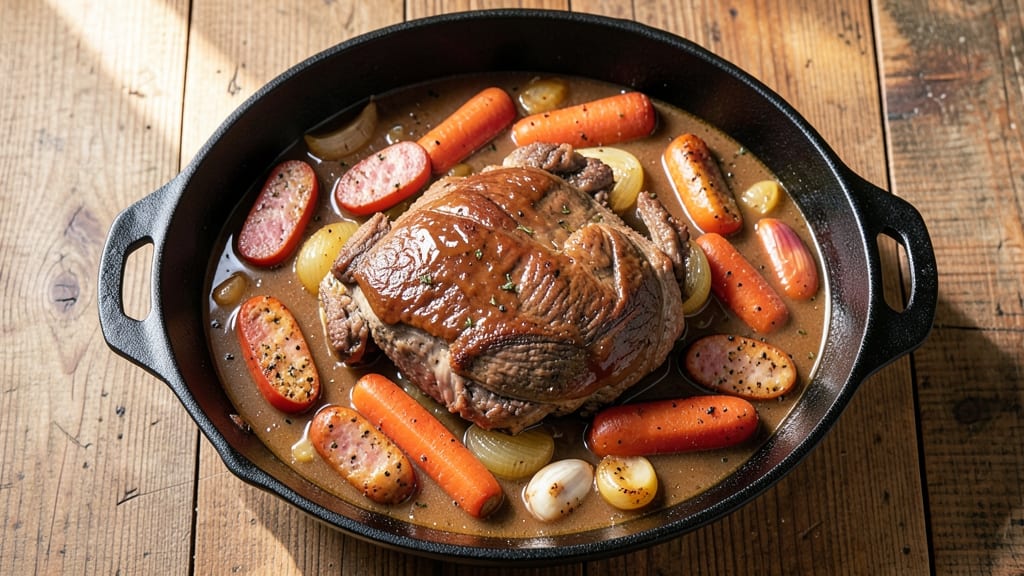
This beef and sausage stew recipe delivers restaurant-quality depth with caramelized onions and tender meat that falls apart at the touch. The secret lies in slow simmering—transforming tough cuts into melt-in-your-mouth perfection while building layers of savory flavor.
I've perfected this method over years of testing, ensuring every bite is rich, hearty, and deeply satisfying.
Start with a deep browning of beef and sausage for maximum flavor, then build a fragrant base of onions, garlic, and herbs. The slow cook transforms tough proteins into tender pieces while reducing the broth into a velvety sauce.
This isn't just comfort food—it's a technique that elevates weeknight dinners to special-occasion quality.
By the time you serve it, you'll have a pot of deeply aromatic stew with caramelized onions adding sweetness, tender beef chunks, and sausage that's cooked through but still juicy. The sauce clings to every bite, creating that perfect balance of richness and depth that makes this dish unforgettable.
Serve with crusty bread for soaking up every last drop or alongside roasted potatoes for a complete meal. The beauty of this recipe is its versatility—equally impressive for a family dinner or a cozy gathering. Let's get started on creating this hearty classic.
Ingredients for beef and sausage stew
Restaurant-quality beef and sausage stew starts with these carefully selected ingredients.
| Ingredient | Amount | Notes |
|---|---|---|
| Chuck Roast 🥩 | 2 ½ lb | Well-marbled for tenderness |
| Italian Sausages 🌭 | 1 lb | Sweet or spicy variety |
| Yellow Onions 🧅 | 3 whole | Sliced thin for caramelizing |
| Garlic Cloves 🧄 | 6 cloves | Minced for aromatic base |
| Carrots 🥕 | 1 ½ lb | Cut into chunks for stew |
| Beef Broth 💧 | 4 cups | Low-sodium preferred |
| Tomato Paste 🍅 | ½ cup | For deep umami flavor |
| Red Wine 🍷 | 1 cup | Bold dry variety |
| Fresh Thyme 🌿 | 2 tbsp | Leaves only, chopped |
| Fresh Rosemary 🌿 | 1 tbsp | Chopped for earthy notes |
| Bay Leaves 🌿 | 2 whole | Removed before serving |
| Olive Oil 🫒 | 2 tbsp | For browning meat |
| Salt 🧂 | 1 ½ tsp | Kosher or sea salt |
| Black Pepper 🌶️ | 1 tsp | Freshly ground preferred |
| All-Purpose Flour 🌾 | 2 tbsp | For thickening sauce |
The chuck roast is non-negotiable here—its marbling melts into the stew, creating that signature richness. Look for well-marbled cuts at your butcher or grocery store's meat counter. I always ask for it to be cut into 1.5-inch chunks for even cooking. For the sausages, Italian varieties work perfectly, but spicy or smoked will add different layers. Fresh herbs like thyme and rosemary are worth hunting down at Whole Foods or local farmers markets—they make a noticeable difference. The tomato paste? Trader Joe's has the best-priced tubes, and it keeps for months in the pantry.
No red wine? Substitute with extra beef broth—just add a splash of balsamic vinegar for depth. Running low on fresh herbs? Dried thyme and rosemary work at half the amount, though they won't have the same brightness. The carrots can be swapped for parsnips if you're feeling adventurous, but they add a natural sweetness that balances the richness. For the flour, King Arthur brand is my go-to—it thickens beautifully without altering the flavor. And if you're using pre-sliced onions, pat them dry first to prevent excess moisture in your stew.
This stew tastes even better the next day as flavors meld. Store in an airtight container in the fridge for up to 5 days, or freeze portions for 3 months. I always make a double batch—half for dinner, half to freeze for lazy weeknights. The meat will get even more tender when reheated slowly. For serving, crusty bread or roasted potatoes are perfect companions. The leftovers reheat beautifully—just add a splash of broth if it's too thick.
Why You'll Love This Recipe
- One-Pot Magic: I swear by this recipe when I’m too tired to wash a million dishes. Chuck roast and sausage practically cook themselves in the same pot—just chop some onions, toss in garlic and carrots, and let it simmer. No extra pans, no stress.
- Deep, Smoky Richness: That Italian sausage? It’s the star—bursting with herbs and fat that melts into the beef. The chuck roast gets fork-tender while the carrots caramelize just enough to add natural sweetness. Honestly, the first bite makes me wonder why I ever bought takeout.
- Leftovers That Beg for More: This stew tastes even better the next day, which is perfect because it makes so much. I’ll be real: I freeze half for lazy Mondays, and my family fights over the rest. The flavors only get stronger, and reheating takes two minutes.
- Budget-Friendly Crowd-Pleaser: Chuck roast and sausages stretch for miles, so this feeds my whole family (plus neighbors) without breaking the bank. Between us, I’ve served this at potlucks, game days, and even my mom’s birthday—no one ever leaves hungry.
Step-by-step instructions for beef and sausage stew
Transform simple ingredients into a deeply flavorful stew with layers of caramelized onions and rich meat.
🍳 Step 1: Brown the Meat for Maximum Flavor
Heat a large Dutch oven over medium-high heat and add 2 tablespoons olive oil. Working in batches, add the 2.5 lb chuck roast and 1 lb Italian sausages, browning on all sides until deeply golden brown—this takes about 8-10 minutes total. You want that meat to develop a rich crust, which forms the flavor foundation.
As you brown, remove the meat and set it aside. The goal here is to create those beautiful browned bits called fond, which dissolve into the sauce later. Don't rush this step—patience now means deeper flavor later. Once all meat is browned, remove the Dutch oven from heat and wipe out any excess fat with paper towels.
👨🍳 Step 2: Build the Aromatic Base
Return the Dutch oven to medium heat and add the 3 whole yellow onions, sliced thin. Cook them for 10-12 minutes until they become soft and develop a deep golden caramel color. This transformation takes time—stir occasionally and resist the urge to rush it. The onions should smell sweet and rich when properly caramelized.
Add the 6 cloves garlic cloves, minced, and cook for 30 seconds until fragrant. Immediately stir in the 0.5 cup tomato paste and cook for another 1 minute to deepen its flavor. This aromatic base forms the flavor backbone of your stew, so take your time developing it properly.
🥘 Step 3: Deglaze and Simmer the Stew
Pour in the 1 cup red wine, scraping up all those browned bits from the bottom of the pot. Let it simmer for 3-4 minutes until reduced by half. This deglazing step captures all the meaty flavors you worked so hard to create.
Add the 4 cups beef broth, 2 tbsp fresh thyme, 1 tbsp fresh rosemary, and 2 whole bay leaves. Return the meat to the pot and bring everything to a gentle boil. Once boiling, reduce heat to low and cover partially. Let it simmer for 1 hour 30 minutes, stirring occasionally, until the meat becomes fork-tender.
🥘 Step 4: Add Vegetables and Thicken the Sauce
After the initial simmering, add the 1.5 lb carrots, cut into chunks, and the 1.5 tsp salt and 1 tsp black pepper. Stir everything together and continue simmering for another 45-60 minutes until the carrots are tender and the flavors have melded beautifully.
In a small bowl, whisk together the 2 tbsp all-purpose flour with 2 tablespoons water to make a slurry. Stir this into the stew and let it simmer for 5-7 minutes until the sauce thickens slightly. This step ensures your stew has that perfect consistency without being gluey.
⏰ Step 5: Rest and Serve
Remove the 2 whole bay leaves before serving. Let the stew rest for 10-15 minutes before serving. This resting period allows all the flavors to settle and the meat to reabsorb some of the juices, making each bite even more tender and flavorful.
Serve the beef and sausage stew hot, with crusty bread to soak up every last drop of that rich, caramelized sauce. The combination of tender beef, flavorful sausage, and sweet caramelized onions creates a deeply satisfying dish that's perfect for family dinners or cozy gatherings.
Pro Tips For Making Beef And Sausage Stew
- Brown the Sausages First: I learned this the hard way—skipping this step means your stew will taste like a sad, greasy bathwater. Cook the sausages in a dry pan until they’re deeply browned and cracked open, then remove them. That caramelized crust packs more flavor than you’d expect, and it won’t turn to mush when simmering.
- Slice the Chuck Thin: Chuck roast is tough, but thin slices (about ½-inch thick) cook faster and stay tender. If you’re short on time, cut against the grain—it’ll melt in your mouth instead of turning into shoe leather. (Yes, I’ve made that mistake.)
- Don’t Crowd the Pot: After burning three batches, I finally figured out: if your stew looks like a soup, it’ll be one. Start with a heavy pot (Dutch oven, if you’ve got it) and add veggies in layers—onions and garlic first, then carrots on top. The meat should have room to breathe, or you’ll end up with gray, watery beef.
- Deglaze with Beer or Wine: Sounds weird, but it works: after browning the meat, splash in ½ cup of beer (or dry white wine) and scrape up every last bit of stuck-on goodness. That’s where half the flavor hides—don’t let it go to waste. (Skip this? Your stew will still be fine, but it’ll taste like it’s missing something.)
Best sauces and condiments for beef and sausage stew
Classic Red Wine Reduction
This stew's rich depth comes from a red wine reduction that forms the sauce's backbone. After browning your meat, deglaze the Dutch oven with 1 cup bold dry red wine (like Cabernet Sauvignon or Merlot).
Simmer this reduction until it reduces by half—about 3-4 minutes—to concentrate flavors. The alcohol burns off, leaving behind complex fruity and earthy notes that meld beautifully with the beef and sausage. 🍷
For an extra boost, add 1 teaspoon balsamic vinegar to the wine during deglazing. This adds a tangy depth that cuts through the richness. If you're avoiding alcohol, substitute with 1 cup beef broth plus 1 tablespoon balsamic vinegar, though the flavor will be slightly less complex.
The key is patience—rushing the reduction means losing those precious layers of flavor.
Tomato Paste Umami
The ½ cup tomato paste in this recipe isn't just for color—it's a flavor powerhouse. Cook it with the caramelized onions and garlic for 1 minute to deepen its umami profile. This step transforms the paste from sweet and acidic to rich and savory, forming the stew's flavor foundation.
For an extra kick, stir in ½ teaspoon smoked paprika with the tomato paste. 🌶️
If you're short on time, you can skip the cooking step and just stir the tomato paste into the wine during deglazing. However, I find that cooking it first creates a more complex, caramelized flavor.
For a vegetarian twist, replace half the tomato paste with ½ cup lentils—they'll soften during simmering and add heartiness while maintaining umami.
Herb-Infused Oil Finish
Brighten the stew's flavors with a finishing drizzle of herb-infused olive oil. Just before serving, heat 2 tablespoons olive oil with 1 teaspoon chopped fresh thyme and ½ teaspoon chopped fresh rosemary for 30 seconds.
Drizzle this fragrant oil over the stew tableside—it adds a fresh, aromatic note that cuts through the richness. This technique is especially effective for stews that have been simmering for hours, as it reintroduces bright, fresh flavors. 🌿
For a smoky variation, infuse the oil with ½ teaspoon crushed red pepper flakes instead of herbs. This adds subtle heat that pairs beautifully with the caramelized onions.
Store any leftover infused oil in a small jar in the fridge for up to 1 week—it's perfect for finishing other dishes like roasted vegetables or grilled meats.
Mustard Cream Sauce
Transform your stew into a creamy masterpiece by stirring in a Dijon mustard cream sauce just before serving. Whisk together ¼ cup crème fraîche (or sour cream), 1 tablespoon Dijon mustard, and 1 tablespoon heavy cream.
Heat this mixture gently until smooth, then stir it into the stew. The mustard adds a tangy brightness that balances the richness, while the cream gives the sauce a velvety texture. 🥄
For a lighter version, replace the crème fraîche with ¼ cup Greek yogurt—it adds protein and a subtle tang. If you prefer a sharper flavor, increase the mustard to 2 tablespoons and add a pinch of sugar to balance the acidity.
This sauce works particularly well with spicy sausages, as the creaminess cools the heat while enhancing the overall depth of flavor.
Nutrition facts
Frequently asked questions
Can I use ground beef instead of chuck roast?
Yes, but the texture will differ. Ground beef cooks much faster and won't have the same melt-in-your-mouth tenderness. For a similar result, use 1.5 lbs ground beef (80/20 blend) and brown it thoroughly. The stew will still be flavorful, but the meat won't be as succulent. If you do use ground beef, reduce the simmering time to 45-60 minutes total.
How do I prevent my stew from getting watery?
Use the flour slurry method in the recipe to thicken the sauce properly. If it's still too thin, simmer uncovered for 5-10 minutes to reduce the liquid. For extra insurance, add 1 tablespoon cornstarch mixed with 2 tablespoons water and stir it in during the final 5 minutes of cooking.
What's the best way to reheat leftovers?
Gently reheat on the stovetop over low heat with a splash of beef broth or water to prevent drying out. For even better results, cover the pot and let it warm through slowly. Microwaving is possible but can make the meat tough—if using, stir frequently and add 1-2 tablespoons broth halfway through.
Can I make this stew in a slow cooker?
Brown the meat in a skillet first, then transfer everything to your slow cooker. Use the low setting for 7-8 hours or high setting for 4-5 hours. The slow cooker's gentle heat will create tender meat and rich flavors. Add the carrots and flour slurry during the last 30 minutes of cooking to prevent them from becoming mushy.
What if I don't have red wine?
No problem! Use 1 cup beef broth plus 1 tablespoon balsamic vinegar for depth. For a different flavor profile, try 1 cup apple cider vinegar or even 1 cup tomato juice. The key is adding acidity—just avoid plain water, as it won't develop the same rich flavor.