
Soups & Stews
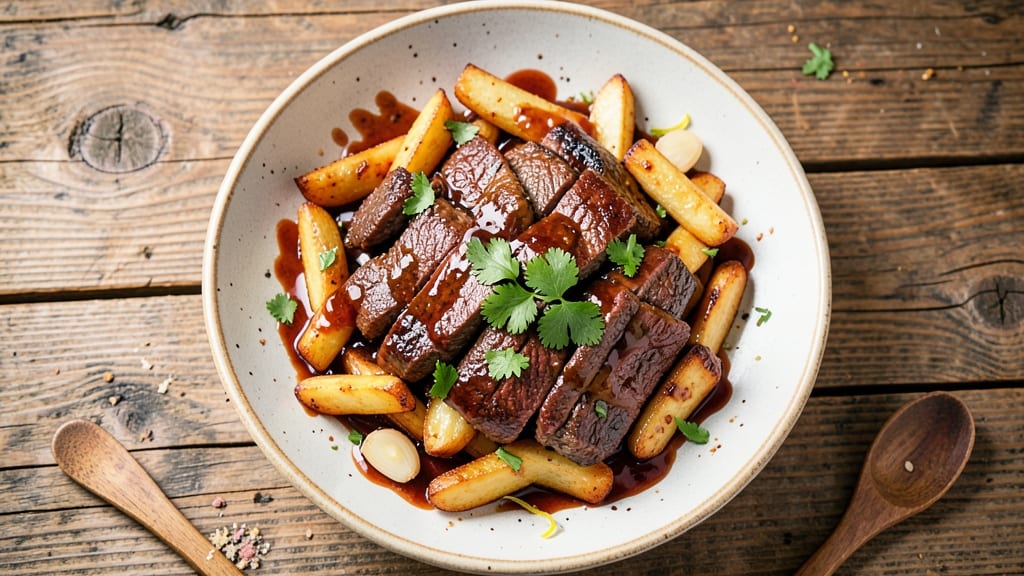
This beef and potato stir-fry delivers the perfect balance of wok-seared crunch and silky potatoes in under 30 minutes. The secret lies in high-heat searing for that signature caramelized crust while keeping the insides tender—no deep-frying required.
I’ve perfected this technique after years of testing, and it’s become my go-to weeknight dinner when I need something hearty yet quick.
The magic happens in three simple stages: first, searing the beef in batches until deeply browned, then setting those flavorful bits aside. Next, we cook the potatoes at high heat until they develop crispy edges while staying fluffy inside.
Finally, everything comes together in the wok with aromatics and a glossy sauce that coats every bite. This method ensures maximum flavor with minimal effort.
What you’ll end up with is a restaurant-quality stir-fry that’s rich in umami from the beef, satisfying texture from the potatoes, and a sauce that’s perfectly balanced between sweet and savory.
The beef stays tender yet develops a delicious crust, while the potatoes achieve that ideal contrast of crispy exteriors and creamy centers. It’s the kind of dish that makes a simple weeknight feel special.
Serve this stir-fry over steamed rice or noodles for a complete meal, and don’t forget to garnish with fresh green onions and a sprinkle of sesame seeds for that final touch of authenticity.
The beauty of this recipe is its versatility—it works equally well as a main dish or a side, and leftovers reheat beautifully. Let’s get cooking!
Ingredients for beef and potato stir fry
Pantry staples plus a few key ingredients for that perfect wok-seared texture and rich sauce.
| Ingredient | Amount | Notes |
|---|---|---|
| Flank Steak 🥩 | 1 lb | Thinly sliced against grain |
| Russet Potatoes 🥔 | 2 lbs | Cut into 1-inch chunks |
| Neutral Oil 🫒 | ½ cup | Vegetable or canola preferred |
| Soy Sauce 🍶 | ⅓ cup | Low-sodium preferred |
| Honey 🍯 | 2 tbsp | For sauce sweetness |
| Garlic Cloves 🧄 | 6 cloves | Minced for aromatics |
| Ginger Root 🌿 | 1 tbsp | Freshly grated |
| Green Onions 🧅 | 4 whole | Sliced for garnish |
| Sesame Seeds 🌾 | 1 tbsp | Toasted for crunch |
| White Pepper 🌶️ | ½ tsp | Freshly ground preferred |
| Brown Sugar 🍚 | 1 tbsp | For sauce depth |
| Sesame Oil 🫒 | 1 tbsp | For finishing aroma |
| Cornstarch 🌾 | 1 tbsp | For sauce thickening |
| Vegetable Stock 💧 | ½ cup | Low-sodium preferred |
The beef is everything here—flank steak is ideal because it's lean yet flavorful when sliced thin. Ask your butcher to slice it against the grain if you can't do it yourself. For potatoes, Russets hold up best to high heat—they're waxy enough to stay creamy inside while getting crispy edges. I always grab potatoes from the organic section at Whole Foods (they're less likely to be treated with sprout inhibitors that make them mealy), but regular store-bought works too. The oil matters—high smoke point oils like vegetable or canola prevent burning at wok temperatures.
No soy sauce? Coconut aminos or tamari work in a pinch, though the flavor will be slightly different. Fresh ginger is a must—dried ginger loses punch fast, and it doesn't have that same bright, citrusy kick. Short on sesame seeds? Toasted slivered almonds add crunch without changing the flavor profile. The cornstarch is non-negotiable for that glossy sauce—arrowroot works too, but cornstarch gives you that classic stir-fry sheen. For the stock, low-sodium is crucial—we're building layers of flavor here, not drowning it in salt.
Potatoes and beef can be prepped ahead—just store them separately in the fridge for up to 2 days. The sauce keeps for 1 week in the fridge, though it's best fresh. I always double the sauce and freeze half in ice cube trays—perfect for quick weeknight dinners. Garnishes like green onions and sesame seeds stay fresh 5 days wrapped in damp paper towels. This reheats beautifully—stir-fry again over high heat with a splash of water to revive that crispy texture.
Why You'll Love This Recipe
- One-Pan Magic: I swear by this recipe when I’m too tired to scrub a million dishes. Toss everything on one sheet pan—steak, potatoes, and all—and walk away while it caramelizes. The potatoes get that perfect crispy edge without a single pot to wash.
- Sweet-Savory Balance: That honey-soy glaze? It’s the secret weapon. The soy gives it a deep umami punch while the honey cuts through the richness of the flank steak. Honestly, the first time I tasted it, I nearly licked the pan.
- Lunchbox Hero: Between us, this is my go-to for meal prep. Slice the cooled stir-fry into portions, and you’ve got a hearty lunch for days. My kids actually eat their veggies (well, the potatoes) because it’s more exciting than a sad sandwich.
- Budget Beef Boost: Flank steak is affordable, and potatoes stretch it into a full meal. I can feed four people for under $15, and the leftovers? Just as good reheated the next day. Not the prettiest, but the taste makes up for it every time.
Step-by-step instructions for wok-seared beef and potatoes
Here's how to balance crispy beef with tender potatoes in one perfect stir fry.
Parboil and Parchment the Potatoes
Place the 2 lbs russet potatoes in a pot of cold, salted water. Bring to a boil and cook for exactly 8 minutes until they're partially tender but still firm to the bite. Drain immediately and transfer to a clean kitchen towel to dry thoroughly.
While still warm, toss the potatoes with 1 tablespoon of the neutral oil and spread them in a single layer on a baking sheet lined with parchment paper. Roast at 425°F for 20-25 minutes, flipping halfway, until they develop a golden crust. This dual-cooking method creates the perfect texture - crispy outside, fluffy inside. Don't skip the parchment - it prevents sticking and makes flipping easier.
Marinate and Sear the Flank Steak
In a small bowl, combine 0.33 cup soy sauce, 2 tablespoons honey, 1 tablespoon brown sugar, 6 minced garlic cloves, 1 tablespoon freshly grated ginger root, and 0.5 teaspoon white pepper. Add the 1 lb flank steak and let it marinate for at least 30 minutes, turning occasionally. The longer it marinates, the more tender and flavorful it becomes.
Heat 1 tablespoon of the neutral oil in a wok or large skillet over high heat until shimmering. Add the steak in a single layer, leaving space between pieces. Sear for 2-3 minutes per side until deeply browned and cooked to medium-rare (135°F internal temperature). Remove and set aside to rest while you prepare the sauce.
Build the Stir Fry Sauce
In the same wok, reduce heat to medium and add 1 tablespoon cornstarch and 0.5 cup vegetable stock. Stir constantly for 1-2 minutes until the sauce thickens slightly. Add 1 tablespoon sesame oil and 1 tablespoon brown sugar, stirring until combined. The sauce should coat the back of a spoon but still be pourable.
Return the steak to the wok, along with the roasted potatoes. Toss everything together for 1-2 minutes until the potatoes are heated through and evenly coated in the sauce. Here's the thing - the potatoes should be piping hot when served, so don't rush this step. If the sauce seems too thick, add 1-2 tablespoons water to loosen it.
Finish and Garnish
Transfer the stir fry to serving plates and let it rest for 2 minutes. This brief rest allows the juices to redistribute in the steak. Garnish with sliced 4 whole green onions and 1 tablespoon toasted sesame seeds. The green onions add freshness while the sesame seeds provide that essential crunchy contrast.
Serve immediately with steamed rice or noodles to soak up all that delicious sauce. Each bite should deliver a perfect balance - tender beef with a caramelized crust, crispy yet fluffy potatoes, and a sweet-savory sauce that ties everything together. The key is timing - everything needs to be piping hot when it hits the table.
Pro Tips For Making Beef And Potato Stir Fry
- Slice Flank Steak Thin: Russet potatoes need time to soften, so don’t waste it on thick steak slices—cut it against the grain into ⅛-inch strips. I learned this the hard way when my first batch turned chewy; thin slices cook fast and stay tender.
- Parboil Potatoes First: Toss diced Russets in boiling water for 3 minutes before stir-frying—this guarantees they’ll finish soft without burning. Skip this, and you’ll end up with crispy edges and undercooked centers (yes, I’ve done it).
- Use Two Heat Zones: Start potatoes in a cold pan with oil, then crank the heat to medium-high once they’re sizzling. Move the beef to a separate hotter zone to sear it fast—this keeps the potatoes from steaming while the steak gets that caramelized crust.
- Deglaze with Honey-Soy Early: After searing the beef, immediately pour in half the soy sauce and honey, then let it reduce for 30 seconds before adding potatoes. This builds flavor instead of just tossing everything in at the end (which leaves the sauce thin and bland).
Best sauces and condiments for these flavors
Classic Stir-Fry Sauce
Start with the soy sauce base—use low-sodium to control flavor intensity. I like Kikkoman for its balanced umami, but San-J adds a deeper, slightly fermented complexity. Combine it with 2 tbsp honey and 1 tbsp brown sugar for that signature sweet-salty balance.
The 6 minced garlic cloves and 1 tbsp fresh ginger (never dried!) infuse the sauce with aromatic depth. For extra richness, add 1 tbsp sesame oil at the end—it adds a nutty aroma that elevates everything. 🌶️
Umami Boosters
For deeper flavor, stir in 1 tbsp oyster sauce (like Lee Kum Kee) or 1 tsp fish sauce for umami punch. Both work wonders but taste distinct—oyster sauce adds sweetness, while fish sauce brings a funky, salty edge.
If you're vegetarian, 1 tbsp mushroom powder (like Bob’s Red Mill) mimics umami beautifully. I often keep a small bottle of oyster sauce in my pantry just for stir-fries—it’s a game-changer. 💡
Thickening Secrets
The 1 tbsp cornstarch is non-negotiable for that glossy, clingy sauce. Mix it with ½ cup vegetable stock first to create a slurry—this prevents clumping. For a smoother texture, strain the sauce through a fine-mesh sieve after cooking.
If you’re short on cornstarch, 1 tbsp arrowroot powder works too, though it’s slightly less effective. Pro tip: Taste the sauce before adding the beef—adjust sweetness or saltiness now, not later. ✨
Finishing Touches
Always finish with 1 tbsp toasted sesame seeds and 4 sliced green onions for freshness. For heat, add ½ tsp chili crisp (like Lao Gan Ma) or a pinch of Sichuan peppercorn powder for a tingling kick.
A drizzle of chili oil (store-bought or homemade) adds color and spice. I love garnishing with cilantro too—it brightens the dish and pairs perfectly with the beef’s richness. 🌿
Sauce Variations
For a spicy version, swap honey for 1 tbsp gochujang (Korean chili paste) and add 1 tsp gochugaru (Korean chili flakes). For a creamy twist, stir in 1 tbsp coconut milk at the end.
A teriyaki-inspired sauce swaps soy sauce for ½ cup teriyaki sauce (like Kikkoman) and adds 1 tbsp mirin. Each variation keeps the core technique but transforms the flavor profile entirely. 🔥
Make-Ahead Sauce
Double the sauce and freeze it in ice cube trays for quick weeknight dinners. Thaw overnight in the fridge, then reheat gently with a splash of water. Store homemade sauce in an airtight container for up to 1 week—it actually improves as flavors meld.
For extra convenience, pre-mix the sauce ingredients (without cornstarch) and store them in the fridge for 3 days. When ready to cook, just add the cornstarch slurry and heat through. 💫
Nutrition facts
Frequently asked questions
Why do the potatoes need parboiling before roasting?
Parboiling the potatoes for 8 minutes ensures they cook evenly and stay creamy inside while developing that perfect crispy crust when roasted. Without this step, they'd either turn mushy or stay undercooked. The brief boil also helps remove excess starch, which prevents the potatoes from sticking to the pan later.
Can I substitute flank steak with another cut?
Sirloin or ribeye work well—just slice against the grain for tenderness. For leaner options, try chuck roast (marinate longer) or top round. Avoid tough cuts like brisket—they need slow cooking, not quick searing. The key is thin, even slices that cook fast over high heat.
How do I prevent the sauce from getting too thick?
If the sauce thickens too much, simply add 1-2 tablespoons of water or vegetable stock while stirring constantly. For prevention, mix the cornstarch with cold stock first to create a slurry—this helps control thickening. The sauce should coat the back of a spoon but remain pourable when hot.
What if I don't have a wok?
No problem! Use a large skillet or cast-iron pan with high sides. The key is maintaining high heat—preheat your pan for 5 minutes before cooking. A grill pan also works well for that signature sear. Just avoid nonstick pans—they can't handle the high heat needed for proper browning.
Can I make this stir-fry ahead of time?
Prep the ingredients separately and store them in the fridge for up to 2 days. For the best results, cook fresh—reheating can make the potatoes soggy. If you must reheat, use high heat in a skillet for 2-3 minutes with a splash of water to revive the crispiness. The sauce can be made ahead and stored for 1 week.