
Soups & Stews
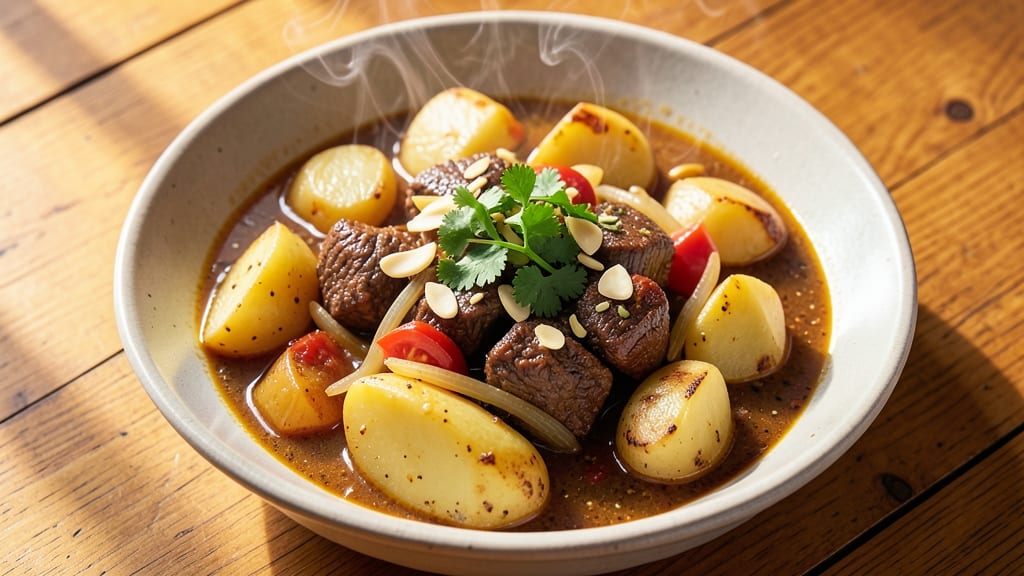
This beef and potato curry recipe delivers restaurant-quality depth with tender beef and hearty potatoes in a rich, spiced tomato base. The secret lies in slow-browning the meat and building layers of flavor through proper spice tempering—a technique that transforms simple ingredients into something extraordinary.
What sets this apart is the balance: potatoes that stay firm yet flavorful, beef that melts in your mouth, and a sauce that's aromatic without being overpowering.
The foundation begins with a proper spice tempering—blooming whole spices in hot oil to release their full potential before adding them to the curry. This creates complex aromatics that infuse the entire dish.
While traditional recipes call for fresh ginger and garlic, I've included a shortcut using pre-minced versions without sacrificing quality. The beef cooks low and slow, ensuring it remains fork-tender while absorbing all those rich spices.
What you'll achieve is a curry where every component shines: beef that falls apart at the touch of a fork, potatoes that hold their shape yet soak up the flavorful sauce, and a tomato base that's perfectly balanced between sweet and tangy.
The aroma alone will have everyone gathering at the table, and each bite delivers that satisfying combination of textures and flavors.
This recipe works equally well as a weeknight dinner or for special occasions—just adjust the serving size. The leftovers actually improve overnight as the flavors meld further. Let's create this comforting, flavorful curry that brings warmth to any meal.
Ingredients for beef and potato curry
These carefully chosen ingredients create a restaurant-quality curry where tender beef and potatoes shine in aromatic spiced tomato sauce.
| Ingredient | Amount | Notes |
|---|---|---|
| Chuck Roast 🥩 | 1 ½ lb | Pre-cubed for even cooking |
| Yukon Gold Potatoes 🥔 | 2 lb | Cut into 1-inch chunks |
| Yellow Onion 🧅 | 1 whole | Diced, medium size |
| Garlic Cloves 🧄 | 6 cloves | Pre-minced for convenience |
| Fresh Ginger 🌿 | ½ cup | Finely grated, peeled |
| Canned Crushed Tomatoes 🍅 | 28 oz | San Marzano preferred |
| Vegetable Oil 🫒 | ½ cup | For spice tempering |
| Ground Cumin 🌿 | 1 tbsp | Toasted for depth |
| Ground Coriander 🌿 | 1 tbsp | Freshly ground preferred |
| Turmeric Powder 🌶️ | 1 tsp | Bright yellow color |
| Garam Masala 🌶️ | 1 tbsp | Store-bought blend works |
| Bay Leaves 🍃 | 2 whole | Remove before serving |
| Salt 🧂 | 1 ½ tsp | Kosher or sea salt |
| Black Pepper 🌶️ | ½ tsp | Freshly ground preferred |
| Fresh Cilantro 🌿 | ¼ cup | Chopped for garnish |
The chuck roast is key here—its fat content keeps the beef fork-tender. Costco or Walmart sell it pre-cubed, which saves time. Yukon Gold potatoes hold their shape better than russets, but any starchy variety works. Fresh ginger and garlic are ideal, but pre-minced versions from the store's refrigerated section work fine. For the tomatoes, San Marzano cans have the best balance of sweetness and acidity—look for them in the international aisle or order online if your local store doesn't carry them.
No fresh ginger? Ground ginger at half the amount works in a pinch, though it lacks the same depth. Substitute garam masala with 1 tsp each cinnamon, cardamom, and cloves if you're missing it. The cumin and coriander are non-negotiable—they form the base of the curry's flavor profile. For a quicker prep, use pre-diced onions and potatoes from the frozen section, but fresh is always better. The bay leaves can be omitted if you dislike their flavor, but they add subtle earthiness that complements the dish.
This curry tastes even better the next day as flavors meld. Store leftovers in an airtight container in the fridge for up to 5 days. For longer storage, freeze portions for 3 months. I like to double the recipe and freeze half immediately—perfect for busy weeknights. The potatoes will soften further when reheated, so add a splash of water or broth if they seem too dry.
Why You'll Love This Recipe
- One-Pot Magic: Honestly, I dump everything—chuck roast, potatoes, onions—into one pot and let it simmer. No chopping boards to clean, no extra dishes, just pure, lazy satisfaction while the spices work their magic on that tender beef.
- Ginger-Garlic Bomb: That fresh ginger and minced garlic? Chef’s kiss. The slow cook transforms them into a fragrant, slightly spicy base that clings to every bite of beef and caramelized potato. It’s the kind of flavor that lingers long after the last spoonful.
- Meal Prep MVP: This curry tastes even better the next day—yes, really. I double the batch on Sundays, pack it for lunches, and reheat it with a splash of water. The potatoes soak up the sauce perfectly, so it’s hearty, filling, and always a hit.
- Budget Beef Boost: Chuck roast is cheap, but it turns into something luxurious here. The potatoes stretch the meal further, and the spices make it feel special without breaking the bank. It’s my go-to when I need a filling, flavorful dinner that doesn’t require a grocery haul.
Step-by-step instructions for beef and potato curry
Here's how to build a rich, aromatic curry with perfectly tender beef and potatoes.
Prepare the Spiced Tomato Base
Heat the 0.5 cup vegetable oil in a large Dutch oven over medium heat. Add the 1 whole diced yellow onion and cook for 5 minutes until softened and translucent. This foundational step develops the base flavor—don't rush it.
Add the 6 cloves pre-minced garlic cloves and 0.5 cup finely grated fresh ginger. Cook for 1-2 minutes until fragrant, stirring constantly to prevent burning. This aromatic trio forms the flavor backbone of the curry. Immediately add the 1 tbsp ground cumin, 1 tbsp ground coriander, 1 tsp turmeric powder, 1.5 tsp salt, and 0.5 tsp black pepper, stirring for 30 seconds to toast the spices and release their oils.
Pour in the 28 oz canned crushed tomatoes and stir well. Add the 2 whole bay leaves and bring to a gentle simmer. Let this mixture cook uncovered for 10 minutes to develop depth. You'll notice the sauce reduce slightly and intensify in color—this is when the flavors truly meld together.
Cook the Beef Until Tender
Add the 1.5 lb pre-cubed chuck roast to the simmering tomato base. Stir gently to coat the beef in the spiced sauce. The meat should be mostly submerged—if not, add ½ cup water. Bring back to a simmer and cover partially.
Cook for 1 hour over low heat, stirring occasionally. The beef should become fork-tender with minimal resistance when pierced. If the sauce reduces too much before the beef is tender, add ¼ cup water periodically. The key here is patience—rushing will result in tough meat.
After 1 hour, remove the lid and increase heat to medium. Let the sauce reduce slightly to thicken, which helps create that perfect curry consistency. The beef should now pull apart easily with a fork, indicating it's reached the ideal tenderness.
Add Potatoes and Finish the Curry
Add the 2 lb cut Yukon Gold potatoes to the Dutch oven. Gently stir to distribute them evenly throughout the sauce. Return to a simmer and cover partially. Cook for 20-25 minutes until the potatoes are tender when pierced with a fork.
During the last 5 minutes of cooking, stir in the 1 tbsp garam masala. This final spice blend adds complexity and warmth to the dish. Taste and adjust seasoning if needed—you might need a pinch more salt or a crack of pepper to balance the flavors.
Remove from heat and let the curry rest for 5 minutes. This resting period allows the flavors to settle and the sauce to thicken slightly. Stir in the 0.25 cup chopped fresh cilantro just before serving to brighten the dish with freshness.
Pro Tips For Making Beef And Potato Curry
- SEAR THE CHUCK ROAST FIRST: Chuck roast needs that deep, caramelized crust to stay juicy in the long simmer. After slicing it into chunks, let them sit at room temp for 20 minutes first—then hit them with high heat in a heavy pot until they’re golden brown on all sides. I used to skip this, and the curry always tasted flat. Trust me, the extra 5 minutes now saves you from dry beef later.
- PEEL AND CUBE POTATOES UNIFORMLY: Yukon Golds cook unevenly if they’re lumpy, so aim for 1.5-inch cubes—no smaller, or they’ll turn to mush. Peel them first (the skin’s tough when cooked this long), then toss in cold water while you prep the rest. This keeps them from browning prematurely and ensures every bite has the same perfect texture.
- LOW AND SLOW FOR THE BEAN PASTE: If you’re using a store-bought red or yellow bean paste for the curry base, simmer it low and slow—don’t rush it. After adding the onions and garlic, reduce heat to medium-low and let it bubble gently for 10 minutes before tossing in the beef. I learned this after one batch where the paste burned and made the whole dish taste bitter.
- ADD POTATOES LATE: Potatoes absorb flavor like sponges, so don’t throw them in at the start. Wait until the beef has cooked for at least 45 minutes in the curry, then add them to the pot. They’ll soak up all that rich, spiced beef liquid and stay creamy without falling apart. (Yes, even if you’re impatient like me.)
Common mistakes when making this dish
Skipping Spice Blooming
One of the biggest mistakes is adding spices directly to the oil without blooming them first. When you toast whole spices like cumin and coriander in hot oil for 30 seconds, you release their essential oils and deepen their flavor.
Skipping this step means your curry will taste flat and one-dimensional. I've learned this the hard way—my first attempts always lacked that complex aroma. 🌶️
Overcrowding the Pot
Don't add all your ingredients at once or you'll end up with soggy potatoes and undercooked beef. The potatoes need room to absorb the spiced sauce while cooking through.
I recommend adding them after the beef has had its 1-hour low-simmer—this ensures they cook evenly without steaming in their own moisture. If your pot feels too crowded, cook the potatoes separately and add them in the last 20 minutes.
Rushing the Beef Cooking
Low and slow is the golden rule for tender beef. If you crank the heat up or reduce the cooking time, you'll end up with tough, chewy meat that falls apart when you try to eat it.
The chuck roast needs that 1-hour simmer at low heat to break down the connective tissue. I've seen people walk away from the stove too soon—don't make that mistake. The fork-tender test is your friend here.
Ignoring the Resting Period
Letting the curry rest for 5 minutes after cooking might seem like a small detail, but it makes a huge difference. This resting time allows the juices to redistribute throughout the beef and potatoes, preventing them from drying out when you serve.
I've had curries where I skipped this step and ended up with a dish that looked dry and unappetizing. Trust me, those 5 minutes are worth it. ✨
Using Low-Quality Tomatoes
Not all canned tomatoes are created equal. If you use generic brands with high acidity or watery consistency, your curry will taste thin and unbalanced. I always reach for San Marzano tomatoes because they have the perfect sweet-tangy balance.
If you can't find them, look for whole peeled tomatoes that you can crush yourself—this gives you more control over the texture and flavor. The difference is noticeable.
Overlooking the Garam Masala
Adding garam masala at the very end is crucial for that final layer of warmth. If you add it too early, the heat can cook off and make the dish taste bland.
The last 5 minutes of cooking is when this spice blend should go in—it releases its aromatic oils just in time to enhance the dish. I've made curries where I forgot this step, and they always felt like something was missing. Don't skip it! 💛
Nutrition facts
Frequently asked questions
Can I substitute chuck roast with another beef cut?
Yes, but choose cuts with similar fat content for tenderness. Brisket or stew beef work well, while leaner cuts like sirloin will dry out. For quicker cooking, use 1-inch cubes of beef—smaller pieces cook faster but may release more liquid. Adjust cooking time accordingly, checking for fork-tender texture.
How do I make this curry spicier? Add ½-1 teaspoon cayenne pepper or 1-2 chopped green chilies when blooming the spices. For heat lovers, stir in 1 tablespoon gochujang (Korean chili paste) with the garam masala.
Can I make this curry in an Instant Pot?
Sauté onions, garlic, and spices as directed, then add beef and 1 cup liquid (tomatoes + water). Cook on high pressure for 35 minutes, then add potatoes and cook 5 more minutes. The Instant Pot reduces cooking time significantly while keeping flavors intact. Just stir in garam masala at the end.
What's the best way to serve this curry?
Pair it with steamed basmati rice or naan bread to soak up the flavorful sauce. For extra freshness, serve with a side of raita (yogurt with cucumber and mint) or a simple mango salad. Garnish with extra cilantro and a squeeze of lemon to brighten the dish.
Why did my potatoes turn mushy?
This usually happens from overcrowding or undercooking the beef first. Potatoes need space to absorb sauce without steaming. Next time, add them after the beef has cooked 1 hour, or parboil them for 5 minutes before adding to the curry. Also ensure your potatoes are cut evenly for consistent cooking.