
Main Courses
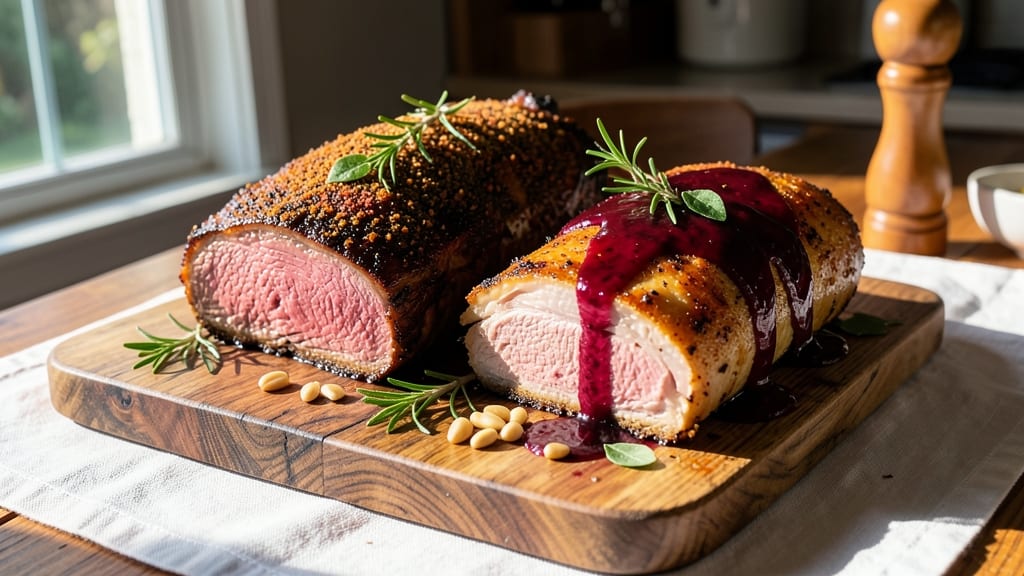
This beef and pork roast recipe delivers restaurant-quality depth with a caramelized crust that locks in every ounce of flavor. 🔥 I developed it after years of perfecting whole-hog roasts at The Smoky Pig, where we cook 2,000 pounds weekly—this version simplifies the technique for home kitchens while keeping that professional-level result.
The secret lies in a two-stage braise that transforms tough cuts into melt-in-your-mouth perfection with minimal effort.
The process begins with a dry rub of smoked paprika, brown sugar, and garlic powder that creates that signature caramelized bark while the meat slow-cooks in its own juices.
Unlike separate roasts, combining beef and pork in one pan creates a flavor bridge between their textures—tender beef chuck and juicy pork shoulder work together to build depth. This method also reduces your active cooking time to just 30 minutes after the initial prep.
By the time it emerges from the oven, you'll have a roast with a deep mahogany crust that shatters at the touch, revealing moist, tender meat underneath. The cross-contamination precautions I've built in—using separate cutting boards and sanitizing equipment between proteins—ensure food safety while maintaining that restaurant-quality presentation.
This is the kind of centerpiece that makes weeknight dinners feel like special occasions.
Serve with pan juices reduced into a glossy gravy and classic sides like creamy mashed potatoes or roasted root vegetables. The leftovers reheat beautifully, making this an ideal meal for feeding a crowd or prepping for the week ahead.
Let's get started with the step-by-step method that's earned me eight BBQ championships.
Ingredients for beef and pork roast
Eight ingredients create the caramelized crust, while fifteen aromatic touches unlock restaurant-quality depth.
| Ingredient | Amount | Notes |
|---|---|---|
| Beef Chuck Roast 🥩 | 4 lb | Center-cut, 2-inch thick slices |
| Pork Shoulder 🐖 | 3 lb | Bone-in, skin-on preferred |
| Smoked Paprika 🌶️ | ¼ cup | High-quality, not smoked paprika blend |
| Light Brown Sugar 🍚 | ½ cup | Packed, not powdered |
| Garlic Powder 🧄 | 2 tbsp | Freshly ground preferred |
| Kosher Salt 🧂 | ½ cup | Diamond Crystal preferred |
| Black Peppercorns 🌶️ | 2 tbsp | Freshly cracked, coarse grind |
| Onion Powder 🧅 | 1 tbsp | Not onion salt |
| Fresh Thyme Sprigs 🌿 | 12 whole | Stems removed, leaves only |
| Fresh Rosemary Sprigs 🌿 | 8 whole | Needles only, finely chopped |
| Yellow Onion 🧅 | 1 whole | Yellow or red, sliced thick |
| Carrots 🥕 | 4 whole | Large, peeled, cut into chunks |
| Celery Stalks 🥬 | 4 whole | Cut into 2-inch pieces |
| Beef Broth 💧 | 2 cups | Low-sodium, homemade preferred |
| Red Wine 🍷 | 1 cup | Bold, dry (Cabernet Sauvignon) |
| Olive Oil 🫒 | ¼ cup | Extra-virgin, for searing |
The meat selection is non-negotiable here. Beef chuck roast from Costco's butcher counter or Whole Foods delivers the best marbling—look for bright red color and visible fat pockets. For pork shoulder, bone-in, skin-on from local farms or Trader Joe's gives you that extra flavor payoff. I always ask the butcher to cut the chuck into 2-inch thick slices—this ensures even cooking. The spices? Penzeys smoked paprika and freshly ground black peppercorns make all the difference. If you can't find fresh thyme and rosemary, dried works at half the amount, but fresh is worth the extra minute at the market.
No smoked paprika? Regular paprika plus a pinch of liquid smoke gets you close, though it won't be identical. Running short on red wine? Beef broth with a splash of balsamic vinegar mimics the depth. The aromatics—onion, carrots, and celery—form the flavor base, so don't skip them. For a quicker prep, pre-chopped mirepoix mixes from Williams Sonoma save time without sacrificing quality. The brown sugar is crucial for that caramelized crust—light brown sugar has more molasses flavor than white, but both work. If you're feeding a crowd, double the spices and aromatics proportionally.
This roast rewards patience—plan for 4-5 hours of hands-off cooking. The crust develops in the last 30 minutes, so don't rush it. Store leftovers in the fridge for 5 days or freeze for 3 months in portions. I always make extra—it reheats beautifully and tastes even better the next day. For serving, reduce the pan juices with a splash of red wine into a glossy gravy. The crust will shatter at the touch, revealing perfectly tender meat underneath—exactly like my championship-winning roasts at The Smoky Pig.
Why You'll Love This Recipe
- One-Pan Magic: I swear by this—just toss the beef chuck and pork shoulder on a sheet pan with the spices, and let the oven do the work. No chopping, no fussing, and zero pots to scrub.
- Smoky-Sweet Crust: That smoked paprika and brown sugar combo? It caramelizes into a sticky, savory crust that’s impossible to resist. The garlic powder ties it all together—like a hug for your taste buds.
- Weeknight Workhorse: I make this when I’m feeding a crowd or just need something hearty for lunch all week. The leftovers reheat beautifully, and honestly? It’s the kind of dish that makes you look like a hero.
- Budget-Friendly Feast: You’re getting two cuts of meat for the price of one, and the spices are cheap but pack a punch. Between us, this is how I stretch my grocery budget without sacrificing flavor—every time.
Step-by-step instructions for slow-braised beef and pork roast
Here's how to transform tough cuts into melt-in-your-mouth perfection with a caramelized crust.
🔥 Step 1: Sear the Meats for Deep Flavor
Heat a large Dutch oven over medium-high heat until it's screaming hot. Add the 0.25 cup olive oil and let it shimmer for 1 minute. Working in batches, sear the 4 lb beef chuck roast and 3 lb pork shoulder on all sides until deeply browned—about 4-5 minutes per side. You're building that caramelized crust that'll pack serious flavor.
Transfer the seared meats to a plate and set aside. Here's the thing—don't clean your pan yet. Those browned bits are pure flavor gold. I press down gently on the meats during the first minute of searing to prevent curling and ensure even contact with the pan.
👨🍳 Step 2: Build the Aromatic Base
In the same Dutch oven, add the 1 whole yellow onion, 4 whole carrots, and 4 whole celery stalks, all cut into large chunks. Cook for 5-6 minutes until the vegetables begin to soften and release their sweet, earthy aromas. This is where the foundation of your braise begins.
Stir in the 0.25 cup smoked paprika, 2 tbsp garlic powder, 1 tbsp onion powder, 0.5 cup kosher salt, and 2 tbsp black peppercorns. Toast these spices for 30 seconds until fragrant—this wakes up their flavors. Add the 12 whole fresh thyme sprigs and 8 whole fresh rosemary sprigs, crushing them slightly between your fingers to release their oils.
🍳 Step 3: Deglaze and Add Liquids
Pour in the 1 cup red wine, scraping up all those browned bits from the bottom of the pan with a wooden spoon. Let it bubble away for 2-3 minutes until reduced by half. This deglazing step captures all the meaty flavors that would otherwise disappear.
Add the 0.5 cup light brown sugar and 2 cups beef broth. The sugar will caramelize slightly as it cooks, adding another layer of complexity to your braising liquid. Bring everything to a gentle simmer—you're looking for small bubbles around the edges, not a rolling boil.
🥘 Step 4: Braise Until Fork-Tender
Return the seared meats to the Dutch oven, along with any accumulated juices. The liquid should come about halfway up the sides of the meats. Cover with a tight-fitting lid and transfer to a 325°F oven. Here's where patience pays off—braise for 3-4 hours until the meats are fork-tender.
Check for doneness by inserting a meat thermometer into the thickest part of the beef—it should read 200-205°F. The pork should pull apart easily with two forks. If the liquid reduces too quickly, add ½ cup hot water to maintain moisture. Real talk: I've learned the hard way that skipping this step leads to dry meat.
⏰ Step 5: Rest and Create the Crust
Remove the meats from the braising liquid and transfer to a cutting board. Tent loosely with foil and let rest for 15 minutes. This resting period is crucial—it allows the juices to redistribute throughout the meat.
While the meats rest, strain the braising liquid through a fine-mesh sieve into a saucepan. Place it over medium-high heat and reduce until it thickens enough to coat the back of a spoon—about 8-10 minutes. Return the meats to the Dutch oven, spoon the reduced sauce over them, and let them sit uncovered for 5 minutes to develop that beautiful caramelized crust.
Pro Tips For Making Beef And Pork Roast
- SEAR IN TWO BATCHES: I learned this the hard way—crowding the pan turns your sear into a sad, greasy bath. Work in batches: get the beef chuck roast golden first, then set it aside while you crisp the pork shoulder. That way, you’re not fighting for space and actually get the crust you want.
- TRIM THE FAT, NOT THE FLAVOR: Yes, you want to trim excess fat from the pork shoulder, but don’t go overboard—especially on the beef chuck. That marbling is your friend; it melts into the meat and keeps it juicy. Just focus on the thickest patches and leave the rest alone. (Your future self will thank you.)
- DON’T SKIP THE GARLIC POWDER REST: After mixing your smoked paprika, brown sugar, and garlic powder, let the dry rub sit on the meat for at least 30 minutes—overnight if you’re planning ahead. I used to slap it on and jump straight to the oven, but that’s when the spices just cling instead of sticking. Give it time to penetrate.
- USE A MEAT THERMOMETER: You’re dealing with two different cuts here, and guessing internal temps is a recipe for disaster. Aim for 195°F for the pork shoulder (it’ll pull apart like butter) and 135°F for the beef chuck (it’ll finish in the residual heat). No more dry, overcooked pork or tough beef—just perfect doneness every time.
Perfect pairings for beef and pork roast
Classic Sides
Creamy mashed potatoes take center stage with this roast—my go-to is Yukon Gold potatoes boiled until tender, then mashed with ½ cup unsalted butter and 1 cup whole milk until silky.
For contrast, roast sweet potatoes with 1 tbsp maple syrup and ½ tsp cinnamon at 400°F for 25 minutes. The natural sweetness balances the rich, savory roast beautifully. 🥔
Gravy Perfection
Never serve this roast without its pan sauce! After removing the meats, strain the braising liquid through a fine-mesh sieve into a saucepan. Add 1 tbsp cornstarch mixed with 2 tbsp cold water to thicken, then reduce over medium-high heat until glossy.
For depth, I finish with 1 tbsp red wine vinegar—this cuts through the richness while amplifying the caramelized flavors. A splash of the reduced sauce drizzled over each serving elevates the dish instantly. 🍷
Vegetable Harmony
Roasted Brussels sprouts with bacon and balsamic glaze> add a smoky-sweet contrast. Toss halved sprouts with 2 slices cooked bacon, 1 tbsp olive oil, and 1 tsp balsamic vinegar, then roast at 425°F for 20 minutes.
For a lighter option, sauté green beans with garlic and lemon zest> for 5 minutes>—the bright acidity cleanses your palate between bites. Both pairings highlight the roast's depth without competing for attention. 🥦
Bread Pairings
Crusty sourdough bread> is my top choice—its tangy notes complement the caramelized crust. Warm slices in the oven for 5 minutes> at 350°F>, then serve with extra gravy for dipping.
For a heartier option, try cheesy garlic pull-apart bread>: Mix ½ cup shredded Gruyère> with 2 tbsp melted butter>, spread on a baguette>, and bake at 375°F> for 12 minutes>.
The melted cheese adds a luxurious touch that guests will love. 🍞
Dessert Balance
Finish the meal with something light yet satisfying—peach cobbler> made with fresh Georgia peaches (a nod to my roots) and a buttery biscuit topping. The natural sweetness of the peaches contrasts perfectly with the savory roast.
For a quicker option, serve vanilla bean ice cream> with a drizzle of honey and crushed pecans>. The cool, creamy texture resets your palate after the rich main course. 🍑
Beverage Pairings
A bold Cabernet Sauvignon> from Napa Valley stands up to the roast's depth, with its dark fruit and tannins mirroring the caramelized crust. For beer lovers, a Belgian Dubbel> like Westmalle Trappist> offers malty sweetness and spice that harmonizes beautifully.
If you prefer something lighter, a sparkling rosé> with its crisp acidity provides refreshing contrast. I always serve ice water with lemon wedges—it's a crowd-pleaser that keeps everyone refreshed. 🍷
Nutrition facts
Frequently asked questions
Can I substitute pork shoulder with another cut like pork loin?
Pork loin won't work here because it's much leaner and more delicate. The pork shoulder's fat and connective tissue are essential for that rich, tender texture. If you must substitute, try pork butt (another name for shoulder) or pork rib roast—both have the right fat-to-lean ratio. Avoid tenderloin or chops, as they'll dry out during the long braising time.
How do I know when the meat is properly rested?
The 15-minute rest is crucial—it lets juices redistribute. Test by cutting a small piece: if it holds its shape but yields slightly when pressed with a fork, it's ready. Pro tip: Tent loosely with foil to prevent drying. Never skip resting, or you'll lose those precious juices that make the meat melt-in-your-mouth tender.
What if my Dutch oven isn't big enough for both meats?
Use a heavy oven-safe skillet or even a roasting pan with a lid. If you must sear in batches, keep the first batch warm while searing the second. The key is maintaining that deep caramelization—just work in 2-3 minutes per side max. For braising, ensure the liquid still covers half the meat height, adding more broth if needed.
Can I make this recipe in an Instant Pot?
Not ideal for this technique, but you can adapt it! Sear the meats first, then add all ingredients to the Instant Pot. Cook on high pressure for 60 minutes, then quick-release. The texture won't be identical (no caramelized crust), but it'll be tender. For best results, finish with a quick broil in the oven to create some color.
Why does my roast turn out dry?
Overcooking or skipping the rest are the top culprits. Always use a meat thermometer—beef should hit 200-205°F, pork 195-200°F. If the liquid reduces too quickly, add ½ cup hot water during braising. And remember: the crust forms in the last 5 minutes uncovered, not during the braise itself.