
Soups & Stews
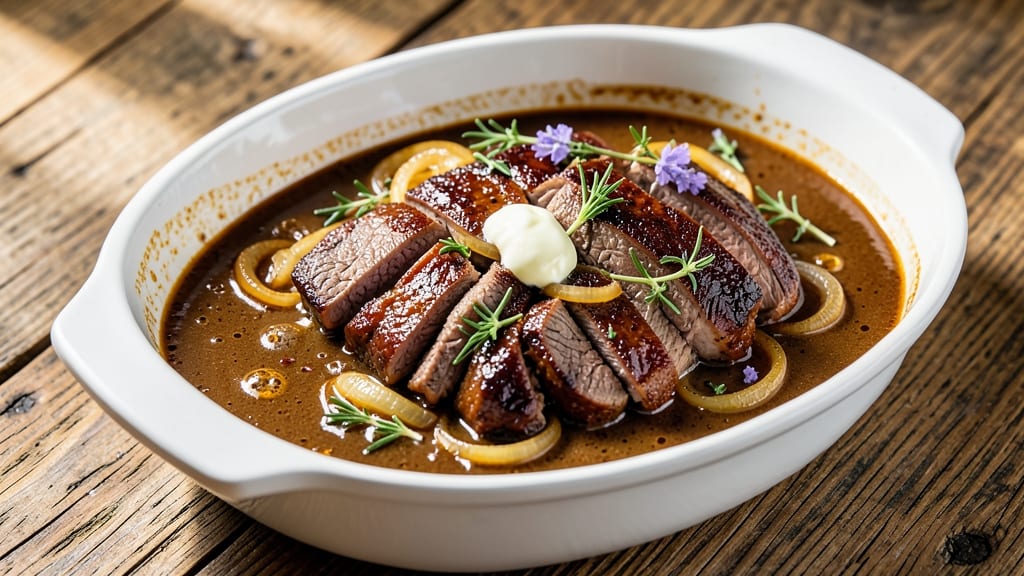
Beef and onion gravy recipe transforms simple pan drippings into a velvety sauce that elevates roasts, steaks, and mashed potatoes. This 15-minute method captures all the rich, caramelized flavors from your beef while building depth with onions and a perfect roux—no complicated techniques required. The secret lies in patience and proper thickening, ensuring every spoonful delivers that restaurant-quality consistency.
What sets this gravy apart is the balance of savory beef drippings, sweet caramelized onions, and a smooth flour-based roux that thickens without turning gluey. I’ve refined this recipe over years of holiday dinners and weeknight suppers, where a quick pan sauce makes all the difference.
The onions add natural sweetness that cuts through the richness, while the slow simmer develops layers of umami that turn a basic pan sauce into something extraordinary.
By the time you’re done, you’ll have a rich, glossy gravy that coats every bite—perfect for drizzling over roasted meats, smothering biscuits, or serving alongside creamy mashed potatoes. The best part? It’s made from ingredients you already have, with no fancy substitutions needed.
This is the kind of sauce that turns a simple meal into something memorable, and it comes together faster than you’d expect.
The key steps—deglazing the pan, building the roux, and simmering the onions—are straightforward but critical for flavor and texture. Once mastered, you’ll never settle for store-bought again. Let’s get started on creating gravy that tastes like it’s been simmering all day.
Ingredients for beef and onion gravy
Eight simple ingredients transform pan drippings into velvety, restaurant-quality beef gravy.
| Ingredient | Amount | Notes |
|---|---|---|
| Beef Drippings 🥩 | 2 cups | From roasted beef, chilled and solidified |
| Yellow Onions 🧅 | 1 ½ cups | Thinly sliced, about 2 medium onions |
| All-Purpose Flour 🌾 | ½ cup | Diamond Crystal preferred for light roux |
| Beef Broth 💧 | 1 ½ cups | Low-sodium preferred, homemade or quality store-bought |
| Unsalted Butter 🧈 | 2 tbsp | Cold for roux building, full-fat for richness |
| Fresh Thyme Leaves 🌿 | 1 tbsp | Or 1 tsp dried thyme (one-third amount) |
| Black Peppercorns 🌶️ | ½ tsp | Freshly cracked for robust flavor |
| Salt 🧂 | 1 tsp | Kosher or sea salt, adjust to taste |
The beef drippings are the foundation—never skip scraping up every last bit from your roasting pan. Costco or Whole Foods sell pre-trimmed beef roasts that maximize drippings, but any roast works. For onions, yellow onions caramelize best—avoid red or white, which can turn bitter. Fresh thyme is ideal, but dried works at one-third the amount. The flour is critical: Diamond Crystal gives a lighter roux than most brands. If you can't find it, use all-purpose, but whisk it vigorously to avoid lumps.
No beef drippings? Use 2 tbsp beef tallow or olive oil instead—just don’t expect the same depth of flavor. Substitute onion powder at 1 tsp for the sliced onions, but fresh is worth the effort. Running short on broth? Diluted beef bouillon cubes work in a pinch. The butter is non-negotiable for richness—full-fat only. If you’re gluten-free, swap the flour for cornstarch or gluten-free flour blend, but the texture will differ. For extra umami, add 1 tsp Worcestershire sauce (ensure it’s vegetarian if needed).
This gravy reheats beautifully—simmer gently for 3-5 minutes to restore its glossy texture. Store in an airtight container in the fridge for up to 5 days, or freeze for 3 months. I like to portion it into ice cube trays for single-use servings—perfect for quick reheats. For a smoother finish, strain through a fine-mesh sieve before serving. The longer it sits, the deeper the flavors become—trust the process.
Why You'll Love This Recipe
- Uses What You Have: I swear by this recipe because it turns scraps into magic—just the drippings from a roast, a handful of onions, and a splash of broth. No fancy ingredients, just the stuff already in your fridge.
- Caramelized Depth: That slow cook with onions until they’re golden? Game-changer. The sweetness balances the richness, and the flour toasts into a nutty base—simple steps, but the flavor? Unreal.
- Leftovers That Shine: Make a double batch and freeze half. Later, when you’re scrambling for a quick dinner, just reheat it over mashed potatoes or dumplings. It’s my lazy-day hero.
- Weeknight Workhorse: Five minutes of stirring, no babysitting. Slather it over steak, pour it into soup, or use it as a glaze—it’s the one sauce that makes everything feel like a celebration. (Yes, even on a Tuesday night.)
Step-by-step instructions for beef and onion gravy
Transform simple pan drippings into velvety, restaurant-quality gravy with this foolproof method.
Melt the Beef Drippings and Butter
Place the 2 cups beef drippings in a heavy-bottomed saucepan over medium-low heat. Let them melt completely, stirring occasionally with a wooden spoon to distribute the fat evenly. Once fully liquid, reduce the heat to low and add the 2 tablespoons cold unsalted butter.
Watch closely as the butter melts into the drippings—this creates a luxurious base. You want the mixture to gently simmer without browning. If you see any browned bits forming, immediately reduce the heat to lowest to prevent burning. These drippings are the foundation of your gravy, so take your time getting them smooth and even.
Build the Roux with Flour
Sprinkle the ½ cup all-purpose flour evenly over the melted butter and drippings. Using a wooden spoon, whisk constantly for 2-3 minutes until the mixture forms a smooth, pale golden roux with no floury bits remaining.
This step is crucial—overcooking will darken the roux and add bitterness, while undercooking will leave a raw flour taste. You're aiming for a light, nutty color that's just beginning to develop. If the roux starts to darken too quickly, reduce the heat slightly to maintain control. Keep whisking vigorously to prevent lumps from forming.
Add the Onions and Cook Until Soft
Add the 1½ cups thinly sliced yellow onions to the roux and stir to coat them evenly. Increase the heat to medium and cook for 5-6 minutes, stirring frequently, until the onions soften and begin to caramelize slightly at the edges.
The onions should release their moisture and reduce down, creating a sweet, aromatic base for your gravy. You'll notice the mixture will bubble more vigorously—this is normal. If the onions start to brown too quickly, reduce the heat slightly. The goal is to develop their natural sweetness without burning them.
Deglaze with Beef Broth
Gradually whisk in the 1½ cups beef broth, about ¼ cup at a time, allowing each addition to be fully absorbed before adding more. This slow incorporation prevents lumps and ensures a smooth gravy. After all the broth is added, bring the mixture to a gentle simmer over medium heat.
Let the gravy simmer uncovered for 5-7 minutes, stirring occasionally, until it thickens to your desired consistency. You want it to coat the back of a spoon smoothly but still be pourable. If it thickens too quickly, whisk in 1-2 tablespoons of hot water to adjust. The gravy should be rich and velvety, with no visible flour particles remaining.
Finish with Seasonings and Rest
Remove the saucepan from heat and stir in the 1 tablespoon fresh thyme leaves, ½ teaspoon cracked black peppercorns, and 1 teaspoon salt. Let the gravy sit off the heat for 5 minutes to allow the flavors to meld together.
Before serving, give the gravy one final taste and adjust the seasoning if needed. The thyme should add an earthy aroma, while the peppercorns bring a subtle heat. This resting period is essential—it allows the gravy to thicken slightly more and develop its full depth of flavor. Serve immediately over your favorite beef dishes for the ultimate comfort food experience.
Pro Tips For Making Beef And Onion Gravy
- Cook the Onions Slowly: I learned this the hard way—drowning onions in beef drippings at high heat turns them mushy instead of sweet and caramelized. Keep the heat medium-low and let them cook for 15-20 minutes, stirring occasionally, until they’re golden brown and breaking down. (Yes, it feels slow, but that’s how you get depth.)
- Use Cold Butter: Adding cold unsalted butter at the end—about 1 tablespoon—creates a silky finish without breaking the gravy’s texture. Skip the melted butter trick; cold butter emulsifies better and adds richness without thinning the sauce. (Trust me, your gravy will look restaurant-worthy.)
- Deglaze with Broth, Not Water: Water washes away flavor, but beef broth adds richness and depth. After browning the onions, pour in just enough broth to loosen the fond (about ½ cup), then whisk in the flour. The broth’s umami will carry through, making the gravy taste like it simmered all day.
- Strain for Smoothness: This isn’t the prettiest method, but it’s the tastiest: After thickening, strain the gravy through a fine-mesh sieve to remove onion bits. It takes 30 seconds but guarantees a velvety texture—no one will guess you didn’t slave over it. (Your future self will thank you.)
Wine and beer pairings for this recipe
Red Wine Pairings
A bold, medium-bodied red wine like Cabernet Sauvignon or Merlot complements this rich gravy beautifully. The tannins in these wines cut through the sauce's richness, while their fruit notes—blackcurrant in Cabernet or plum in Merlot—echo the gravy's caramelized onion sweetness.
I love a Napa Valley Cabernet for its velvety texture, or a Washington State Merlot for its approachable balance. 🍷
For a lighter option, try a Chianti Classico from Tuscany—its bright acidity and cherry undertones refresh your palate between bites. Avoid heavy, oaky wines like Bordeaux or over-extracted Zinfandels, which can overwhelm the gravy's delicate herbaceousness.
Beer Pairings
A dark lager like Schneider Weisse Aventinus or Paulaner Salvator pairs surprisingly well with beef gravy. The malty sweetness and subtle caramel notes in these beers mirror the gravy's depth, while their effervescence cleanses your palate. I keep a six-pack of Aventinus in my fridge specifically for gravy-heavy meals.
For craft beer lovers, a Belgian Dubbel such as Westmalle Dubbel offers a perfect balance. The caramel and raisin flavors in the beer harmonize with the gravy's caramelized onions, while the alcohol's warmth enhances the thyme's earthiness. Avoid hoppy IPAs—they'll clash with the gravy's richness.
White Wine Options
If you prefer white wine, a Chardonnay with noticeable oak—like a California Sonoma Coast—works surprisingly well. The buttery notes in the wine complement the gravy's velvety texture, while its acidity prevents the dish from feeling too heavy.
I reach for Kendall-Jackson Vintner's Reserve when I want a crowd-pleasing option. 🍷
Avoid unoaked Chardonnays or crisp Sauvignon Blancs—they lack the body to stand up to the gravy's richness. Instead, opt for a Viognier with its floral notes and gentle spice, which adds an unexpected but delightful contrast to the savory gravy.
Non-Alcoholic Choices
For those avoiding alcohol, a sparkling apple cider like Martinelli's Sparkling provides the same refreshing contrast as beer. The crisp acidity and subtle sweetness cut through the gravy's richness without overpowering it. I serve this chilled in a wine glass for a sophisticated touch.
A ginger beer like Feather Ginger Beer adds a zesty kick that balances the gravy's heartiness. The ginger's warmth complements the thyme, while the effervescence cleanses your palate between bites. Look for brands with real ginger listed as the first ingredient for maximum flavor.
Nutrition facts
Frequently asked questions about beef and onion gravy
Can I make this gravy without beef drippings?
Yes, but the flavor will be less rich. Use 2 tablespoons beef tallow or olive oil instead, plus 1 teaspoon beef bouillon powder dissolved in the broth to mimic the depth. For best results, roast a beef bone separately to create drippings for future batches.
Why did my gravy turn out lumpy?
Lumps usually mean the flour wasn't fully incorporated during the roux stage. Whisk continuously for 2-3 minutes until smooth and pale golden. If lumps appear later, blend briefly with an immersion blender or strain through a fine-mesh sieve. Always add broth slowly to prevent clumping.
How do I adjust the thickness if it's too thin or too thick?
For thin gravy, simmer uncovered for 2-3 extra minutes to reduce. If too thick, whisk in 1 tablespoon hot water or broth at a time until smooth. The ideal consistency coats the back of a spoon but remains pourable—like heavy cream.
Can I make this gravy ahead of time?
Store in an airtight container in the fridge for up to 5 days. Reheat gently on the stove, stirring frequently, until warmed through. For longer storage, freeze in ice cube trays—thaw and reheat as needed. The flavors actually deepen overnight!
What's the best way to use up leftover gravy?
Drizzle over mashed potatoes, roasted vegetables, or steak. Freeze portions in muffin tins for single-use servings. Mix into beef stews or meatloaf for extra richness, or use as a base for gravy mac and cheese. Even better—make gravy sandwiches with toasted bread!