
Main Courses
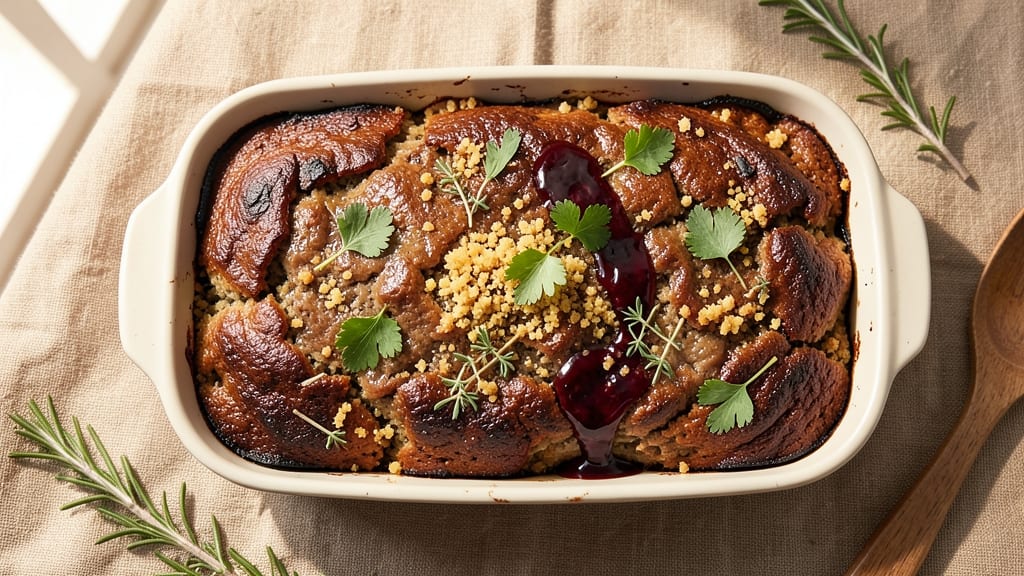
This beef and lamb meatloaf recipe transforms a classic comfort dish into something extraordinary with a dual-protein crust that adds texture and depth. The combination of ground beef and lamb creates a rich, savory base while the herbed crust delivers a satisfying crunch that elevates every bite.
Years of perfecting this technique ensure a meatloaf that's moist inside, flavorful throughout, and impressive enough for dinner guests.
The secret lies in balancing the proteins with just the right amount of binder—breadcrumbs, egg, and fresh herbs—to create a structure that holds up during baking.
Smoked paprika and umami-rich ingredients like Worcestershire sauce deepen the flavor profile, while a simple glaze adds a glossy finish that makes it look (and taste) restaurant-quality. This isn't your grandmother's meatloaf—it's a refined dish that respects tradition while embracing modern techniques.
By the time it emerges from the oven, you'll have a meatloaf with a golden, crispy crust that contrasts beautifully with the tender, juicy interior. The aroma alone will have everyone gathering around the table, and the first bite delivers layers of savory, herby, and slightly smoky flavors that linger.
This is the kind of dish that turns a simple weeknight dinner into a memorable meal.
Serve with roasted vegetables, mashed potatoes, or a fresh salad to round out the plate. The leftovers reheat beautifully, making it perfect for meal prep or feeding a crowd. Let's get started on creating this showstopping centerpiece.
Ingredients for beef and lamb meatloaf
Sixteen ingredients crafting a dual-protein masterpiece with herbed crust and umami depth.
| Ingredient | Amount | Notes |
|---|---|---|
| Ground Beef (80% lean) 🥩 | 1 ½ lb | Coarse grind preferred for texture |
| Ground Lamb 🐑 | 1 lb | Finely ground for even blending |
| Panko Breadcrumbs 🍞 | 1 cup | Light and airy for crust |
| Fresh Parsley 🌿 | ¼ cup | Finely chopped, stems included |
| Fresh Thyme Leaves 🌿 | 2 tbsp | Finely chopped, fresh preferred |
| Large Eggs 🥚 | 2 whole | Room temperature for even mixing |
| Diamond Crystal Kosher Salt 🧂 | 1 ½ tsp | Adjust to taste after initial seasoning |
| Freshly Ground Black Pepper 🌶️ | 1 tsp | Coarse grind for texture contrast |
| Smoked Paprika 🌶️ | 1 tbsp | High-quality Spanish smoked |
| Worcestershire Sauce 🍶 | 1 ½ tbsp | Anchovy-free version for clarity |
| Yellow Onion 🧅 | 1 whole | Medium size, finely diced |
| Garlic Cloves 🧄 | 4 cloves | Minced, fresh preferred |
| Extra-Virgin Olive Oil 🫒 | 2 tbsp | For crust binding and glaze |
| Honey 🍯 | 2 tbsp | For glaze, local preferred |
| Mustard 🍯 | 1 tbsp | Dijon style for glaze depth |
The protein blend is non-negotiable for texture and flavor. Ground lamb from the butcher section (not pre-packaged) delivers superior marbling—Whole Foods or local markets carry the best quality. For beef, 80% lean ensures juiciness without excessive fat. The crust relies on Panko breadcrumbs for structure; Trader Joe's sells the highest-quality in bulk. Fresh herbs are essential—Penzeys bulk bins offer the most vibrant parsley and thyme. If substituting dried, reduce to one-third the amount, but fresh delivers that restaurant-quality aroma. The Worcestershire sauce should be anchovy-free for clarity in flavor profiling.
No lamb available? Ground turkey or chicken works in a pinch, though texture differs slightly. Substitute panko with regular breadcrumbs, but expect less crunch. For the glaze, maple syrup replaces honey in a 1:1 ratio, though traditionalists may notice the difference. The onion and garlic can be swapped for asafetida powder (1/4 tsp) if avoiding alliums, though purists will detect the distinct savory note. Smoked paprika from Penzeys provides the deepest flavor—avoid grocery store brands that often taste flat. Pre-minced garlic from jars lacks freshness; take the 30 seconds to mince your own for optimal flavor development.
All ingredients except the glaze components can be prepped 24 hours ahead and stored in airtight containers in the fridge. The glaze keeps for 1 month refrigerated. For make-ahead convenience, assemble the meatloaf (unbaked) and refrigerate for up to 12 hours before baking. Leftovers reheat beautifully—350°F for 15 minutes with a splash of beef broth restores moisture. Portion into individual servings for easy meal prep; the crust holds up well when reheated. For longer storage, freeze the fully baked meatloaf (without glaze) for up to 3 months—thaw overnight in the fridge before reheating.
Why You'll Love This Recipe
- No-Mix Magic: I swear by this recipe because it doesn’t need binding agents—just the beef, lamb, and panko hold it together. No eggs, no milk, no fuss. The panko adds that satisfying crunch without turning it into a dense brick.
- Herb-Packed Punch: That lamb? It’s the secret weapon—rich, tender, and packed with thyme and parsley that sing when baked. Honestly, the first bite makes me think of Mediterranean feasts, but it’s on my table in 45 minutes.
- Leftover Hero: This meatloaf begs to be sliced and saved. Reheat it for sandwiches, toss chunks into pasta, or serve it cold in wraps the next day. My freezer’s always stocked with portions because it stays juicy and flavorful for days.
- Budget Flexibility: Ground lamb might sound fancy, but it stretches further than beef alone—plus, the panko keeps costs down. I make this for date nights and lazy Sundays, and no one ever questions the bill. (Yes, even on a Tuesday night.)
Step-by-step instructions for beef and lamb meatloaf with herbed crust
This method delivers a perfectly balanced meatloaf with a crispy herbed crust and juicy interior.
Prepare the Dual-Protein Mixture
In a large mixing bowl, combine the 1.5 lb ground beef (80% lean) and 1 lb ground lamb. Use your hands to break up any large clumps in the lamb—this ensures even blending with the beef. The coarse grind of the beef provides texture while the finely ground lamb adds richness and moisture retention.
Add the 1 whole yellow onion (finely diced) and 4 cloves garlic (minced) to the meat mixture. I like to press the onion and garlic into the meat with my fingers to distribute their flavors evenly. This step builds the flavor foundation before adding any wet ingredients.
Build the Seasoning Matrix
In a separate small bowl, whisk together the 1.5 tsp Diamond Crystal kosher salt, 1 tsp freshly ground black pepper, 1 tbsp smoked paprika, and 1.5 tbsp Worcestershire sauce. This dry rub ensures even seasoning throughout the meatloaf without overpowering any single area.
Add the seasoning mixture to the meat along with the 0.25 cup finely chopped fresh parsley and 2 tbsp chopped fresh thyme leaves. Gently fold these ingredients into the meat mixture using a wooden spoon—just until combined. Overmixing develops gluten, which can make the meatloaf dense rather than tender.
Create the Herbed Crust Layer
In another bowl, combine the 1 cup Panko breadcrumbs, 2 tbsp extra-virgin olive oil, and 1 tbsp Dijon mustard. The Panko should absorb the oil and mustard completely, creating a crumbly but cohesive crust. This layer will encase the meatloaf, creating that signature crispy exterior while maintaining moisture inside.
Transfer half of the crust mixture to a separate small bowl and set aside. This reserved portion will be used to coat the top of the meatloaf after baking, ensuring maximum crust development.
Assemble and Shape the Meatloaf
Line a 9x5-inch loaf pan with parchment paper, leaving an overhang for easy removal. Divide the remaining crust mixture evenly between two sheets of plastic wrap. Place half of the meat mixture on one sheet and the other half on the second sheet.
Press each meat portion into a 4x5-inch rectangle, about 1-inch thick. The goal is even thickness for uniform cooking. Place one meat rectangle on the prepared loaf pan and spread the reserved crust mixture evenly over the top. Top with the second meat rectangle and press gently to seal the edges.
Bake to Golden Perfection
Preheat your oven to 375°F. Bake the assembled meatloaf for 50-55 minutes until the internal temperature reaches 160°F when measured at the thickest point. The crust should be deep golden brown with crisp edges that pull away slightly from the pan.
For the final touch, mix together the 2 tbsp honey and remaining 1 tbsp Dijon mustard in a small bowl. Brush this glaze over the top of the meatloaf during the last 10 minutes of baking. This creates a sticky, caramelized finish that enhances both flavor and presentation.
Rest and Serve
Remove the meatloaf from the oven and transfer it to a wire rack. Tent loosely with aluminum foil and let it rest for 15 minutes before slicing. This resting period allows the juices to redistribute, preventing them from running out when you cut into the meatloaf.
Slice into 6 equal portions and serve immediately. The interior should be moist with just a hint of pink, while the exterior boasts a crispy herbed crust that contrasts beautifully with the tender meat. Pair with your favorite roasted vegetables or a fresh garden salad for a complete meal.
Pro Tips For Making Beef And Lamb Meatloaf
- Mix the Lamb First: Ground lamb gets greasy fast—handle it separately before combining with beef. Shape it into a loose ball, pat it dry with paper towels, and mix in half the breadcrumbs and herbs first. This keeps the texture light and prevents a soggy mess later.
- Press It Firm, Not Hard: Pack the meatloaf just enough to hold its shape, but don’t overwork it like you’re making burgers. Too much pressure squeezes out fat and air, leaving you with a dense brick. Use your hands to gently press the edges, then let the center stay slightly loose—it’ll firm up as it bakes.
- Skip the Crowding Pan: I learned this the hard way—stacking another pan on top to save space steams the meatloaf instead of browning it. Use a single baking sheet or roasting pan, and if you’re short on space, bake one at a time. A golden crust is worth the extra rack space.
- Toast the Panko: Toss the panko in a dry skillet over medium heat for 2–3 minutes until it’s fragrant and just starting to brown. The extra crunch elevates the texture, and the toasted flavor cuts through the richness of the lamb and beef. Do this while preheating the oven—it’s an easy upgrade.
Pro cooking tips for perfect results
Protein Blending
The key to this meatloaf's success starts with the protein blend. I always use 80% lean ground beef for texture and finely ground lamb for moisture retention. The lamb should be finely ground—ask your butcher for this specification.
If your lamb has large clumps, break them up with your fingers before mixing. This ensures even distribution throughout the beef, preventing dry pockets. The coarse grind of the beef adds a satisfying bite, while the lamb's fat content keeps everything juicy. 🥩
Seasoning Technique
Instead of mixing all seasonings directly into the meat, I create a seasoning matrix first. Whisk together the kosher salt, black pepper, smoked paprika, and Worcestershire sauce in a small bowl before adding to the meat. This ensures even distribution without overpowering any single area.
I also fold in the fresh herbs (parsley and thyme) last—just until combined—to preserve their bright flavors. Overmixing develops gluten, leading to a dense rather than tender texture.
Crust Development
The herbed crust is what makes this meatloaf special. I use Panko breadcrumbs for their light, airy structure and extra-virgin olive oil to bind them together. The Dijon mustard adds a subtle tang that complements the meat.
Reserve half of the crust mixture for topping after baking—this creates a double-crust effect that's both visually stunning and texturally satisfying. For extra crispiness, I press the crust firmly onto the meatloaf before baking.
Glaze Timing
The honey-mustard glaze is applied in the last 10 minutes of baking to prevent burning. I mix 2 tbsp honey with 1 tbsp Dijon mustard and brush it over the top of the meatloaf.
This creates a caramelized finish that adds depth to the flavor and makes the crust even more appealing. If you prefer a sweeter glaze, you can increase the honey to 3 tbsp—just keep an eye on it to avoid over-browning.
Resting Period
Never skip the 15-minute resting period after baking. This allows the juices to redistribute throughout the meatloaf, ensuring each slice is moist and flavorful. I place the meatloaf on a wire rack and loosely tent it with aluminum foil.
If you cut into it too soon, the juices will run out, leaving you with a dry interior. Patience here makes all the difference in the final result. 💫
Temperature Control
Use a meat thermometer to check the internal temperature—160°F at the thickest point is perfect. The oven should be preheated to 375°F for even cooking. If your oven runs hot, reduce the temperature to 350°F and extend the baking time by 5-10 minutes.
The crust should be deep golden brown with crisp edges. Avoid opening the oven door during baking, as this can cause the meatloaf to lose heat and extend cooking time.
Nutrition facts
Frequently asked questions
Why mix beef and lamb instead of using just one protein?
The combination creates a perfect balance of texture and moisture. Beef provides a satisfying bite with its coarse grind, while lamb adds richness and helps retain juices. This dual-protein approach prevents dryness while delivering deeper, more complex flavors than single-protein meatloaves.
Can I make this meatloaf ahead of time?
Assemble the unbaked meatloaf and refrigerate it for up to 12 hours before baking. For longer prep, you can even freeze the assembled (unbaked) meatloaf for 3 months. Just thaw it overnight in the fridge before baking as directed.
What's the best way to reheat leftovers?
Slice the meatloaf and reheat portions in a 350°F oven for 15 minutes with a splash of beef broth. This helps restore moisture and keeps the crust from becoming rubbery. Microwave reheating works in a pinch, but oven reheating preserves texture better.
How do I know when the meatloaf is fully cooked?
Use a meat thermometer to check the internal temperature at the thickest point—it should reach 160°F. The crust should be deep golden brown with crisp edges. If you don't have a thermometer, cut into the center: juices should run clear, not pink.
Can I substitute ground turkey or chicken for the lamb?
Yes, but expect some texture differences. Ground turkey or chicken works in a pinch, though it won't provide the same richness as lamb. For best results, use 85% lean ground turkey and increase the fat content by adding 1 tbsp olive oil to the meat mixture.