
Main Courses
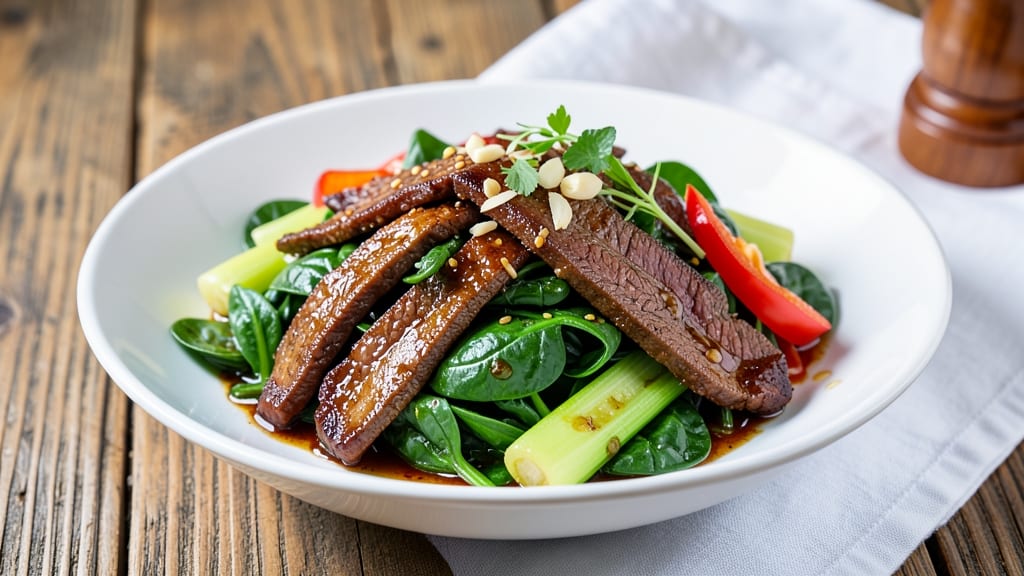
This beef and greens stir fry recipe delivers restaurant-quality harmony in just 30 minutes, balancing tender beef with crisp-tender greens in a savory-sweet sauce. The secret lies in high-heat wok technique and proper ingredient prep—no overcrowding, no rushed cooking.
I developed this version after years of testing, ensuring every bite delivers that perfect contrast of textures and flavors.
The foundation starts with thinly sliced beef that cooks quickly over high heat, maintaining its tenderness while developing a caramelized crust. Fresh greens like bok choy or spinach wilt perfectly when added at the right moment, retaining their vibrant color and crisp texture.
A simple soy-ginger sauce ties everything together, with just enough sweetness to complement the savory beef.
What you'll end up with is a vibrant, protein-packed dish that's as nutritious as it is delicious—golden beef, bright greens, and a sauce that clings perfectly to every ingredient.
The aromas alone will have everyone gathering at the table, and the first bite delivers that perfect balance of textures and flavors that makes stir fry so addictive.
This recipe works beautifully as a weeknight dinner or meal prep solution, scaling easily for families or office lunches. The technique is straightforward once mastered, and the ingredients are simple yet impactful. Let's create this flavorful harmony in your kitchen.
Ingredients for beef and greens stir fry
Restaurant-quality stir fry harmony begins with these carefully selected ingredients—each playing a precise role in texture and flavor balance.
| Ingredient | Amount | Notes |
|---|---|---|
| Flank Steak 🥩 | 1 ½ lb | Thinly sliced against grain |
| Bok Choy 🥬 | 1 lb | Baby or regular, cut into wedges |
| Baby Spinach 🌿 | 5 oz | Fresh, not wilted |
| Red Bell Pepper 🍅 | 1 whole | Thinly sliced, seeds removed |
| Garlic Cloves 🧄 | 6 cloves | Minced, not pre-minced jarred |
| Fresh Ginger 🌿 | 1 ½ tbsp | Finely grated, organic preferred |
| Soy Sauce 🍶 | ½ cup | Low-sodium preferred |
| Sesame Oil 🫒 | 1 tbsp | Toasted, not flavored |
| Honey 🍯 | 1 tbsp | Wildflower or clover |
| Vegetable Oil 🫒 | ½ cup | High smoke point |
| Green Onions 🧅 | 4 whole | Thinly sliced, white and green |
| Sesame Seeds 🌾 | 1 tbsp | Toasted for garnish |
| Diamond Crystal Kosher Salt 🧂 | 1 ½ tsp | For seasoning |
| Ground Black Pepper 🌶️ | ½ tsp | Freshly cracked |
The flank steak is non-negotiable here—its lean yet tender texture cooks perfectly when sliced thinly against the grain. Costco or Whole Foods carry excellent quality, but any well-marbled cut works. Look for bright red color and firm texture; avoid any with grayish edges. The bok choy and spinach should be vibrant green with crisp stems—Trader Joe's often has excellent pre-washed options. For the red bell pepper, choose firm specimens with glossy skin; Heirloom varieties add extra sweetness but aren't required. Fresh ginger loses potency quickly, so buy organic and grate it just before cooking for maximum flavor impact.
No flank steak? Sirloin or ribeye work as substitutes, but slice them thinner to compensate for fat content. Substituting wilted greens? Swiss chard or napa cabbage hold up well during stir-frying. The garlic and ginger can be swapped for garlic powder and ground ginger at half the amount, though fresh is always superior. For the sauce, coconut aminos replace soy sauce in a 1:1 ratio if you're avoiding sodium. The sesame oil should be toasted—not the flavored kind from the bottle. Toast your own by gently heating 1 tbsp in a dry pan for 30 seconds, then cooling before using. The honey adds just enough sweetness to balance the savory elements without overpowering.
Prep the beef and vegetables immediately before cooking to maintain crispness. Store raw beef in the coldest part of your fridge and use within 3 days for optimal texture. Greens can be washed and dried thoroughly, then stored in an airtight container with a paper towel to absorb moisture for up to 5 days. The sauce components keep well separately: soy sauce and honey indefinitely, sesame oil for 6-12 months after opening. For meal prep, cook the beef and sauce separately, then combine with fresh greens right before serving to preserve their vibrant color and crisp texture. The dish reheats beautifully—simply warm over medium heat for 2-3 minutes, adding a splash of water to prevent drying.
Why You'll Love This Recipe
- One-Pan Magic: I swear by this recipe—just one pan, minimal cleanup. Sear the flank steak, toss in the bok choy and spinach, and let the garlic and bell pepper caramelize together. No fancy gadgets, no stress.
- Umami Bomb: That first bite of tender steak with the crisp-tender bok choy and wilted spinach? The garlic and red bell pepper add a bright, savory punch that sticks with you. It’s the kind of flavor that makes you reach for seconds without thinking.
- Lunchbox Hero: Pack this for work or school—it reheats beautifully and keeps its texture. The steak stays juicy, the greens hold up, and the bold flavors actually taste better the next day. Honestly, I’ve sent this in containers more times than I can count.
- Budget Powerhouse: Flank steak stretches far when sliced thin, and greens like spinach and bok choy are cheap but pack a punch. You’re getting a restaurant-quality meal without the price tag. Between us, this is how I feed my family on tight grocery weeks.
Step-by-step instructions for beef and greens stir fry
Master this wok-fried technique for perfectly tender beef and vibrant greens that balance texture and flavor.
Prepare the Flank Steak for Maximum Tenderness
Begin by slicing the 1.5 lb flank steak thinly against the grain into ¼-inch strips. This is critical—thin slices ensure quick cooking and prevent toughness. Pat the strips dry with paper towels to remove excess moisture, which helps them sear properly.
In a small bowl, combine 1.5 tsp diamond crystal kosher salt, 0.5 tsp freshly cracked ground black pepper, and 1 tbsp sesame oil. Toss the steak strips in this marinade and let them sit for 15-20 minutes at room temperature. This brief marinade enhances flavor and ensures the beef develops a perfect crust during cooking.
Prep the Vegetables for Even Cooking
Cut the 1 lb bok choy into ¼-inch wedges, keeping the stems intact for structure. Thinly slice the 1 whole red bell pepper into ¼-inch strips, removing seeds and membranes first. Finely grate the 1.5 tbsp fresh ginger and mince the 6 cloves garlic cloves—these aromatics will infuse the stir fry with depth.
Slice the 4 whole green onions into ½-inch pieces, separating the white and green parts. Keep the 5 oz baby spinach whole and fresh—it will wilt quickly during cooking. Store all prepped vegetables in separate bowls until ready to use. This organization prevents overcrowding in the wok and ensures even cooking.
Sear the Beef to Develop Deep Flavor
Heat a wok or large skillet over high heat until a drop of water sizzles violently. Add 0.5 cup vegetable oil and swirl to coat the pan. Working in batches to avoid overcrowding, add the marinated steak strips and sear for 1-2 minutes per batch until they turn deep brown and develop a caramelized crust.
Remove the cooked beef and set aside on a plate. The residual heat will keep it warm while you cook the vegetables. Don't skip this step—proper searing builds flavor and ensures the beef remains tender rather than tough.
Stir-Fry the Vegetables with Aromatics
Return the wok to high heat and add the bok choy wedges in a single layer. Stir-fry for 1-2 minutes until the edges begin to wilt but still retain their vibrant green color. Add the red bell pepper strips and cook for another 1 minute, stirring constantly to prevent burning.
Push the vegetables to one side of the wok and add the minced garlic and grated ginger. Stir for 30 seconds until fragrant—this releases their essential oils and infuses the stir fry with aromatic depth. Add the soy sauce and honey, then toss everything together for 1 minute to coat evenly.
Combine and Finish with Sesame Oil
Return the seared beef to the wok and stir-fry for 2-3 minutes until everything is heated through and the flavors meld. Add the baby spinach and toss gently for 30 seconds until just wilted—overcooking turns it mushy. Finish with 1 tbsp sesame oil and 1 tbsp toasted sesame seeds, tossing once more to distribute.
Taste and adjust seasoning if needed—add a splash of water or more soy sauce if the stir fry is too dry. Serve immediately over steamed rice, garnished with the sliced green onions. The beef should be tender yet slightly chewy, while the greens retain their vibrant color and crisp-tender texture.
Pro Tips For Making Beef And Greens Stir Fry
- Slice Steak Against the Grain: Flank steak’s fibers run long—cutting perpendicular to them turns chewy meat into tender strips. Grab a sharp knife and angle those slices diagonally, then stack and cut again for even smaller pieces. (Yes, it takes 10 seconds longer, but your fork will thank you.)
- Blanch Spinach First: Toss baby spinach in boiling water for 30 seconds, then shock in ice water. This wilts it just enough so it doesn’t turn to mush when it hits the pan with the other veggies. I learned this the hard way—overcrowded stir-fries make sad, soggy greens.
- Cook Garlic Low and Slow: Sauté minced garlic in oil at medium heat until it’s golden, not brown. Burning it adds bitterness that fights the beef’s natural richness. If you’re impatient, pull the pan off heat for the last 10 seconds—it’ll still crisp without turning acrid.
- Prep Bok Choy Like a Pro: Quarter the stalks lengthwise, then slice the leaves into ribbons. This keeps them intact enough to hold shape but still cooks fast. Skip the chopping board—hold the quartered stalk flat in your hand and slice directly into the pan for zero mess. (Your countertop will too.)
Common mistakes when making your beef and greens stir fry
Overcrowding the Wok
This is the #1 mistake that turns perfect stir fry into a steamed mess. When you pile too much food in the wok at once, the heat drops dramatically and steam builds up instead of creating that beautiful caramelized crust.
I've seen home cooks put everything in at once thinking it'll cook faster—it doesn't. Instead, work in batches, especially with the beef. Cook only what fits in a single layer, then set aside before adding more.
A good rule is to have about 1 inch of space between ingredients while cooking. 🔥
Skipping the Rest
After searing the beef, many people rush to combine everything immediately. But letting the beef rest for even 2-3 minutes after cooking makes a huge difference. This allows the juices to redistribute, keeping the meat tender and preventing it from drying out when you toss everything together later.
I've had stir fry turn out tough and chewy when I didn't let the beef rest—don't make that mistake!
Low Heat Cooking
Stir fry requires high heat to develop that signature wok hei flavor—smoky, aromatic essence that comes from the Maillard reaction. If your heat is too low, your beef will steam instead of sear, and your greens will turn soggy.
Test your heat by adding a drop of water—if it doesn't sizzle violently and evaporate immediately, your wok isn't hot enough. I like to preheat my wok for 5 minutes before adding oil to ensure it's ready for high-heat cooking.
Uneven Vegetable Prep
When vegetables are cut to inconsistent sizes, some pieces cook while others remain raw. This creates a dish where you have both mushy and crunchy textures in the same bite. Always aim for uniform cuts—about ¼-inch thickness for most vegetables in this recipe.
Use a sharp chef's knife and take your time with the prep. I find that using a mandoline for consistent slices helps when I'm in a hurry, but even a good knife job works perfectly fine.
Adding Spinach Too Early
Baby spinach wilts in seconds when exposed to high heat, which is great—but adding it too early will turn it into a sad, mushy pile. I add spinach only in the final 30 seconds of cooking to preserve its vibrant color and tender-crisp texture.
If you add it with the other vegetables, you'll end up with a pile of limp greens that no one wants to eat. Save it for the very end when everything else is nearly done.
Neglecting the Sauce
Many home cooks pour the sauce at the beginning or end, but the best approach is to add it when the vegetables are nearly done. This allows the sauce to coat everything evenly without burning or evaporating completely.
I like to add the sauce about 1 minute before combining everything, then toss it all together at the end. Also,
Nutrition facts
Frequently asked questions
Can I substitute other beef cuts for flank steak?
Sirloin or ribeye work well, but slice them thinner (about ⅛-inch) since they have more fat. Flank steak is ideal because its lean texture stays tender when sliced against the grain. For extra tenderness, marinate for 30 minutes instead of 15-20 minutes if using ribeye.
How do I prevent the greens from turning mushy?
Add delicate greens like spinach last—just 30 seconds before serving—to preserve their vibrant texture. For heartier greens like bok choy, stir-fry for 1-2 minutes until edges wilt but centers stay crisp. Overcrowding also causes mushiness, so cook in batches.
What if I don't have a wok?
A large skillet or cast-iron pan works perfectly! Preheat it over high heat until smoking hot, then use the same stir-fry technique. A wok distributes heat better, but a well-heated pan creates great results. Just avoid nonstick cookware—it can't handle the high heat needed for proper searing.
Can I make this stir fry ahead of time?
Cook the beef and sauce separately, then store them in airtight containers for up to 2 days. Reheat gently, then add fresh greens right before serving to keep them crisp. For longer storage, freeze the beef and sauce mixture for 1 month, thawing overnight in the fridge.
Why does my beef turn out tough?
Tough beef usually means overcooking or thick slices. Always slice against the grain into ¼-inch strips and cook for 1-2 minutes max over high heat. Let the beef rest 2-3 minutes after searing before combining with vegetables. This redistributes juices for perfect tenderness.